In honor of the start of a new school year we thought it would be fun to learn about some of the colors that grace the paintings in the gallery and paintings of the past. The origins and histories of colors are more diverse and surprising than you could imagine!
We conclude our 'Back to School Series' with the colors
Green
,
Blue
, and
Violet
.
|
|
There was once a secret color in China called
mi se
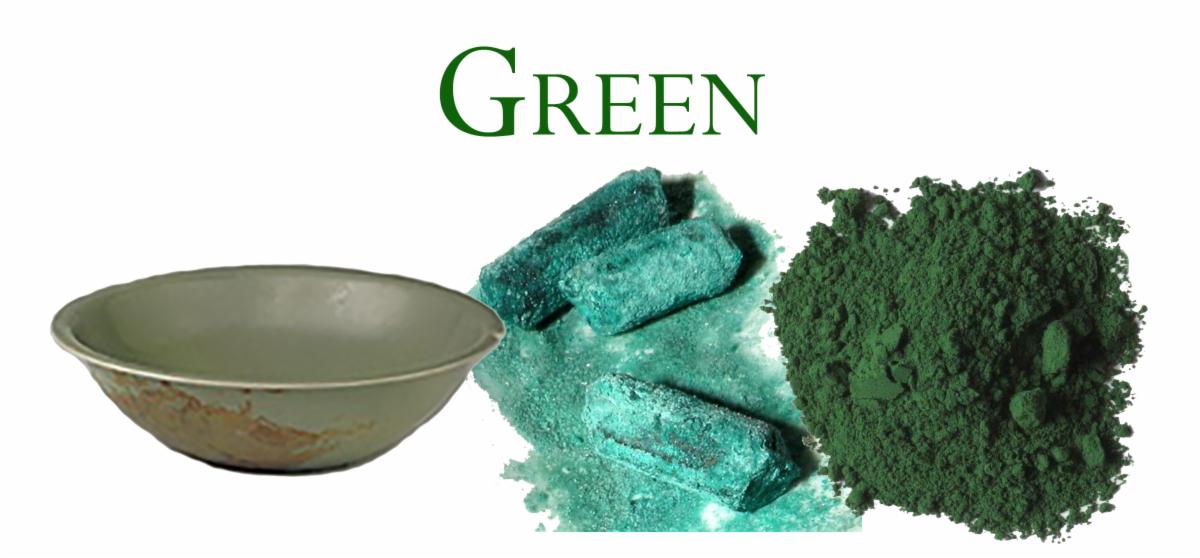
. It was so secret that only royalty could own it. For hundreds for years people only speculated on what it looked like. It wasn’t until 1987 when, in the ruins of a collapsed tower, this legendary color was discovered on an ancient trove of royal porcelain. The color was a light gray-ish green now known as celadon.
|
|
Sally Tharp
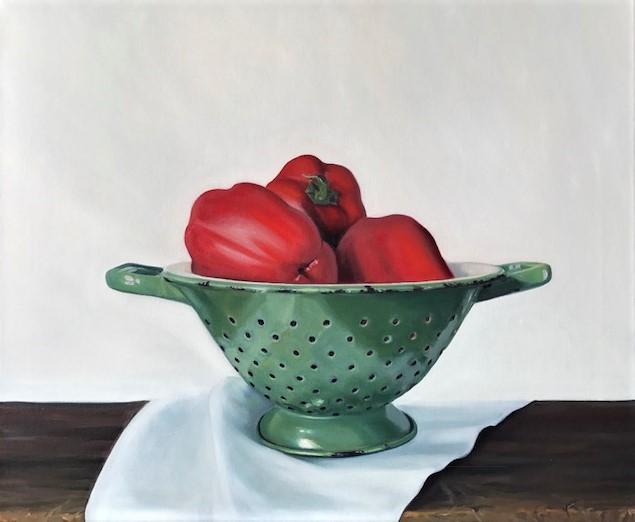
Us Three
20x24
|
|
Not a particularly remarkable color, the popularity for
mi se
stemmed from the Chinese tendency to mythologize art in order to make it more appreciated. The secrecy of the color made it more exciting. In fact, the word for secrecy in Chinese is ambiguous; as well as “secret” it can also mean “reserved” or “held back”. The beauty of this iron-based color is in its simplicity. It is about nature and harmony. It stands apart from other brighter and more saturated pigments by being earthy and quiet. It is human nature to crave what you are in danger of losing, and to the Chinese elite of the Tang dynasty who were surrounded by gold and colorful silks, that would have been simplicity and calm. It is a reminder of nature.
|
|
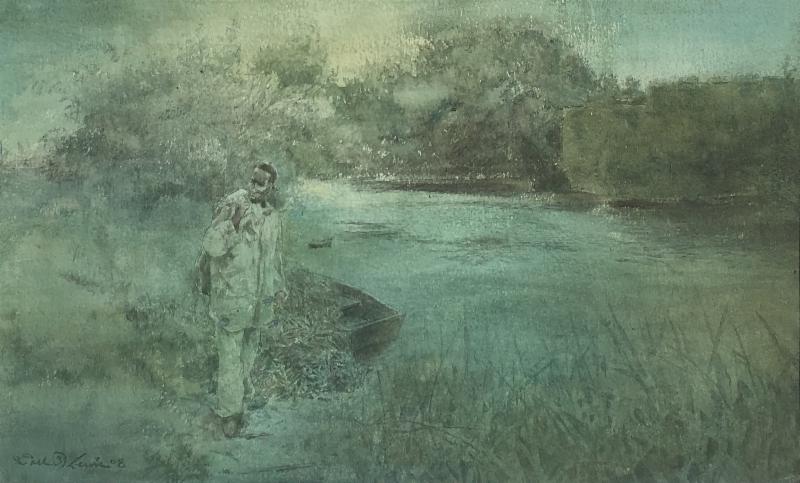
E.B. Lewis
The River's Edge
12x19
|
|
Green is the natural color of the world. Most of the world is covered in it. Yet for artists it has been one of the hardest colors to reproduce. This color of grass and leaves has traditionally been made from metal (more accurately, the corrosion of metal) and even poison.
|
|
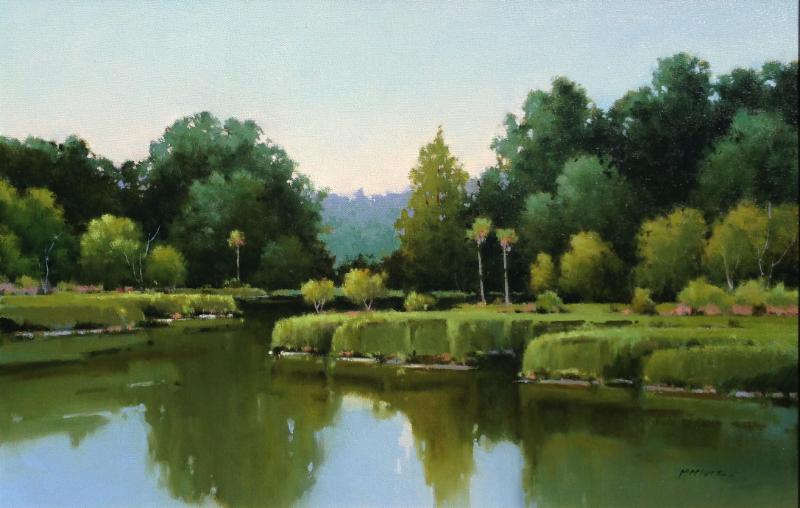
Rick McClure
This Water Doesn't Flow
20x30
|
|
Verdigris was made by suspending copper over a bath of vinegar. After a few hours the orange metal and the red wine would combine and leave a green deposit. It was sometimes called van Eyck Green because the Flemish master used it often and successfully – unlike the Italians whose verdigris tended to blacken as Leonardo da Vinci had warned about in his notes. The Flemish artists had found a secret to varnishing the verdigris which protected its green and, so far, has lasted centuries (the most popular example of this is the bright green dress in van Eyck’s
The Arnolfini Marriage
). The rest of the art world was not so fortunate.
|
|
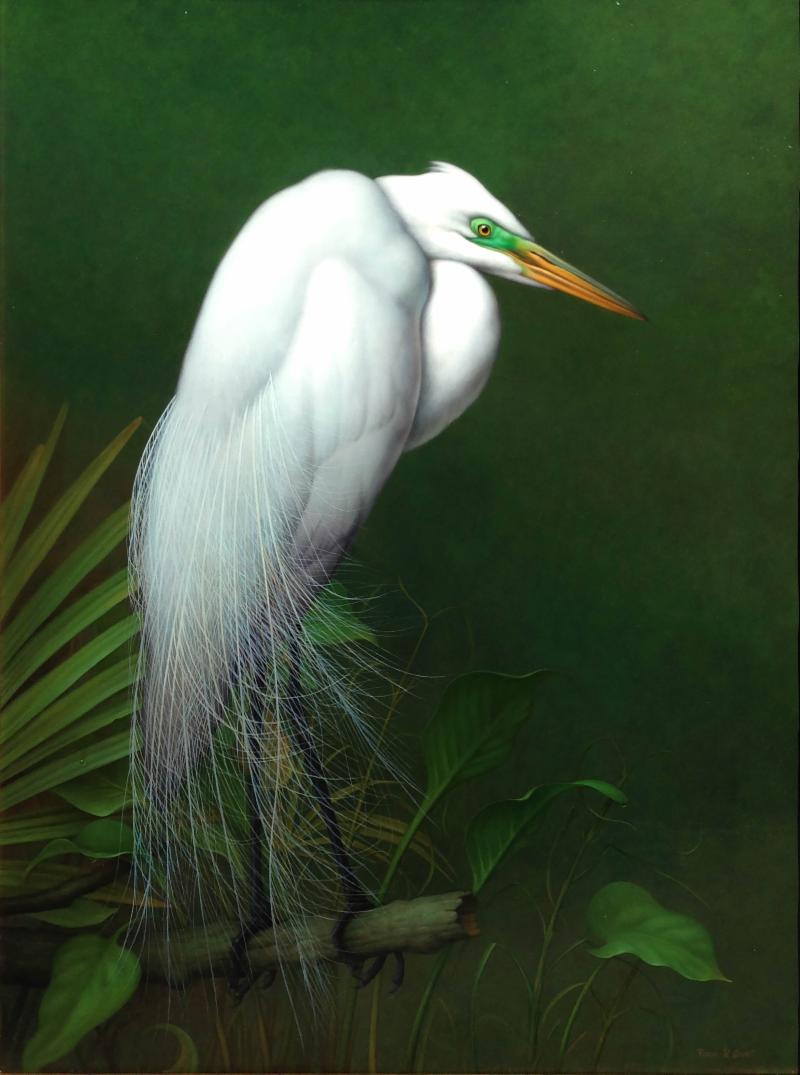
Russell Gordon
Great White Egret
40x30
|
|
The first of the ‘poison greens’ to be discovered was that named after Carl Wilhelm Scheele, the Swedish chemist who made it in 1775: copper arsenite, a highly toxic salt of arsenic. Soon after its introduction from about 1780, it became clear that it tended to darken with age, and the search began for a replacement began.
Wilhelm Sattler, a paint manufacturer in Schweinfurt, Germany, worked with Friedrich Russ to discover an even better arsenic compound for use as a colorant, and from 1814 Sattler’s company manufactured Schweinfurt or Emerald Green, the equally toxic copper acetoarsenite. Its alluringly brilliant green color appears very stable, with only slight darkening resulting from reaction with hydrogen sulphide, which has been a common atmospheric pollutant.
|
|
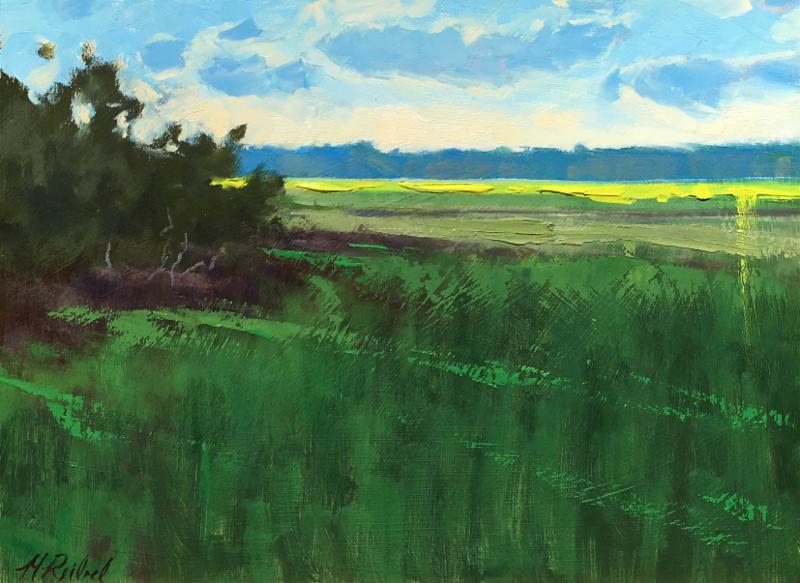
Michael Reibel
Just A Sliver of Chartreuse
12x16
|
|
The Impressionists relied heavily on Emerald Green for its brilliance and intensity of color. Claude Monet used Emerald Green among other green pigments and mixtures in his famous Bathers at la Grenouillère, painted in 1869. It has also been found widely in the landscapes of Cézanne, Gauguin, Pissarro and Vincent van Gogh. By the late nineteenth century, concern over the consequences of using Emerald Green had risen to the point where the pigment was banned in many countries. During the twentieth century, genuine Emerald Green was withdrawn from use as a pigment, although it wasn’t completely discontinued until the 1960s. Since then, paints sold as being Emerald Green have contained alternatives which are far less toxic than the original pigment.
|
|
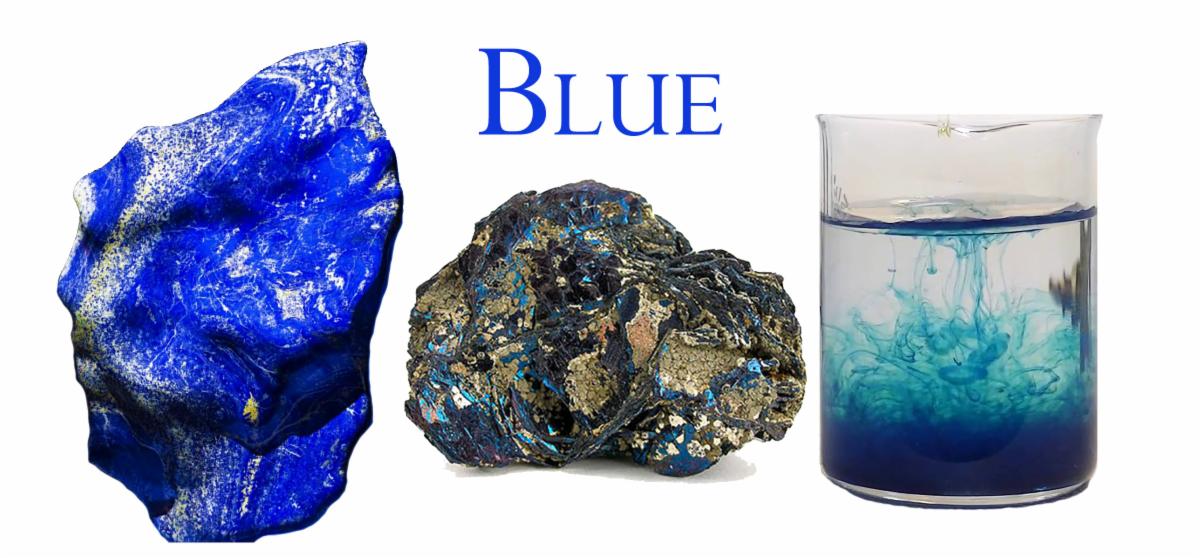
Lapis Lazuli, also known as natural
ultramarine
, has been an important source of blue pigment in many cultures. Its use has always been a status symbol for patrons of the arts. Since the Renaissance, artists have been frugal in their use of it due to its difficult attainment and high cost.
Derived from the lapis lazuli stone, the pigment was considered more precious than gold. For centuries the lone source of ultramarine was an arid strip of mountains in northern Afghanistan called Sar-e-sang, the Place of the Stone. The process of extraction involved grinding the stone into a fine powder, infusing the deposits with melted wax, oils, and pine resin, and then kneading the product in a dilute lye solution; the entire process taking weeks.
|
|
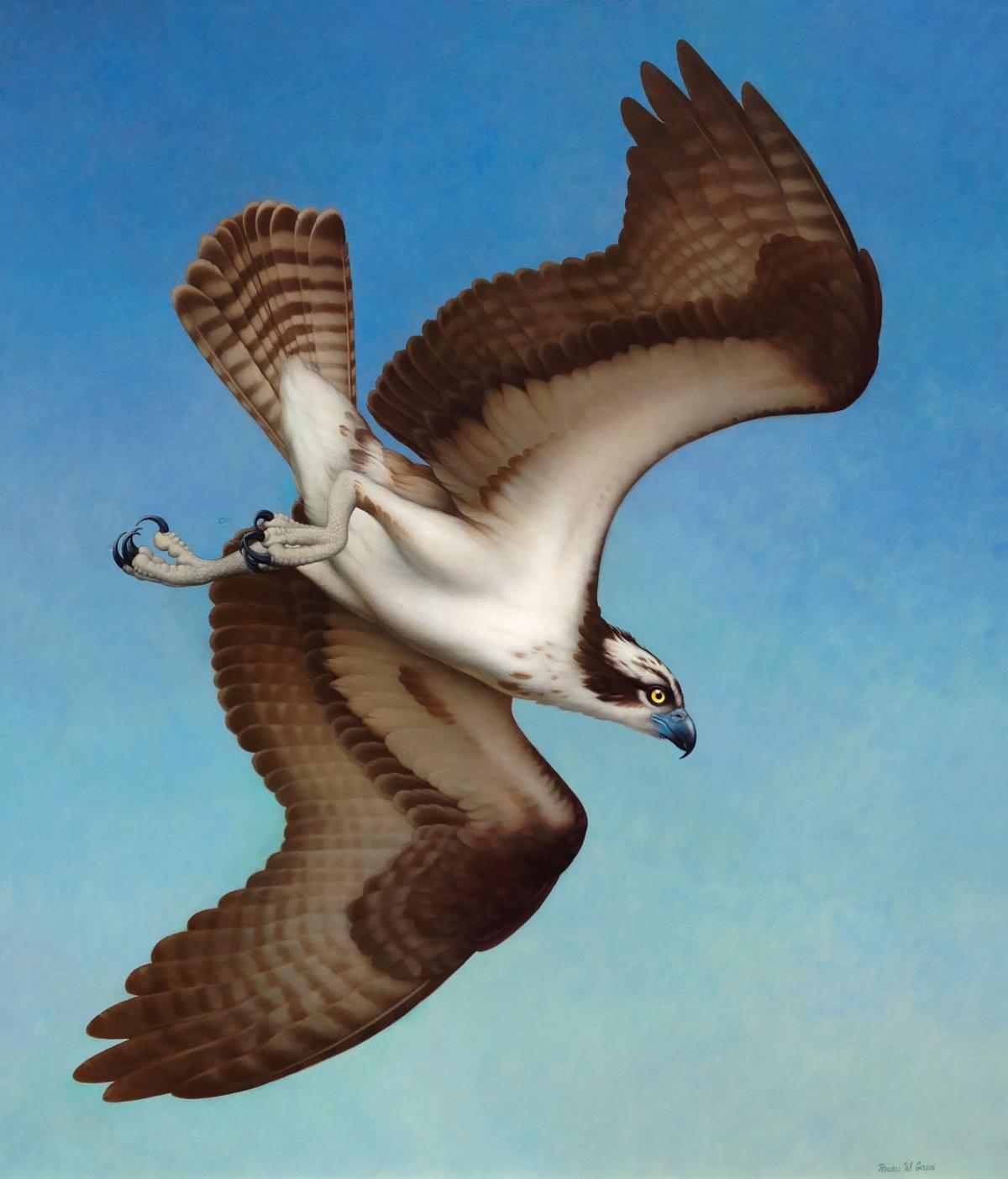
Russell Gordon
Osprey
40x34
|
|
Because of its prohibitive costs, the color was traditionally restricted to the raiment of Christ or the Virgin Mary. European painters depended on wealthy patrons to underwrite their purchase. Less scrupulous craftsmen were known to swap ultramarine for smalt or indigo and pocket the difference; if they were caught, the swindle left their reputation in ruin. As a young artist, Michelangelo couldn’t afford ultramarine and his painting The Entombment (1501), as the story goes, was left unfinished as the result of his failure to procure the prized pigment. He refused to use anything less than ultramarine for the virgin’s robes.
Most modern-day artists use synthetic ultramarine. French ultramarine (invented in the nineteenth century) is composed of crystals all the same size and they reflect the light evenly. It makes the paint less interesting than if you used real ultramarine from stones. Lapis contains speckles of iron pyrite – fool’s gold – which sparkle like stars in the blue stone.
|
|
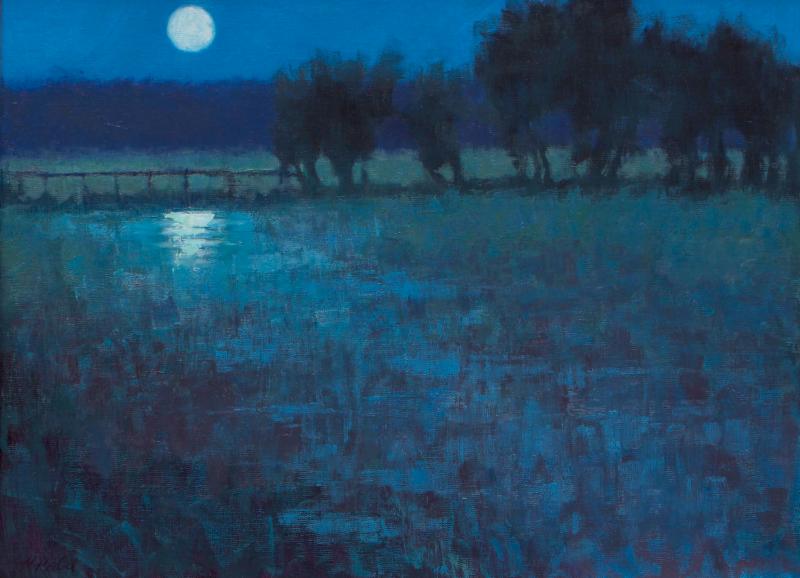
Michael Reibel
Full Moon Fever on Kiawah
18x24
|
|
Only those with an extensive study of the old master’s techniques still know how to use it. Natural ultramarine is much richer than its modern replacement, but it doesn’t mix as well with other pigments. Today, the natural ultramarine paint is still made from Afghan stones using a Renaissance recipe and is extremely costly – around $3,000 a pound.
Ultramarine is the superlative blue, the end-all blue, the blue to which all other hues quietly aspire. The name means “beyond the sea”—a dreamy ode to its distant origins, as romantic as it is imprecise.
|
|
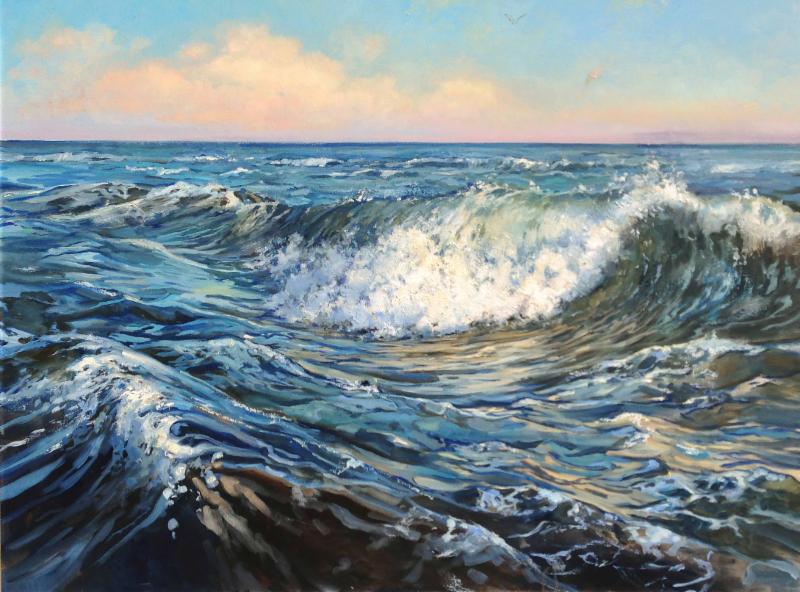
Karen Larson Turner
Tumbling to Shore
36x48
|
|
Cobalt blue came from Persia – now Iran – and was given the name by European silver miners. In German folklore Kobald was the name of a vicious goblin who lived in the earth and resented intruders. It got the name because cobalt was responsible for the horrible and mysterious deaths of many miners. Miners in cobalt-rich silver mines came to fear something in the tunnels. They didn’t know exactly what it was, they just knew that, when heated, it filled the mine with a vapor that could kill them. Even those who did escape were sick for weeks, and sometimes had their health permanently ruined.
The deathly culprit was cobalt. One of the elements that cobalt combines with is arsenic. A cobalt atom with two arsenic atoms attached is called cobaltite, and a cobalt atom with three arsenic atoms attached is called skutterudite. Neither is a rare combination. So, when miners tried to extract a piece of ore by heating it, they’d release arsenic as a gas all around them. They noticed that this was especially common when they were hacking into a substance that looked like copper, but had turned blue, and called the substance “kobald,” or goblin.
People have been using cobalt for six hundred years. The element is a dirty silver color on its own, but when combined with other elements turns a deep and gorgeous blue. Pot-makers, painters, and glass makers all went crazy for the pigment, but it wasn’t until chemistry came into its own that anyone realized it was its own element.
|
|
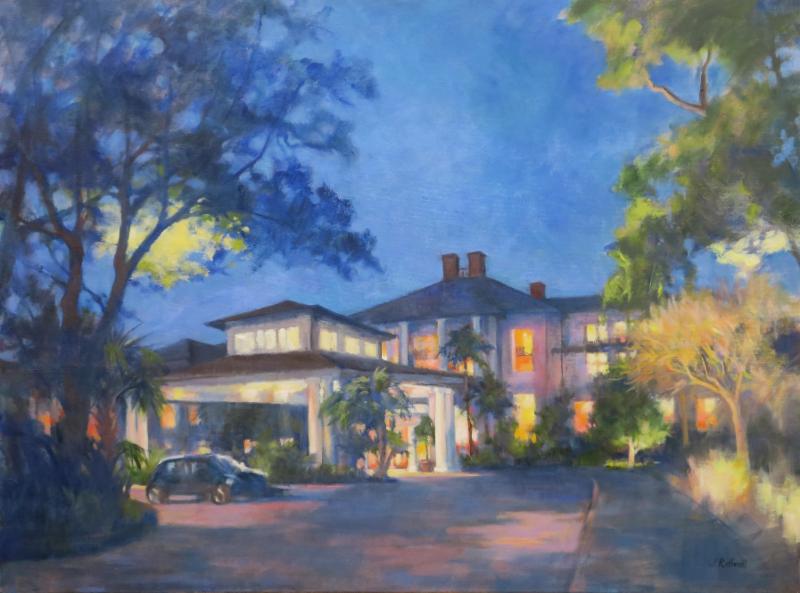
Junko Ono Rothwell
The Sanctuary at Night
30x40
|
|
Prussian Blue was created by mistake while a paint maker was trying to make red. In 1704, Herr Diesbach of Berlin was at his mixing table using a tried and true recipe for carmine lake red. He mixed ground cochineal, alum and ferrous sulphate, then precipitating it all with an alkali – when he realized he’d run out of the alkali. He borrowed some from his boss but didn’t realize it had been distilled with animal oil. Suddenly, he found blue instead of red in his flask.
|
|
Sally Tharp
Above High Tide
36x24
|
|
This surprising result was due to the “animal” element – the oil had contained trace amounts of blood, which contains iron. Diesbach had unwittingly created iron ferrocyanide, which was named Prussian Blue. The color was instantly popular among artists and it became the basis of industrial photocopying processes (known as
blueprints
). While most paints are toxic and have led to the death of some of their users, Prussian Blue is actually a life saver as it is the antidote to Thallium poison. Prussian Blue is an ion exchange compound; the ions in the pigment pull the poison from the body so it can be expelled if the pigment is ingested soon after the poisoning.
|
|
Glenn Harrington
Mepkin Abbey Monk on the Cooper River
12x18
|
|
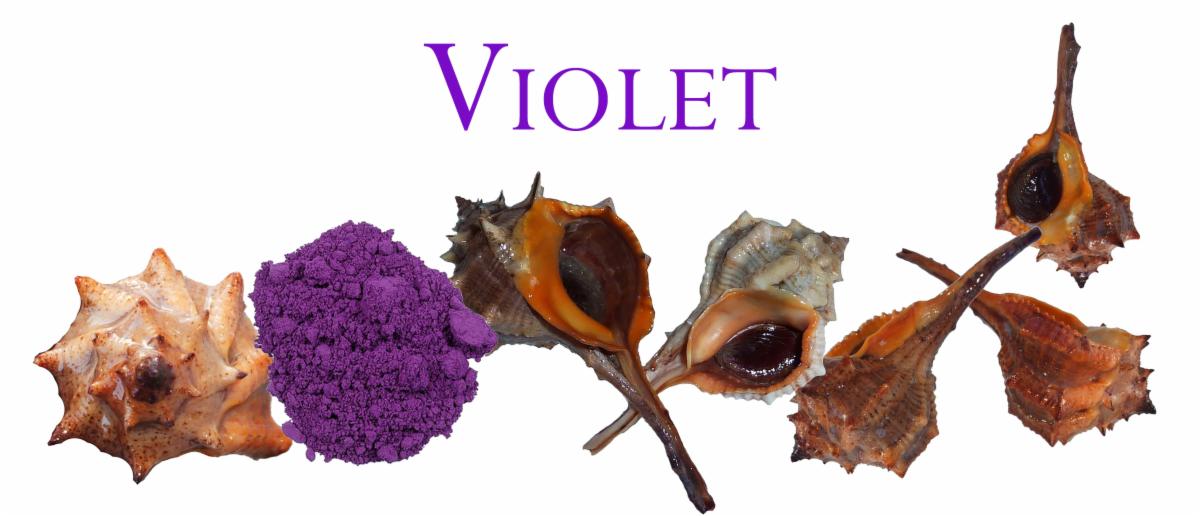
There is only one color more expensive and difficult to extract than that of genuine Lapis Lazuli, and that is Tyrian Purple.
|
|
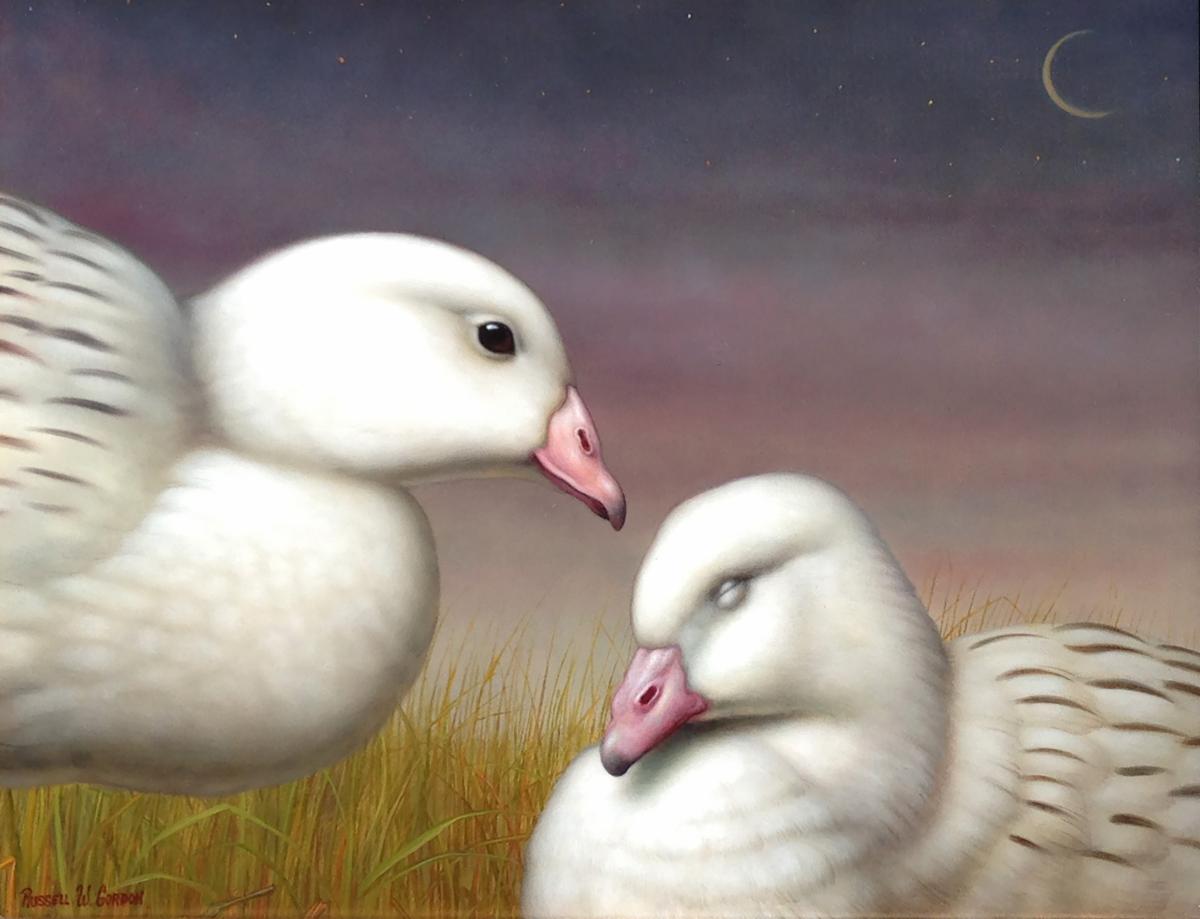
Russell Gordon
Devotion
11x14
|
|
Tyrian Purple is a red leaning violet color in the form of a dye which is extracted from the regional shellfish,
Bolinus brandaris
, found in the eastern Mediterranean Sea. It takes the secretion of roughly 10,000 of these sea snails to produce just 1 gram of colored pigment, hence the high costs of this color historically and in the present day.
|
|
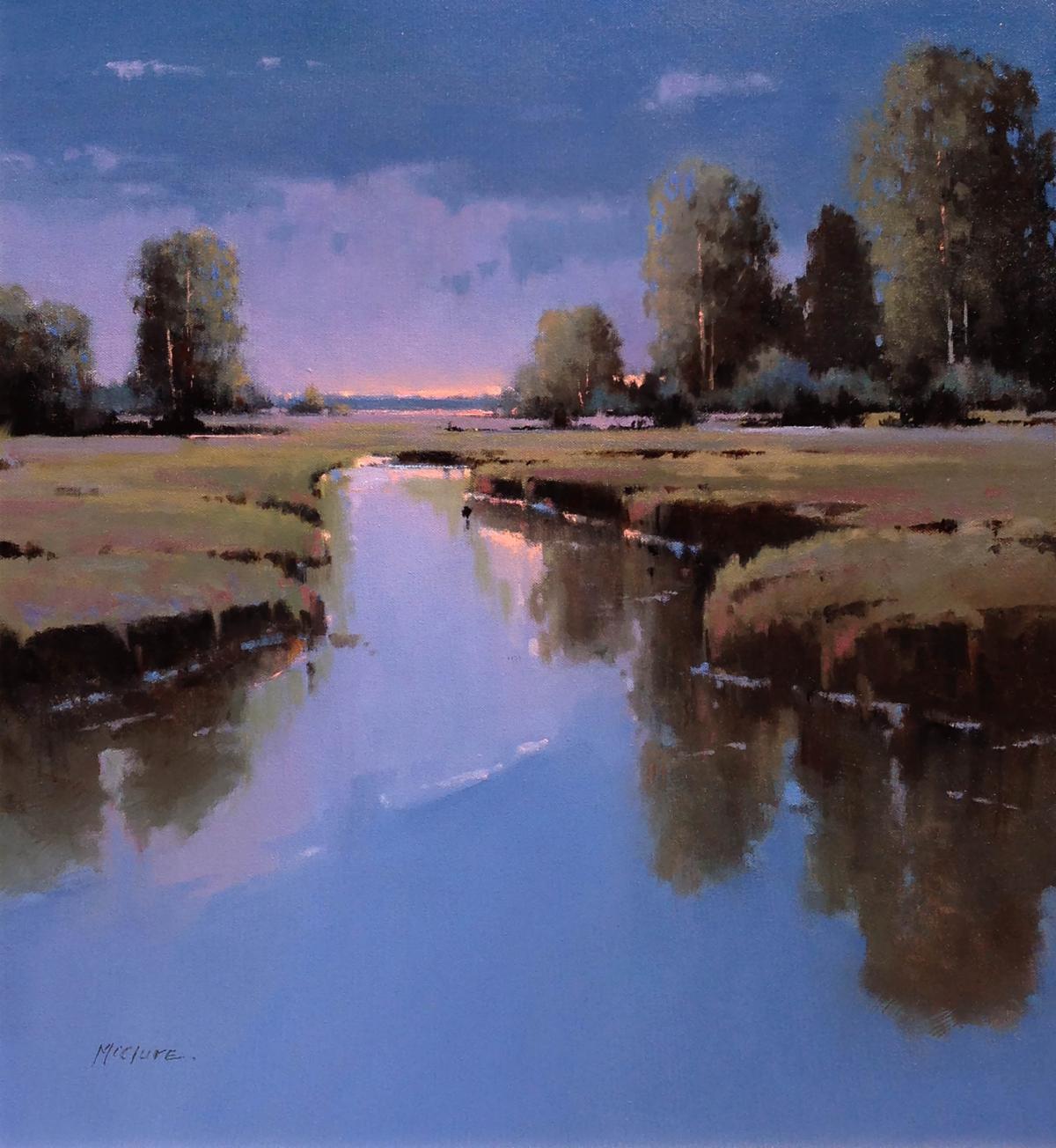
Rick McClure
Softly Into Night
26x24
|
|
Tyrian Purple also goes by the names “Imperial Purple” and “Royal Purple” which goes back to the original usage of this color. Originally Tyrian Purple was used as a dye for the clothing of royalty. Both the colors blue and purple were a rarity until the 1800’s. Often to get a purple color a blue had to be mixed with a red cinnabar or vermilion to approximate a hue.
|
|
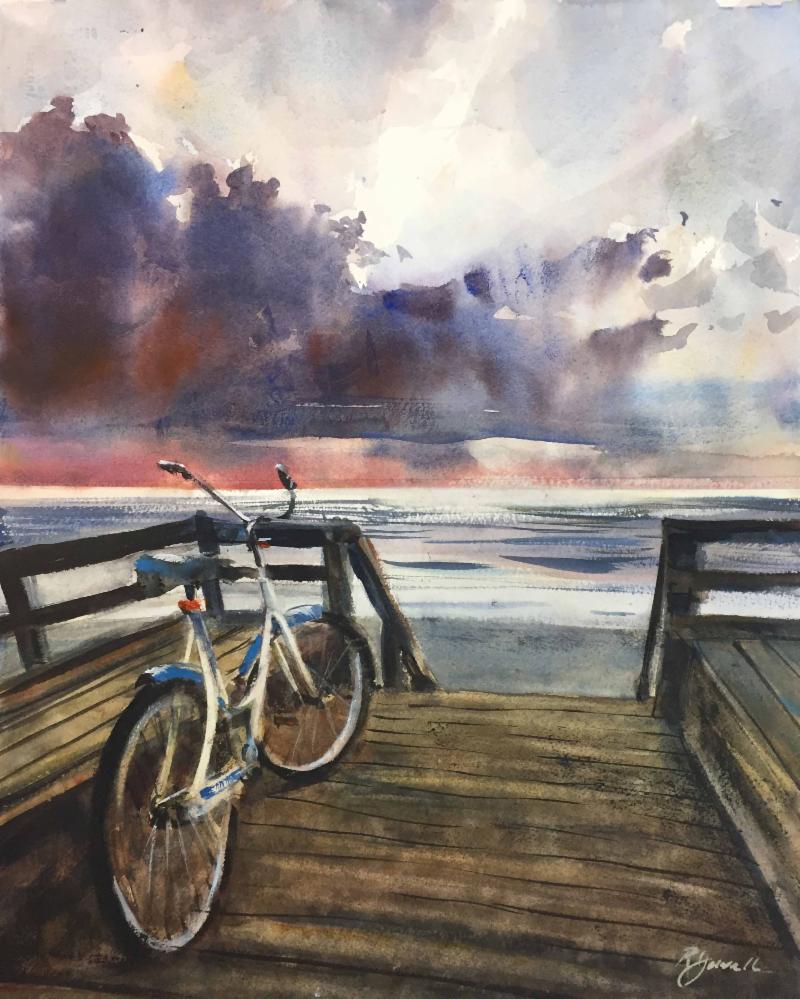
Russell Jewell
Cruiser
20x16
|
|
We hope you've enjoyed the recent emails.
Check your email again soon for a collection of new paintings just arrived!
|
|
Wells Gallery
1 Sanctuary Beach Dr.
Kiawah, SC 29455
(843)576-1290
kiawah@wellsgallery.com
www.wellsgallery.com
|
|
|
|
|
|
|