In honor of the start of a new school year we thought it would be fun to learn about some of the colors that grace the paintings in the gallery and paintings of the past. The origins and histories of colors are more diverse and surprising than you could imagine!
In this collection we are exploring
Red
,
Orange
, and
Yellow
.
|
|
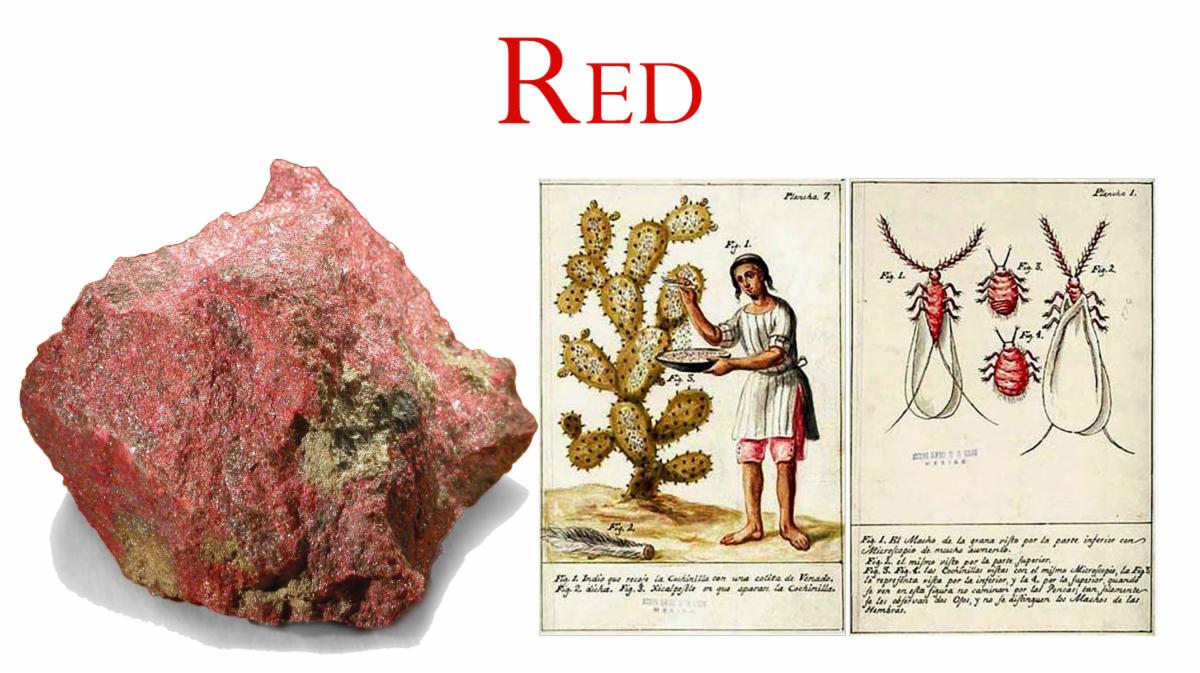
Red Carmine pigment comes from insect blood. Cochineal bugs are a beetle type insect that are about the size of a bedbug and are covered in a snow-white down. When crushed they produce a deep scarlet stain. On the day it is fresh carmine it is one of the reddest dyes of the natural world, but it quickly fades. It is rarely used in paintings nowadays for this reason, but it can be found in abundance in Cherry Coke… it is the color additive E120.
|
|
A favorite red among artists is vermilion, made from the toxic mercury sulfide mineral, cinnabar.
|
|
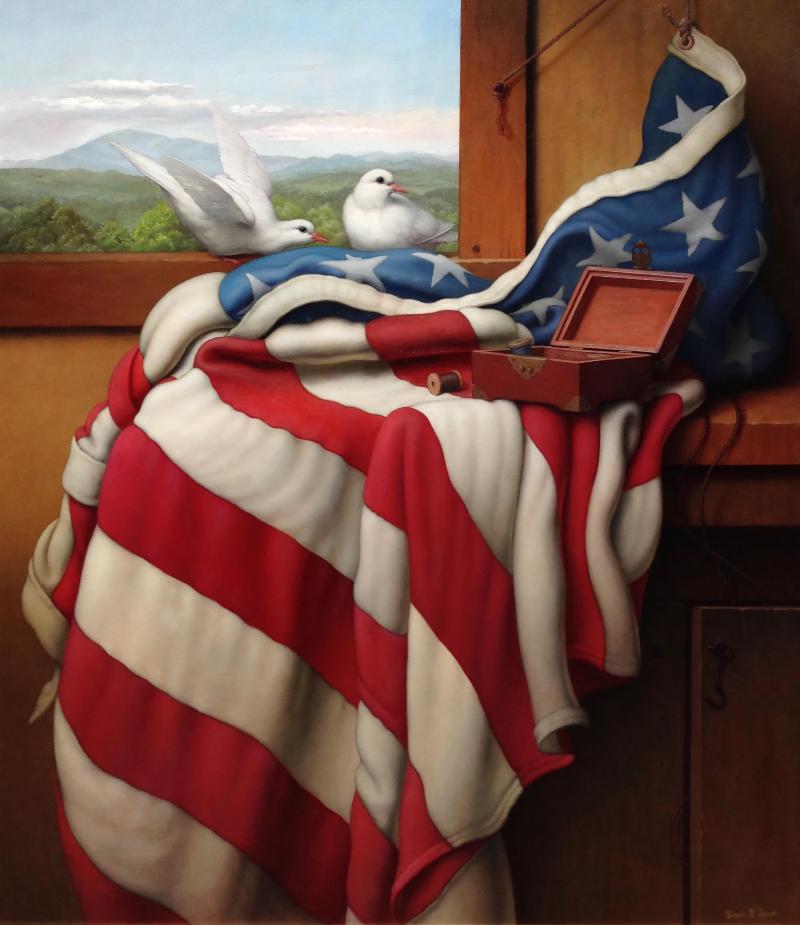
Russell Gordon
Indivisible
40x34
|
|
Ancient Romans got their vermilion from the greatest mercury mine in the classical world – Almaden, south of Madrid. Two thousand years later it is still the world’s most productive mercury mine. The search for a perfect and steadfast red continues today. Many artificial chemical reds are now produced, along with traditional vermilion (which can fetch $400 a tube).
|
|
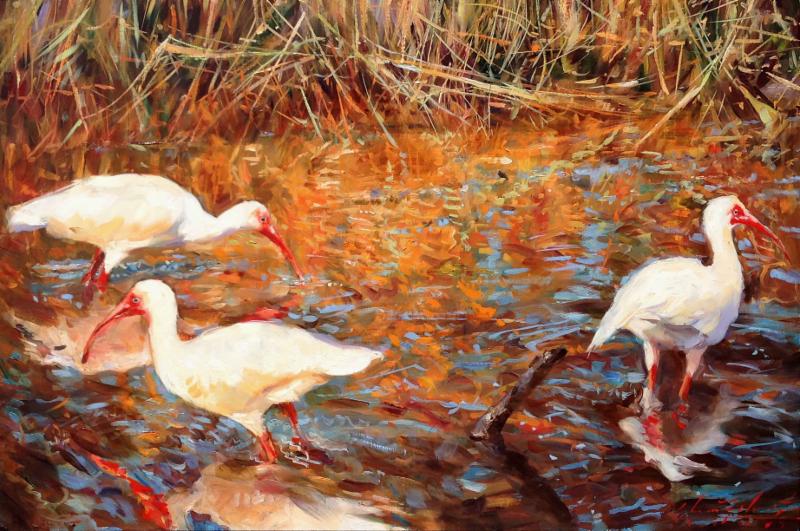
Glenn Harrington
Kiawah Ibis
20x30
|
|
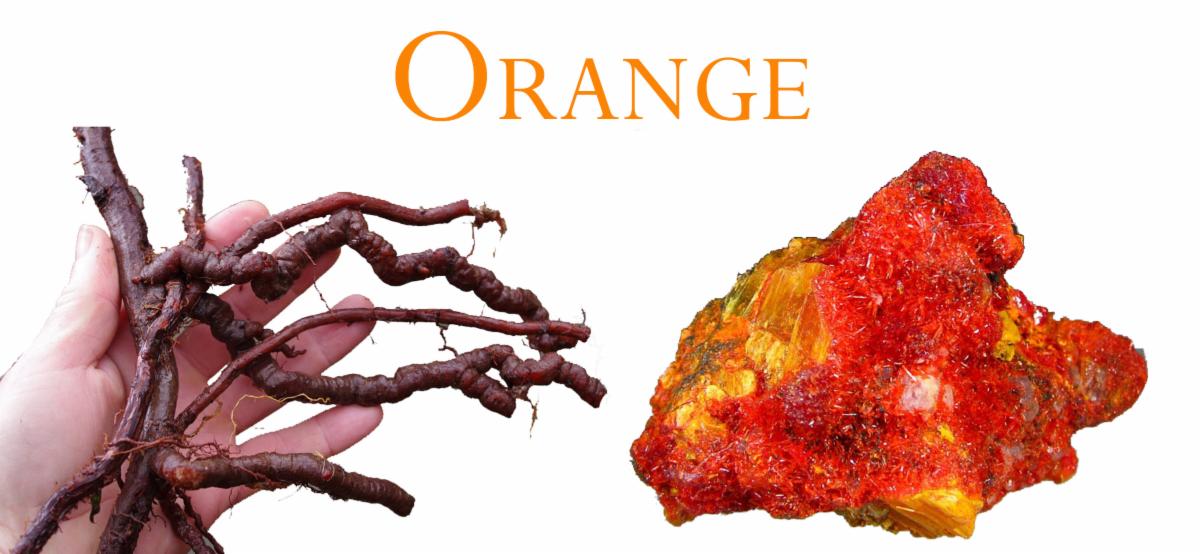
For hundreds of years the only pure orange pigments available were realgar and orpiment, two arsenic-based compounds that were highly toxic. Orpiment, because of its brilliant hue, was highly sought after by alchemists, who thought it might be a means of making gold.
|
|
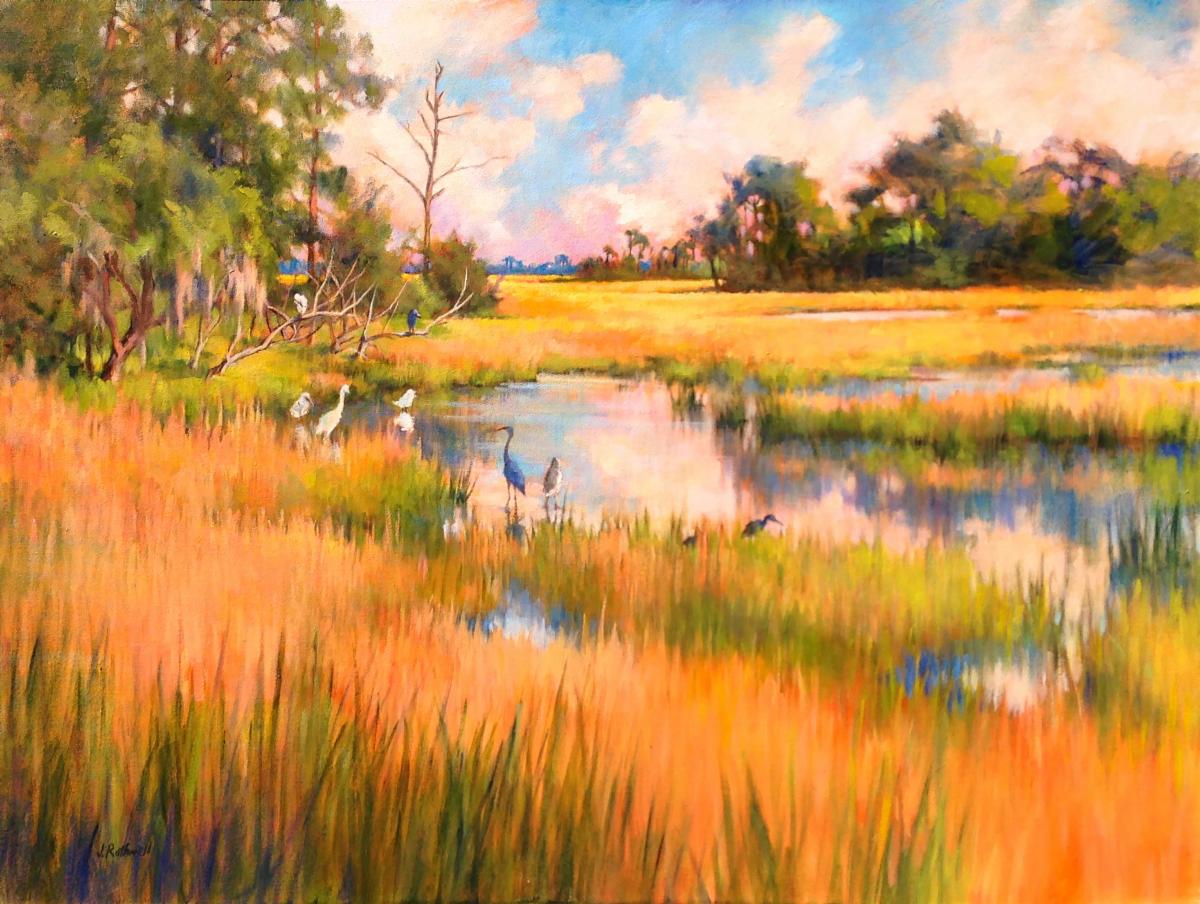
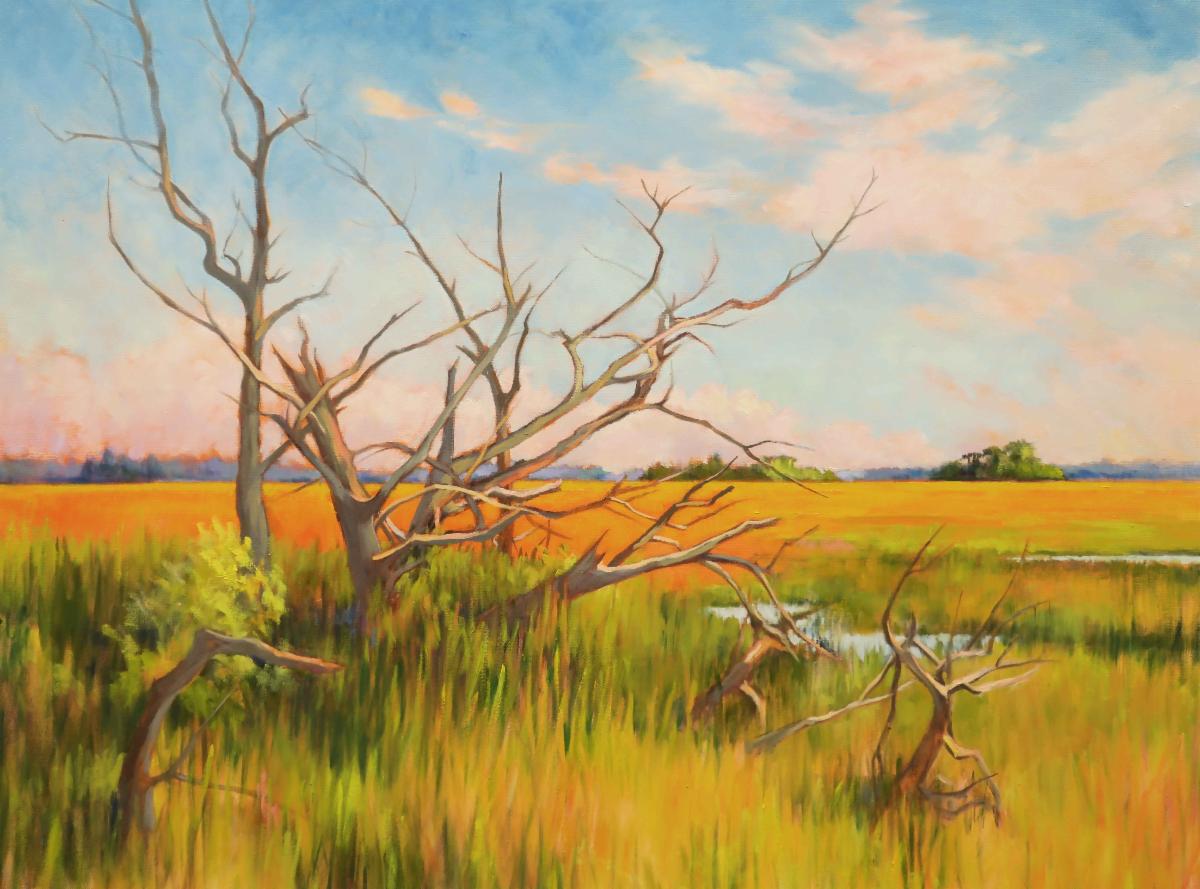
Junko Ono Rothwell
Morning Gathering at Marsh Island Park
30x40
|
|
The 1800s coincided with the arrival of a new synthetic orange pigment, “chrome orange,” made from the mineral crocoite. The advent of chrome orange allowed painters to use the color more widely. It was crucial to the Impressionists, who loved the brilliant shade.
|
|
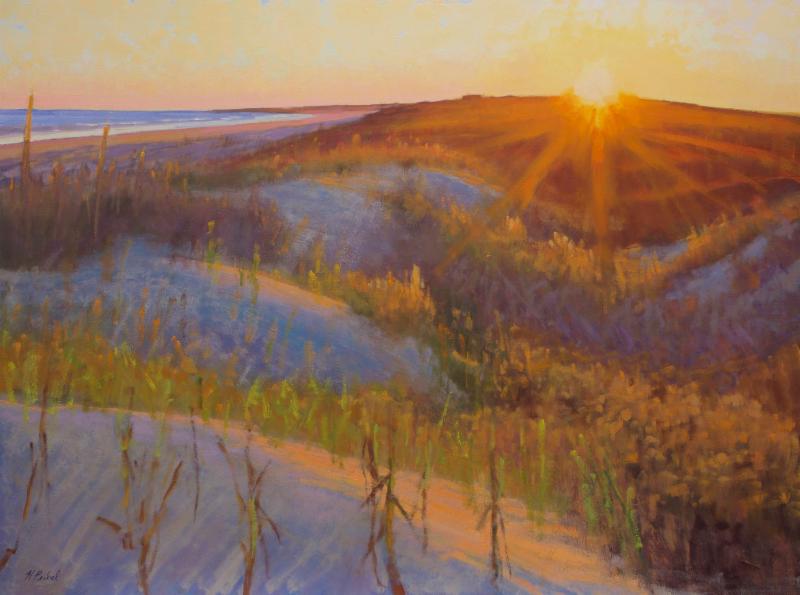
Michael Reibel
West Beach Sunrise, Kiawah
36x48
|
|
The richest oranges and reds are from the pink root of the rubia tree, called madder –
Rubia tinctorum
– in its root form it is the thickness of a pencil but much longer. So long in fact that in 17
th
century Holland (when the Dutch were the European leaders in madder production) farmers were legally required to harvest their madder crop so the roots didn’t grow too long and penetrate the dykes and cause flooding. The artist would dry the roots in the sun and then pound them with a mortar and pestle. The first pounding would separate the cheap madder, the second would be the average grade, and the third pounding would powder the heart of the madder root, the finest grade, which the Dutch would call “krap” and the English would adapt to “crop”.
|
|
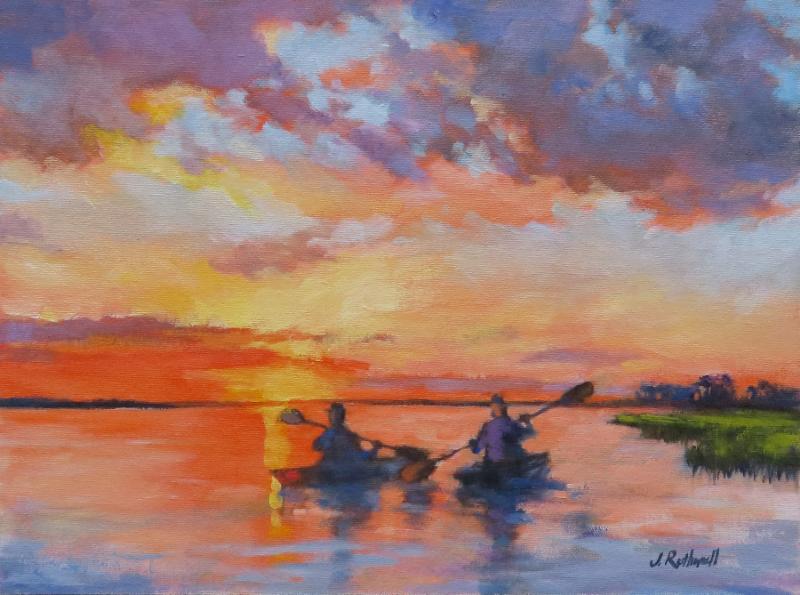
Junko Ono Rothwell
Morning Kayaking
12x16
|
|
Madder provides many shades of warmth to the artist’s palette, but it is as unpredictable as carmine. A famous example of this is found in a painting by Vincent Van Gogh. Van Gogh purchased paints from the colorman Julien Tanguy (of whom he painted three portraits). They had a turbulent friendship which may have been strained on occasion by the quality of paint he provided Van Gogh who often complained about their quality – and for good reason. One of the most popular paintings at Washington’s National Gallery is Van Gogh’s “White Roses”. It was only in the late 1990s it was realized that the painting contained traces of the color Madder Red, and that the roses had originally been pink.
Today, madder is synonymous with pink colors. The pink comes from putting the madder through a pressurized filtration system. Rose Madder, originating from Iran, takes three months to prepare through this process and is notoriously expensive.
|
|
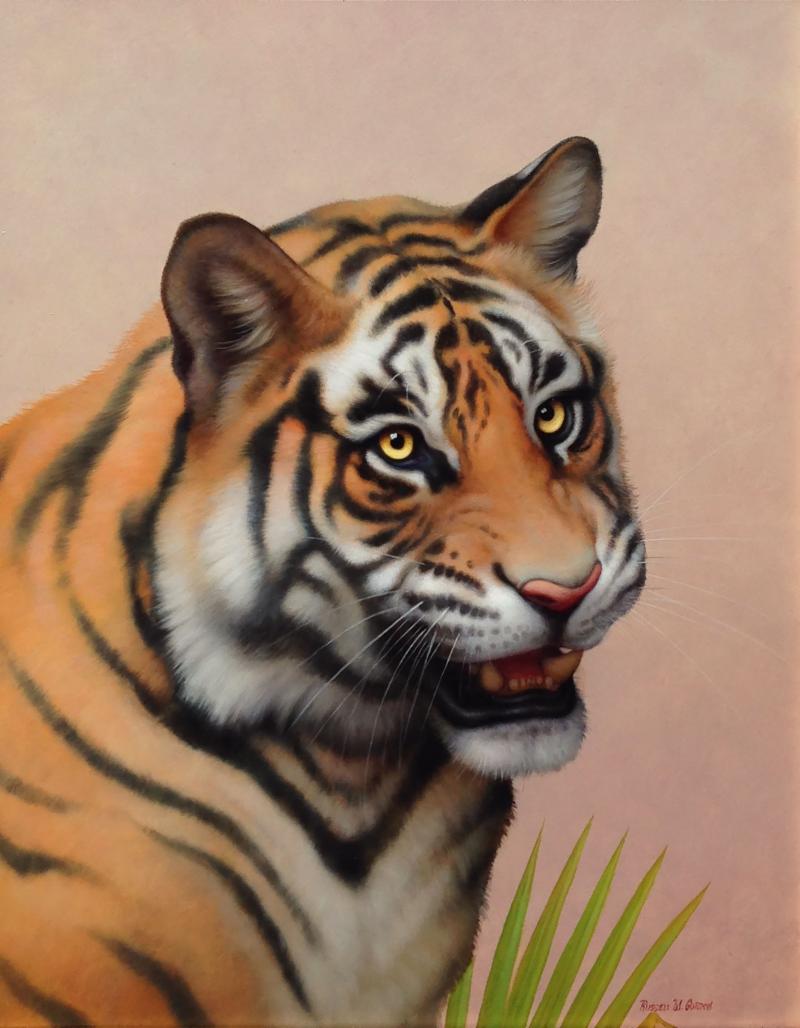
Russell Gordon
Tigress
14x11
|
|
In 1869 two German scientists found the formula for alizarin – the chemical in madder that makes it red. From then on, cheaper chemical reds and pinks were available though there has been a recent revival in the original madder reds. Synthetic dyes contain just one color, but in natural madder there is red, blue and yellow as well. It makes it softer, and more interesting. Worth the extra money spent.
|
|
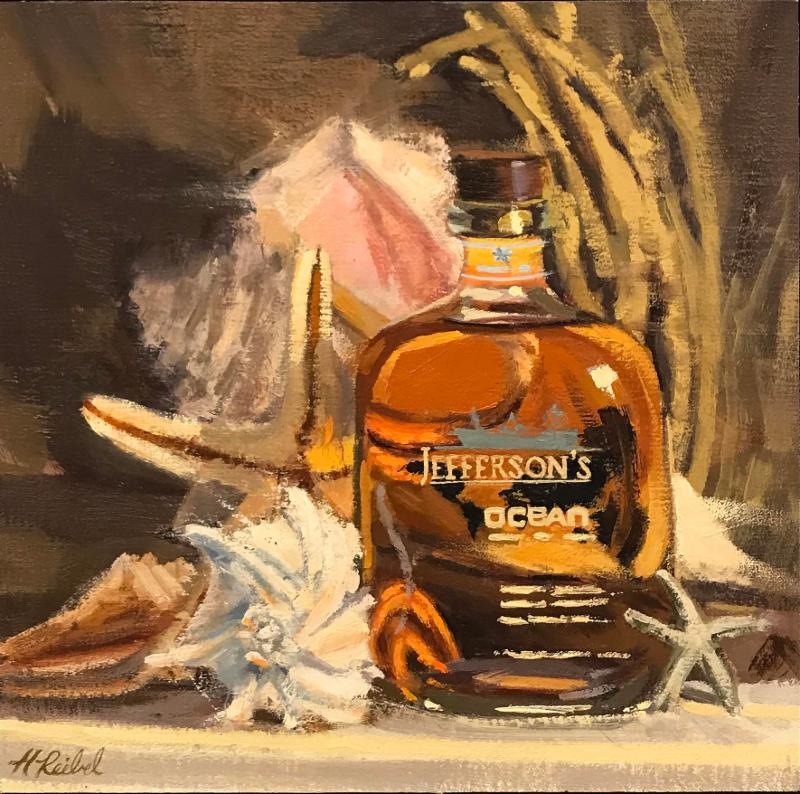
Michael Reibel
From The Sea
12x12
|
|
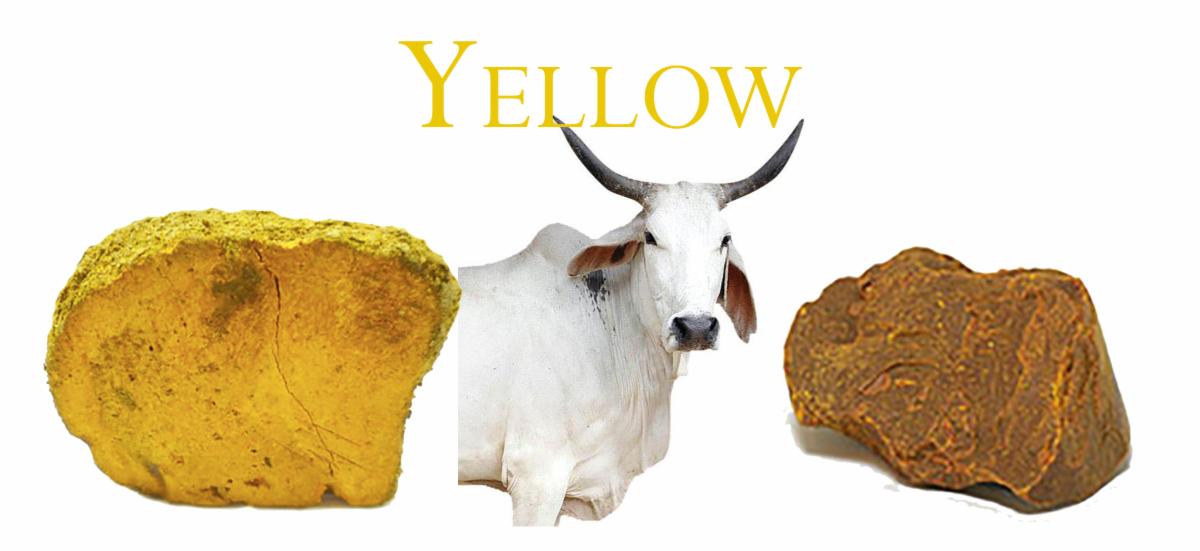
For years the ingredients of Indian Yellow were a mystery to those outside of Calcutta, until one day in 1883 a letter arrived to the Society of Arts in London from a Mr. Mukharji stating that he had been to a town called Monghyr in Bihar state and had seen it being made. He reported that Indian Yellow, also known as
piuri
, was made from the urine of cows fed nothing but mango leaves. The urine was collected in buckets and evaporated into soft, powdery, spongy lumps with a stale odor.
|
|
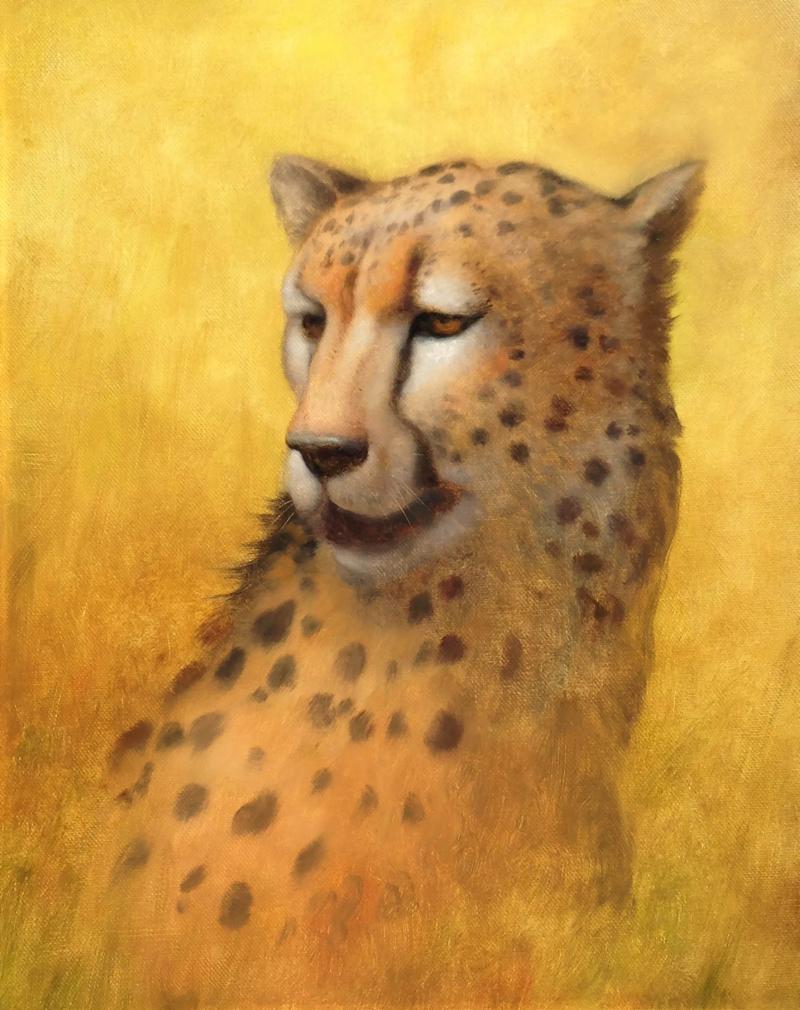
Russell Gordon
Spotted
14x11
|
|
An account of this peculiar process appears nowhere else in history but in this letter. It may be truth (after all, in the 17
th
century yellow was made from ox bile dug from the insides of the deceased animal) or it may be a myth. In any event, Indian Yellow today is derived from sulphonated acid salts.
|
|
Junko Ono Rothwell
Kiawah Marsh from Marsh Island Drive
30x40
|
|
Gamboge Yellow paint has been used in Chinese and Japanese paintings since at least the eighth century. Gamboge comes mostly from Cambodia. During the Vietnam War it was extremely difficult to export and process. It gets easily mixed with mud when exposed to high traffic (such as the foot falls of armies) and a clean piece of gamboge is called a “peacetime piece”. It looks like a brownish rock, but when slightly wetted with water it produces the brightest yellow imaginable. It is the resin of the garcinia tree. The tree is tapped, but unlike maple or rubber trees which bleed within a few minutes to hours, a garcinia tree is gashed and then the gamboge collector doesn’t come back to retrieve the resin until the following year.
To this day retrieving gamboge is extremely dangerous as many of the garcinia forests are littered with landmines. In the 1970s and 1980s, one of the world’s largest paint manufacturers, Winsor and Newton, received packages of gamboge from Cambodia and Vietnam that contained exploded bullets from war. Bullets that had hit the trees and fallen into the bamboo resin collectors. It is easy to overlook the fact that many of the paint materials we take for granted come from places where people have lived through unimaginable suffering.
|
|
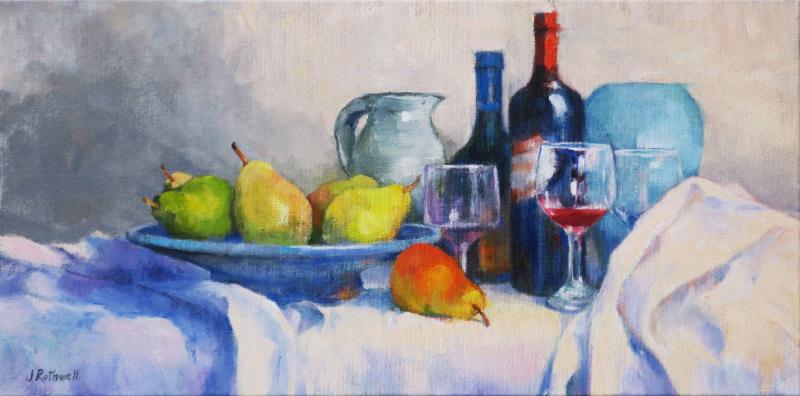
Junko Ono rothwell
Pears and Bottles
12x24
|
|
Gamboge is deadly in another way too - it's highly poisonous.
|
|
Keep checking your Inbox for emails from Wells Gallery.
Next time we will end our 'Back to School Series' by exploring the colors Green, Blue, and Violet.
Get ready to meet the most expensive colors known to man!
|
|
Wells Gallery
1 Sanctuary Beach Dr.
Kiawah, SC 29455
(843)576-1290
kiawah@wellsgallery.com
www.wellsgallery.com
|
|
|
|
|
|
|