|
Backyard Conversation
Connecting Community & Conservation
| | |
Flooding and Wet Backyards | |
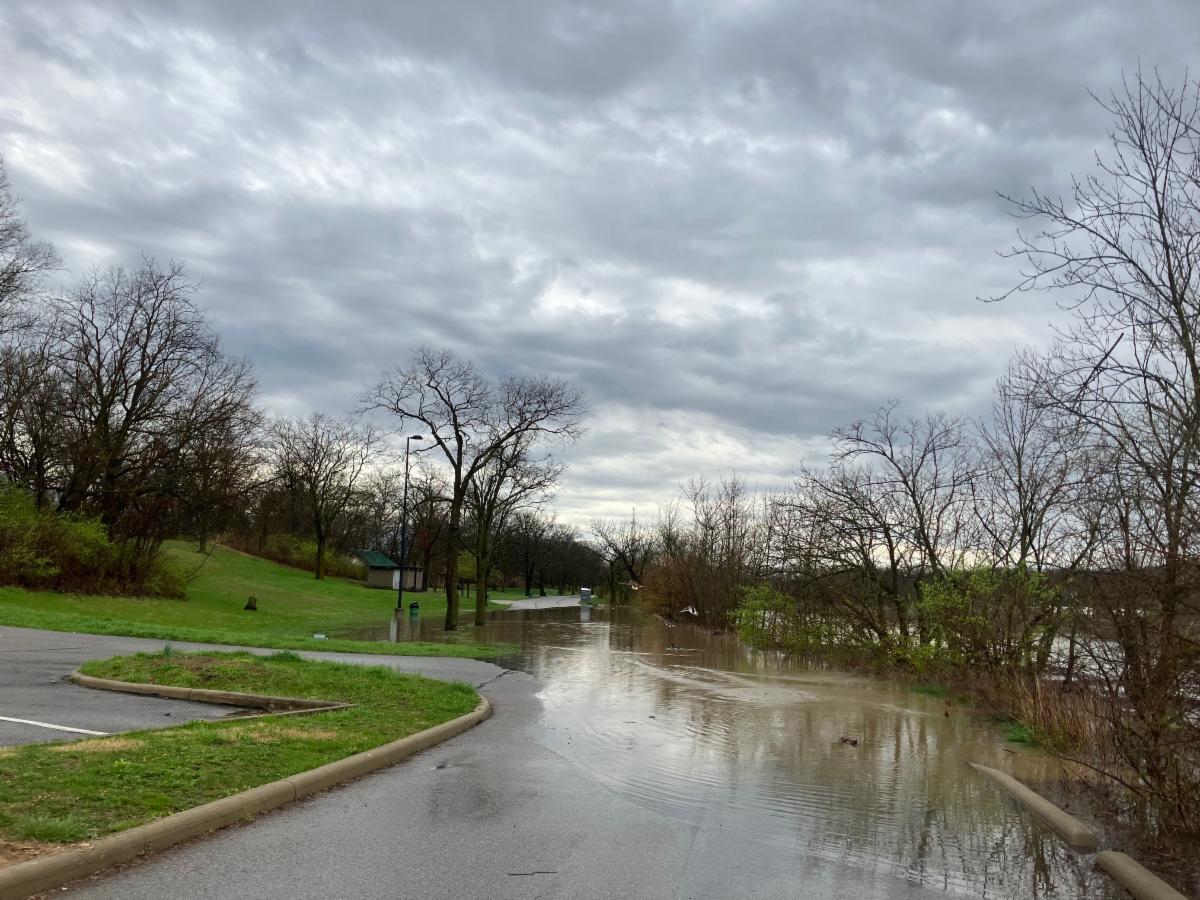
Floods are our number one hazard risk in Franklin County. A few years ago we asked Backyard Conversation readers if they had flooding in their yards and 61% responded "Yes, and I don't know how to fix it!" The truth is that, in most cases, flooding and ponding are incredible difficult to fix. Unless the water is threatening a structure like your basement or garage, the best course of action is to wait for the water to soak into the ground or move along downstream. At the end of this article, we'll talk about some practices that can help speed up these processes!
Many of us don't pay attention to the water drainage landscape around us until a large storm or blocked infrastructure causes excess water to find the natural water pathway that existed prior to development. Many streets are designed with this major flood routing built in, and homes are usually graded with drainage easements in rear and side yards to carry runoff away from houses towards collection facilities like detention ponds and catch basins. When these systems are blocked or full, excess water and overland flow will occur and may result in flooding or ponding. Simply put, the ground is just too saturated and water can't drain fast enough.
| |
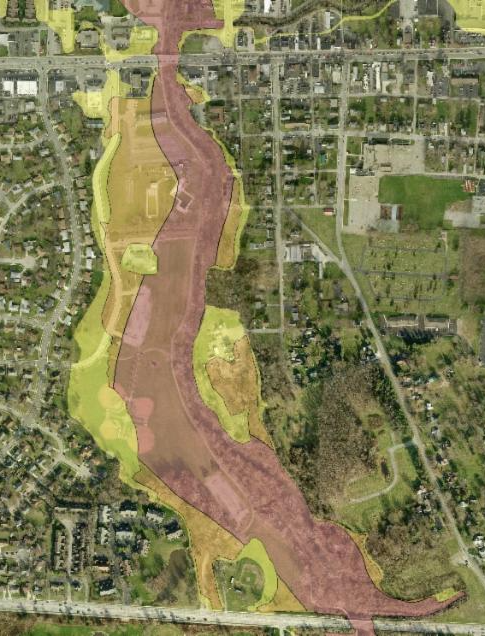
Sometimes flooding is planned for. There are many parks and even backyards in Franklin County, bordered by streams, that flood a few times each year, usually in early Spring. Planners account for these expected floods by not building flood-prone structures like basements or wooden supports where they know the water will rise. The colored areas of the map to the left denote a floodplain. Park features like baseball diamonds, open lawns and parking lots are suitable to be underwater a couple days each year while the nearby houses are constructed outside of the floodplain.
While floods can be planned for, deducing flood risk can't be done just by looking at a home. It's an important part of the homework of purchasing property to check for floodplains and water-holding soils.
Check out our video below on how to read the FEMA Flood Map and Web Soil Survey to help predict how water may behave on your property.
| |
There are activities we can do on our own properties to reduce the impacts of flooding. When enough people participate, these small actions have significant cumulative effects!
- Keep debris off of the streets and out of storm drains.
- Plant trees that capture rainfall with their leaves and help rainwater infiltrate into the soil.
-
Planting a tree that can handle periodic wet periods in a depression and directing downspout runoff there enhances the stormwater impact of that tree, allowing it to function like the native plants in a rain garden.
- Install a rain garden.
- Plant deep-rooted, native plants in areas around your property, especially where water tends to runoff your lot.
- Protect bare soil from erosion with vegetation and/or mulch.
- Replace hard, impermeable surfaces (e.g. cement or asphalt) with more permeable surfaces (e.g. pavers, mulch, stepping stones or crushed rock).
- Put in and use rain barrels. Make sure you empty it before rain storms!
|
| |
Spread the word with Outreach Resources!
Make a social media post on the monthly topic, send an article to your HOA for their newsletter, or add info to your non-profit's website.
| | Participate in the Invasive Plant Trade In | | |
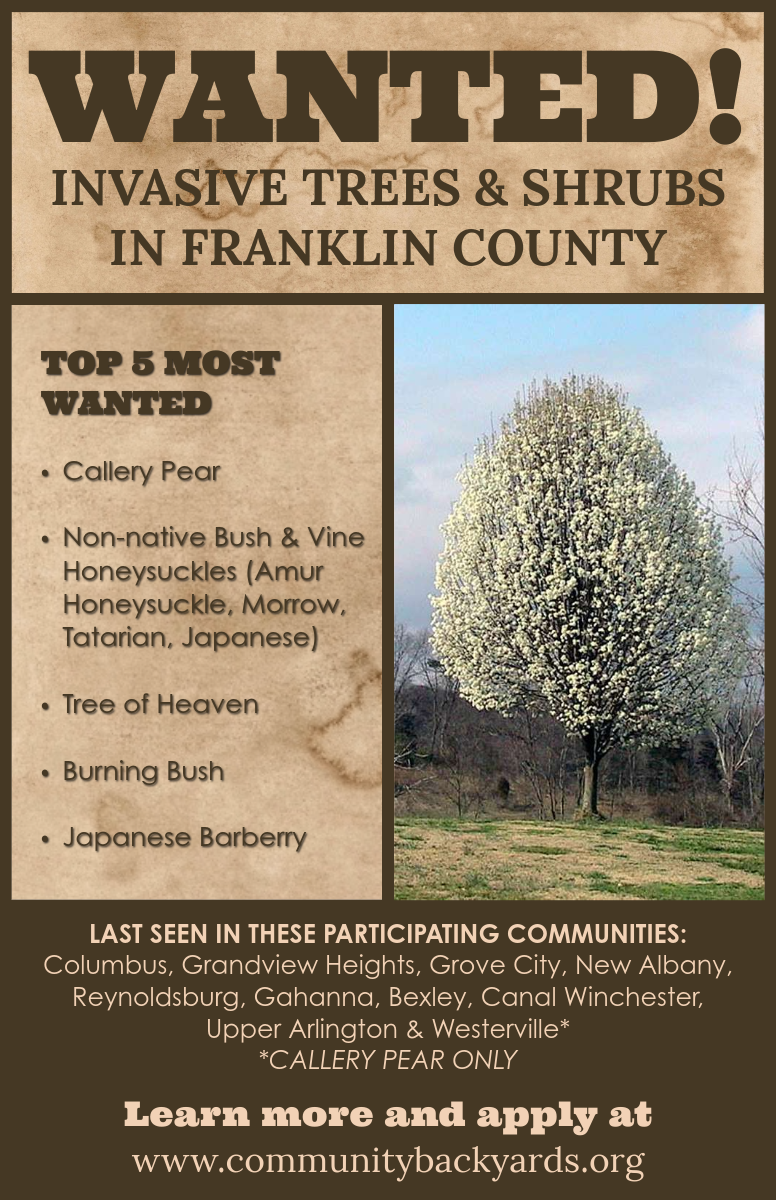
Invasive plants are non-native, aggressive plants that take over natural areas and push out native species.Since 2010, invasive species have cost North America $26 billion per year in harm. Many invasive plants spread unknowingly from home gardens to other properties and natural areas. By removing invasive plants, you are helping to slow the spread and improve our environment.
Residents of participating communities can remove an invasive tree or shrub and get a reimbursement towards replacing it with a new native tree or shrub. With this program, we want residents to learn about and remove invasive plants in our communities and encourage them to plant new native trees and shrubs instead.Thank you to the City of New Albany who helped us pilot this program in 2024. In 2026, we are excited to offer this program for another year with more participating communities!
BREAKING NEWS!: City of Columbus spots have all been filled, but City of Hilliard was just added to the program!
| | Take the Native Plant Backyard Challenge | | | | |
Grange Insurance Audubon Center's Native Plant Backyard Challenge supports Central Ohio residents in turning a part of their yard into native plant habitat, providing food and shelter for birds, pollinators, and other wildlife.
This annual program provides resources for new and returning households who would like to transform or further develop their outdoor spaces with native plants. The NPBYC includes community events, educational workshops, giveaways, and more throughout the year. The challenge works to ensure that participants become ambassadors for native plants in their community!
| | |
Multiple Dates throughout the month- Attend a Community Backyards Workshop!
Saturday April 4 - Civic Park Invasive Plant Removal
From 10am-12pm
Saturday April 11 - Upper Arlington Library Sustainability Fair
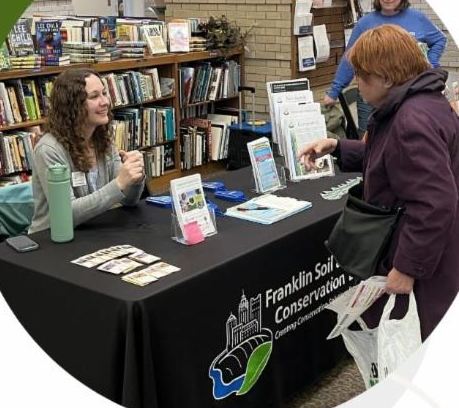
From 10am-1pm, head to the Upper Arlington Library Tremont Road Branch for the annual UA Sustainability Fair! Plus, our Public Outreach Coordinator will be doing our first Community Backyards workshop of the year at 11am.
Saturday April 18
-
Grove City EcoFest - From 9am-1pm, bring the family to Grove City Eco Fest at Town Center Park to learn the many ways to live a healthy lifestyle and make a positive impact on the environment. Lots of hands-on activities, games, farmers market, and more.
-
Seeds of Caring - Register for free for one of the two sessions, 10am-12pm or 12pm-2pm, and head to the Grange Insurance Audubon Center for activities geared towards kids ages 2-12 all about the environment, plants, and wildlife.
- Clinton Township Litter Sweep
Saturday April 25- Clinton Township Earth/Arbor Day & DEA Drug Take Back Day, 10am-2pm
Volunteer for Earth Month! Check out our latest Volunteer Newsletter to see opportunities around the county.
| | What is your favorite Ohio native plant? | | |
|
Get the Scoop from Nature Scoop
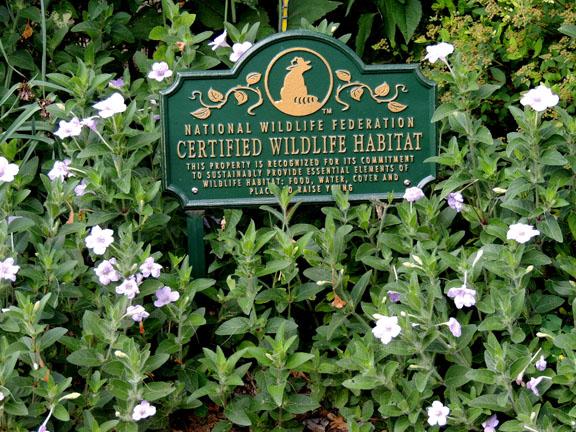
Want to learn more about backyard conservation, pollinators, and more? Read the latest edition of the monthly newsletter Nature Scoop by Toni Stahl, National Wildlife Federation Habitat Ambassador.
Nature Scoop April 2026 - https://mailchi.mp/813ee51f2d0f/nature-scoop-april-2026
Garden for Wildlife. Certify your yard. Monarch tracking on your smart phone & More!
Learn more at www.nwf.org/certify and on Twitter/X @NatureScoopOhio
| Our Company | Contact Us | FAQs | Privacy Policy |
| | | |