|
Things are heating up.
While debating the Senate’s fiscal year 2027 (FY27) budget proposal (during the week of May 18), I proclaimed that inequitable funding formulas are “banished from the Senate. And good riddance to them. May we never see them again.”
We know that one-size-fits-all budget and policy doesn’t fit western and north central Massachusetts. That’s why, as part of our seven and a half year campaign for regional equity, we’ve prioritized cracking open fossilized, bankrupt formulas that have shortchanged us for far too long. We know there's pain in local communities and we feel great urgency.
Here’s a partial list of what’s moving right now:
- In the Senate’s FY27 budget:
-
A Foundation Budget Review Commission to reform the Chapter 70 K-12 school funding formula.
-
An Unrestricted General Government Aid Commission, to reform the funding formula for state aid to municipalities.
-
A commission to consider additional state funding for school building construction.
-
A Commission to rethink the formula for PILOT payments for State-Owned Land is up and running. (More on this below.)
-
A working group to transform required local funding for K-12 schools is churning away.
There’s so much more, and I’ll find ways to fill you in on all of it. These gains can be summed up like this: When we fight, we win.
So let’s keep fighting.
Let’s get into it.
Make it to the P.S. for the best pair of socks.
Here are two tech tips based on constituent feedback:
- If the newsletter ends abruptly, look for instructions at the bottom of your screen on how to view the full message.
- If the newsletter appears without images, you may need to click “allow blocked content.”
| | TL;DR (that's a "too long; didn't read" digest) | |
-
The Senate passes the fiscal year 2027 budget.
- Fair share dollars at work.
-
The Senate sends requested documents to the Office of the State Auditor.
-
The Senate passes immigrant protection legislation.
-
Conference committees are negotiating the final version of bills that have passed the House and Senate.
-
Economic Development Secretary Eric Paley comes to Northampton.
- Pancreatic cancer awareness during National Cancer Survivors month.
- Holding utility companies accountable.
-
The Trails for All Working Group Report is now available.
-
Testimony on Mass Save.
-
Welcoming waves of constituents to the State House.
-
Grant awards galore for municipalities and organizations.
- Celebrating our veterans and remembering those who gave their lives in service of our country.
-
A massive thank you to our spring interns and fellows.
- Answering your calls to action on legislation and pressing issues.
| | Debating the Senate's fiscal year 2027 budget proposal | | |
The Senate’s FY27 budget proposal, finalized on May 21, reflects our shared commitment to meet this moment with urgency, compassion, skill, and resolve.
As residents and communities across Massachusetts face rising costs, this budget invests in food security, health care, education, and municipal support. While we cannot fully address the hardship stemming from federal cuts and federal policies, this budget protects essential services and guards against further harm.
I spoke in the Senate chamber (and recorded short videos throughout budget week, linked below) to explain how this budget, after years of sweat-equity and advocacy, makes progress on key issues:
| | |
You can also check out:
A summary of the Senate’s FY27 budget is here. With the House and Senate having approved different versions of the FY27 budget, a conference committee on which I am serving has begun to reconcile the differences before sending the final budget to Governor Maura Healey.
Local priorities
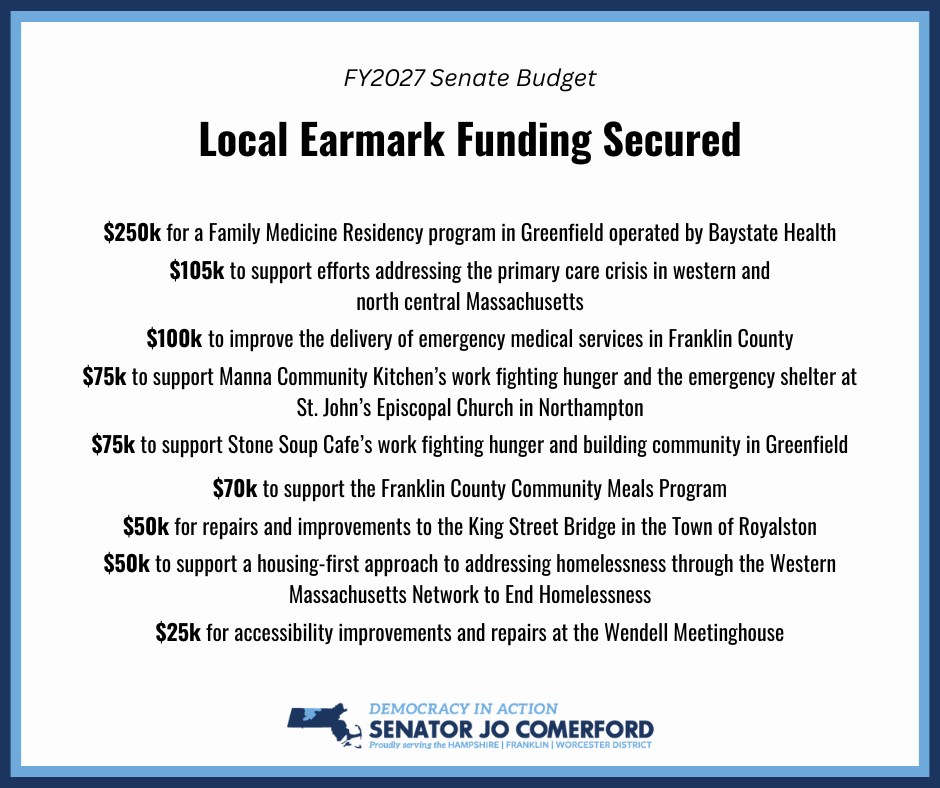
My team and I secured direct funding in the budget for programs and organizations working across our district, including:
| | Fair share dollars at work: Millions more coming to our cities, towns, and school districts | | |
Each year, our annual state budget is bolstered by billions of dollars in Fair Share (millionaire surtax) revenue.
This year, Fair Share revenue exceeded expectations, triggering a supplemental budget to fund education needs, transportation programs, and more.
I helped shape the Senate’s version of a supplemental budget. Here’s a video I made when it passed the Senate.
I remained in the work as a member of the Conference Committee that reconciled the differences between the House and Senate-passed supplemental budgets.
Here’s a snapshot of what’s in the final bill:
- $100 million for cities and towns for post-winter road maintenance and repair; with $80 million distributed using a road miles-based formula which is best for our region;
-
$27.5 million to support rural and regional school districts, implementing part of the Rural Schools bill (S.314) which I have filed since 2023 with former Representative Natalie Blais;
- $5 million for microtransit and last mile transportation;
- $3.75 million for unpaved roads; and,
- $1 million to help school districts transition to be cell phone-free. (I’m particularly grateful to advocates from Northampton who called me to support the Senate’s cell phone-free bill. I worried about the cost of implementing the bill, so I worked to get some additional funds.)
Additionally, the supplemental budget finalizes and funds nearly a dozen public employee collective bargaining agreements. (I have long supported separating public employee collective bargaining agreements from larger spending bills so that they can move more quickly.)
It also delays the implementation of the One Big [Brutal] Bill (OB3) tax cuts that threaten state revenue.
The final bill also included:
- $41.7 million for the Department of Transitional Assistance to implement recent federal eligibility changes;
- $25 million for grants to school districts for clean energy infrastructure improvements and upgrades;
- $20 million for Home Energy Assistance Program (HEAP) home energy fuel assistance benefits (supplemental funding is needed this year to backfill federal cuts);
- $12.3 million for Committee for Public Counsel Services (CPCS) court costs, including expert witness and vendor services tied to elevated caseloads;
- $10 million for scholarships and loan forgiveness initiatives to encourage students to teach in Massachusetts public schools;
- $10 million for a program to provide financial assistance to students at the UMass Chan Medical School and grow the workforce of primary care physicians in the Commonwealth; and,
- Funding for gender affirming and immigrant legal defense work.
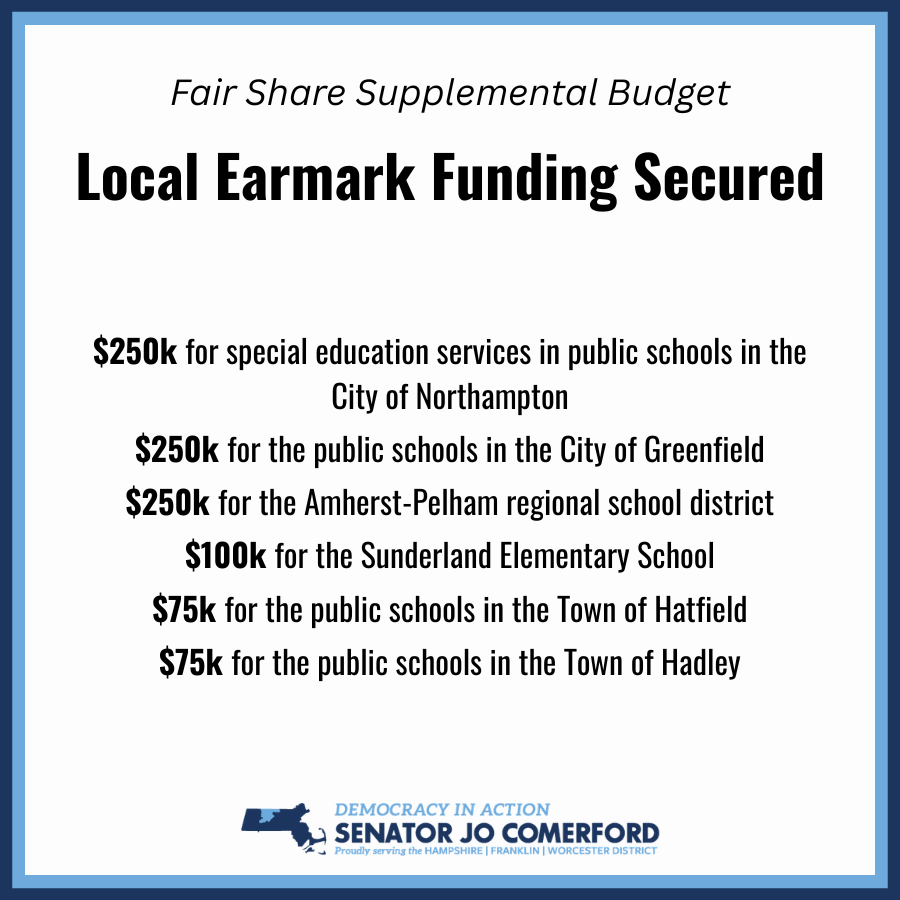
Finally, my team and I secured a handful of local wins:
| | This supplemental budget is now on the Governor's desk waiting to be signed into law. | | Responding to the Auditor | | |
On May 13, an order from the Supreme Judicial Court (SJC) provided clarity on documents being sought by the State Auditor. On May 28, the Senate passed a Resolution to provide all of those documents:
-
The Senate budget for fiscal years 2021, 2022, 2023, and 2024 (available here and here);
-
The official audit of the Senate for the same fiscal years (available here);
- A listing of all transactions related to the Senate’s balance forward line item for the above fiscal years; and,
- A list of all monetary settlement agreements entered into by the Senate with any current or former employees or elected members during the same timeframe.
As of June 1, the Senate’s documents have been sent to the State Auditor. (The House of Representatives took a different approach.)
Here’s what’s true for me:
I value a transparent, accountable, accessible, and productive state government, and I hold myself and my team to a very high bar when it comes to delivering on these values. This regular warts-and-all newsletter is one example of what I hope is deeply transparent and accountable work, as is our website (SenatorJoComerford.org) where we publish every vote I take on the Senate floor, every letter I send and piece of testimony I give, as well as a blog which details much of the work I do in the name of constituents. Our team also holds office hours, town halls, and attends many regional gatherings so that we can meet with constituents, answer questions, and be accountable for our actions.
I respect the will of the voters and was proud that the Legislature changed the rules which govern our operations in response to the overwhelming vote to support Question 1. As a part of that rules change:
- All votes on bills in joint committees are public (the Senate already makes roll call votes public);
- Testimony received by committees is public;
- Joint committees are required to advance bills more quickly — so that more bills have the chance to get to the finish line;
- Conference committee meetings are public; and,
- Joint committees must provide ten days notice for public hearings.
It's also important to understand that:
- A full accounting of money appropriated by the legislature is and has been publicly available online;
- The Senate is audited by an independent firm annually; and,
-
The Senate now has a webpage focused on transparency (I urge you to take a look): https://malegislature.gov/OpenRecords/Senate.
As we debated the Resolution, my colleague Senator Paul Feeney said, “I've learned a lot over the last couple of years, and if I had to do it over again, I probably would seek advice from the SJC [Supreme Judicial Court] initially when it was happening.”
Senator Feeney and Attorney General Andrea Campbell both recently spoke to the need to improve the state’s ballot question process by requiring that ballot questions are reviewed for constitutionality before they go on the ballot — and I agree.
The Senate’s actions strike a balance: accountability for taxpayer dollars, responsiveness to voters, respect for the Constitution and our separation of powers, and a path forward that increases productivity and transparency.
Could the legislature do more to be more transparent? Yes. And I'm ready to partner with Senate colleagues on our piece of this work.
We all know that hindsight can be a good teacher. As the situation develops further, I’m sure I’ll respond differently based on what I learned during these previous months.
| | |
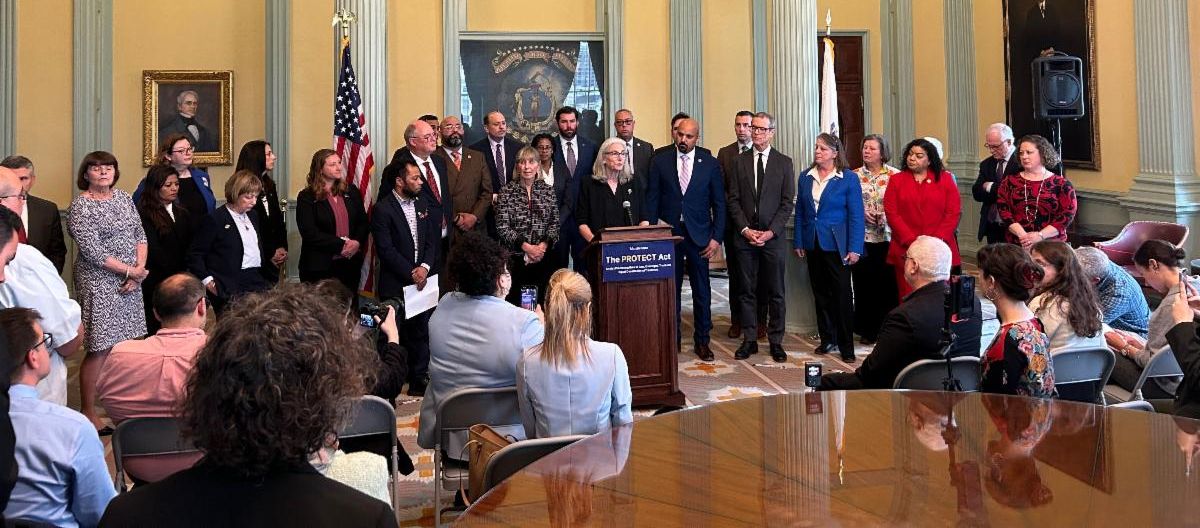
On May 7, I was proud to vote ‘YES’ on An Act Promoting Rule of Law, Oversight, Trust and Equal Constitutional Treatment, also called the PROTECT Act.
This bill safeguards the Constitutional rights of all residents, strengthens trust between immigrant communities and law enforcement, and ensures that locations like schools, hospitals, and places of worship remain safe and accessible for everyone. More details on what the Senate’s version of the bill would do can be found here.
I joined Senate colleagues and key advocates in a press conference before the vote.
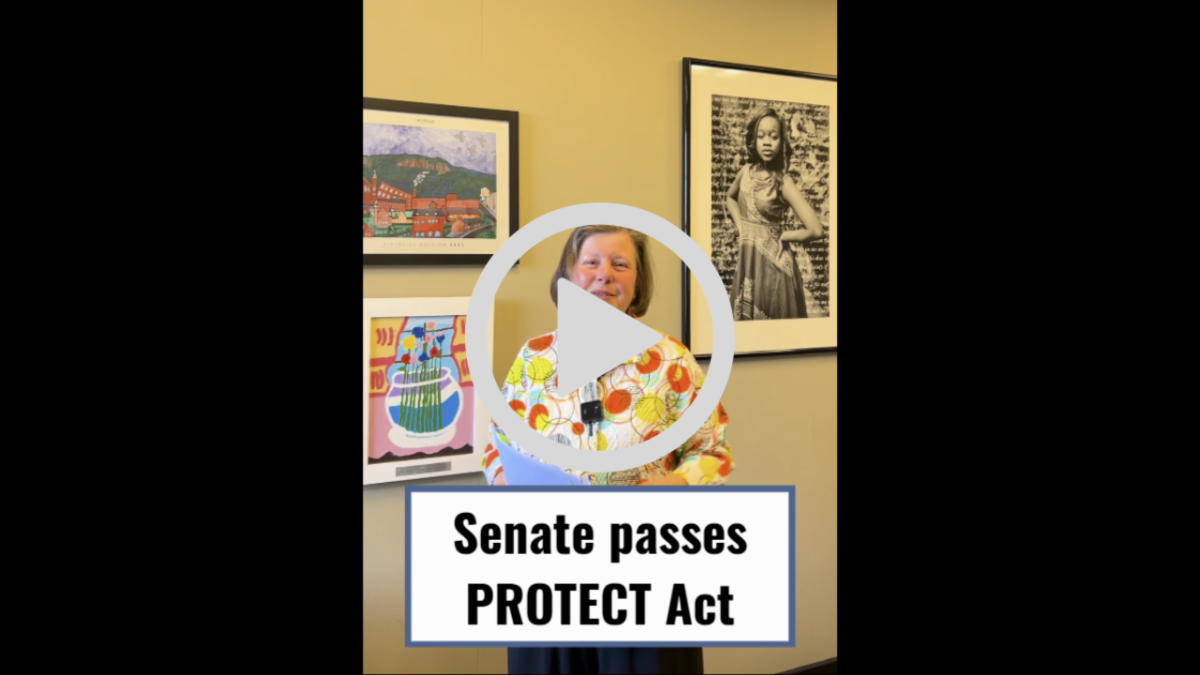
| | And in a short video, filmed while there were still cheers echoing in the State House halls, I summarized the bill and the debate: | | Conference committees are on the move | | |
We’re entering the bring-it-on-home portion of the two year (2025-2026) legislative session. A flood of bills will pass both the House and Senate in the coming two months and need to have differences reconciled before they reach the Governor’s desk.
To help you track and engage in this work, my team and I have compiled a list of the conference committees currently underway. It’s available here.
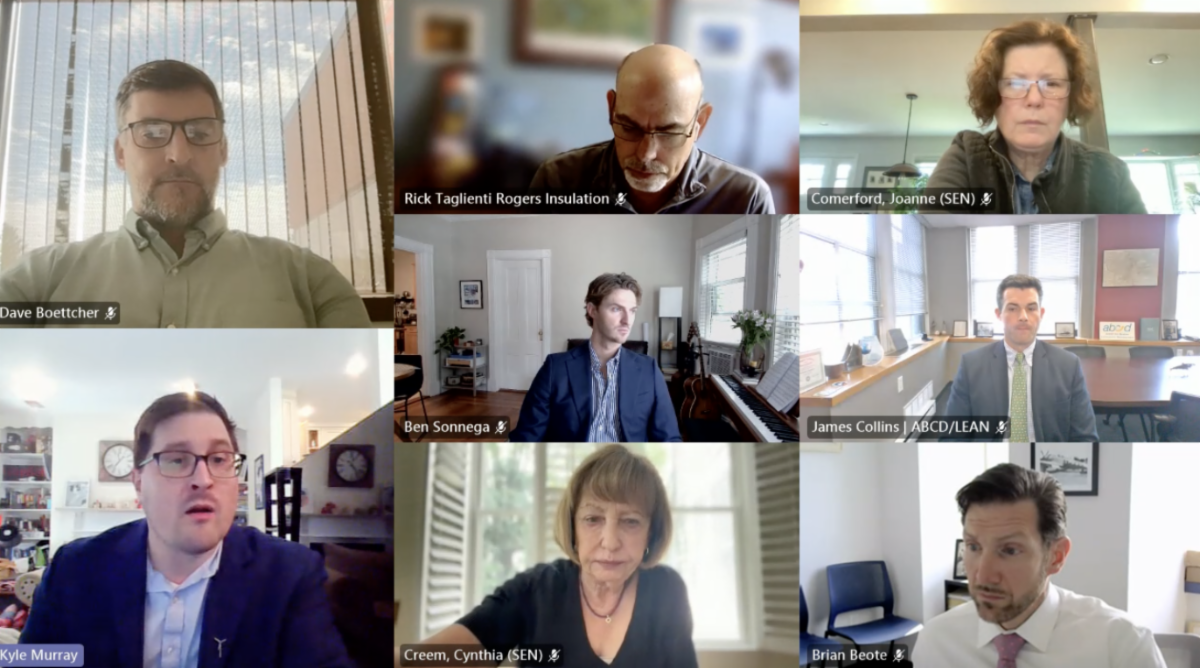
I have been appointed as Senate Chair of the conference committee on An Act to build resilient infrastructure to generate higher-ed transformation, also known as the BRIGHT Act, and I am a member of the FY27 budget conference committee. (As you read, I was also on the supplemental budget conference committee, but we have concluded our work.)
| | Economic development in Northampton | | |
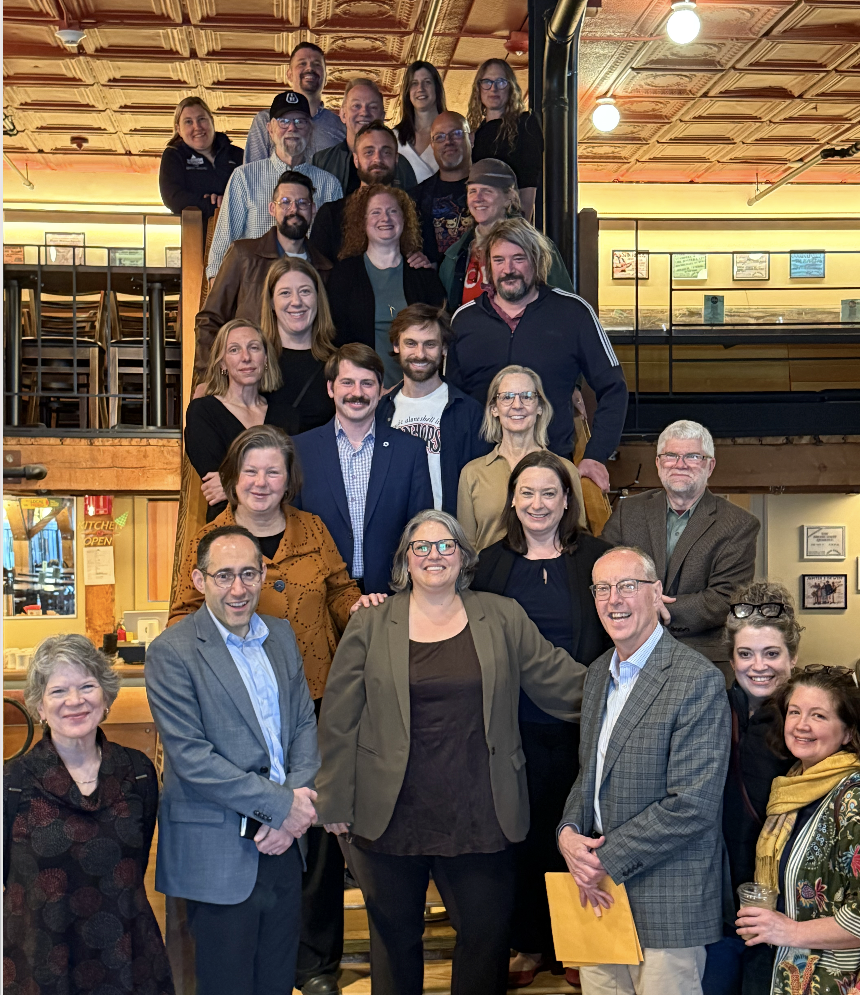
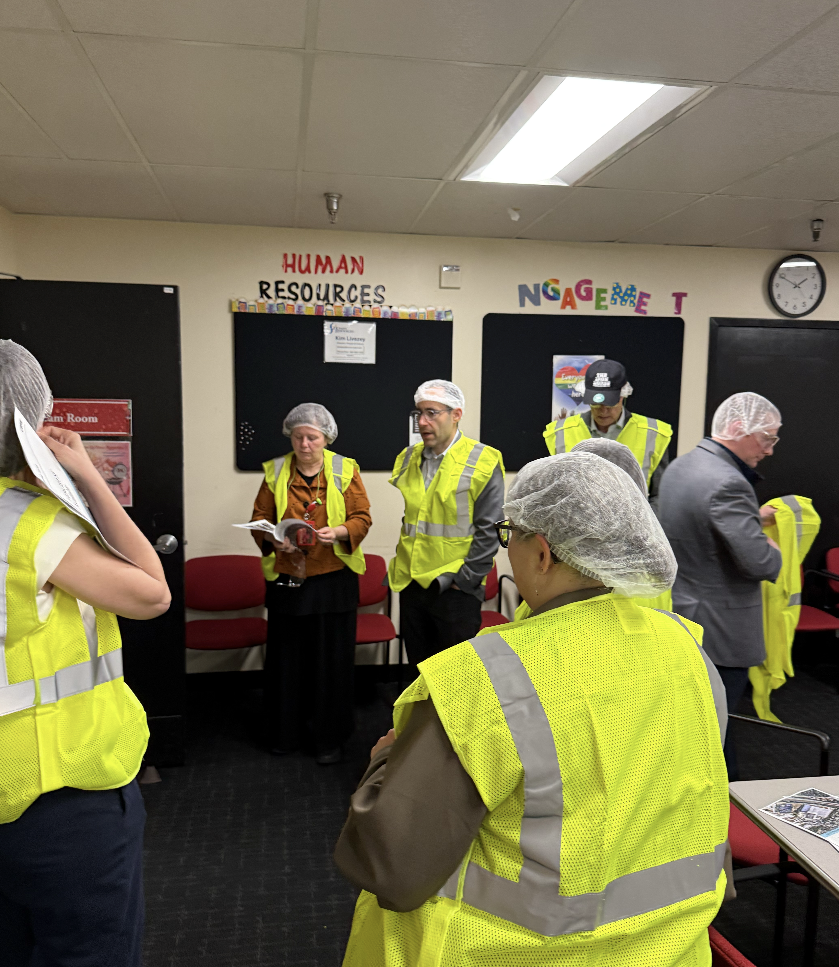
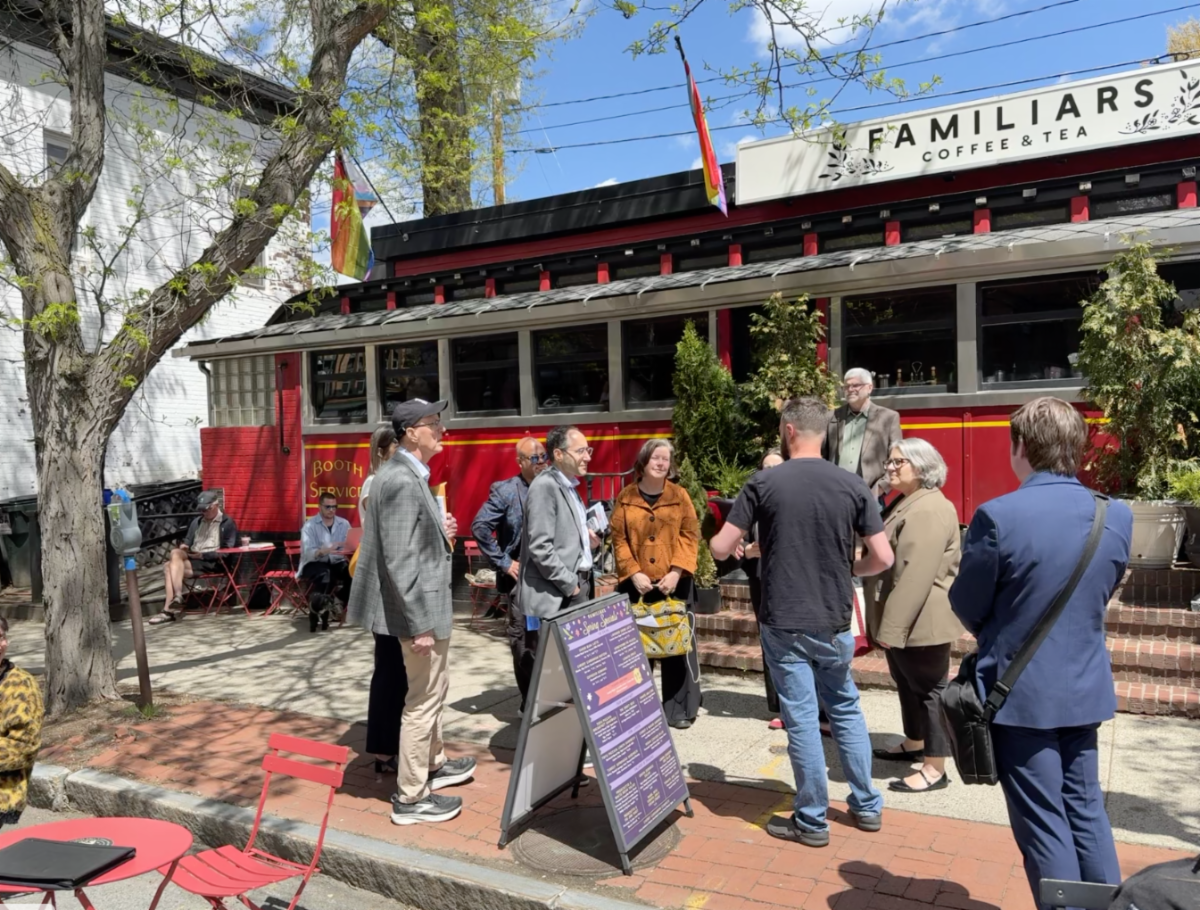
On May 1, Representative Lindsay Sabadosa, Mayor Gina-Louise Sciarra, and I welcomed Economic Development Secretary Eric Paley to Northampton for a day spent connecting with local leaders and artists at the Iron Horse Music Hall, sharing a meal at Familiars Coffee & Tea, and visiting the Coca-Cola Bottling Plant.
It was a meaningful opportunity to highlight both the challenges and the incredible promise of Northampton — and to see firsthand the impact of last session’s $4 billion Mass Leads Act, alongside the potential of the newly filed Mass Wins Act.
I’m grateful for such collaborative partnership with state and local leaders, especially during this high stakes time for our region. And I'm grateful to Secretary Paley for another day-long visit to our district. You may remember that he was previously in Franklin County and at UMass.
| | A focus on pancreatic cancer | | |
June is National Cancer Survivors Month.
Pancreatic cancer is estimated to be the second leading cause of cancer-related deaths in Massachusetts in 2026.
In 2019, my team and I served on a Special Commission to Study Pancreatic Cancer, which was created to identify areas of unmet need in pancreatic cancer prevention, diagnosis, and treatment, and to make recommendations for next steps.
Since then, I have filed legislation to implement the commission’s recommendations.
As we remember those we have lost, and recognize those who have won their battles with cancer, or are still fighting, the Commonwealth must take steps towards creating a comprehensive initiative to combat one of the deadliest cancers in our state. I am glad to see this bill moving forward in the House and grateful to Representatives Hannah Kane and Carmine Gentile for leading.
| | Holding utility companies accountable | | |
In mid-April, Representative Mindy Domb and I hosted a community meeting with Eversource officials regarding its Transmission Right-of-Way Reliability Project, which affects 29.3 miles of transmission lines through Northfield, Erving, Wendell, Montague, Leverett, Shutesbury, Pelham, Belchertown, Amherst, Granby, and Ludlow.
I received an email from a constituent in response saying that National Grid also needs to be held accountable. National Grid is engaged in a similar project impacting 67 miles including in the communities of Deerfield, Sunderland, Leverett, Shutesbury, and Pelham. We are similarly engaging in this Central to Western Massachusetts Energy Improvement Project and making sure constituents and municipalities have the ability to engage robustly.
In addition, we’re holding utilities accountable by:
- Limiting the profits that they can earn off ratepayers;
- Limiting what they can charge to “interconnect” solar to the electricity grid; and,
- Preventing ratepayer dollars from being spent on fossil fuel infrastructure that we can’t afford (in any way) to use.
I expect the Senate will take up energy affordability legislation this month to build on and further these goals.
| | Trails for All Working Group Report is now available | | |
In 2023, I filed legislation to improve trail accessibility, promote inclusive outdoor experiences, and advance effective access policies. Building on that effort, in 2024, Governor Healey launched the Trails for All Initiative and convened a Trail Access Working Group of state agencies, disability advocates, and conservation organizations.
The working group recently released its final report: Trails for All: Expanding Access to Nature Across Massachusetts.
This report lays out a clear, actionable roadmap to close the gap between the 49% of Massachusetts residents who would benefit from accessible trails and the less than 0.5% of public trails that are currently accessible.
I’m encouraged to see this report and grateful for the $10 million investment proposed in the Senate’s environmental bond bill (passed earlier this spring), which will help implement these recommendations across the Commonwealth.
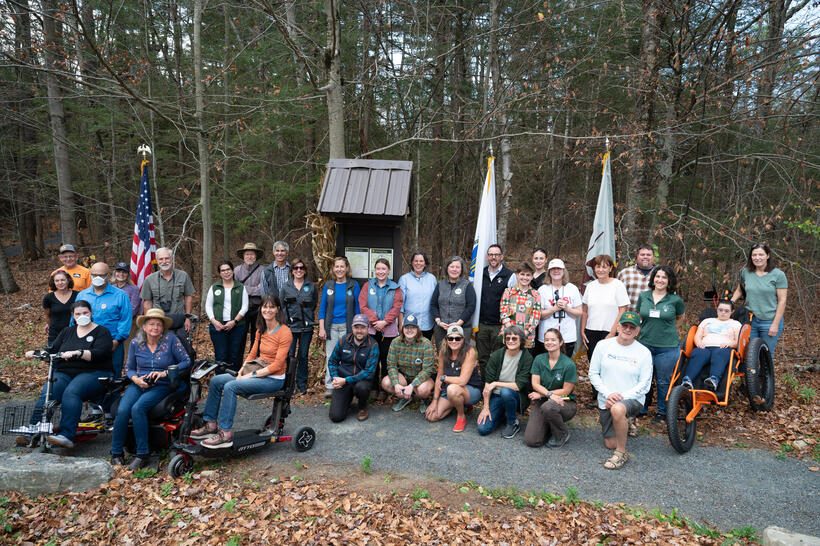
Bravo to the Trail Access Working Group members. Many are pictured below (I’m in the middle in the back) at the launch of this work, along with a galvanizing logo created by organizers. It’s because of your advocacy that I engaged and it’s because of your expertise that we’re gaining significant momentum.
| | |
On Wednesday, May 27, I joined Senate members of the Global Warming and Climate Change Committee in a hearing relative to Mass Save.
Over the course of the hearing, we heard from experts about the cost savings for participants and the wider community, the boost to small businesses, and the overall climate benefits of the program.
| | Speaking to hearts and minds: Constituents in the State House | | |
My team and I welcomed waves of constituents to the State House over the past weeks who advocated on a range of important issues.
Speaking with nurses
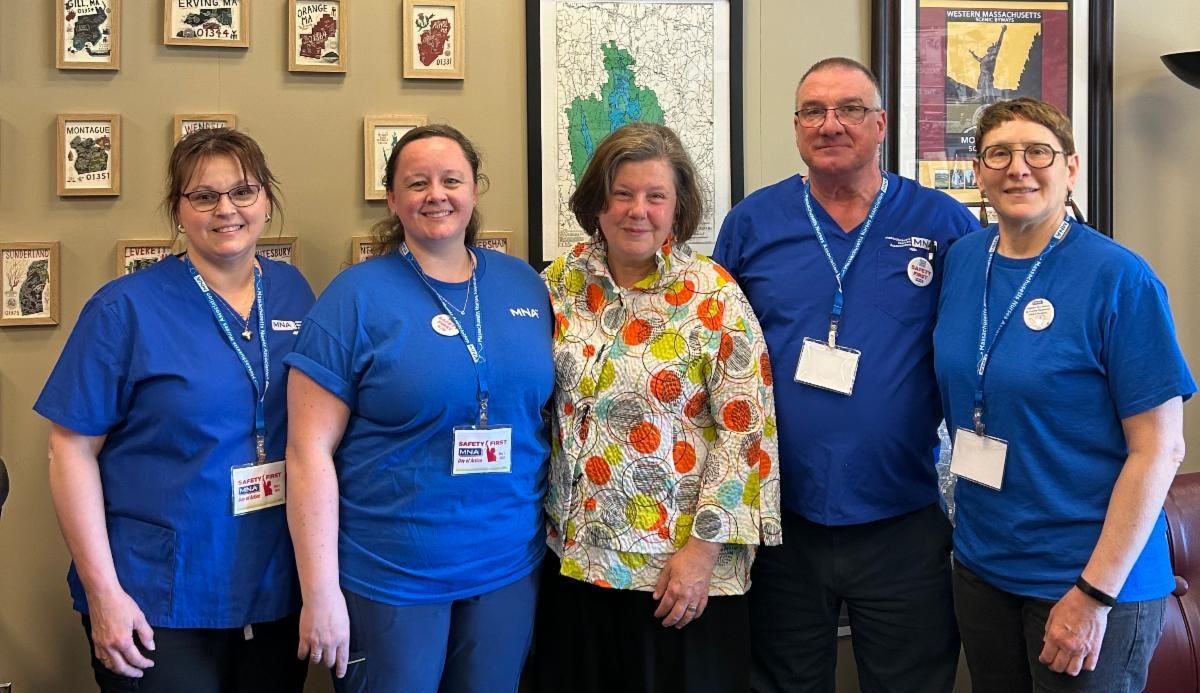
On May 5, my team and I met with nurses from across the Hampshire, Franklin, Worcester district as part of the Massachusetts Nurses Association’s Day of Action at the State House.
We spoke about An Act requiring health care employers to develop and implement programs to prevent workplace violence (S.1718) — legislation I co-sponsor in the Senate. Hearing directly from these nurses about the violence they and their colleagues have endured was both powerful and deeply troubling. Their stories underscore the urgent need for action, and I remain committed to working with my Senate colleagues to advance this bill to a vote.
| | |
The Caring Force
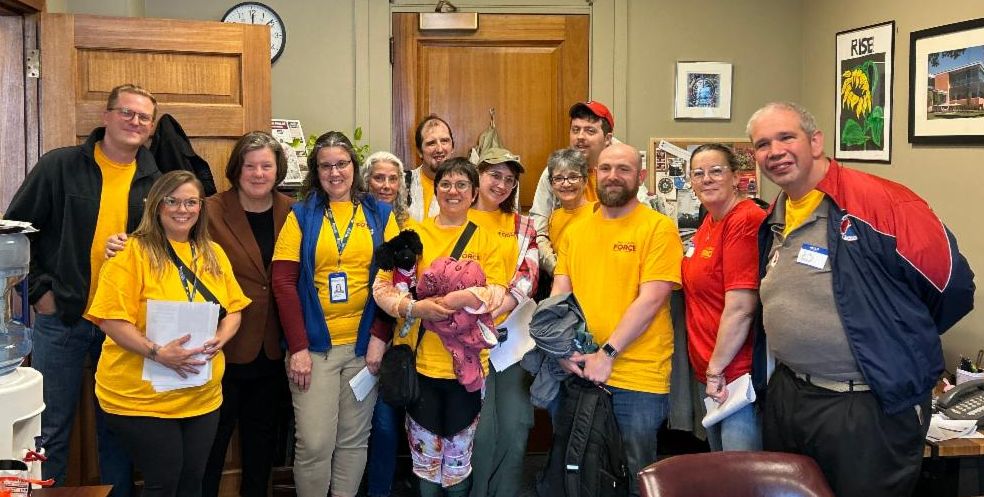
On May 13, I met with a group from Riverside Industries as part of the annual Caring Force Rally Day, focused on human services caregivers and providers. I was glad to have an important conversation regarding my support for human services providers and where the state can invest further.
| | |
Hadley grass for everyone!
On May 20, I joined Representative Homar Gómez and an incredible group of third-grade students from Hadley Elementary School to testify in support of designating asparagus, also known as “Hadley Grass,” as the vegetable of the Commonwealth.
These young leaders are unstoppable. Watch our testimony below.
| | |
Economic development in Franklin County
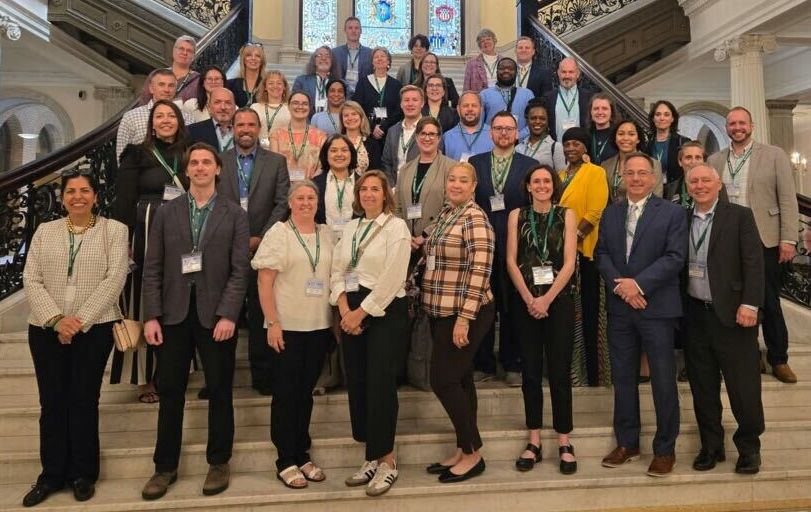
On June 3, thanks to Greenfield Savings Bank, 50+ economic development and cultural leaders from across Franklin County came to the State House for conversations with their representatives, Economic Development Secretary Paley, Housing and Livable Communities Secretary Juana Matias, and more.
They spoke about the challenges they are facing in Franklin County, shared innovative ideas and solutions, and discussed possible investments from the state to support regional and economic development.
I was glad to help host them for the third year in a row with Representatives Susannah Whipps, Aaron Saunders, Homar Gómez, Mindy Domb, and Lindsay Sabadosa.
| | |
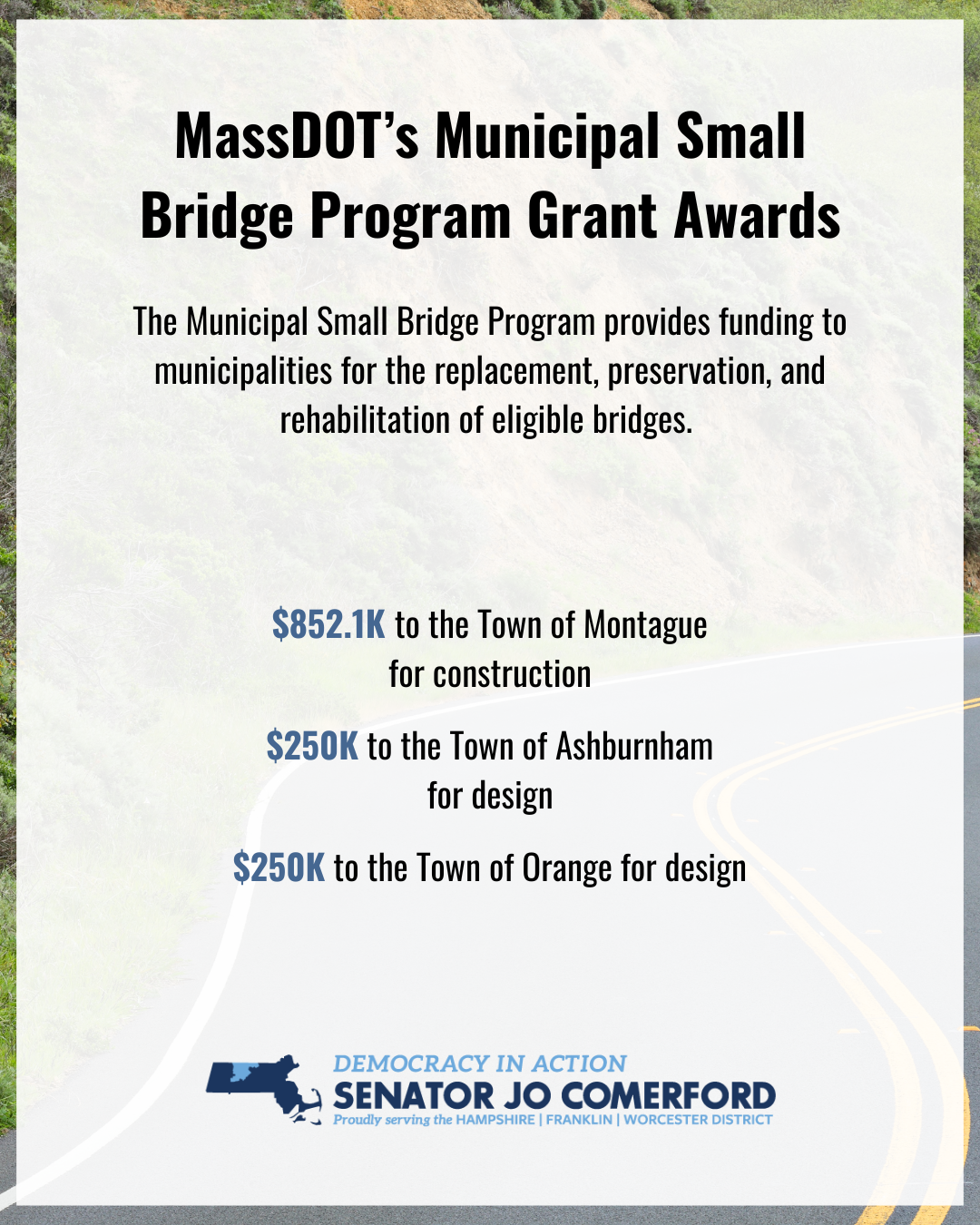
What do the Friends of North Leverett Sawmill, the Franklin County Fairgrounds, and a small bridge in Ashburnham have in common? State grants are headed their way.
I advocate for these grant programs and many others to be funded in state budgets, and then my team and I advocate for the grant applications submitted by constituents and municipalities.
(I don’t list all of the grants coming into the district, but I hope flagging a few helps show how our tax dollars are being used for so many significant and positive projects across our district.)
Cultural Facilities Fund grants
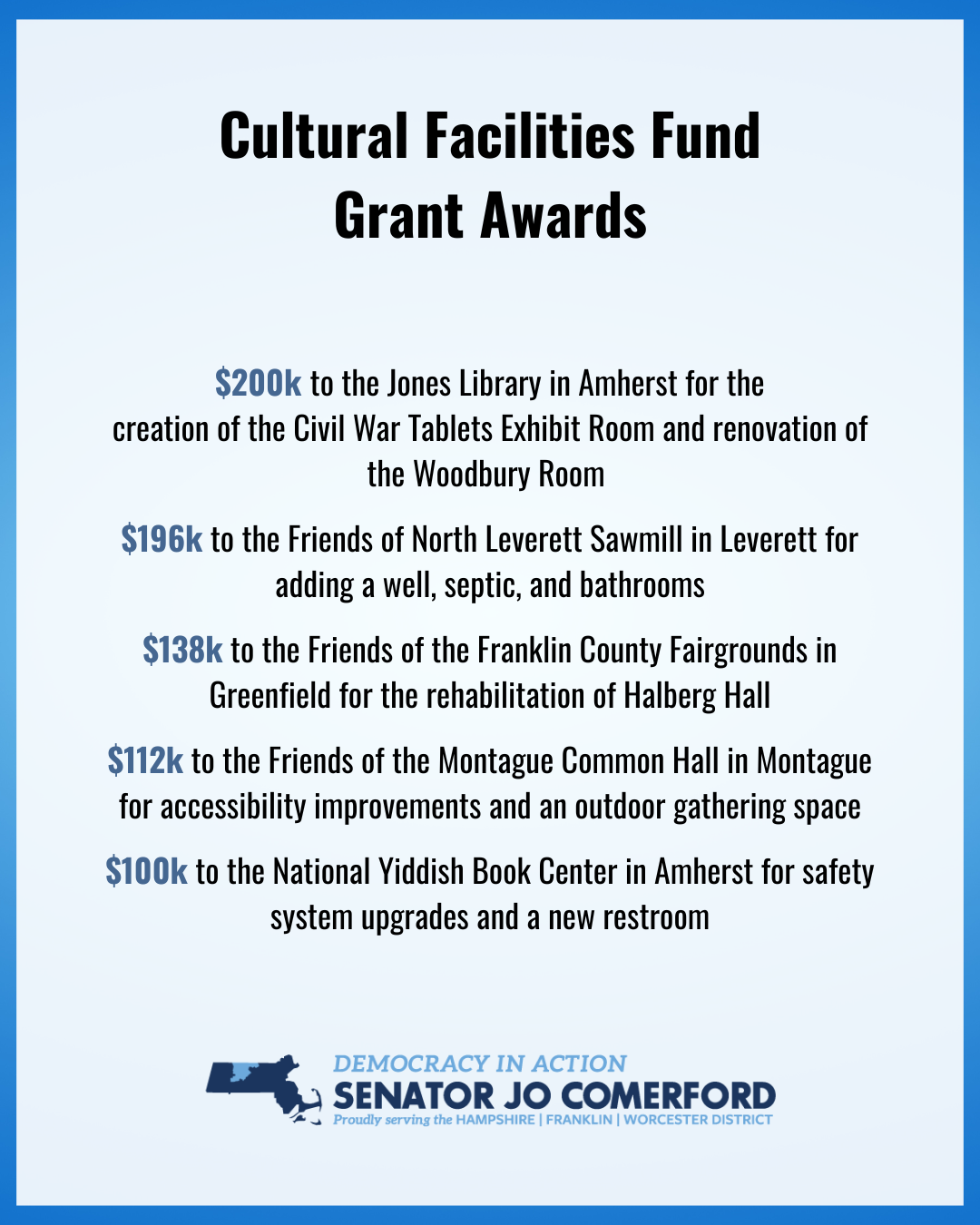
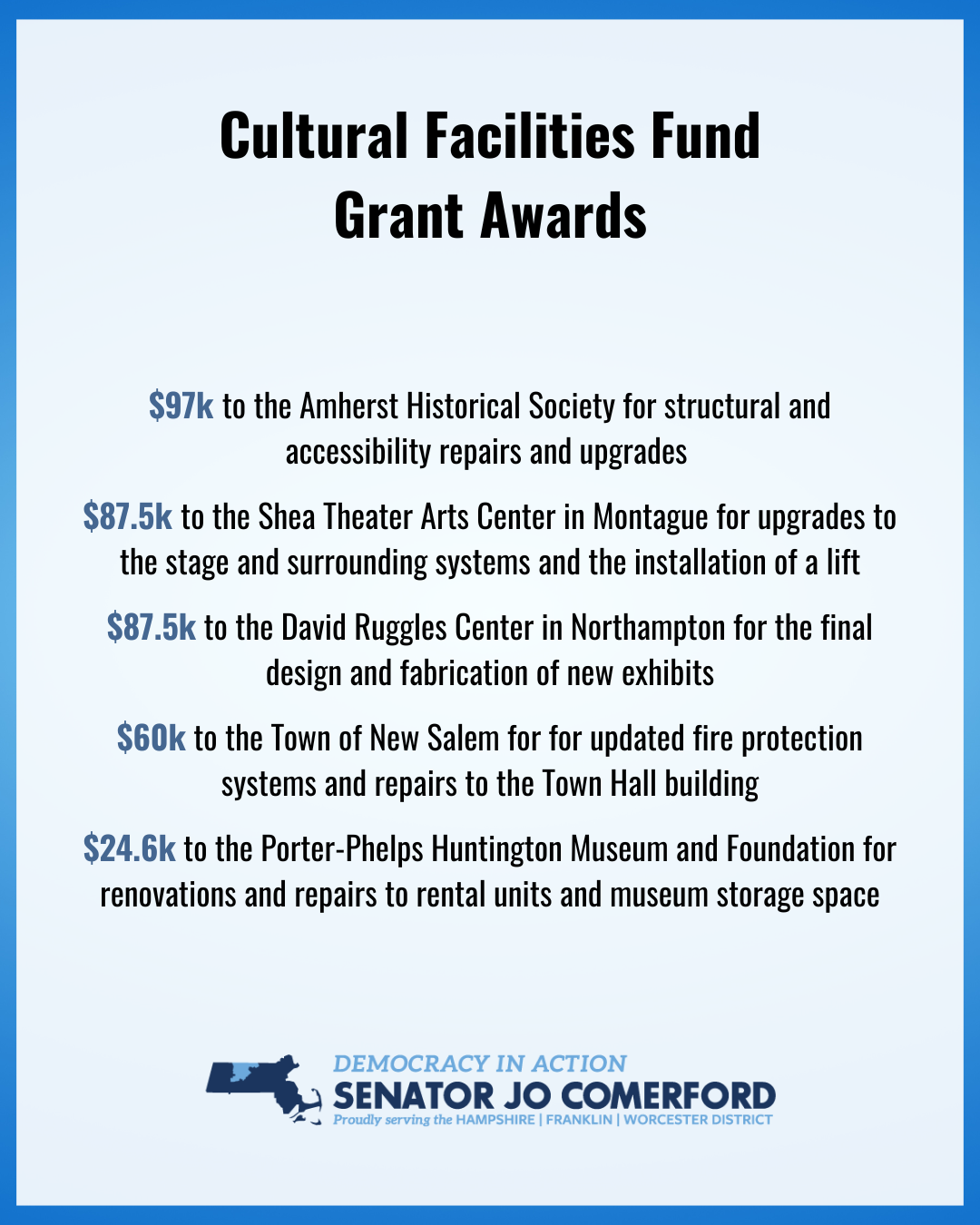
Over $1 million is coming to the Hampshire, Franklin, Worcester district through the Cultural Facilities Fund grant program, facilitated by Mass Cultural Council and MassDevelopment.
| | |
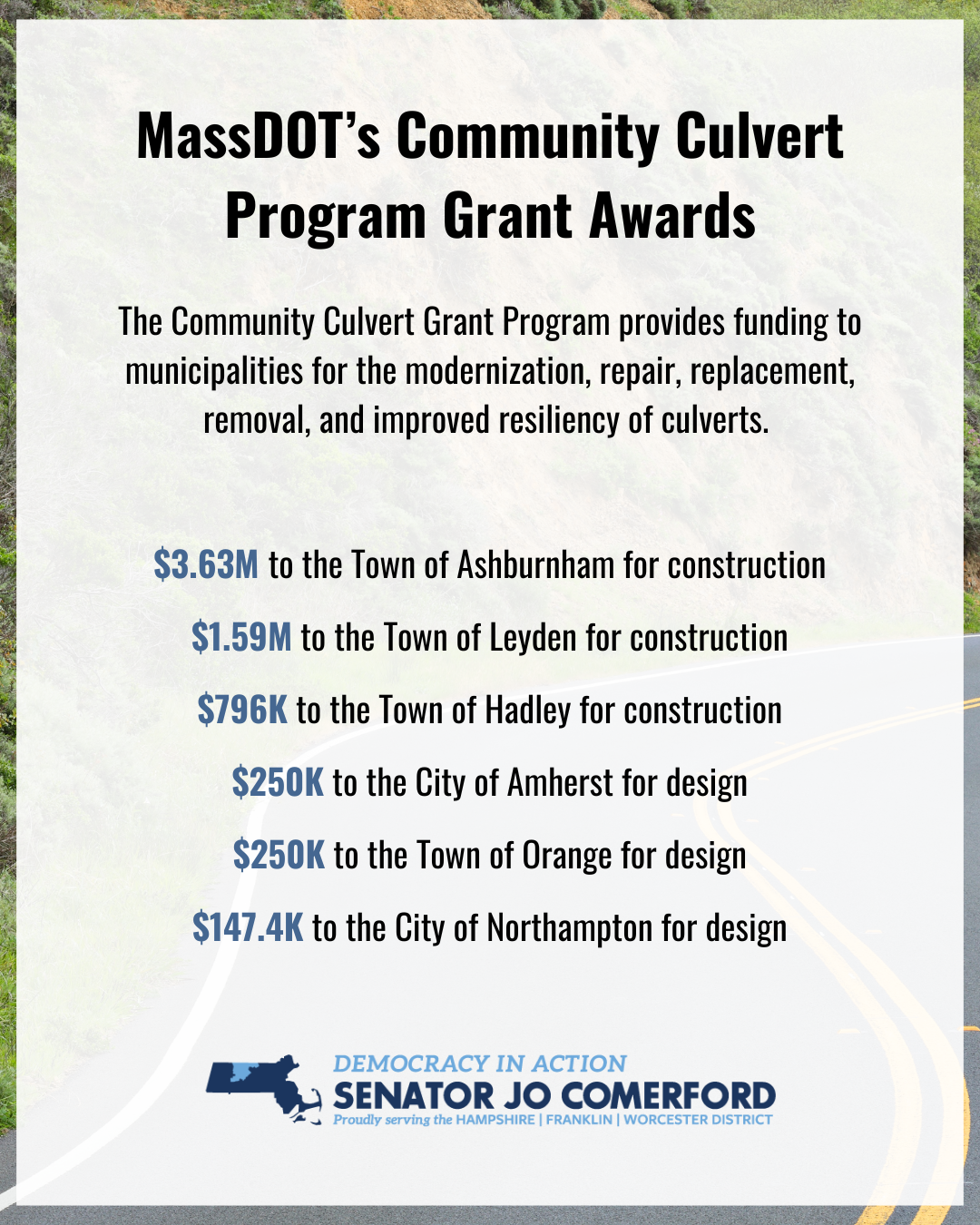
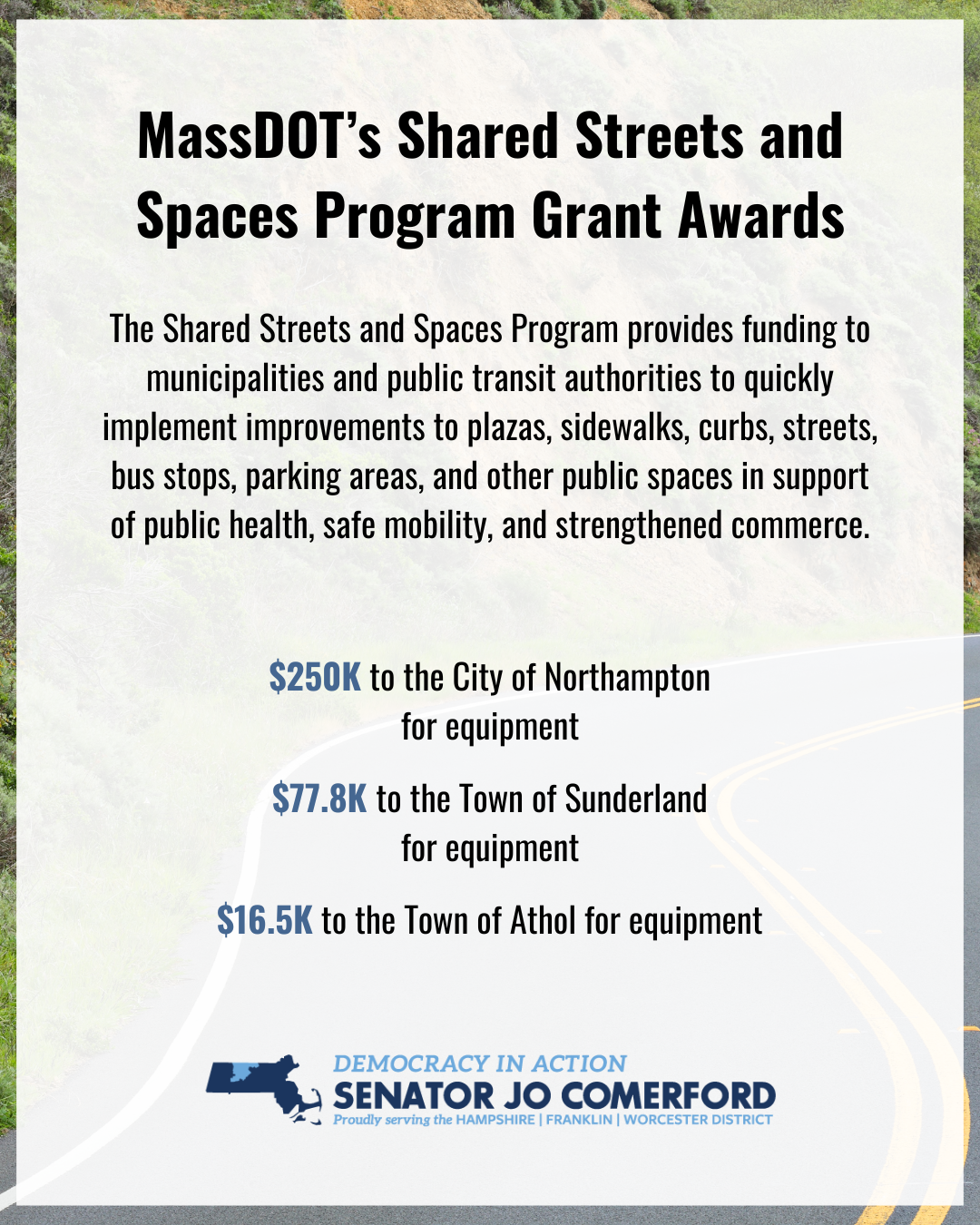
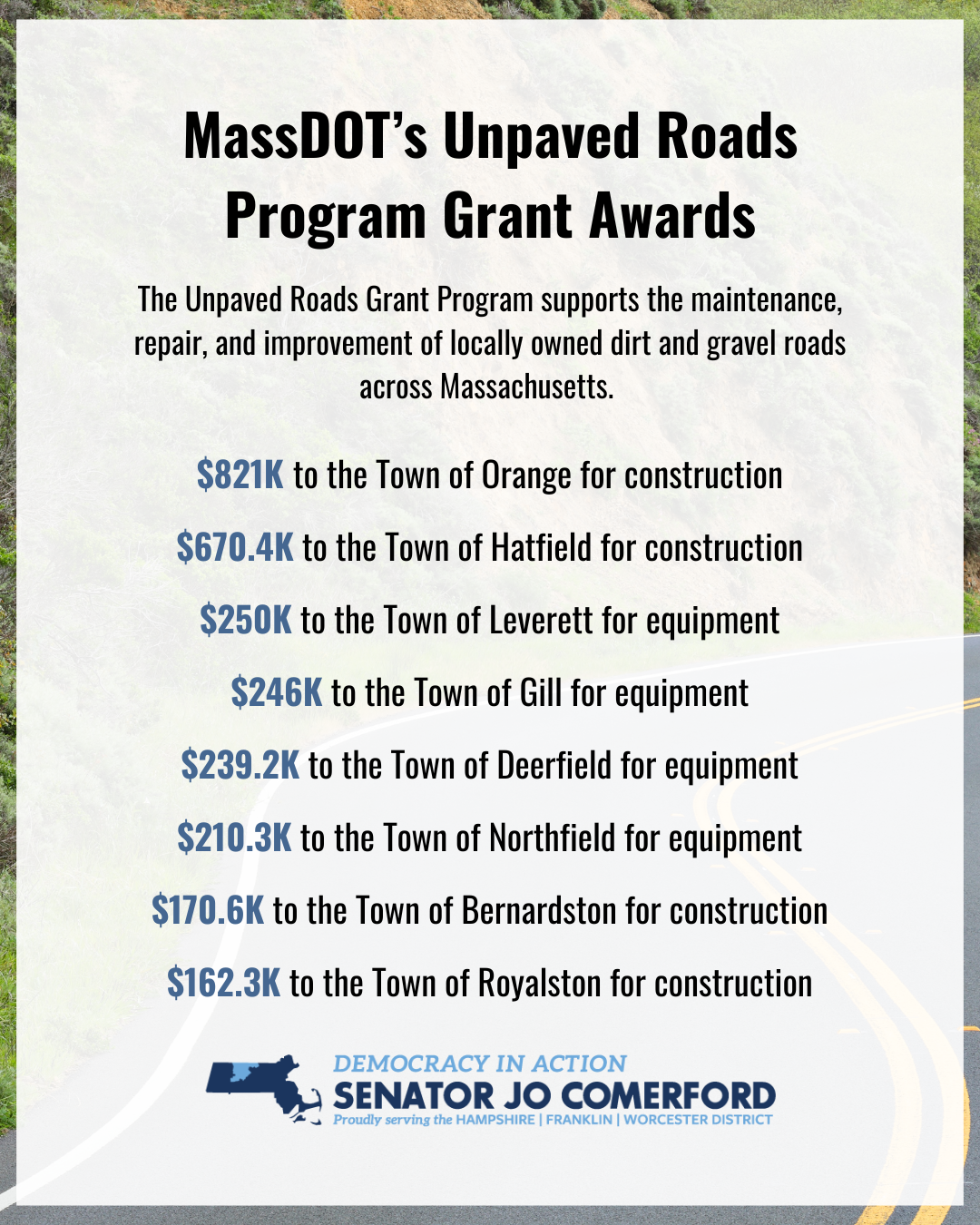
Inaugural round of MassDOT’s Grant Central Fully Integrated Application (FIA) and the Community Culvert and Unpaved Roads Programs
More than $11 million is directed to communities across the Hampshire, Franklin, Worcester district through the inaugural round of MassDOT's Grant Central Fully Integrated Application! My team and I are especially thrilled about MassDOT’s new Community Culvert and Unpaved Road Programs, which help meet critical needs for municipalities throughout the district.
Thank you to the municipal leaders who have prevailed against all odds for years and years. We hear you.
| | |
Before his recent retirement, Steve Connor, a native of Northampton and a Navy veteran, served 14 communities as Director of Central Hampshire Veterans' Services and as a Veterans' Service Officer since 2004. I partnered with Senator Paul Mark to recognize Steve's lifetime of service at Military Appreciation Day on May 21.
I've worked with Steve for years, benefiting professionally from his knowledge and advocacy. He also helped me and my family personally. Last summer, my dad, Bob Comerford, who was a Korean War veteran, became unable to care for himself in his home. As I searched for resources and support, Steve came forward with love and compassion and not only showed me the path, he personally oversaw the process for VA benefits. I will always remember his kindness, compassion, and care.
Steve has helped countless veterans live their entire lives with dignity.
| | |
In the FY27 budget, the Senate included:
- $85 million for veterans’ benefits provided by municipalities, including cash, fuel and rent assistance, employment training and placement, and health benefits;
- $36.8 million for Holyoke Soldiers’ Home;
- $9.5 million for Veterans’ Outreach Centers providing peer counseling, employment skills building and job search assistance, substance use disorder counseling and other services;
- $3.9 million for transitional and housing assistance for homeless veterans; and,
- $2.5 million for veterans’ mental and behavioral health services through the Home Base program.
All of this is a testament to Steve Connor and the Central Hampshire Veterans' Services' team who have educated us on the importance of this funding.
| | Thank you to spring interns and fellows | | |
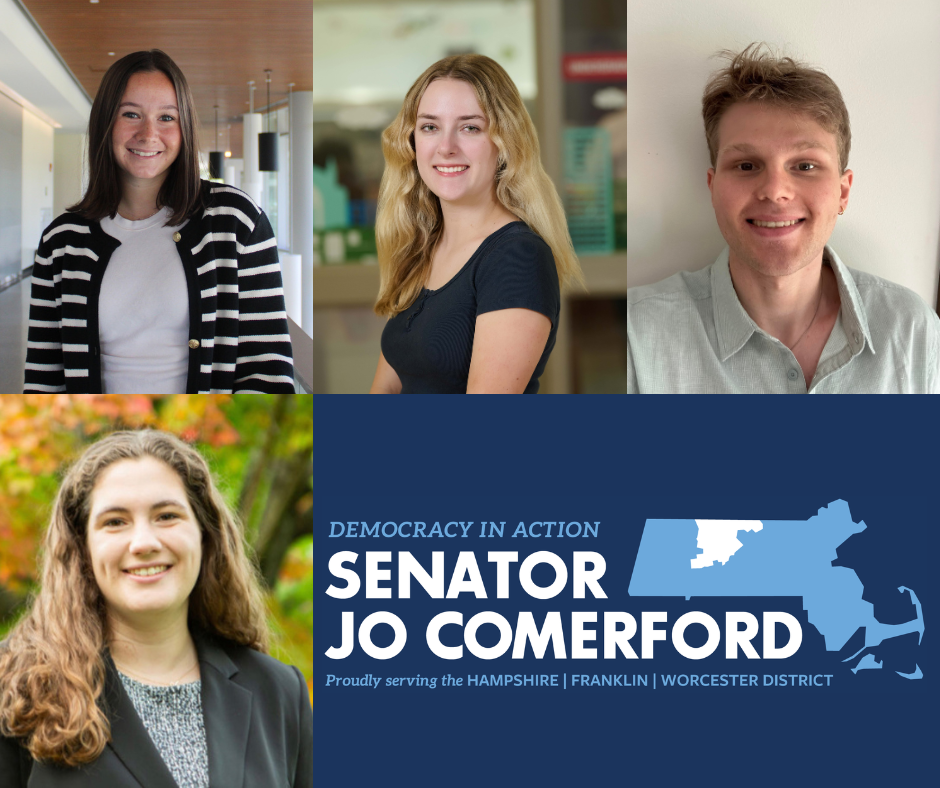
This spring, my team and I worked with a superstar team of interns and fellows.
From left to right, starting at the top: Lucy Postera (UMass Amherst), Katelyn-Rose Crocker (Boston University), Maxwell Balkema (UMass Amherst), and Katie Smith (Northeastern University School of Law). On our team, interns and fellows expand our reach, bolster our efforts, and inject much-needed urgent and new perspectives.
Please join me in thanking them and wishing them well as they leap into new adventures. Our future is in very good hands.
| | Answering your calls to action on legislation and other pressing issues | | |
About one-third of the hundreds of emails I receive each day are from constituents calling me to act on pieces of legislation or pressing issues. Thank you for allowing this “bulk” reply to some of the issues I have heard most about in the recent weeks. I’ve also recorded short videos to answer your questions in real time. You can find You ask, I answer, here.
Chapter 70 – Foundation Budget Review Commission
Reforming the K–12 education funding formula is the number one issue I hear about from constituents and municipal officials. The current Chapter 70 formula is not working for our school districts or our children.
That’s why the Senate included a Foundation Budget Review Commission (FBRC) in our FY27 budget proposal. This Commission is a critical step toward breaking open and modernizing the Chapter 70 formula so it better addresses challenges like regional school transportation, rising special education costs, declining enrollment, the needs of rural districts, the role of vocational schools, and the financial impact of charter schools.
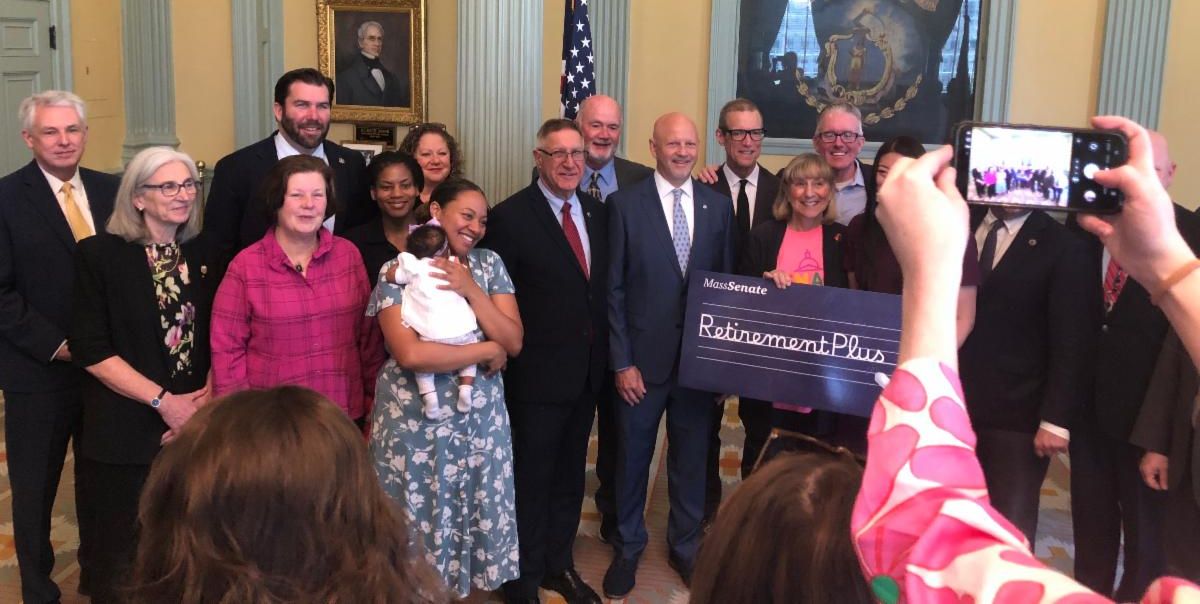
Retirement Plus
On June 4, the Senate voted to pass A Fair Fix for RetirementPlus to allow longtime public school teachers to buy into the enhanced savings program if they missed out when the program was initially launched 25 years ago. A full summary of the bill is here. The House has already passed this legislation, so the House and Senate versions must now be reconciled so that a final bill can be sent to the Governor to be signed into law.
| | |
Battery storage
I have heard from many constituents expressing their support for battery energy storage systems in our communities.
While I agree that energy storage will be critical for transitioning away from fossil fuels, this must not come at the expense of the natural environment.
I remain committed to finding the best path forward that balances the energy needs of our residents and communities with our responsibility to safeguard our environment.
Election protections
I have heard concerns from constituents about federal actions to curtail mail-in voting and to impact state election processes.
Litigation is ongoing at the state and federal level to block some of the most egregious efforts to undermine election processes. Attorney General Campbell is co-leading a suit featuring 22 state attorneys general who have sued to block an Executive Order that would restrict voter eligibility and mail-in voting to lists of voters pre-authorized by the federal government. The suit argues that this order is an unconstitutional overreach into election powers reserved for states.
In 2022, I was proud to vote Yes on the VOTES Act, which made several permanent changes to Massachusetts’ election laws, including:
- Allowing voters to vote by mail without an excuse;
- Expanding early voting options;
- Ensuring that eligible voters who are incarcerated are able to request a mail ballot and vote;
- Requiring the Commonwealth to join the Electronic Registration Information Center (ERIC) to keep voter registration rolls up-to-date; and more.
I have also heard calls for support from constituents for Same Day Voter Registration and I am proud to support and cosponsor An Act establishing same day voter registration (S.505).
Voting rights and accessibility will stay at the top of my priority list.
End of life options
Thank you to constituents who continue to call and email in support of compassionate choices at the end of life. I lead this bill in the Senate with strong partnership from Senators Will Brownsberger, Jake Oliveira, and Dylan Fernandes. We hear your calls for the bill to pass this session. I promise that we’ll keep at it, in partnership with you.
The Personal Care Attendant program
I have received significant outreach in strong opposition to the proposed cuts to the Personal Care Attendant (PCA) program in the Governor’s FY27 budget proposal.
I hear you. This program is a lifeline for so many in our communities, supporting independence, dignity, and quality of life. Cuts of this kind would be deeply harmful — both to those who rely on these services every day and to a system already strained by long waitlists.
In November 2025, the PCA Working Group, convened through legislation, produced its final report, with recommendations to generate $32 million in savings. These findings can help guide our path forward, ensuring that any cost-saving measures do not come at the expense of those who depend on this essential care.
As the budget process continues, I am working to balance the urgent need to protect the PCA program with the broader fiscal pressures straining our health care system, including the impact of significant federal funding cuts.
Removing biomass from receiving subsidies
Throughout the spring, I have heard a great deal of support from constituents on removing biomass energy subsidies from the Commonwealth’s clean energy program, and I am hopeful we will see this policy included when the Senate takes up the energy affordability legislation proposed by Governor Healey and passed earlier this session by the House.
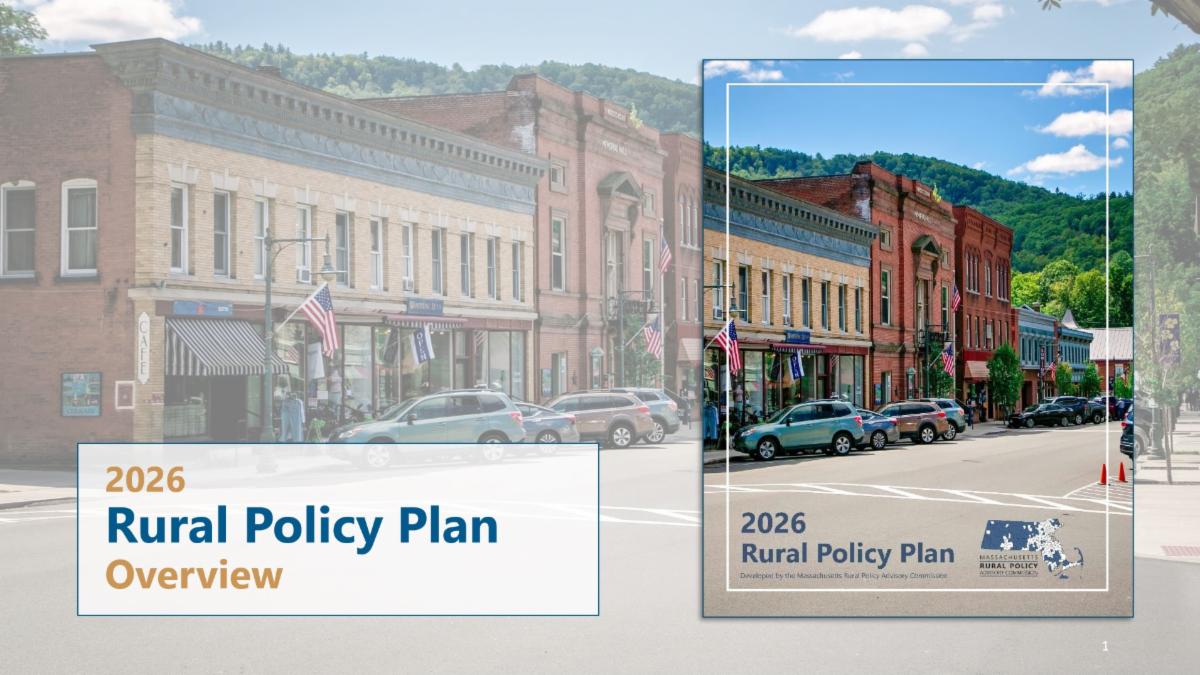
| | Massachusetts Rural Policy Plan Feedback Sessions — Throughout June, members of the Massachusetts Rural Policy Commission will hold public engagement feedback sessions to hear your thoughts regarding the draft 2026 Massachusetts Rural Policy Plan. Find more information on the draft report and how to register for a feedback session here. | | Office hours in June — Constituent Services Director Jessie Cooley will be hosting remote office hours via Zoom on Tuesday, June 23, 2026 from 11 a.m. to 1 p.m. Sign up here. Thanks to Jessie for leading! | | |
As always, we’re only able to share a few highlights of our team out and about. As you scroll through, please know that I also joined Representative Saunders to offer remarks at the Massachusetts Municipal Association’s Rural and Western Mass Conference; marched in the joyous Hampshire PRIDE parade; joined an Agricultural Stakeholders tour for UMass Amherst’s Future of Food; attended the annual gatherings of Community Action Pioneer Valley and Western Mass Network to End Homelessness; offered remarks at Northampton’s Dollars for Scholars Awards Ceremony; joined a listening session held at the Northampton Senior Center by the Massachusetts Commission on LGBTQ Aging; and much more.
***
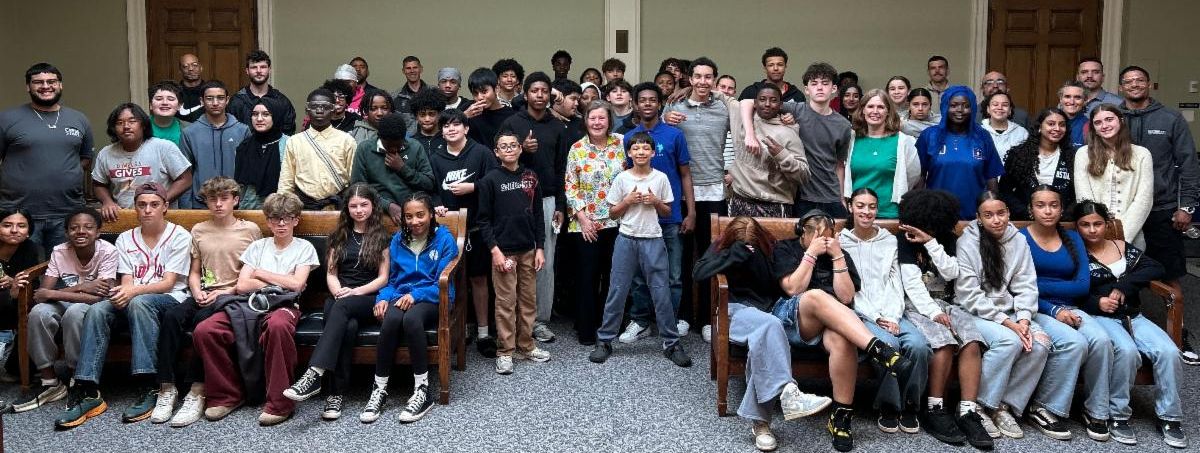
On May 7, I began the day by speaking with Amherst Middle and High School students who participate in the Morning Movement and Mentorship program. Thanks to Representative Domb for the invitation.
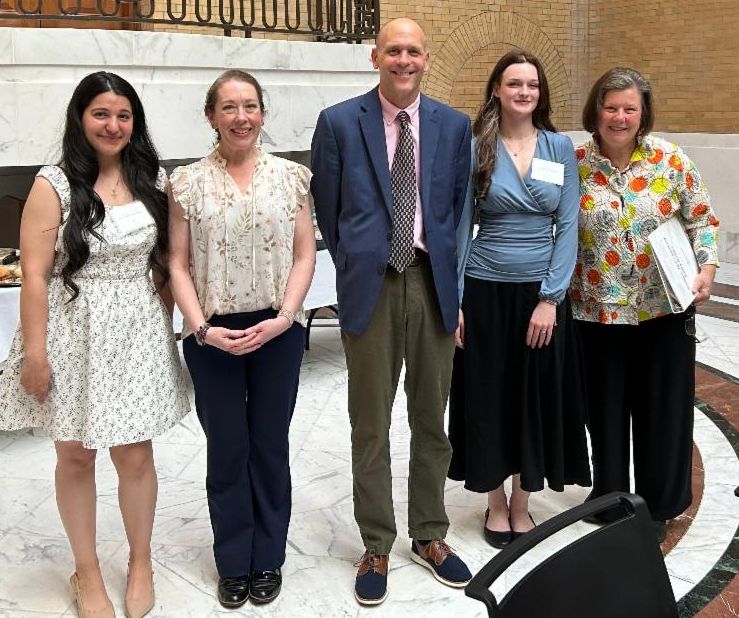
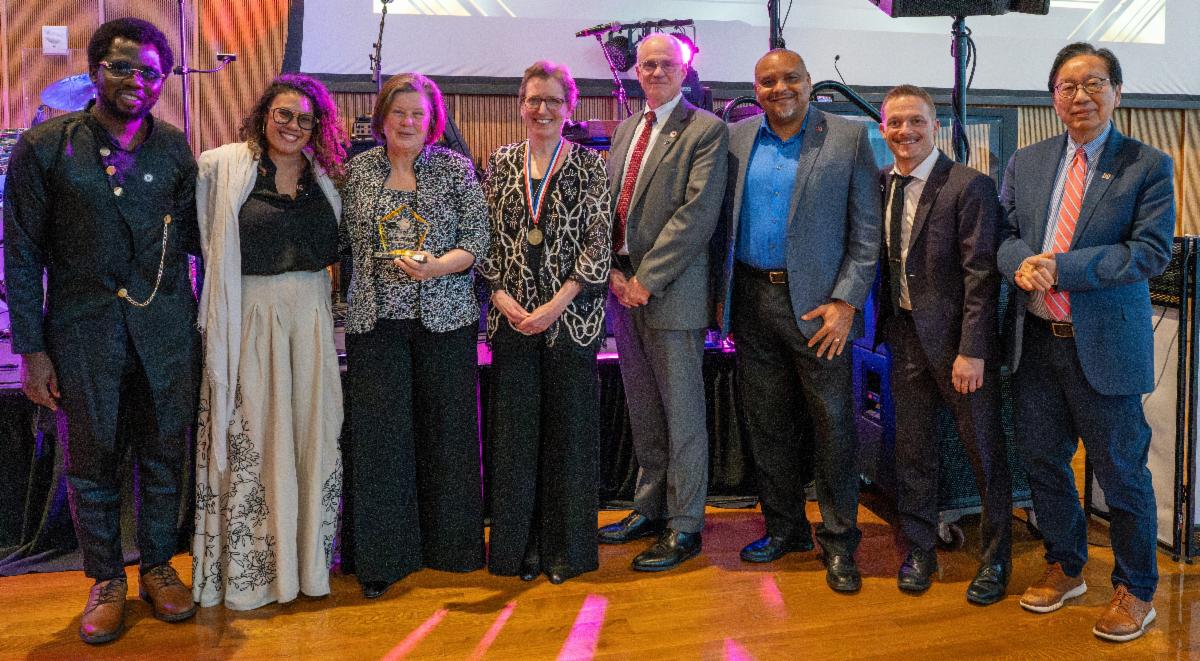
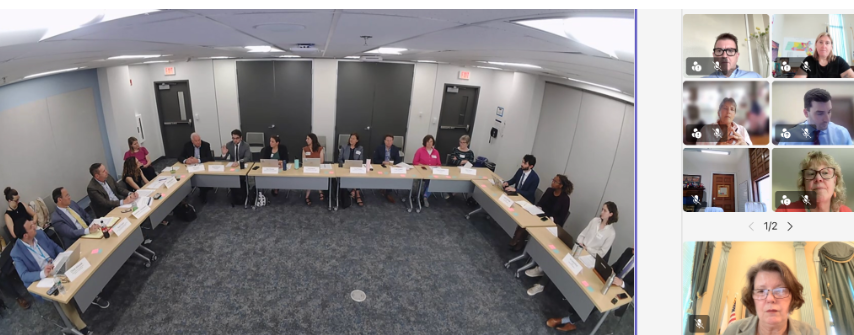
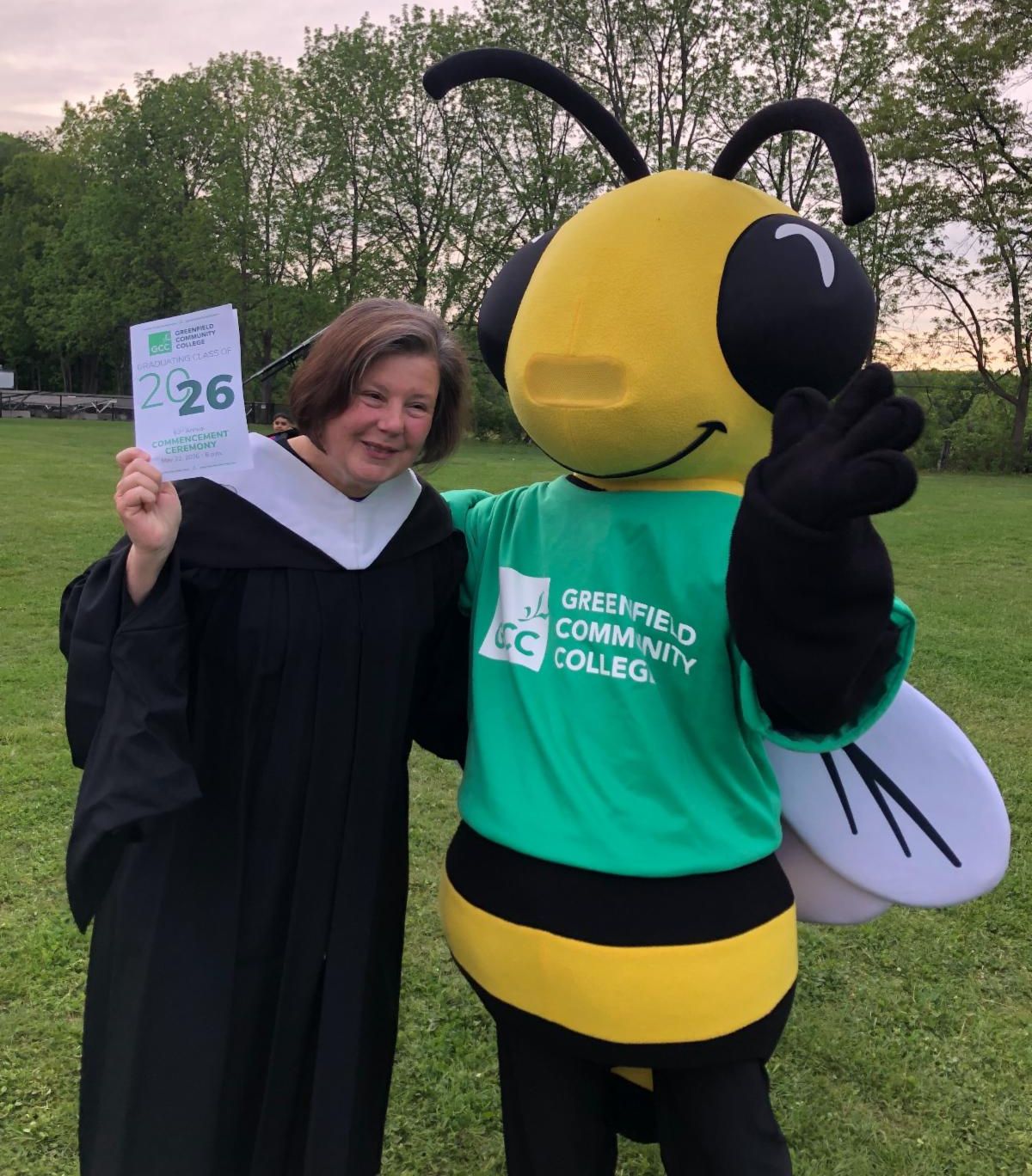
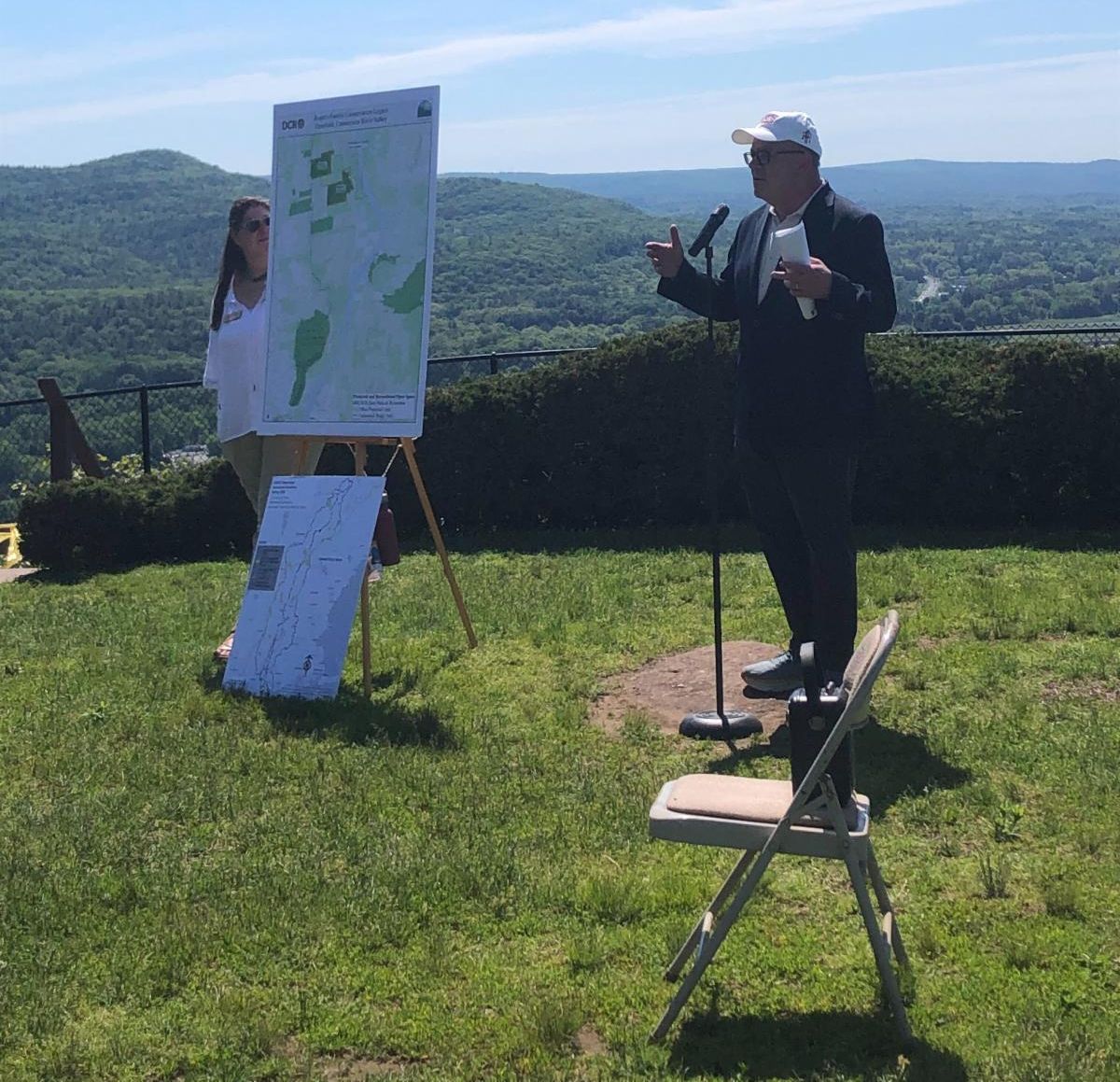
| | I then congratulated Joslynn Vautour of Winchendon (pictured in the blue long-sleeve top below) who was one of 38 students from community colleges across the Commonwealth named to the 2026 Phi Theta Kappa All-Massachusetts Academic Team based on outstanding academic achievement and exemplary student service. | | On May 8, I received the UMass Amherst’s Graduate Student Government’s (GSG) Education Equity & Opportunity Leadership Award at its Annual Gala. It was a beautiful evening — full of examples of the brilliance and impact of passionate graduate students. Thank you for the honor, GSG, and thanks especially to GSG President John Arigbede, pictured furthest left. | | On May 20, as the Senate was debating its FY27 budget, I beamed into the first meeting of the Commission on Payment in Lieu of Taxes (PILOT) on State-Owned Land. I am representing the Senate on this packed Commission, and I am delighted that work is underway to crack open the current PILOT formula and ensure that state dollars are appropriately valuing the ecosystem services performed by our natural and working lands. | | On May 23, I cheered for the inspiring 2026 graduates at Greenfield Community College’s commencement ceremony, pausing for a picture with the beloved GCC bee. | | On May 26, I joined Congressman Jim McGovern and folks from the Connecticut River Watershed Partnership, the Appalachian Mountain Club, and the Department of Conservation and Recreation (DCR), for a celebration of a consequential conservation effort in Deerfield, as well as Congressman McGovern’s reintroduction of the Connecticut River Watershed Partnership Act. | | |
We could go on, but we'll stop here and send our love to you.
Jo, Rachel, Jessie, Jared, Katelyn, and Elena
| | |
P.S. The week of May 4, we celebrated Teacher Appreciation Week in the Commonwealth. These are the socks of and on my wife, Ann Hennessey (with our dog, Otis, in the background). Ann has devoted her big brain and even bigger heart to a lifelong career in education. She is an inspiration to me. Big love also to my sister Lori Patterson who has crushed it as a transformative public school librarian in Maine for the last many years.
As we head into the summer months and graduation season, I am sending big love to all educators near and far. You are helping to raise and launch generations of young people into the world. I value you. I respect you. I am grateful to you.
| |
| Did you find the content of this email useful? | | | | |
Boston office
(617) 722-1532
State House
Room 410
24 Beacon Street
Boston, MA 02133
| |
Amherst office
(413) 367-4656
UMass Amherst
| | Please send all mail correspondence to the Boston office. | | | | |