|
DC Staff Help Secure Support for Letter to President Trump on Science-Based Ag Policy
NBGA’s Washington, D.C. staff recently played an active role in helping secure Republican support for a new congressional letter sent directly to President Trump. The letter emphasizes the need to base the upcoming MAHA report on sound science and risk-based analysis and advised caution of anti-agricultural groups seeking to use this report as a means to undermine the regulatory process.
This letter followed an earlier one sent on April 11 to HHS Secretary Kennedy, USDA Secretary Rollins, and EPA Administrator Zeldin. That first letter was signed by 79 Republican lawmakers and raised concerns about the MAHA Commission’s Assessment.
In the new letter to the President, several Republican members of Congress joined to reiterate the importance of using credible science in public health and agriculture policy. Signers include Senators Grassley, Fischer, Hyde-Smith, Crapo, and Tillis, along with Representatives Bacon, Downing, Flood, Hinson, Yakym, and others.
NBGA appreciates the Administration’s engagement on this issue and remains committed to ensuring that the final strategy, due August 12, protects access to safe, proven agricultural tools and reflects sound science.
The full letter can be read here.
| | |
Senate Agriculture Committee Passes Appropriations
The Senate Agriculture Committee passed their FY26 Appropriations Bill in a unanimous 27-0 vote. Keep in mind this was only the Senate passing it out of committee and a lot of obstacles remain to getting any FY26 Appropriations bills enacted.
The Senate bill includes an increase of $500,000 for the Barley Pest Initiative, and an increase of $1,000,000 for the USWBSI bringing it back to the fully authorized level of $15 million, and $3,000,000 for the Resilient Barley Initiative! I have included the text for each initiative below and they can be found on pages 21-36 of the attached report.
“Barley Pest Initiative.—The Committee recognizes that insects and viral, bacterial, and fungal diseases inflict substantial yield and quality losses to the barley crop throughout the United States, resulting in significant economic losses to growers and end-users. The Committee supports research to be carried out through the Barley Pest Initiative to address these major threats to sustainable and profitable barley production and utilization. The Committee provides an increase of $500,000.”
“Resilient Barley Initiative.—The Committee recognizes the need to build resiliency within the barley production system in order to maintain a sustainable and high-quality supply for its many value- added end uses. The Committee directs ARS to coordinate research efforts focused on strengthening barley’s resilience to climate stressors that threaten that supply through improved genetics and management. The Committee provides $3,000,000 to support this initiative.”
“U.S. Wheat and Barley Scab Initiative [USWBSI].—The Committee recognizes that fusarium head blight is a major threat to agriculture, inflicting substantial yield and quality losses throughout the United States. The Committee supports research carried out through the USWBSI. The Committee provides an increase of $1,000,000 to conduct further research on reducing the impact of fusarium head blight on wheat and barley.”
“Small Grains Genomic Initiative.—The Committee supports research on barley and wheat high throughput genomics and phenotyping and recognizes its importance in improving crop traits and developing new cultivars. The Committee provides no less than the fiscal year 2024 level to support the Small Grains Genomic Initiative.”
| | |
USDA Staffing/Reorganization Plan Released
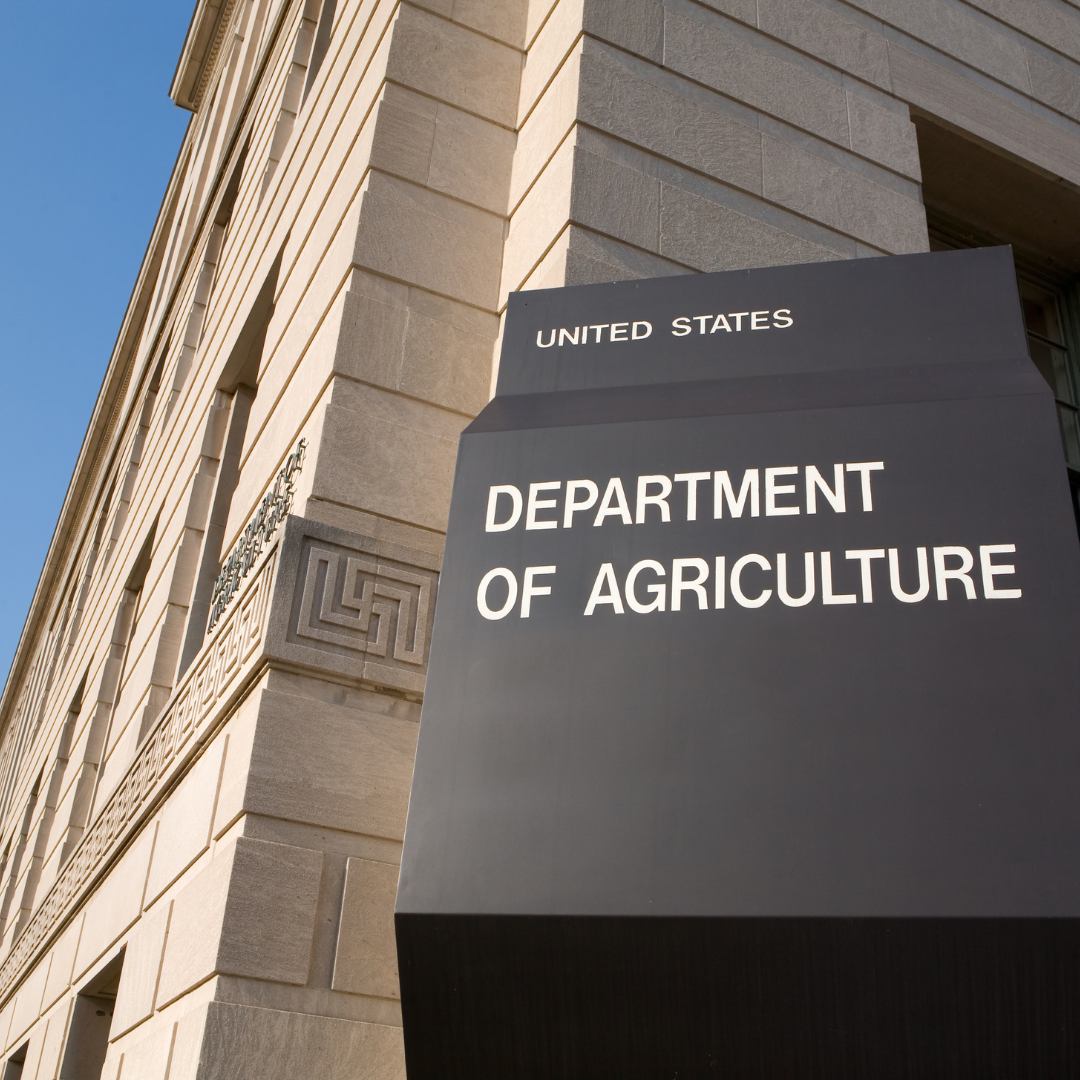
Secretary Rollins released a memo outlining USDA’s reorganization plan. I’ve attached the full memorandum for your reference. The reorganization is intended to minimize reductions to frontline positions, including those in firefighting, inspection, and roles directly serving farmers and rural communities. No details were provided about which specific departments will move or to which hubs. Several D.C. area buildings would be vacated under this pillar, including the USDA South Building and the Beltsville ARS Center.
Pillar 1 focuses on aligning USDA’s workforce with financial resources and priorities. USDA confirmed that 15,364 individuals accepted the deferred resignation offered in two phases this year. USDA is not conducting large-scale workforce reductions but may implement targeted RIFs (Reductions in Force) if necessary. They will continue to use voluntary separation tools such as the Deferred Resignation Program, the Voluntary Early Retirement Authority (VERA), and Voluntary Separation Incentive Payments (VSIP).
Pillar 2 to reduce workforce size and salary costs, USDA plans to relocate approximately 2,600 of the 4,600 employees currently based in Washington, D.C. Locality pay in D.C. is 33.94% higher than other regions. The relocation, combined with expected attrition from employees choosing not to move, will contribute to further staff reductions.
The department aims to establish five regional hubs in:
- Raleigh, NC
- Kansas City, MO
- Indianapolis, IN
- Fort Collins, CO
- Salt Lake City, UT
Pillars 3 and 4 eliminate layers of management and consolidate support functions.
| | |
Trade and Tariffs
On July 31st President Trump amended the original Executive Order on trade and tariffs. The updated tariff rates, outlined below, will take effect on August 7 and will remain in place until a trade agreement is reached and new tariff rates are announced. Goods from any country not listed in the Annex 1 chart will be subject to a 10% tariff. A special rule applies for EU goods with a current tariff rate below 15%, a top-up will be added to bring the total tariff to 15%. No additional tariff will be applied to EU goods that already face a tariff of 15% or more.
The updated tariff rates will apply starting August 7, 2025. However, goods that were in transit before that date and are entered for consumption or withdrawn from warehouse by October 5, 2025, will continue to be subject to the previous tariff rates under Executive Order 14257.
Exceptions to the July 31 Announcement:
- China: The Executive Order Modifying Reciprocal Tariff Rates to Reflect Discussions with the People’s Republic of China, issued on May 12, remains in effect and is not affected by this new order. (Keep in mind China originally had a separate deadline of August 12, so this could change next week.)
- Mexico: A 90-day extension on reciprocal tariffs will continue while negotiations are ongoing. The following tariffs remain in place: 25% on fentanyl, 25% on cars, and 50% on aluminum and steel. Note that current tariffs exclude USMCA-covered products.
- Canada: The 25% tariff has been increased to 35%, effective August 1. The 10% tariffs on potash and steel, along with Section 232 tariffs, remain in place. USMCA-covered products continue to be excluded from these tariffs.
- Transshipping: Any product found to have been transshipped to evade tariffs will be subject to a 40% tariff
Under the amended Executive Order, reciprocal tariff rates vary widely by country and territory. Most nations face a standard 15% tariff, including countries such as Afghanistan, Botswana, Ghana, Israel, and South Korea. Higher rates apply to specific nations: India (25%), Indonesia, Malaysia, and the Philippines (19%), Sri Lanka and Vietnam (20%), and Syria (41%)—the highest listed rate. Notable increases include Iraq (35%), Libya and South Africa (30%), Serbia (35%), and Myanmar and Laos (40%). The European Union is subject to a unique rule: EU goods with a current tariff below 15% will be “topped up” to 15%, while those already at or above 15% face no additional duty. Lower rates apply to the United Kingdom and Brazil (10%), Nicaragua (18%), Cambodia and Pakistan (19%), and Switzerland (39%). Full details, including HTS code-level changes, are available in Annexes 1 and 2.
Trade agreements with the EU, Japan, U.K., Indonesia, Thailand, Cambodia, and the Philippines have been reached ahead of the August 1st deadline in exchange for a lower tariff rate, which is reflected in the above list.
The full executive order can be read here.
| | |
Trade Developments Continued
- The President reiterated his dissatisfaction with the dairy provisions under USMCA. Earlier this month, the Canadian Parliament passed a law preventing the Prime Minister from negotiating dairy quotas, which is expected to become a major sticking point in upcoming USMCA negotiations.
- The President announced a 15 percent tariff floor, saying most countries would likely face a blanket tariff between 15 to 50 percent. He acknowledged that most will probably just pay the flat rate rather than reach a deal.
- At the AI Summit, President Trump said he was close to a deal with China.
- Additional tariffs announced include a 50 percent tariff on copper, which will take effect on August 1.
-
The President also announced a Section 301 investigation into Brazil, with a hearing scheduled for September 3rd.
- The IEEPA case before the U.S. Court of Appeals for the Federal Circuit began on July 31, a ruling is expected in August.
| | |
Trump nominates Callahan as USTR Chief Agricultural Negotiator
On July 17, President Donald Trump nominated Julie Callahan to serve as the U.S. Trade Representative’s Chief Agricultural Negotiator. Callahan has worked at USTR since 2016, holding multiple roles in the Agricultural Affairs office. Since April 2020, she has served as the Assistant USTR for Agricultural Affairs and Commodity Policy.
If confirmed, Callahan will lead negotiations with key trading partners on behalf of the U.S. agriculture sector.
| | |
Grains Council Meeting in Grand Rapids
NBGA members and D.C. staff were in Grand Rapids, Michigan, this week for the U.S. Grains Council's Summer Meeting, held July 29–August 1. The event covered a wide range of topics, from key trade issues like Section 301 tariffs to market updates and export strategies. There were also some great discussions during a panel of past USGC Chairs and a trade outlook from USDA’s Foreign Agricultural Service.
The barley sector had a chance to meet separately on Thursday to talk through our own priorities. We heard updates from USGC staff: Javier Chavez, Sierra Richey, and Carlos Suarez who shared helpful insights on global market development, sustainability, and how barley fits into the bigger picture.
Throughout the week, attendees had the chance to connect at events like the Past Chairs Roundtable, breakout sessions on Mexico, India, and Southeast Asia trade policy, and even a tour of Grand Rapids for a local flavor. The week wrapped up with a fun closing reception at Wildwood Family Farms.
| |
|
Share Your Story with USDA
Secretary Rollins and the U.S. Department of Agriculture are inviting farmers, ranchers, and producers from across the country to share their stories through short video submissions. This is a great opportunity to highlight your passion for agriculture and the barley industry. USDA will feature selected videos on its digital channels to showcase these videos.
The video should be approx. 60 seconds and filmed vertically. Suggested questions you can answer include where your farm is located, what you grow or raise, and what inspires you to farm. Videos can be submitted here and are being accepted on a rolling basis.
| | | | |
STAY CONNECTED
Want to keep up with the latest updates. Follow and like us below!
| | SHARE THE NEWSLETTER BELOW | | | | |