|
Please share this edition of Wildlife Highlights with other outdoor enthusiasts
and help our subscription list grow!
| |
Bat Appreciation Day Is Saturday, September 10, at Old New-Gate Prison and Copper Mine | |
|
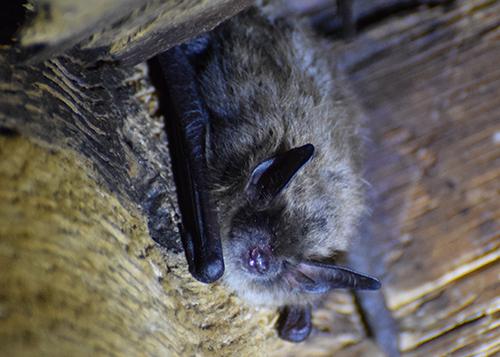
Bats are incredibly important, providing humans with free insect control. Did you know a single little brown bat can eat 1,200 mosquitoes and other night-flying insects in just one hour?! Foraging bats are estimated to save U.S. agriculture billions of dollars each year! To help raise awareness about the importance of bats, the Connecticut Department of Energy and Environmental Protection (DEEP) Wildlife Division and the Department of Economic and Community Development (DECD) are hosting the sixth annual Bat Appreciation Day at the Old New-Gate Prison and Copper Mine in East Granby on Saturday, September 10, 2022, from 11:00 a.m. to 3:00 p.m.
This event will feature bat activities for the whole family and include exhibits, bat story time, historical tales, the unique opportunity to sneak a peek at the “bat cave”, and a chance to see a live bat up close.
More details on Bat Appreciation Day . . .
Agenda for Bat Appreciation Day . . .
| |
Restoration Work at Great Meadows Marsh Moves Forward | |
|
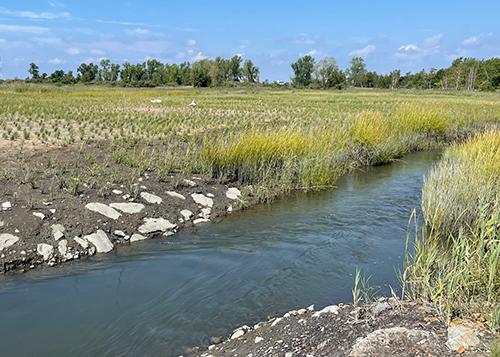
The DEEP Wildlife Division was pleased to join our many conservation partners at a ribbon cutting event for important restoration work at Great Meadows Marsh in Stratford, a part of the Stewart B. McKinney National Wildlife Refuge. This marsh is home to many state-listed species, including saltmarsh sparrows, snowy egrets, diamondback terrapins, and the marsh pink—a beautiful flowering plant. Special thanks are extended to Audubon Connecticut and their Salt Marsh Stewards and Connecticut's Beardsley Zoo. The Salt Marsh Stewards are conservation rock stars and the students did a lot of hard, on-the-ground work to make this habitat restoration project a success. The Beardsley Zoo's CDC students, Zoo Explorers, and adult Zoo volunteers were also participants in the 34-acre restoration of the Great Meadows Marsh. More than 155,000 native plants and shrubs were planted, thousands of them by Zoo volunteers.
More on this important project . . .
| |
Adult Monarchs Are Beginning their Migratory Journey | |
|
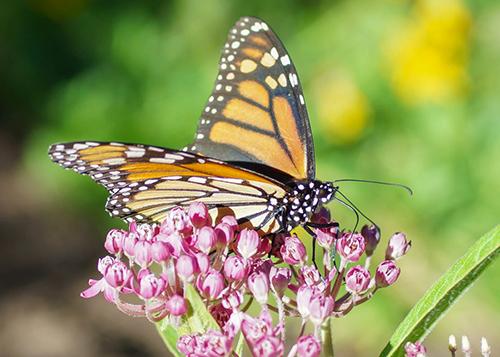
Monarch butterflies are unique compared to most other North American species of Lepidoptera (moths and butterflies) because of the long-distance migration taken by adults in the fall to their wintering grounds in Mexico (western populations also migrate to California). This fall migration can begin in late August and continue through the fall. Unlike the spring migration northward, which takes several generations and cycles of mating, egg laying, caterpillar growth, and metamorphosis into adult butterflies again, the fall migration is completed in one generation. As the final round of caterpillars matures on native milkweed across their breeding grounds, they will emerge as adult butterflies and begin to head south. Along the way, these migrants will face many challenges, including foul weather, predation, pesticides, and habitat loss. To sustain them on this journey, monarchs depend on plant nectar, especially from species that naturally occur in their native range.
Connecting habitats with abundant late-summer and fall-blooming wildflowers is the lifeline that monarchs rely on to reach their overwintering grounds. Across the Northeastern United States, asters, goldenrods, ironweeds, joe-pye weeds, and sunflowers make great additions to your gardens and support monarchs on their journey.
More on the threats monarchs face . . .
| |
Help Connecticut's Birds By Turning Out the Lights During Migration | |
|
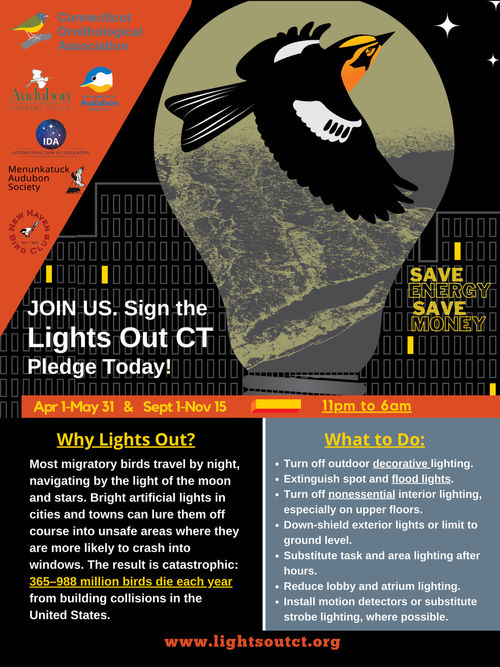
During spring and fall migrations, the majority of birds travel by night, leaving the daytime for resting and refueling. These nighttime movements are generally safer for birds, when the weather is calmer, cooler, and predators are less active.
However, light pollution makes navigating along flyways increasingly difficult, resulting in many bird-building collisions. Overall, hundreds of millions of birds are killed each year after flying into buildings, with the highest risk during migrations. Light pollution during night has been shown to disorient birds, causing some to fly around for hours, exhausting birds trying to reorient. Confused birds are also more vulnerable to predators if they settle on the ground or on buildings. It is estimated that for every 1 bird found dead from a building strike, there are 3 more that go undetected when the animal is taken away by predators, or makes it into cover before perishing.
What Can You Do to Help?
The easiest thing to do is turn off your lights at night, especially during migration periods in spring and fall, when great numbers of birds are moving. The time period in fall is September 1 through November 15 from 11:00 PM to 6:00 AM. One recently published study (2021) using two decades of data found that bird collisions can be reduced nearly 60% when light pollution is limited. Visit LightsOutCT.org to learn more about this problem and join others across Connecticut taking the pledge to go Lights Out!
| |
Connecticut Resident Finds a Blue Frog (?) | |
|
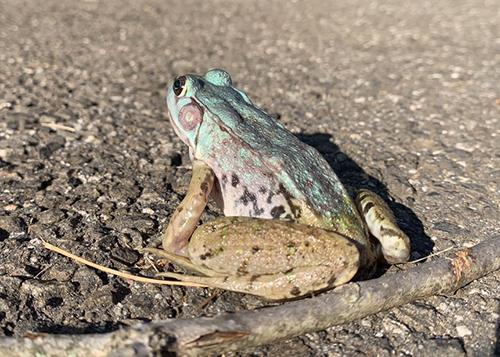
One of Connecticut’s most common amphibians is the green frog, but have you ever seen a blue frog?! The frog in this photo is in fact a green frog, but it has a genetic mutation that prevents the production of yellow pigment. In a typical green frog, the combination of yellow and blue pigments creates the familiar green that gives the green frog its name. Without the yellow pigment, this frog appears blue and is likely at a higher risk of predation because the blue color prevents the frog from easily blending into its environment. Special thanks to Chelsea Bristol for sharing this photo!
More on the blue frog . . .
| |
Connecticut Public Radio's Colin McEnroe Talks Megafauna With DEEP Wildlife Biologist | |
|
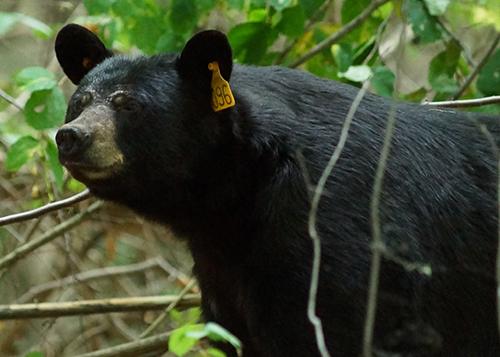
Wildlife Division biologist and carnivore expert, Jason Hawley, spent some time talking with WPNR's Colin McEnroe about bears, bobcats, and mountain lions. During the radio program, Hawley discussed the challenges of managing conflicts with black bears, particularly when residents feed bears and allow them to become habituated and food-conditioned, and how Connecticut is the outlier in its inability to regulate the bear population’s growth rate through a sustainable harvest. Hawley and McEnroe also discussed the lack of evidence that mountain lions live in the state and the remarkable journey one male subadult mountain lion took from South Dakota that ended along a Connecticut roadway in 2011.
Listen to the conversation . . .
| |
Junior Pheasant Hunter Training Day Opportunities | |
|
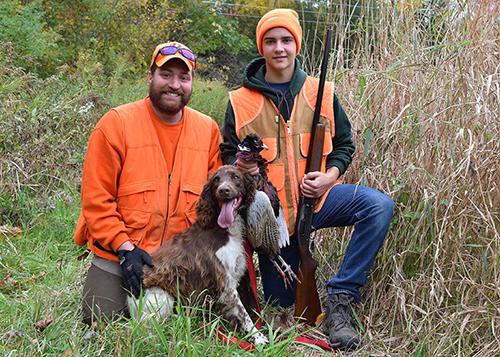
Fall hunting season is just around the corner, and that means the return of the Wildlife Division's mentored junior pheasant hunts! These events are held free of charge for hunters between 12 and 15 years of age at select sportsmen’s clubs in Connecticut. At each event, participants will be coached on shooting clay targets on a trap or skeet field prior to participating in the hunt. Mentored hunts are staffed with Certified Volunteer Hunter Safety Instructors and experienced hunters, along with a well-trained bird dog and its handler. Note: Youth participants must possess a 2022 junior hunting license and 2022 Connecticut Resident Game Bird Conservation Stamp, as well as complete and submit a 2022 Junior Pheasant Hunt Day Application. September and October hunts are posted for registration now, with November and December to be added later this fall.
More on Junior Hunter Training Days . . .
| |
2022 Hunting Seasons and Outdoor Safety | |
|
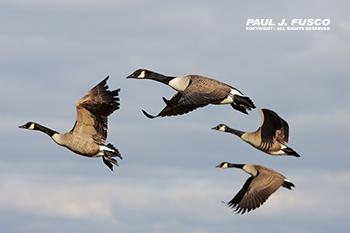
Several fall hunting seasons have already started and more are slated to begin as the fall season progresses. The best way to stay up to date is to check the 2022 Connecticut Hunting and Trapping Guide and the 2022-2023 Connecticut Migratory Bird Hunting Guide. Details on season dates and limits can be found in the season summary for the fall seasons. Migratory bird season details can be found here.
Note for Hunters Traveling to Canada to Hunt: Hunter-harvested unprocessed wild game bird meat/carcasses, originating from or transiting Canada will not be permitted to enter the United States regardless of the Canadian province from which the bird was harvested. The Animal and Plant Health Inspection Service (APHIS) is aware of the impact this will have on hunting season and will provide updates if new information is received. (more information)
Whether you like to hike, camp, horseback ride, mountain bike, hunt, or fish, it is a good idea to observe a few safety precautions while outdoors.
Basic SAFETY TIPS that all outdoor users should follow:
- Look up and watch out for hazardous trees while in forested areas. Several years of storms, drought, and insect infestations have severely damaged a significant number of trees. A "hazard tree" has a structural defect that makes it likely to fail in whole or in part. Such a tree can fall without warning.
- When you plan to spend time outdoors, let someone know where you are going and when you will return.
- Familiarize yourself with the area where you plan to go and know the activities that occur there. Maps and hunting information for State Forests, Wildlife Management Areas, State Parks, Permit-Required Areas, and other areas managed or leased by DEEP can be found on DEEP’s Interactive Hunting Area Map.
- Wear brightly colored clothing. A fluorescent orange vest and/or hat is recommended. A fluorescent orange vest is also recommended for dogs that accompany hikers.
- If you see another person while in the woods, whether a hiker, hunter, biker, or horseback rider, call out to make them aware of your presence.
- Respect property rights. Remember, all users are required to obtain permission from the owner before entering private property. Deer and turkey hunters hunting on private land must obtain and carry written permission from the landowner. Verbal permission for the hunting of other game species is sufficient.
More on outdoor safety . . .
| |
Species of the Month: Northern Walking Stick | |
|
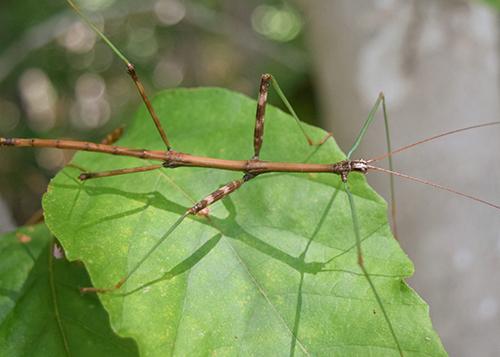
A true master of camouflage, the northern walking stick almost perfectly resembles a small woody branch, helping to keep them safe from predatory birds during the day. Wingless, walking sticks feed on deciduous trees and shrubs, especially oaks and hazelnuts.
Female walking sticks will deposit their eggs singly on the forest floor among the leaf litter. The eggs overwinter and hatch in the spring, and the young nymphs then climb up nearby vegetation to feed.
| |
|
Stay Connected!
Follow us on Social Media
| |
|
-- Quick Links --
Your Feedback Is Important to Us!
Send your comments or suggestions to deep.ctwildlife@ct.gov
|  | |
The Connecticut Department of Energy and Environmental Protection is an Affirmative Action/Equal Opportunity Employer that is committed to complying with the requirements of the Americans with Disabilities Act. If you are seeking a communication aid or service, have limited proficiency in English, wish to file an ADA or Title VI discrimination complaint, or require some other accommodation, including equipment to facilitate virtual participation, please contact the DEEP Office of Diversity and Equity at 860-418-5910 or by email at deep.accommodations@ct.gov. Any person needing an accommodation for hearing impairment may call the State of Connecticut relay number - 711. In order to facilitate efforts to provide an accommodation, please request all accommodations as soon as possible following notice of any agency hearing, meeting, program or event.
This program receives Federal financial assistance from the U.S. Fish and Wildlife Service.
Under Title VI of the 1964 Civil Rights Act, Section 504 of the Rehabilitation Act of 1973, Title II of the Americans with Disabilities Act of 1990, the Age Discrimination Act of 1975, and Title IX of the Education Amendments of 1972, the U.S. Department of the Interior prohibits discrimination on the basis of race, color, national origin, age, sex, or disability. If you believe that you have been discriminated against in any program, activity, or facility, or if you need more information, please write to:
Office of Diversity, Inclusion and Civil Rights
U.S. Department of the Interior 1849 C Street, NW
Washington, D.C. 20240
| | | | |