|
Please share this edition of Wildlife Highlights with other outdoor enthusiasts
and help our subscription list grow!
| |
Cave Bats Mate During Autumn Swarm, then Head Below Ground | |
|
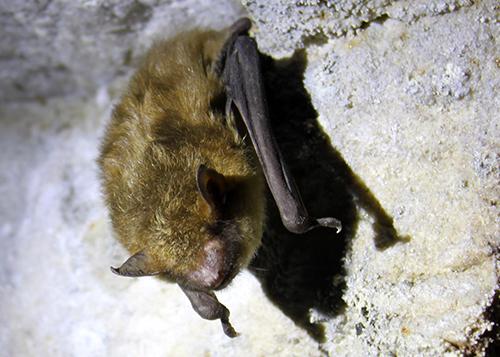
Before heading into their hibernation sites for the winter, many different species of bats that hibernate, often called cave bats, gather in and outside the entrances of hibernacula. This weeks-long period of gathering before hibernation season is called swarming and is thought to play an important role in the lifecycle of bats of both sexes and different age classes. Swarming season is believed to be important for information sharing between bats, as well as the inspection of the communal hibernaculum and orientation of juvenile bats who are there for the first time.
Swarming is also when adult bats mate, but fertilization does not actually take place until the spring. Female bats store the spermatozoa through the winter and fertilization occurs after they emerge and disperse in the spring.
Connecticut’s three migratory, tree-roosting bat species, which do not hibernate in cave-like hibernacula, also mate in the fall. These species tend to migrate to more southerly latitudes and hibernate during cold periods in leaf litter and under exfoliated tree bark. Ovulation also occurs in the spring.
Did you know that all of Connecticut’s bats are listed as Species of Greatest Conservation Need, and several are endangered?
More on the challenges bats face and the benefits they provide . . .
| |
Fall Firearms Deer Season Opens November 16 | |
|
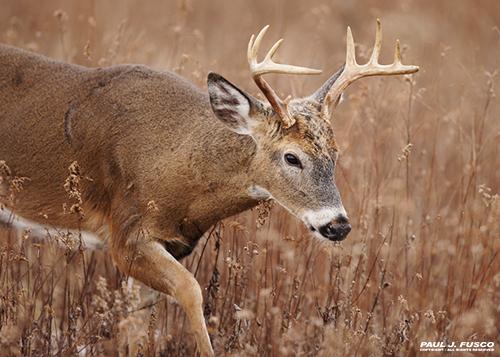
Firearms deer hunting season begins Wednesday, November 16. Everything you need to know about the tagging and reporting process is covered on our website.
A note on fluorescent orange: All hunters must wear hunter orange (fluorescent orange) from September 1 through the last day in February (with some exceptions). When fluorescent orange is required, the hunter must wear an article of clothing that has 400 square inches of fluorescent orange material visible above the waist and visible from all sides.
It is strongly recommended that all public land users wear fluorescent orange to improve their visibility to others while recreating in public hunting areas.
Common Hunting FAQs . . .
| |
DEEP and Beardsley Zoo, a Wildly Successful Collaboration | |
|
Many of the conservation success stories in Connecticut are the result of important partnerships between DEEP and non-government organizations and/or private land owners. One of these long-standing and highly successful partnerships is with Connecticut’s Beardsley Zoo.
From Atlantic salmon restoration efforts, to bobcat research, to eastern box turtle population monitoring (with many projects in between), Beardsley Zoo continues to support ongoing DEEP research efforts. DEEP and Zoo staff also collaborate on a variety of outreach and education efforts, including programs held not only at Beardsley Zoo but at state-owned locations such as Sherwood Island State Park.
While this partnership continues to flourish on the conservation and education fronts, it also extends to law enforcement and public safety as well, with the Zoo supporting the Connecticut DEEP Environmental Conservation (EnCon) Police in their Animal Amnesty Days to get illegal, endangered, and dangerous animals out of private hands. Over the years, EnCon police officers have provided public education support for the Zoo’s wildlife conservation events by delivering community programming in conjunction with the EnCon TIP Trailer.
When partners such as DEEP and Connecticut’s Beardsley Zoo collaborate to leverage their skills and resources, wildlife and citizens alike derive the benefits!
More on this collaboration . . .
| |
Black Bears Continue to Pack on the Pounds Through November | |
|
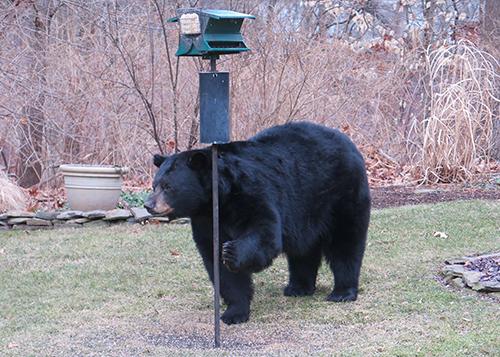
In preparation for the winter denning season, black bears across Connecticut are fattening up on easy-to-find, calorie-rich foods. During this time, many bears are consuming over 20,000 calories per day. Biologists call this phase of the bear’s yearly cycle “hyperphagia”, or the time of big eating. Hard mast from trees are the most important source of food for bears and many other species of wildlife during autumn. Oaks, hickories, and beech trees produce thousands of nuts each year, with some years producing far more than other years. In Connecticut, nearly 70% of our forests are dominated by these mast-producing species, creating an abundance of suitable habitat for bears.
While there is plenty of quality habitat and natural food for bears across most of the state, the typical human-related foods that bears have become so familiar with, like birdseed and trash, are too good to pass up. A bear may take a several hours to forage for the same number of calories that it can get at just one birdfeeder, or a few of the trash cans in your neighborhood. As a result, bears that make a habit of visiting birdfeeders or unsecured trash bins get big calorie rewards for doing so. These rewards condition bears to spend more time in backyards and can lead bears to exhibit bolder and progressively more dangerous behaviors, like entering homes, damaging structures, and altercations with people and pets.
For the safety and well-being of people and bears, it is essential to prevent bears from accessing human-related foods throughout the year. The best ways to do that are to secure trash and abstain from putting out birdfeeders. Of the thousands of human-bear conflicts reported to the Wildlife Division each year, more than 65% involve birdfeeders or trash.
More on keeping people, pets, livestock, and bears safe . . .
| |
Take Care of Holiday Shopping While Helping CT's Wildlife | |
|
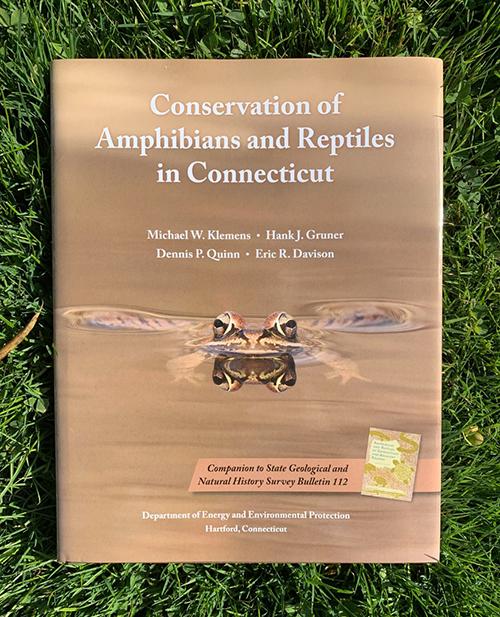
Looking for a great gift for the nature enthusiast in your family? Pick up a copy of DEEP’s recent publication, Conservation of Amphibians and Reptiles in Connecticut.
This 305-page book includes 131 color photos, species account maps, and offers conservation solutions for the complex challenges Connecticut’s amphibians and reptiles face. This is an excellent resource for anyone interested in learning more about this fascinating group of “slimy” and scaly critters!
All proceeds from the sale of this publication go to the conservation of Connecticut’s reptiles and amphibians. Thank you for supporting Connecticut’s wildlife!
Purchase your copy HERE . . .
| |
Motorists, Watch Out for Deer this Fall | |
|
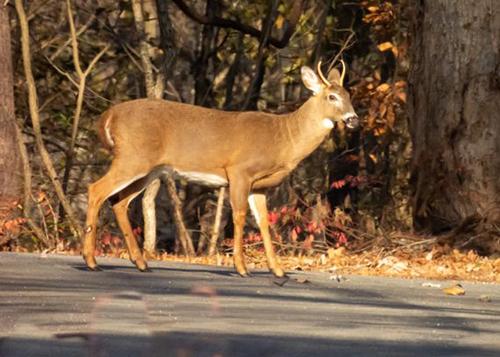
Fall is a time when many animals are busier than usual, trying to prepare for winter, seeking food across larger areas, and crossing busy roadways more often. These crossings can put animals and motorists at increased risk of collisions. These collisions can lead to serious injury to drivers, in addition to thousands of dollars in vehicle damage. The breeding season (also known as "the rut") for white-tailed deer typically runs from late October through late December. The Wildlife Division cautions motorists to be aware and heed “Deer Crossing” signs which are placed in areas along state highways where multiple animals have been struck in the past. Motorists are advised to slow down and drive defensively should a deer or moose be spotted on or by the road.
All deer, bear, and moose vehicle collisions should be reported to local, state, or DEEP Environmental Conservation Police Officers (24-hour DEEP Dispatch Center -- 860-424-3333).
| |
Migratory Bird Conservation Stamp Art Prints Available | |
|
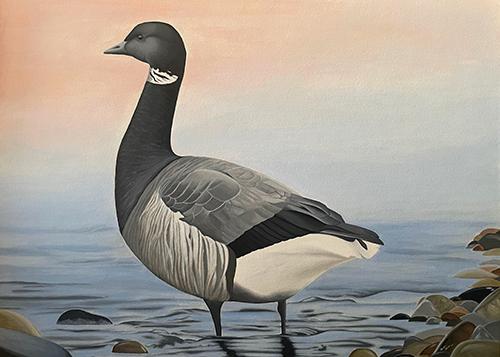
Conservation Edition Prints of the 2015 and 2017 through 2023 Connecticut Migratory Bird Conservation Stamps are available in limited quantities. All proceeds from the sale of these prints go into the Connecticut Migratory Bird Conservation Fund to be used for the enhancement of wetland and associated upland habitats in our state. Those interested in purchasing prints from 2017 through 2023 should contact DEEP Wildlife Division biologist Min Huang at min.huang@ct.gov or 860-418-5959. The 2015 Connecticut Duck Stamp print is available from Crittenden Studio. Pictured here is the 2023 Connecticut Duck Stamp Competition winning image of an Atlantic brant by Sophie Archer.
Since the early 1990s, over 3,145 acres of wetlands have been restored or enhanced in Connecticut as a result of Connecticut Duck Stamp funds. Projects have encompassed nearly 50 sites, mostly on state-owned wildlife management areas.
More on available art prints . . .
| |
Recovering America's Wildlife Act (RAWA) Would Provide Stable Funding for Wildlife At-risk | |
|
Without investing in proactive wildlife conservation, scientists estimate that one-third of wildlife species in the United States are at risk of becoming threatened or endangered! The Recovering America's Wildlife Act (RAWA) would dedicate $1.3 billion annually to state fish and wildlife agencies to implement their science-based wildlife action plans.
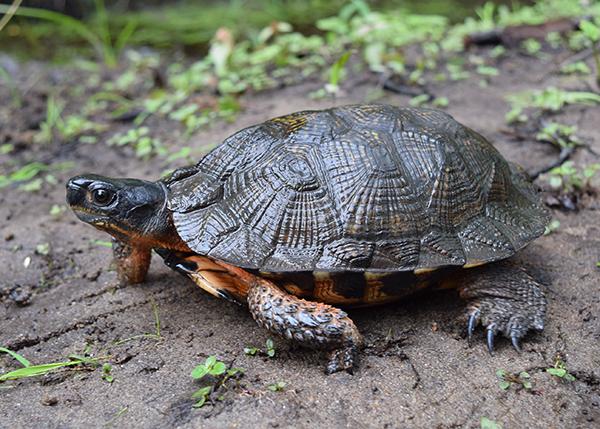
What does this mean for Connecticut? Hundreds of species would greatly benefit from the passing of RAWA. For example, funding would help further protect Connecticut’s bats both where they hibernate and at key maternity roost locations. It could also be used to implement strategic conservation plans to help keep species like the wood turtle from being listed under the federal Endangered Species Act. While many of these at-risk species prepare to hunker down for the winter months, this critical piece of legislation continues to move forward and will hopefully soon allow us to protect our diversity of wildlife for generations to come.
More on RAWA . . .
| |
Species of the Month: Marbled Salamander | |
|
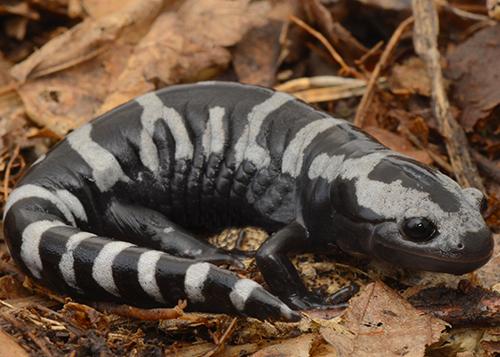
The marbled salamander is a stout-bodied member of the mole salamander family Abystomatidae, which includes the very familiar spotted salamander. Unlike the spotted salamander that emerges in early spring to breed, the marbled salamander emerges from its underground home in early fall to migrate to nearby breeding grounds. The marbled salamander is the only member of the mole salamander family to breed on land and not in the water. Males typically precede females to a dried-up site that will fill with water after a big rain. By the time spotted salamanders begin their reproductive cycles in the spring, marbled salamander larvae have transformed and are ready to emerge from the wetlands. Photo courtesy of Dennis Quinn.
More on the marbled salamander . . .
| |
|
Stay Connected!
Follow us on Social Media
| |
|
-- Quick Links --
Your Feedback Is Important to Us!
Send your comments or suggestions to deep.ctwildlife@ct.gov
|  | |
The Connecticut Department of Energy and Environmental Protection is an Affirmative Action/Equal Opportunity Employer that is committed to complying with the requirements of the Americans with Disabilities Act. If you are seeking a communication aid or service, have limited proficiency in English, wish to file an ADA or Title VI discrimination complaint, or require some other accommodation, including equipment to facilitate virtual participation, please contact the DEEP Office of Diversity and Equity at 860-418-5910 or by email at deep.accommodations@ct.gov. Any person needing an accommodation for hearing impairment may call the State of Connecticut relay number - 711. In order to facilitate efforts to provide an accommodation, please request all accommodations as soon as possible following notice of any agency hearing, meeting, program or event.
This program receives Federal financial assistance from the U.S. Fish and Wildlife Service.
Under Title VI of the 1964 Civil Rights Act, Section 504 of the Rehabilitation Act of 1973, Title II of the Americans with Disabilities Act of 1990, the Age Discrimination Act of 1975, and Title IX of the Education Amendments of 1972, the U.S. Department of the Interior prohibits discrimination on the basis of race, color, national origin, age, sex, or disability. If you believe that you have been discriminated against in any program, activity, or facility, or if you need more information, please write to:
Office of Diversity, Inclusion and Civil Rights
U.S. Department of the Interior 1849 C Street, NW
Washington, D.C. 20240
| | | | |