|
Please share this edition of Wildlife Highlights with other outdoor enthusiasts
and help our subscription list grow!
| |
Fall Migration Continues through October | |
|
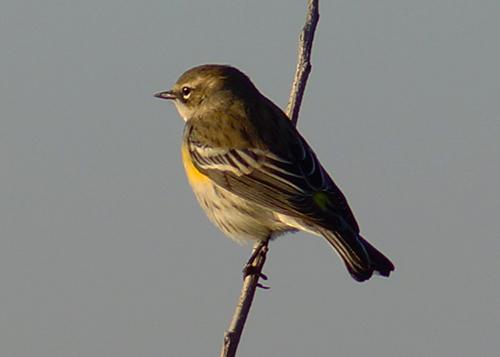
The annual southerly migration of birds is underway across Connecticut and the rest of North America. Each fall, hundreds of millions of birds leave their breeding grounds to travel south for the winter. While some species will not travel too far, settling in the southern United States, others will embark on astounding journeys over many thousands of miles to South America. Most migrating birds will follow flyways en route to wintering grounds. These flyways typically run along north-south geographic features, like mountain ranges, coastlines, and major rivers. In the eastern United States, most birds use the Atlantic or Mississippi Flyways, amassing in large flocks, flying together through the night, then coming down during the day for rest, food, and water at established stopover sites. Preserving these stopover sites is a critical part of protecting migratory birds, for without stopover sites, these birds will not have adequate resources to refuel, putting many at risk of starvation. While most shorebirds began their migratory journeys in mid to late summer, many songbirds are still traveling through. Yellow-rumped warblers are one of the last songbirds to pass through Connecticut in September and October. A good place to see many migrating birds this time of year is along the coast, at places like Hammonasset Beach State Park, but you can also see them in your own backyard. A clean source of water and some native trees and shrubs are all you need to establish natural foods like insects and berries, while providing shelter to rest along their journey.
View daily migration patterns . . .
| |
Take a Break on the Fall Cleanup | |
|
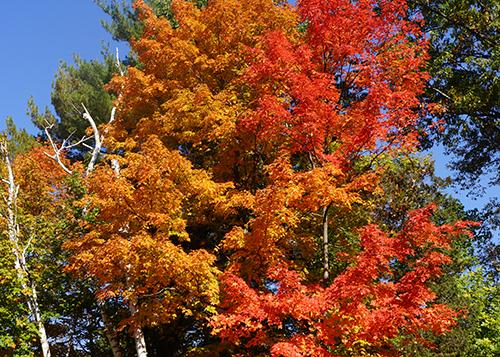
While many of us love the autumn foliage while the leaves are on trees, once they fall to the ground they are often seen as an unsightly mess across our lawns. However, that carpet of leaves is a critical part of the lifecycle for many animals through the winter. Leaves and other plant litter provide cover and insulation for many important insects, including many moths and butterflies. Different species may spend the winter as eggs, caterpillars, or adults, finding refuge in the leaves. Some species spin cocoons and chrysalises, then pausing their development until warmer weather returns. Healthy populations of insects within the leaf litter are also an important natural food source for birds throughout winter, even when birdfeeders are available. You can often see robins scraping through the leaves, looking for insects to eat. Decaying leaves also release nutrients back into the ground.
This year, instead of mowing, mulching, bagging, or raking your entire yard, consider leaving at least a section of the lawn in a more natural state. Winter winds will often gradually clear your yard of leaves, or snow will eventually cover them, and you will not even notice. Leaving the leaves also saves you time to enjoy the scenic fall landscape. If you choose to clear the leaves from your yard this fall, consider piling them into your garden beds, keeping the leaves intact.
More on the benefits of "leaving the leaves" . . .
| |
Public Land Users: A Reminder on Fluorescent Orange | |
|
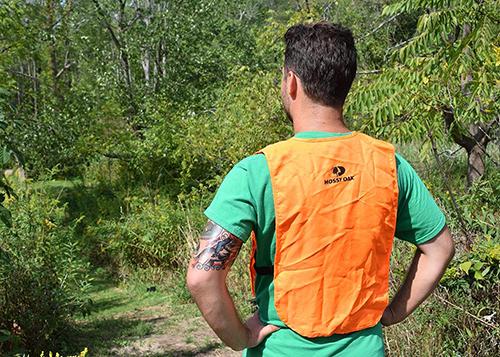
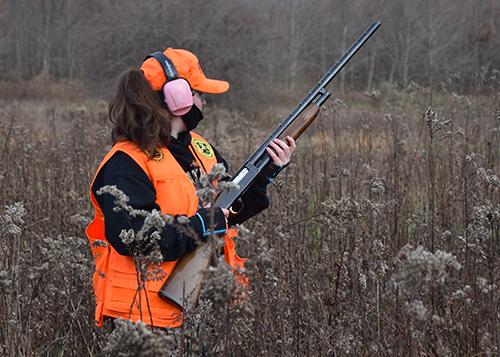
For many outdoor enthusiasts, fall means hunting season. With several seasons underway (and more to follow shortly), wearing fluorescent orange to improve your visibility to other users of the land is strongly recommended while recreating in public hunting areas. Connecticut has one of the best hunting safety records in the country and most hunters also wear fluorescent orange when moving between hunting locations. As an additional reminder, always keep your dog on a leash (no longer than 7 feet) while on DEEP properties, unless the dog is in the act of hunting or training for hunting. Please be respectful to all public land users. We hope you have a great fall season!
More outdoor safety tips . . .
More on hunting seasons . . .
| |
Celebrate Bats this October | |
|
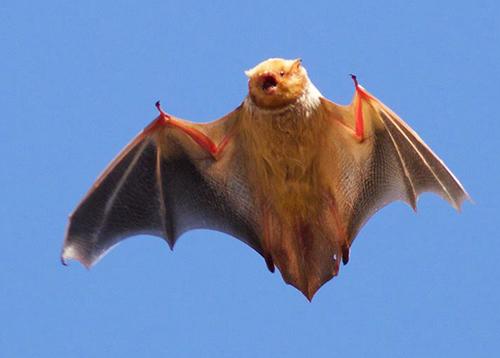
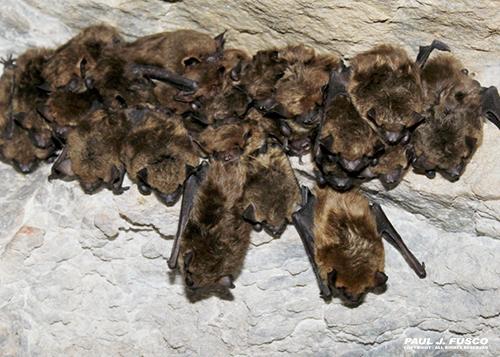
Bats are one of the most fascinating group of mammals and are incredibly beneficial to have around your property. Bats serve as a natural form of pest control. Did you know a single little brown bat can eat 1,200 mosquitoes and night-flying insects in one hour?! Nine different species of bats are found in Connecticut, and all but one of them (the big brown bat) are on Connecticut's List of Endangered, Threatened and Special Concern Species. This is mostly due to white-nose syndrome, an epidemic in cave-roosting bat species that has caused tragic and extensive mortality in hibernating bats in eastern and midwestern North America. While the Wildlife Division continues to monitor our state’s bat populations, you can take some simple steps to help bats, including installing your own bat house! Education is key to helping society value (rather than fear) these denizens of the night.
More on Connecticut's bats . . .
Celebrate Bat Week 2021 . . .
| |
Be Bear Aware: Bears Are Fueling Up for Winter Denning | |
|
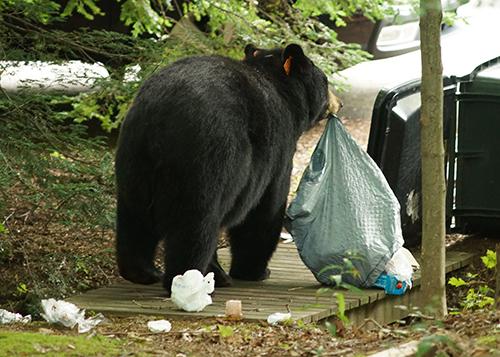
Hard mast, like acorns, beechnuts, and hickory nuts, are the most important source of food for bears as they prepare for winter. In Connecticut, black bears can gain over 100 pounds in just a few months by feeding on the nutritious foods found naturally around us! While our state provides plenty of natural food and habitat for bears, they will not pass up an easy meal from your backyard if birdfeeders are out and garbage is left unsecured. Problems associated with these human-related foods continue to increase each year, despite being preventable. Bears that gain access to bird food and garbage become more and more habituated to neighborhoods where these human-related foods are readily available. The Wildlife Division asks that you refrain from feeding birds until December, when most bears begin denning. Trash cans should always be secured or stored in an inaccessible area like a locked shed or garage to prevent bears from accessing them and not placed out until collection day. You can also talk to your trash hauler or municipality about options for bear resistant carts.
Be bear aware . . .
More on how bears survive winter . . .
| |
Motorists: Watch Out for Deer and Moose | |
|
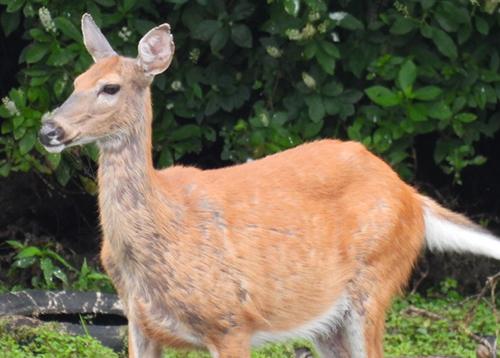
Please watch for deer and moose along roadways, especially during early morning and evening hours. September through October is the peak of the breeding season for Connecticut's small moose population, which mainly resides in the northern part of the state. The breeding season (also known as "the rut") for white-tailed deer closely follows the moose breeding season, running from late October through late December.
| |
Still Time to Register for Junior Pheasant Hunts | |
|
Act now! Available slots for our 2021 Junior Pheasant Hunts are filling up! DEEP’s Hunter Education Program works cooperatively with sportsmen's clubs throughout the state to provide these FREE mentored hunts. Hunters must register for their desired hunt and submit a parent permission slip.
Junior Pheasant Hunter Training Day is Saturday, October 9! Licensed junior hunters who are accompanied by a licensed adult hunter can hunt pheasants at certain designated state areas on this special day. Pheasants will be stocked at the areas and permits are now available.
Register for a junior pheasant hunt . . .
More on "Hunt Your Own" locations . . .
| |
Species of the Month: Big Brown Bat | |
|
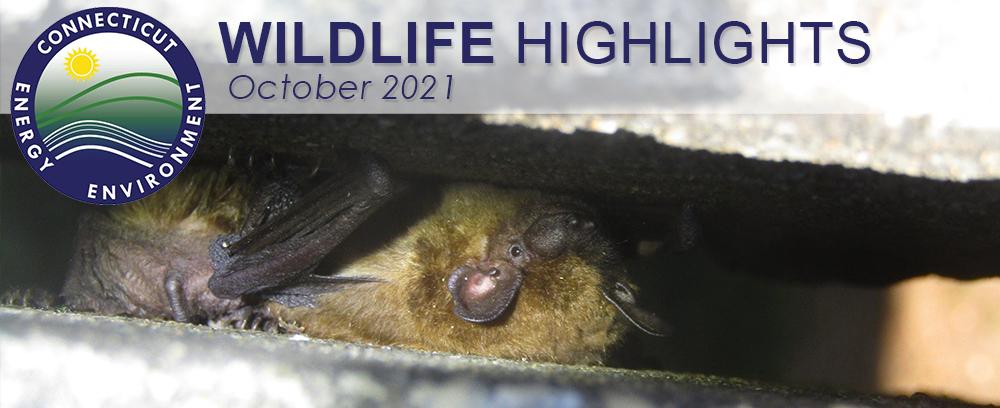
The big brown bat is now the most frequently seen species of bat in Connecticut, following dramatic declines of other once common species such as the little brown bat due to white-nose syndrome. Despite being considered common, the big brown bat is listed as a species of Greatest Conservation Need in Connecticut’s Wildlife Action Plan and remains a focus of monitoring and conservation planning by the Wildlife Division.
Big brown bats have thick, glossy brown fur on the back, contrasting their black forearms and wing membranes. Despite having a “big” name, they are only about five inches long with a wing-span of roughly 12 inches. Big brown bats are insectivores and can eat thousands of insects a night. Even though they have decent vision, big brown bats rely mainly on echolocation to locate their flying food, which includes many different types of insects, but beetles are their preferred food. This includes major agricultural and forest pests, such as cucumber beetles, scarab beetles, stink bugs, and ground beetles.
In Connecticut, big brown bats are adaptable and can roost in a number of different areas, including trees, caves, and manmade structures, such as barns, attics, and bridges. If there are bats in your house, they are most likely big brown bats.
You can help big brown bats by providing them a place to stay by installing a bat house on your property!
Build a bat house . . .
Additional bat house options . . .
| |
|
Stay Connected!
Follow us on Social Media
| |
|
-- Quick Links --
Your Feedback Is Important to Us!
Send your comments or suggestions to deep.ctwildlife@ct.gov
|  | The Connecticut Department of Energy and Environmental Protection is an Affirmative Action/Equal Opportunity Employer that is committed to complying with the requirements of the Americans with Disabilities Act. If you are seeking a communication aid or service, have limited proficiency in English, wish to file an ADA or Title VI discrimination complaint, or require some other accommodation, including equipment to facilitate virtual participation, please contact the DEEP Office of Diversity and Equity at 860-418-5910 or by email at deep.accommodations@ct.gov. Any person needing an accommodation for hearing impairment may call the State of Connecticut relay number - 711. In order to facilitate efforts to provide an accommodation, please request all accommodations as soon as possible following notice of any agency hearing, meeting, program or event. | | | | |