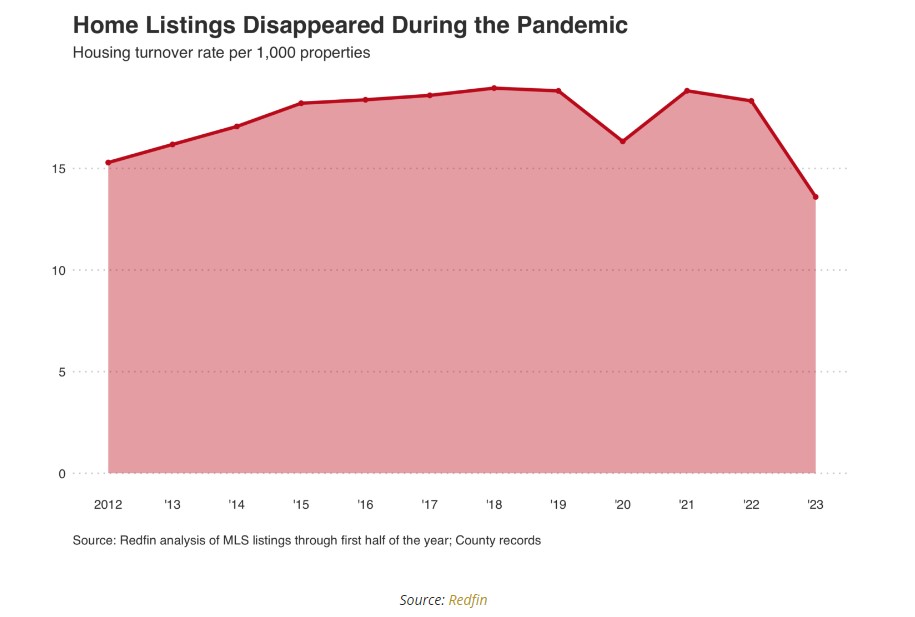
Five years ago, in 2018, Freddie Mac was already looking at the shortfall of housing supply and estimating we needed about 2.5 million more homes, largely because we weren’t building nearly enough single-family homes.
Then, in late 2020 and 2021, homebuyers and investors flooded the market, thanks to remote work and record-low mortgage rates, further depleting inventory levels.
And when mortgage rates almost doubled from January to June 2022, the lock-in effect of lower rates kept many would-be sellers on the sidelines and convinced a fair share of them to rent out their homes rather than sell them.
The quick increase in mortgage rates created an uphill battle for many Americans who want to buy a home by locking up inventory and making the homes that do hit the market too expensive. The typical home is selling for about 40% more than before the pandemic. Mortgage rates dropping closer to 5% would make the biggest dent in the affordability crisis by freeing up some inventory and bringing monthly payments down. But there are a few other things that would boost turnover and help make homes more affordable. Building more housing is imperative, and federal and local governments can help by reforming zoning and making the building process easier. Financial incentives, like reducing transfer taxes for home sellers and subsidizing major moves with tax breaks, would also add to supply.
Taylor Marr - Redfin Deputy Chief Economist)
SUBURBS HAVE SEEN THE BIGGEST DROPS IN TURNOVER RATE
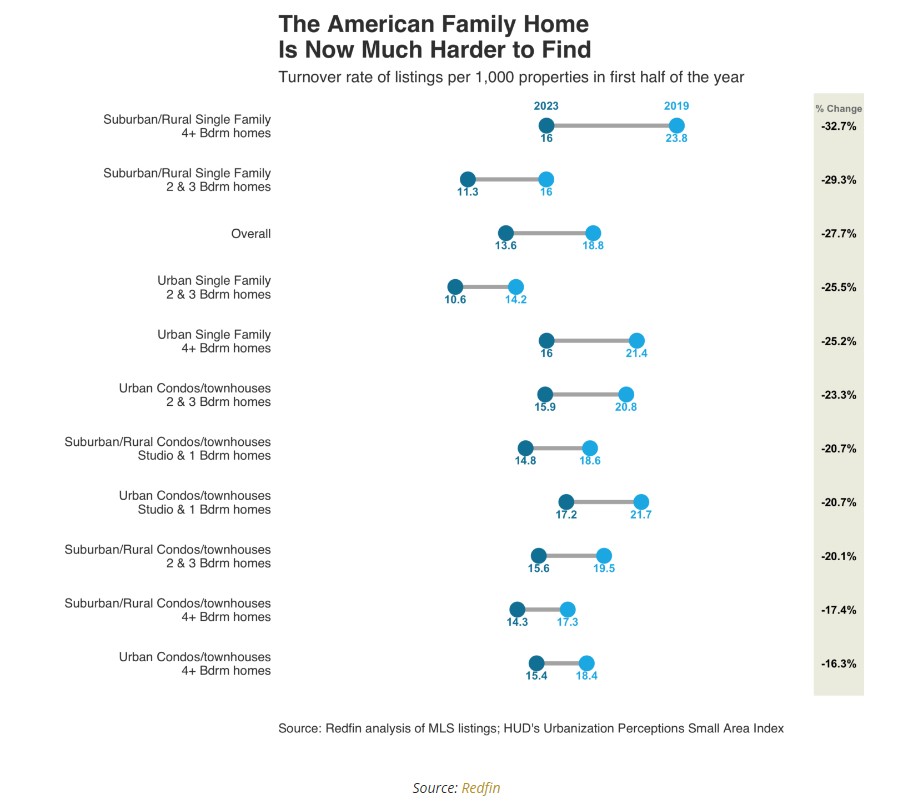
Prospective buyers looking for large suburban homes have seen their options shrink the most. Roughly 16 of every 1,000 four-bedroom-plus single-family homes changed hands in the first six months of 2023—two-thirds of the turnover rate (24 of every 1,000) from the first half of 2019.
That translates into 33% fewer suburban homes of this size available for buyers.