June 2025

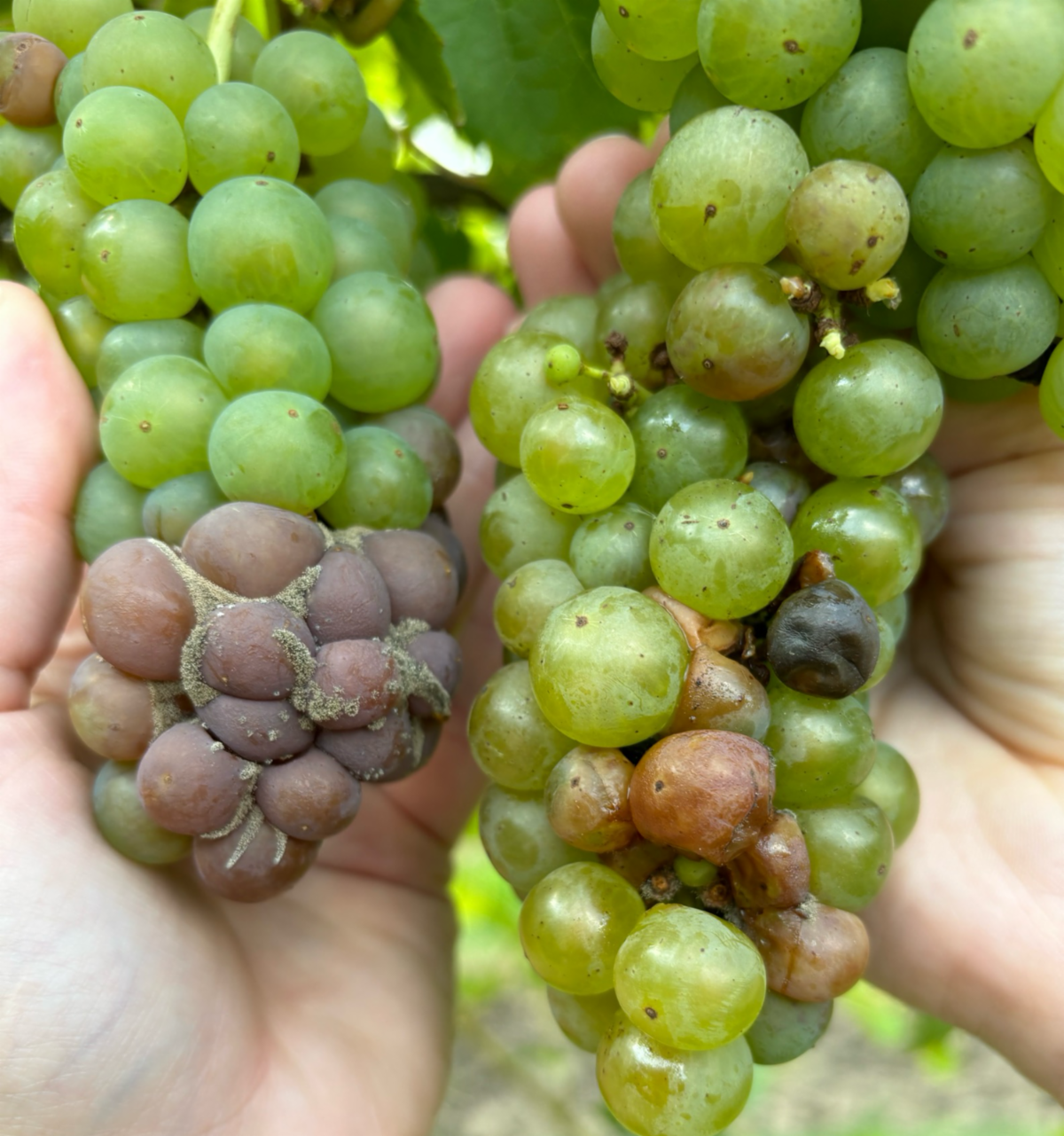
Pick your poison*

IT’S NOT ALL BAD

Earlier this month, NGRA Board member and Lodi Winegrape Commission Research & Education Director Stephanie Bolton wrote a blog post for the Commision’s website titled, “Five Pieces of Good News in the Research World.” In it, she celebrates research-related news in and around the Lodi AVA, including the highly anticipated, forthcoming hiring of an Assistant Professor of Applied Viticulture to lead UC Davis’ Oakville Station viticulture research site.


Stephanie’s pick-me-up post got me to thinking: she’s right. There’s a lot of good news in the research world! In fact, there’s so much good news—across the US and around the world—that we (NGRA) post about it every single weekday on our social media accounts! And we round up and aggregate all those awards and accolades, and research advancements, breakthroughs, field trials and findings in this newsletter every month.


This year has brought a lot of worrisome news. Federal funding cuts and firings have made endless headlines and heartaches every day, every month. These stories have serious implications for current and future grape research, as we’ve covered in this newsletter. It’s easy to focus on the negative when there’s so much of it, at such high volume and intensity.


By contrast, research is typically quiet work. In sports terms, it’s a game of inches. A marathon, not a sprint. I often say that research is a matter of faith—work you invest in, knowing you might not see the outcome of your efforts or funding in your lifetime. The incremental wins don’t always rise to the level of press release, journal article or trade magazine story. But there’s enough to fill our social media feed every day. And that’s a lot!


As we enter the second half of 2025, let this be your reminder that, although the news isn’t always good, it also isn’t always bad! If you ever need a quick reminder that research keeps winning, just visit us on Facebook or X (Twitter). We’ll be happy to oblige.


Donnell Brown

President

*ABOUT THE IMAGE

Cornell AgriTech’s Dave Combs took this photo to illustrate the difference between botrytis (left) and sour rot on vignoles at veraison. These are prime examples from his cluster rot study vineyard in Geneva, NY. Learn more about Dave’s work on managing grape diseases in the Research Focus article below.


AROUND THE INDUSTRY

Register for the July 16 NVEELC Meeting!

NGRA proudly supports the National Viticulture and Enology Leadership Community (NVEELC), which regularly gathers viticulture and enology extension and industry (non-sales) outreach specialists for professional development, best-practice sharing, research and regional reports, collaboration and dialogue on the unique challenges in V&E extension. The goal? To lift up, connect and support the important extension function for the American grape and wine industry. 


Mark your calendar for any (or all!) of the three upcoming NVEELC virtual meetings between now and the in-person NVEELC Conference in April 2026. Each 90-minute virtual meeting will feature regional reports from two US production regions and a timely topic. Registration is now open for the first meeting, Wednesday, July 16, featuring California and the Northwest Region and WineAmerica’s 2025 Economic Impact Study. See the full schedule and register for the July 16 meeting now!

Senate Budget Reconciliation Includes Increases for Research

On June 11, the US Senate Committee on Agriculture, Nutrition and Forestry released legislative text for its budget reconciliation package. Noting that “farmers and ranchers are facing real challenges,” Committee Chairman John Boozman (R-AR) said the legislation represents an “updated farm bill safety net.” It proposes significant increases to research funding, including raising annual mandatory funding for…


  • Specialty Crop Research Initiative from $80 million to $175 million
  • Specialty Crop Block Grants from $85 million to $100 million 
  • Plant Pest and Disease Management and Disaster Prevention from $75 million to $90 million


These items are unchanged in the updated reconciliation text released June 25. The federal budget is as yet unapproved, but these are hopeful signs for federal research funding.

The Fight Over Indirect Costs 

This month, leaders of the House Committee on Science, Space and Technology requested a review of the indirect costs of federally supported research by the Government Accountability Office (GAO). “Since the 1940s, the federal government has debated, implemented, removed or revised many actions related to indirect costs,” Committee leaders write. “Despite the ever-active debate, there continues to be a lack of transparency in the current indirect cost model, which leads to concerns around how taxpayer funds are spent.”


The request comes amid increased attention on indirect costs as the Trump Administration seeks to cap facilities and administrative (F&A) costs at 15% for grants awarded by the National Institutes of Health, National Science Foundation and other federal agencies. Due to lawsuits brought by research and higher education groups, these efforts are stalled.


A few days before the GAO request, the Joint Associations Group (JAG) on Indirect Costs, a newly formed group of research and academic community leaders, held webinars to present two provisional indirect cost models it has developed “to fairly account for the essential costs required to conduct federally funded research.” The group is soliciting feedback on the models and plans to synthesize a final model to present to Congress and the executive branch. 

UC Davis Launches Small-Batch Wine Label

The University of California, Davis, announced this month that it will now sell wines made by students, staff and faculty from grapes they grow in the Napa Valley and around campus in Yolo County. Students were even involved in making the UC Davis label, Hilgard631, possible. In 2018, a team of MBA students from the UC Davis Graduate School of Management partnered with the Department of Viticulture and Enology to create a comprehensive business plan to guide the wine sales initiative. It outlined the formation of a nonprofit and recommended lobbying for a legislative fix. A 2021 state law cleared the way, allowing the transfer of as much as 20,000 gallons of V&E Department wines to a nonprofit that will handle public sales.


The wine label name pays homage to Eugene Hilgard, founding director of the university’s Agricultural Experiment Station and 631, the address of the Teaching and Research Winery on campus. The first Hilgard631 wines to be sold include a 2020 Cabernet Sauvignon and 2024 Sauvignon Blanc made from grapes grown at Oakville Station, the university’s research and teaching vineyard in Napa County.

AVF Research Funding Announced

The American Vineyard Foundation (AVF) this month announced nearly $850,000 in funding for 12 research projects that will help protect vineyards, conserve water and ensure the future of American wine production. The projects funded this year address grapevine red blotch virus, biocontrol methods for mealybugs and nematodes, irrigation strategies, tannin chemistry and more. “Every project AVF funds has real people behind it—family farmers, small business owners and entire communities whose futures depend on healthy, productive vineyards,” says AVF Board Chair Nick Dokoozlian. “When we invest in research, we’re investing in solutions that will protect these livelihoods for generations to come.” See the list of funded projects.

California’s PD/GWSS Referendum Passes

Voting in the referendum for California’s Pierce’s Disease and Glassy-Winged Sharpshooter (PD/GWSS) Assessment closed earlier this month. With 76.56% of voters casting ballots in favor, the Pierce’s Disease Control Program will continue for another five years, through 2031. The program funds research and activities to address the threat not only of PD and its vectors but also other serious grape pests and diseases like brown marmorated stink bug; fanleaf, leafroll and red blotch diseases, mealybugs and spotted lanternfly. The grower-led PD/GWSS Board has invested more than $60.1 million since 2001 on research and outreach. This year, the Board is investing $2.2 million in new research funding.

Michigan Seeks to Develop a Winegrape Commodity Group

After grape growers submitted enough signatures to pursue organization, the Michigan Department of Agriculture and Rural Development (MDARD) this month began forming a temporary advisory committee of industry members to oversee the process of developing a winegrape commodity group. Its establishment would help Michigan wine producers “grow their product, expand their knowledge and improve their economic impact,” says MDARD Director Tim Boring.


The advisory committee’s responsibilities will include developing program recommendations to be considered by fellow winegrape growers at future public hearings. If the feedback at those hearings is positive, a referendum date will be set for qualified producers of the commodity. A successful referendum is the final step in enacting a winegrape group. 

Site Selected for Agtech Incubation Farm

The Reservoir, a California company supporting agricultural technology innovation, has secured a long-term lease on 40 acres of farmland in Salinas, CA, for Reservoir Farms, its nonprofit on-farm startup incubator in partnership with family-owned produce growers Tanimura & Antle. The land, 60 miles south of Silicon Valley and surrounded by some of the nation’s most productive specialty crop acreage, will function as a living laboratory for the development, testing and demonstration of agtech solutions. There, Reservoir Farms will incubate startups, pilot robotics and automation technologies, and foster sustainable agricultural practices, providing a real-world proving ground that bridges the gap between invention and adoption.

ASEV Award Winners Honored; New Nominees Sought

At the American Society for Enology and Viticulture (ASEV) National Conference in Monterey, CA, earlier this month (June 15-18), three grape scientists received the Society’s highest honors. Each took the stage and gave outstanding presentations demonstrating just why their peers nominated them for recognition. The honorees and titles of their talks were:


Merit Award

Larry Bettiga, University of California Cooperative Extension, Monterey County

In the Question of Vine Development—Does Size Matter?


ASEV Extension Distinction Award

Justin Scheiner, Texas A&M University, College Station

Is Anyone Listening? Stakeholder Engagement in a Post-COVID World


Honorary Research Lecturer

Markus Keller, Washington State University, Prosser

Simply Water: H2O and Prejudice


Nominations are open for the Merit Award and Extension Distinction Award, both due August 1. If you know someone who deserves to take the podium at the joint ASEV-ASEV Eastern Section conference in June 2026, nominate them now!

Vaughn Walton Is an OSU Faculty Innovator

The Oregon Wine Research Institute announced this month announced that entomologist Vaughn Walton received Oregon State University’s OSU Advantage/College of Agricultural Sciences Faculty Innovator Award. The distinction specifically honors outstanding faculty who actively work to promote the commercialization of university intellectual property. It is based on creativity, novelty and the commercial benefit to society of related innovations.

Lead the Texas A&M AgriLife Viticulture & Fruit Lab

The Texas A&M AgriLife Extension Service seeks an Assistant Professor and Extension Specialist to lead its Viticulture & Fruit Lab in Fredericksburg, TX. This non-tenure track horticultural sciences position has an emphasis on grapes, tree fruit and small fruit. It is a 12-month faculty appointment (75% extension and 25% research appointment). Candidates must have completed their Ph.D. in Horticulture or a closely related discipline by September 1, and have experience in grape, tree fruit and small fruit production. Learn more and apply.


RESEARCH FOCUS

Biofungicides Stand Out

By Dave Combs, Cornell AgriTech

With forthcoming EPA restrictions on broad-spectrum fungicides, the future of integrated grape disease management is evolving. Biofungicides are stepping into the spotlight. Over the past five years, Cornell Grape Pathology has demonstrated that, when used correctly, biofungicides can offer season-long disease control equivalent to conventional chemistries. These findings, plus early results from new applied trials on optimal biofungicide usage, inform our first “Outstanding in the Field” biofungicide recommendation list. Read on.


Applied Trials and Our Top Picks

Last August, Katie Gold and I published an article on the future of grape disease management without broad spectrum fungicides, considering proposed changes to mancozeb usage. I’m proud of our work establishing that biofungicides can provide equivalent season-long disease control to conventional chemistries. Now, five new applied trials in our Cornell Pathology Vineyards in Geneva, NY, are designed to answer growers’ number-one question, “How do I actually use these materials?” 


In 2024, we evaluated four mixed biofungicide-conventional programs targeting black rot, downy mildew and powdery mildew in our New York Wine and Grape Foundation-funded Traminette vineyard. We designed our experimental programs to target critical periods of disease control with different regimes of materials and whether the choice of a conventional or a biomaterial was essential to the timing of application, specifically the four- to five-week range from immediate pre-bloom to bunch closure. As always, we included an untreated control treatment of equal size and replications.


There were no significant differences in disease control between any of the programs. All treatments significantly outperformed the untreated control. Powdery mildew was virtually undetectable on the moderately resistant cultivar Traminette, while black rot and downy mildew remained present. These findings suggest biofungicides may be used interchangeably with conventional fungicides in mixed rotations during key periods of disease pressure.


Skeptical? So was I. So, I dug through our powdery and downy mildew data on Chardonnay under our disease-intensive Geneva, NY, conditions. (More on our vineyards below.) Across both cluster and foliar evaluations, programs that combined biofungicides and conventional materials performed equally as well as conventional-only programs and significantly better than the untreated controls. Rotational programs incorporating two or more biological fungicides provided equivalent foliar and cluster mildew control to conventional only programs. We still have more digging to do, but we are excited by these findings. They support the case for reducing synthetic chemistry use without compromising disease control or yield potential.


Now that you have an idea how to use them, what biofungicides might you try? We’re proud to share our first “Outstanding in the Field” biofungicide recommendation list, based on replicated trials, field observations and a little intuition. It features 14 high-performing biofungicides and notes the disease(s) against which they showed greatest efficacy.


See for Yourself!

The Cornell Pathology Vineyards in Geneva, NY, represent tough testing grounds for disease control. Across nine acres, we deliberately manage these vineyards to promote disease, creating high-pressure environments ideal for rigorous fungicide testing. Our nine concurrent disease trials test more than 100 unique combinations of conventional, biofungicide and mixed rotational programs, and form the foundation of the NY/PA Grape Pest Management Guidelines.


Our vineyards are open to the industry each fall on the first Wednesday after Labor Day. Growers, chemical reps, vineyard and winery staff, and researchers are welcome. If you’d like to visit or have questions regarding this research, email Dave or Katie Gold.


Dave Combs is a Research & Extension Support Specialist II in Katie Gold’s Grape Pathology Laboratory at Cornell AgriTech in Geneva, NY. He runs Cornell Grape Pathology’s annual fungicide efficacy evaluation program, challenging conventional, biological and mixed fungicide programs against five common grapevine diseases in the Cornell pathology vineyards. 


This article is excerpted from Dave’s original post on the Cornell College of Agriculture and Life Sciences website, published May 25, 2025, titled “Are We Standing out in the Field, or Are We Outstanding in the Field?” Read the full story, which is packed with more insights and data.

Apply for PPA 7721 Funding

The USDA-APHIS Plant Protection Act Section 7721 (or PPA 7721) Plant Pest and Disease Management and Disaster Prevention Program (PPDMDPP) is offering funding opportunities for projects that address its six goal areas representing critical needs to strengthen against, prevent, detect, and mitigate invasive plant pests and diseases. Submissions are due August 6. Four webinars are scheduled in July to guide applicants through the submission process. Learn more.

Applying for a grant? Request a letter of support!

NGRA is pleased to provide letters of support for research projects that directly address our industry research priorities. Request a letter via our online request form at least two weeks prior to the grant deadline (or any internal deadline you may have). Requests are reviewed and approved by NGRA Research Committee leadership, so processing times may vary.


IN THE NEWS

The Future of Weather Forecasting Is Hyperlocal

June 19, 2025 | The Wall Street Journal

The future of drone delivery services relies on the ability to predict conditions on a hyperlocal level, driving a revolution in weather forecasting. Innovators are tapping into nontraditional sources of data, such as the Internet of Things which connects billions of devices, including barometric pressure sensors in cell phones. One startup’s “comprehensive bespoke atmospheric model” (or CBM) can achieve resolution of tens of meters (about 1 city block) vs. the 1.8-mile range the NOAA weather system delivers.


Below-Ground Listening Devices Monitor Biodiversity in Vineyard Trials

June 16, 2025 | Growing Kent & Medway

New research led by the UK’s Niab is “taking a holistic view of vineyard management to reduce disease pressure, increase beneficial insects, decrease pests and increase soil health in vineyards without impairing the grape juice and wine chemistry,” PI Belinda Kemp explains. The project uses companion plants sown in row middles to deter pests and attract beneficial insects; visual and below-ground acoustic surveys will be used to monitor their numbers. Two types of Chitosan will be applied to vines as a biostimulant and biopesticide to prevent mildew and disease. It is believed the approach could dramatically reduce the need for fungicide applications and improve sustainability.


Tailoring Vineyard Nutrition from Soil to Wine

June 12, 2025 | HiRes Vineyard Nutrition

NGRA Board member Anji Perry of J. Lohr Vineyards & Wines takes a practical approach to vineyard nutrition, focusing on the long-term health of the vines, and emphasizing precision and sustainability. Five factors guide her nutrient management program: soil quality, water quality, YAN (yeast assimilable nitrogen), leaf analysis and visual symptoms. Tune in as Anji discusses the importance of nitrogen and potassium in vine health and wine quality, and how site-specific strategies and minimal fertilization can lead to better outcomes. “From a sustainability standpoint,” she says, “that’s huge—to not have to fertilize a whole vineyard. It saves on money for fertilizer and it saves on the environmental aspects of applying nitrogen.”


Soil Nutrient Interactions and the Role of Potassium in Eastern Vineyards with Dr. Jaclyn Fiola

June 10, 2025 | Vineyard Underground Podcast

Research by Virginia Tech’s Jaclyn Fiola shows that the mineralogy of vineyard soils can confound assessment of plant-available potassium (K). Plus, too little or too much K uptake into wine-grape tissues can negatively affect fruit chemistry, ultimately impacting wine pH. Thus, she says, it’s important to use not only standard soil tests but also plant tissue testing, particularly whole-leaf sampling at veraison, for a more reliable view of this important—and commonly misunderstood—macronutrient.


Beyond Foxy: The Case for Hybrid Winegrapes

June 5, 2025 | Sustainable Winegrowing with Vineyard Team

Tune in as Adam Huss, host of the Beyond Organic and co-owner of Centralas Wine, explains that the hybridization of grape varieties “has been part of traditional breeding since forever and is also something that happens naturally in the wild,” as in the case of Norton and Catawba. Modern hybrids, he says, often involve crossing multiple species to achieve specific breeding goals. Adam also shares what he hopes to achieve with his own research and demonstration project in Upstate New York: a “married vine” viti-forestry system of vines growing with trees.


It’s Not Just Poor Rains Causing Drought. The Atmosphere Is ‘Thirstier.’

June 4, 2025 | The New York Times

A new study, published this month in Nature, shows that, over the last 40 years, “atmospheric thirst” has increased the frequency and intensity of droughts and caused them to cover larger areas. “For a long time, studies of global droughts only focused on precipitation,” The New York Times reports. But “atmospheric thirst, a direct result of global warming, (has) made droughts about 40% more severe” since the 1980s. “A hotter world is a thirstier one,” says the University of Oxford hydroclimatologist who led the research.


Will All English Wines Soon Be Whole Bunch?

June 4, 2025 | The Drinks Business

When the English county Sussex was granted protected designation of origin (PDO) status for its sparkling wines in 2022, one of the requirements was that grapes grown in the region must be picked by hand. Now, a push is underway to apply the same rule across all English vineyards—and to stipulate whole-bunch harvesting, as a means to ensure that as the technology develops, “it could (not) be carried out by robots.” A decision is expected to be reached by the end of the year.


Why Consumers Really Buy Eco-Friendly Wines: New WMC Study Uncovers Surprising Insights

June 2, 2025 | Wine Business Monthly

A survey of 1,509 American wine drinkers revealed that “the number-one motivation to purchase eco-friendly wines is to support the farmers and producers of these types of wines,” reported Liz Thach of the Wine Market Council, which led the study in partnership with Wine Opinions. Younger consumers cited personal health concerns, and older and more frequent wine consumers noted concern for the environment as motivations, as well. Most respondents said they’d like to see “no artificial ingredients,” “natural ingredients,” or “packaging that is recyclable or biodegradable” on the label.


Transition to More Efficient Nitrogen Fertilization in Winegrapes

June 1, 2025 | Practical Winery & Vineyard Journal inside Wine Business Monthly

The UC Cost and Return Studies provide target yields and nitrogen fertilization amounts for winegrape vineyards across California. Recently retired UCCE Farm Advisor Mark Battany compared the 75 studies from 1966 to 2021, finding a “substantial downward trend in applied nitrogen per ton of fruit,” especially since 1995, with increased use of precision drip irrigation and fertigation and awareness of potential nitrogen pollution. “It should be seen as an amazing success story for the California winegrape industry,” he says.


Feeding by Adult Spotted Lanternfly Affects Carbon Allocation Postinfestation in Young Grapevines

June 2025 | American Journal of Enology and Viticulture

Scientists at Penn State used 13C pulse labelling (a technique used to trace the movement of carbon within a system) to find out if exposure to spotted lanternflies affects grapevine carbon dynamics, particularly after the bugs have moved on. They found notable shifts in carbon allocation: two times greater content in stems and more than four times less in roots, 12 days after SLF removal. “These results highlight the importance of controlling the exposure time of vines to high populations of adult SLF to avoid negative effects on carbon allocation and storage,” they conclude.


Do Farmers Dream of Electric Tractors?

May 31, 2025 | Offrange

Farmers have been slow to adopt electric tractors and interest in them seems to have waned, even as EVs continue to surge. A 2023 Pew Research survey showed only 24% of rural respondents were “open to the idea.” Some dealerships even reported death threats when they put an electric tractor on the lot! Turnoffs include the high cost to buy and maintain, slow return on investment and short battery life--as low as two hours. An aspiring farmer in New York built his own electric tractor with a six-hour run-time. He’s thinking about making more.


Trellis Talks: The Science of Phenolic Development with James Campbell

May 28, 2025 | Trellis Talks Podcast by Napa Valley Grapegrowers

Tune in as phenolics researcher James Campbell explores the science behind phenolic development in wine grapes, from early-stage flavonol formation to anthocyanin synthesis and degradation. Early-season practices like precise leafing and light management are key, he says, and well-timed irrigation can be a tool for phenolic preservation during heatwaves. But there’s a nuanced interplay of variety, environment and stress, and not all grape cultivars respond the same way to heat.


Potential Spotted Lanternfly Sighting Spurs State Investigation

May 28, 2025 | Axios 

A photo taken in Portland, OR, of a small black bug with white dots—similar to the early nymphal stage of spotted lanternfly—was posted to iNaturalist on May 9. The Oregon Department of Agriculture to followed up with visual surveys, but no signs of SLF were found. Without confirmation, an ODA spokesperson announced, “Spotted lanternfly is not considered to be present in Oregon,” but the risk remains.


How Research Influences Our Spray Program Decisions with Dr. Katie Gold

May 27, 2025 | Vineyard Underground Podcast

Tune into this Vineyard Underground podcast with Cornell’s Katie Gold for a deep dive into managing grapevine diseases…and fungicide resistance. “We have biologicals that work by activating the plant’s defenses. (Because) they don’t act upon the pathogen at all, it’s fundamentally impossible for a pathogen population to develop resistance,” Katie explains. “That’s a powerful statement! We have effective disease control products that pathogens are incapable of developing resistance to.”


Understanding the Role of Mancozeb in Eastern Grape Production

May 26, 2025 | Cornell CALS

In response to the EPA’s review of the registration for the fungicide Mancozeb, the Cornell Grape Pathology Lab surveyed grape growers in the eastern US to understand how current management practices align—or not—with those EPA cites as risky. The results show that Eastern grape growers (96% of whom use Mancozeb) tend not to use it in ways that cause concern and can adapt as needed to protect worker safety as needed.


A Robot’s ‘Eyes’ and a Satellite’s View Are Changing the Way We Detect Crop Diseases

April 30, 2025 | USA Today

“PhytoPatholoBots” deployed in a test vineyard in New York are gathering ground-truthing data from on-board hyperspectral sensors ahead of the anticipated 2028 launch of the NASA Surface Biology and Geology satellite. Its payload will include a visible-to-shortwave infrared imaging spectrometer and thermal imager that will collect “mow-the-lawn” level of detail of the agriculture it “sees.” The goal is to give farmers advance notice of disease and other crop stresses that can be detected in vines’ light reflectance for cosmically more advanced vineyard management.


Communicating the Return on Investment of our Genebanks

April 7, 2025 | CSA News

The seeds and clonal collections of the USDA-ARS National Plant Germplasm System (NPGS) have contributed traits or genes that saved the production of several crops from biotic or abiotic threats. Seeds, pollen and plant cuttings from the germplasm repositories are ongoingly used by plant (including grape) breeders to develop new varieties, new traits, or new market uses and niches to grow crop value, enable more sustainable farming and foster resilience of economically important crops into the future. “However, many cultivars bred with genebank materials in their pedigrees are not publicized,” the authors (members of The Crop Science Society of America) write.


Grapevines Escaping Trunk Diseases in New Zealand Vineyards Have a Distinct Microbiome Structure

August 23, 2023 | Frontiers in Microbiology

This journal article won best viticulture research paper at the June 2025 New Zealand Wine Centre Scientific Research Conference. The study takes a novel approach to grapevine trunk disease (GTD) causation, finding that “escape vines,” those that remained healthy under high GTD disease pressure, had a significantly different microbiome than adjacent diseased vines. It’s the first report of a link between the GTD “escape phenotype” and the plant’s microbiome.


Find these stories and more, published every weekday, on our Facebook and X (Twitter) feeds. You can also find us on LinkedIn. Use #graperesearch to join and grow the conversation!


UPCOMING EVENTS

July 8-10, 2025

ASEV-Eastern Section Conference

Athens, GA


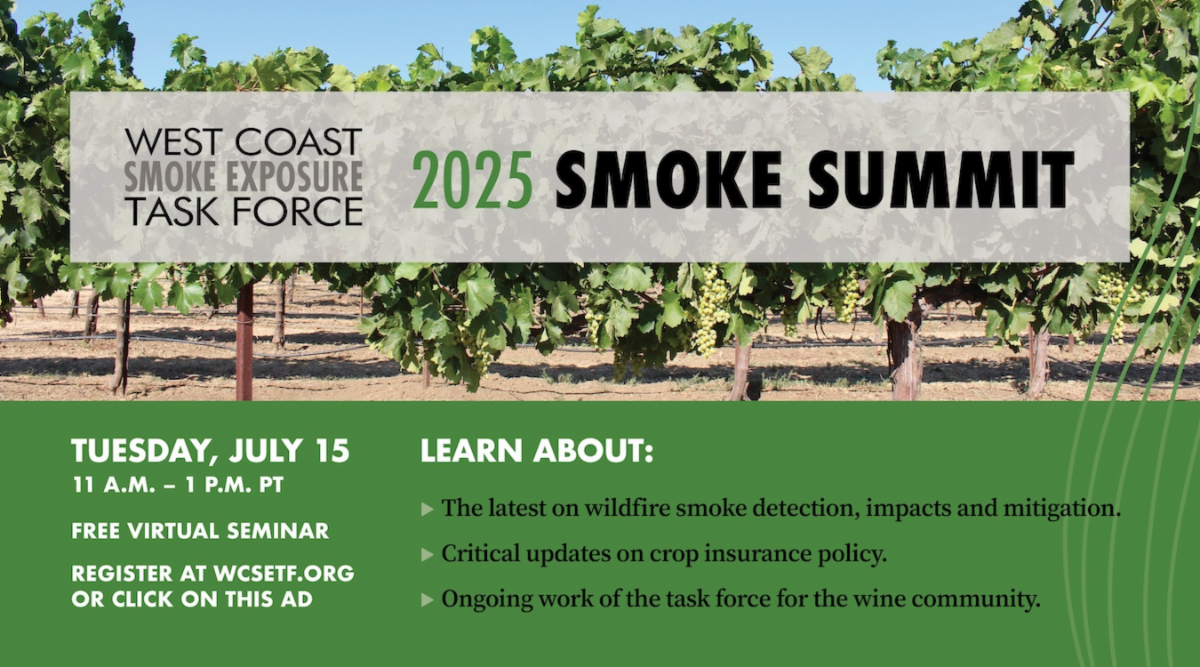
July 15, 2025

West Coast Smoke Exposure Task Force

Virtual Smoke Summit

Virtual event


July 16, 2025

National Viticulture & Enology Extension Leadership Community (NVEELC) Meeting

Virtual event


July 20-23, 2025

Australian Wine Industry Technical Conference

Adelaide, Australia


July 23, 2025

UCANR San Joaquin Valley Grapevine Rootstock Field Day

Five Points, CA


July 24, 2025

WSU and Washington State Grape Society

Viticulture Field Day

Benton City, WA


July 27-31, 2025

GiESCO Conference

Geisenheim, Germany


August 12, 2025

Ohio State University

New Sprayer Technologies and Best Practices Field Day: Vineyards and Orchards

Berlin Heights, OH


August 21-22, 2025

Michigan State University

Dirt to Glass Conference

Traverse City, MI


August 25-26, 2025

North American Grape Breeders Meeting

Bloomfield, MN

Find all upcoming events on the NGRA website.
 

National Grape Research Alliance


The monthly NGRA newsletter is provided as a service to the US grape and wine industry.

Not a member of NGRA? Please consider joining us.

Facebook  X  LinkedIn