A monthly communication from the Supportive Ministries Team of the Wisconsin Conference to invite conversation about the Church’s “big” call to create communities of belonging who serve the greater good. | |
Embracing the Joy of Transformation | |
Since the onset of the COVID pandemic over four years ago, we have been on a journey of learning what it means to be in community as congregations -- initially when we needed to distance ourselves from one another and now as we grapple with what it means to re-engage as communities. The Supportive Ministries Team of the Wisconsin Conference has been on this journey with you, initially considering how we might Tend the soul of God’s beloved communities, then moving to how we might Nurture the soul of God’s beloved communities as we regathered, and discovering how we were being called to Renew the soul of the beloved communities of which we are a part. As the shape of renewal emerges in our various communities, we are being invited to what will be the ongoing journey of what it means to Become Beloved Communities. | |
|
As John Lee observes at The Gospel Message, “To 'become' means to grow, to change and to transform. The apostle Paul urges us to ‘be transformed by the renewing of your minds.’ (Romans 12.2). Being connotes a fixed state of having arrived. When we are becoming, we are in motion, we are moving along a path, we are realizing our potential as part of God’s ever-flowing, ever-changing beloved Creation.”
| |
The Rev. Dr. Martin Luther King Jr. held out a vision of the Beloved Community that God envisioned for the whole creation. The vision of Beloved Community rises from a commitment to following the central teaching of Jesus, that the most important commandments are to love God and love neighbor as an expression of that love. Beloved Community is the community that loves as God intends: where truth is told and hierarchies of human value are dismantled, where each person, culture and all of Creation is valued, protected and honored as an equally beloved part of the family, the kin-dom of God. King asserted that “all life is interrelated.” | |
|
Beloved Communities grow and evolve from the intentional commitment of each participant to bring our best selves to every interaction and person we encounter, whether within the church or in the wider community. As Dr. Kenda Creasy Dean observes in Almost Christian, “We are not called to build better churches. We are called to be better humans who reflect God’s love.” To participate in Beloved Communities, we must pay attention to our own transformation as we interact with others.
How might that be lived out in real terms in our congregations and communities? One example might be to commit to a Relational Covenant like the one developed by First Congregational United Church of Christ in Oconomowoc.
We, the members of First Congregational United Church of Christ of Oconomowoc, commit to treating one another fairly, honestly, and with respect, remembering that we are all beloved children of God. We promise to listen to one another, with focus and patience, withholding judgement. When differences arise that cause conflict, we commit to responding with directness and timeliness, and to creating safe spaces to engage in conversation that allows each person to hear the other. After conversation, we commit to acknowledging the complexity of our differences, and will try to understand that there are many sides to any disagreement. We will claim ownership of our part in the conflict, and will publicly support the outcomes of resolution, seeking to recommit to relationship-building in faithfulness to our Lord and Savior, Jesus Christ.
| |
Or to engage in “Conversation as Communion” as Dr. Patricia Jensen observes in Conversational Learning.
To be in communion with others, with our natural world, with the source of being of all living things is to deeply experience being at one with the other, in and beyond time and space. It is an experience that we know as a feeling of being fully alive. Being in communion, we sense something of the mystical, the mysterious, an intermingling of souls and spirits. We feel together in the intimacy of conversation with others, in sensing that we share in the abundance of life we encounter in deserts, forests, mountains and prairies. In our experience of the numinous we feel grounded, connected, in communion.
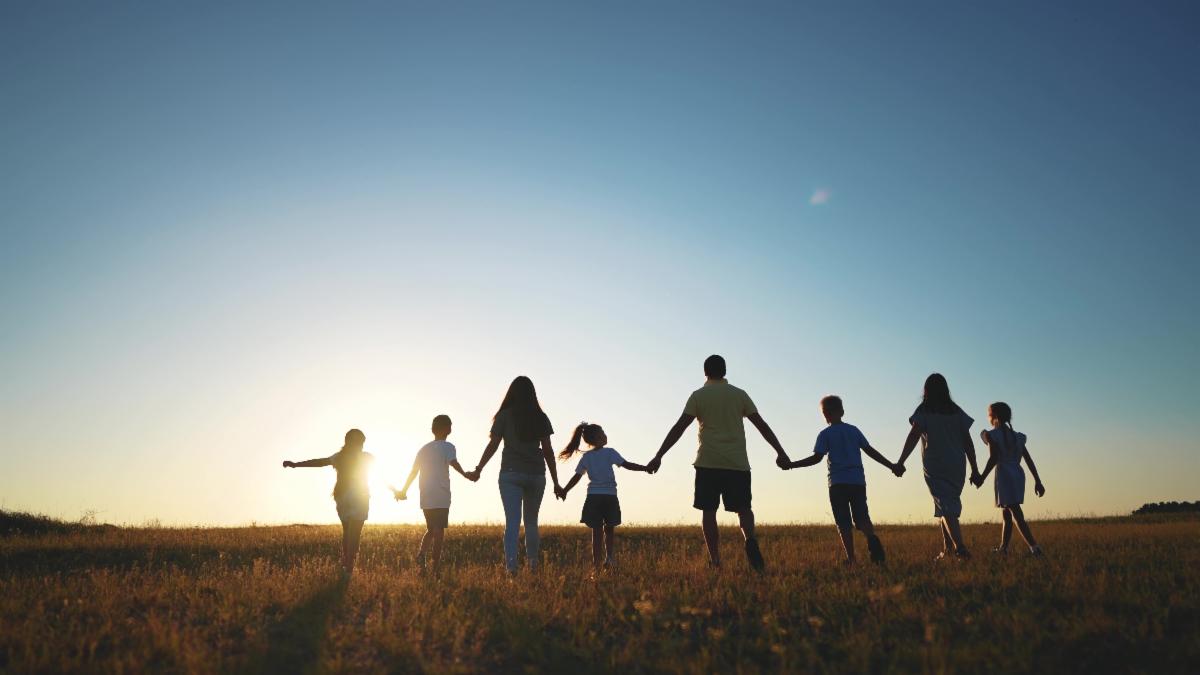
Being in communion, being in community, becoming a Beloved Community – a new journey unfolds before us.
| |
|
In the words of Abba Dorotheus, seventh-century Eastern Orthodox mystic:
Imagine a circle, and in its midst a center, and from this center rays extend, each one, each radius radiates from the center of the circle.
The farther these radii extend from the center, the more they diverge, the more remote they become from one another. On the other hand, as they approach the center, they converge and come together.
Now imagine that this circle is the world, and the center of the circle is God, and the radii from the center to circumference, from the innermost point to the outer edge, and from the outer edge to the very center, are the paths of life of people. When people withdraw from the center, from God, they withdraw from one another, and when they approach the center, when they seek after God, they come closer to one another.
Such is the circle of love. If we do not love, if we are distant from God, we are distant from one another. When we love God, when we are one with God, we are one in our love of each other. The converse is also true. The closer we are to each other, the closer we are to God. Such is the circle of love.
God is a circle whose center is everywhere and whose circumference is nowhere. - St. Bonaventure.
| |
|
Questions for further reflection:
- What do you love about the community of which you are a part?
- How has that changed for you since COVID? How has that changed for your community?
-
Tending, Nurturing, Renewing, Becoming Beloved Communities – which movement attracts you at the moment? Where do you see that happening in your community?
- Someone once observed that our church community is everyone and everything that is outside of our congregation. What does that suggest to you about the nature of community? How does that change how you look at community?
- What opportunities for “Conversation as Communion” do you see for your community? What opportunities do you see for contributing to and encouraging your community to become a beloved community?
| |
Bonus track for further conversation:
Imagining a New Model for the Church
June 10, 2024 by Sarai Rice
When we church people talk about “what it means to be the church,” we use lots of grand Scriptural and theological language. But our actual model for the church — both our image of what church is supposed to be and the way we organize to make it happen — tends to be based on more commonplace ideas. Perhaps it’s time to imagine a new model for the church.
When we talk about the church, we church people often say:
- the church is the body of Christ
- the church participates in God’s mission to care for the needs of the sick, poor, and lonely
- the church is the “one holy catholic and apostolic church”
- the church seeks to make disciples of all nations
No matter what version of church we champion or reject, if you watch how we actually organize church work, you can see that most of the time we think of church as a “membership” organization with a basic set of components: Continue reading the article
| |
Join the Discussion: Embracing the Joy of Transformation | |
|
The Supportive Ministries Team offers to opportunities each month to join a discussion on topics raised by this newsletter. The next conversations, "Embracing the Joy of Transformation," will take place by Zoom at noon and 7 p.m. on Thursday, Oct. 3.
Please join us for a discussion on Community, from the Rev. Bob Ullman's article above.
Register here for the noon discussion
Register here for the 7:00 p.m. discussion
| |
|
Missed these articles?
Revisit these thought-provoking articles from previous issues. Many include questions for groups discussions in your congregation, or for personal reflection.
| |
Conference Supportive Ministries
In addition to the direct support to pastors and congregations provided by Wisconsin Conference staff, here are some of the supportive ministries congregations can take advantage of. Follow the link below to learn more about this programs and how your church might benefit.
- Conflict Transformation
- Coaching Partners
- Grants and assistance programs
- Communities of Practice for Clergy or Faith Formation
- Appreciative Inquiry
- 5 Practices of Fruitful Congregations
- Readiness 360
| |
Supportive Ministries Task Force
Through this communication, the Wisconsin Conference Supportive Ministries Task Force provides articles, discussion guides and other resources for clergy and congregations on coping and thriving as we navigate the current turbulent waters. Supportive Ministries Task Force members from top left are Bob Ullman, Lisa Hart, Bonnie Andrews, Cathleen Wille and Tim Perkins.
| | |
Sign up for here for future issues of Renewing the Soul to be sure you don't miss any.
| |  |
Nurturing the Soul is made possible through your contributions to Our Church's Wider Mission. | | | | |