|
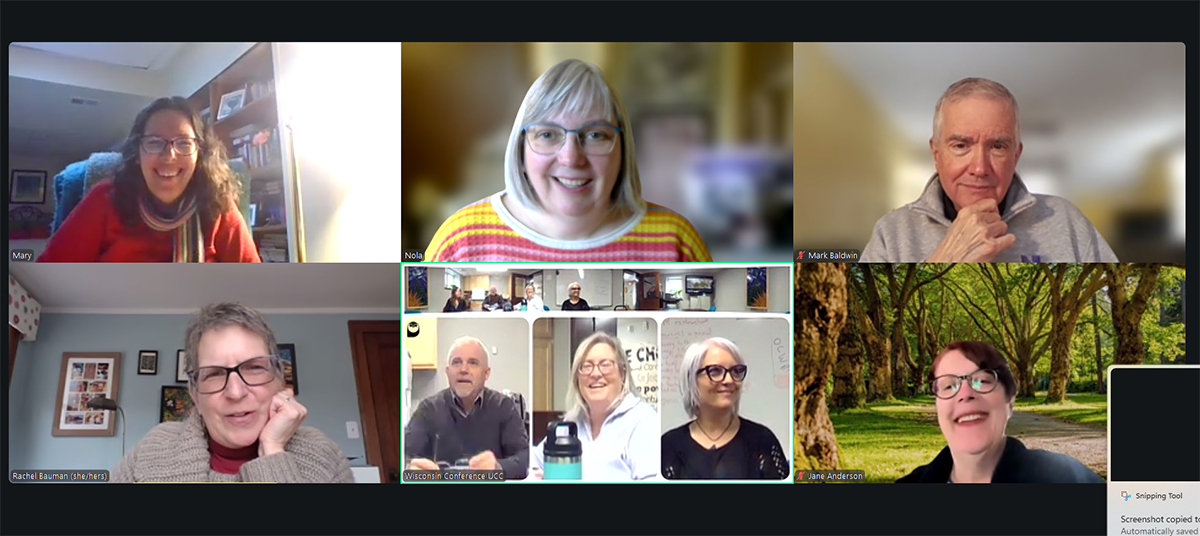
My first experience of creating a new community online came in the first few months of the pandemic. As I heard stories about the stress and isolation faith formation and youth ministry leaders were feeling as they tried to navigate new ways of doing things, I wondered if connection online could be a support for them. It started as an experiment. I would hold space on Zoom every week for 90 minutes for a faith formation and youth ministry leader gathering (FFYM Gathering). It was a drop-in space where people could come and go as they pleased. It was a space for people to seek support, and share frustrations and successes, ideas and resources. I wondered if anyone would show up. They did. I wondered if they would keep coming. They did. And, although not everyone could stay for the full 90 minutes, the majority did. A beloved community was forming.
Six years later, this online community no longer meets weekly, but does meet twice a month, and has continued to expand. The group, while mostly UCC, is ecumenical and has people who join the conversation from across the country. It is a mix of clergy and lay staff, as well as faith formation volunteers. It is a community that gathers not because they are required to meet, but because they want to be together. It is a community that supports one another in ministry, but also supports each other through the joys, struggles and sorrows of life. It is a community where most of the people would not know one another if it weren’t for its online format.
When asked recently what they value about this community, the group provided a variety of responses. Here are a few examples:
- “I would never have known any of the people in the group without this online gathering. The sharing of ideas is invaluable.”
- “Without this community, I would have been floundering. You all helped me survive.”“This online community, with the ideas shared, helps keep ministry fresh.”
- “This community helps us connect across regions. Doing this work outside of isolation allows for innovation as a spiritual practice.”
Reflecting on what makes this online community (and others) successful, I turned to the 5 C’s of Community: Connection, Collaboration, Communication, Commitment and Contribution. While the 5 C’s are not specific to online community, I think they are key to building a successful online community. So what exactly are each of the 5 C’s?
- Connection – is about forming relationships that work well. It’s about creating a community that supports each other through challenges and celebrates successes together.
- Collaboration – is about the working together to achieve something as a community. This is possible through the sharing of ideas, resources and skills within the community.
- Communication – is what holds a community together. It involves sharing, listening and providing feedback. It also means offering clarification when something has been misunderstood or is not clear.
- Commitment – is about showing up and staying connected. For some communities, it means reliably showing up. For others, such as our FFYM online community, it means staying connected and checking in with each other, even when someone isn’t able to join the online gathering on a regular basis.
- Contribution – is about giving back to the community. It may mean giving time and energy to a joint project, it may mean sharing ideas and resources, or it may mean sharing something about yourself that helps the community get to know you better.
Over the past several years, I have experienced beloved community in a variety of online settings. One setting is local congregations that have built an online worship community. As I visit congregations across our conference, I have been intrigued by the variety of ways online community has been created for worship. In some cases, online worship is offered via Zoom. This allows for the online participants to interact with one another, and in some cases, with those gathered at the church. The best practice is to have a Zoom host for the worship service. They can host at the church or from home. Their responsibility is to welcome people to the Zoom and also be a liaison to help address any tech issues. The ability to communicate directly with the those gathered in the sanctuary is dependent on the technology available at the church. However, even when this direct communication is not possible, those gathered online are able to communicate with one another. In some cases, they gather to socialize prior to the service, have their own coffee hour after the service, or both. Prayer requests are able to be shared through chat and the facilitation from the Zoom host.
If the service is streamed using YouTube or Facebook, those worshiping online can send messages and prayer requests through the chat. A best practice is to have someone at the church assigned to monitor the chat. This makes it possible for the prayer requests or announcements to be offered in real-time.
Another practice that helps build connection between those in the sanctuary and those worshiping online is to acknowledge those online during the Passing of the Peace. If the technology setup allows for interaction between the two groups, they can connect with and acknowledge each other. If not, those online can pass the peace among their gathered community and those in the sanctuary can turn to the camera to wave at everyone online. While this may seem superficial, it serves as a reminder that the worshiping community goes beyond the walls of the church.
Another online setting for building community is small groups. Congregations may gather for Bible study, faith formation opportunities, committee or team meetings, and other gatherings. It is also a way to connect with the wider church. There are a variety groups from the conference and beyond that meet online. While some are assigned groups, such as Circles of Trust and Communities of Practice (COPs), others are by choice such as the various justice working groups in the Wisconsin Conference and the monthly Beloved Community Conversations offered by the Supportive Ministries Team. The Damascus Project also offers a variety of opportunities for online community. Each one of these groups relies on the 5 C’s of Community in order to become a beloved community. While gathering in person is wonderful, these online groups allow us to develop relationship (and community) with people beyond our geographical area. This is a blessing of online communities, and we are blessed to have many to choose from in the Wisconsin Conference.
Reflection questions:
- What do you hope for, or need from, community?
- What experiences have you had with online community? Have you connected with a group that you would describe as a beloved community?
- What has enhanced your experiences with online communities? What has been a roadblock to forming community online?
- Where do you prefer to participate in a community… online or in person? Does the type of group make a difference in whether you prefer online or in person gatherings?
- Where do you see God at work in, and through, online communities?
|