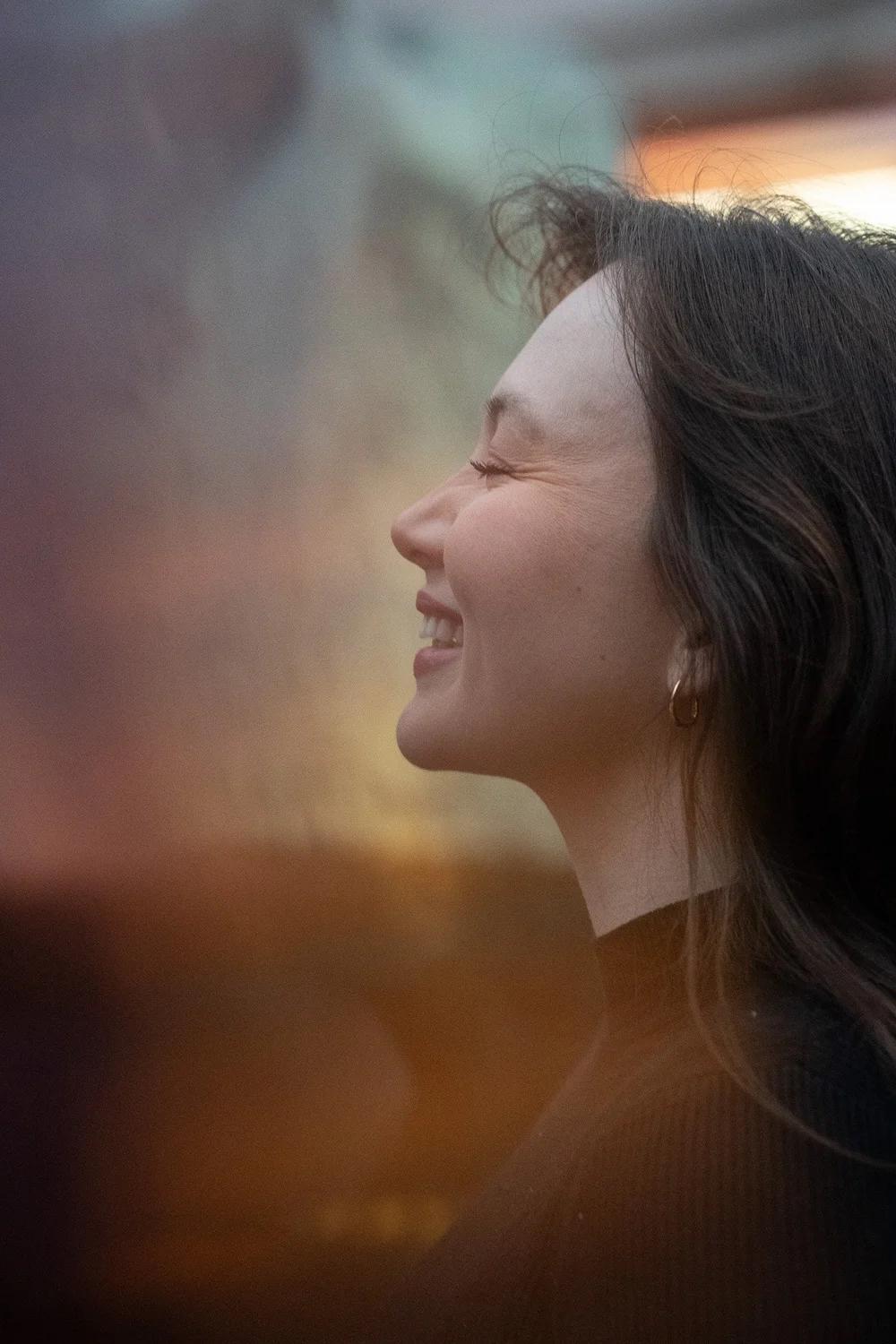
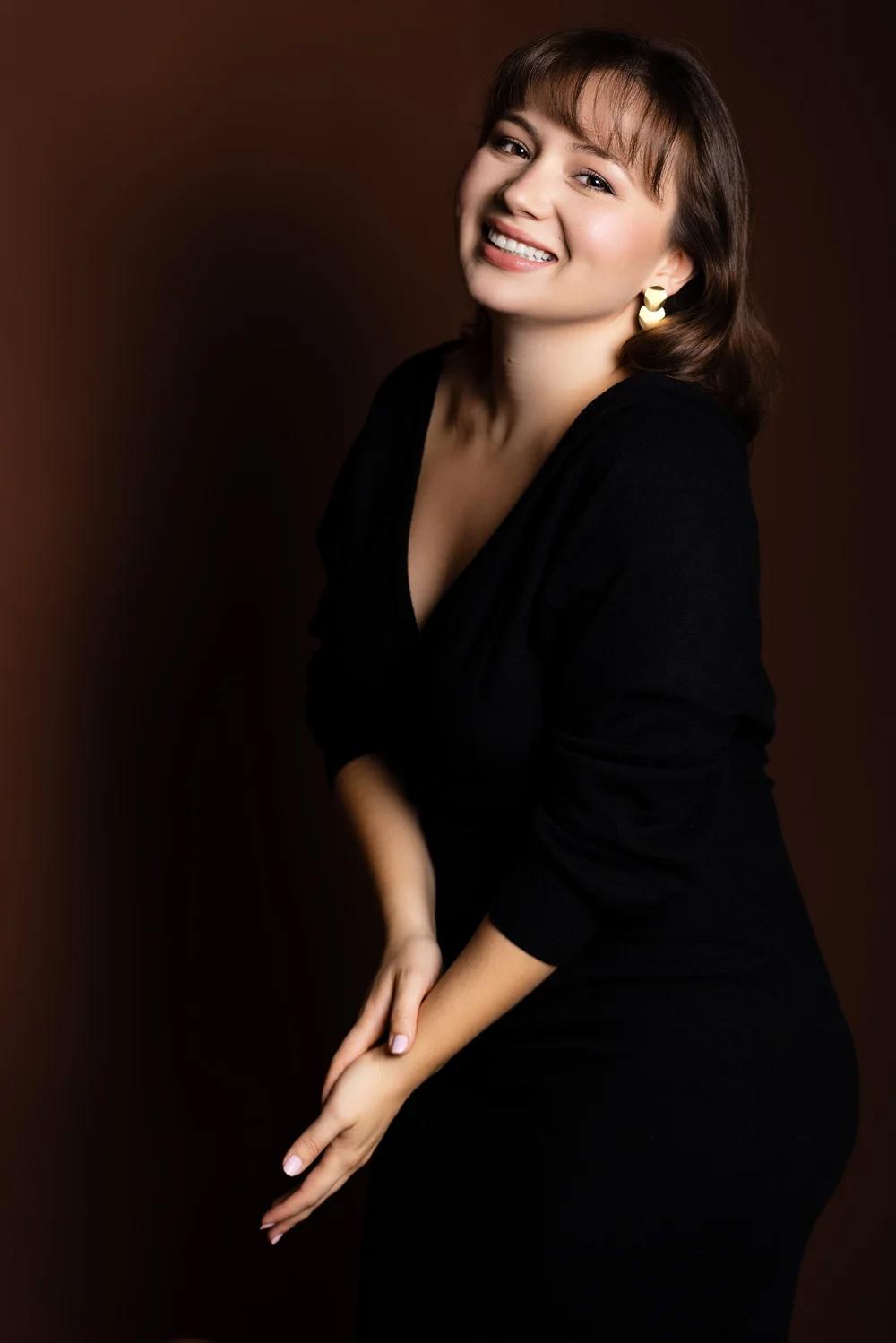
Meet acclaimed soprano Shelén Hughes Camacho, making her ACO debut September 17 at Alice Tully Hall.


Shelén joins ACO for Haydn’s dramatic “Lord Nelson” Mass as part of Turning the Key, our season-opening concert featuring Haydn and Beethoven. We recently spoke with her about the role, her remarkable international career and what it means to make her first appearance with ACO.

Shelén, the soprano solo in Haydn's "Lord Nelson" Mass is famously virtuosic, even operatic. Can you talk about how your voice is particularly suited to this role?


Certainly. I'm a lyric coloratura soprano, which describes a voice that's warm, light, agile, and can sing comfortably in a fairly high register. Agility is key in this work for the rapid runs, leaps, trills and ornamentation Haydn wrote for the soprano, especially in the fiery opening, the Kyrie.


Is agility a quality you discovered in your voice or set about achieving as a goal? 


A bit of both. Agility has always been a natural quality of my voice. Still, maintaining it requires constant technical work. As voices mature, they naturally evolve, and I’m already discovering more richness and color in mine. I love that development, but I also want to preserve the flexibility and ease that allow me to sing this repertoire. So I think of agility as both part of the instrument I was given and something I have a responsibility to cultivate.

As an artist with an operatic career, how is your approach different for an operatic solo within a mass?


With an opera, I'm doing everything I can to fully inhabit a character in the way I look, move, and express emotion. With a mass, I'm expressing emotion, too, but in service of a prayer—not a narrative. I want to honor the composer's intentions by reflecting at all times on the meaning of that prayer—inviting the audience to experience its beauty and power regardless of personal beliefs or lack thereof.


In a piece this demanding, what's your strategy for maintaining stamina as you step in and out of the chorus?


Actually, I'm not stepping in and out— which says so much about Tom's sensitivity. Looking deeply at the score, he saw how exposed the soprano solo part is— the need to soar over fierce and stormy instrumentation. In order for me to conserve my energy for these demanding passages, he's not asking me to sing the entire mass. This kind of sensitivity is rare, and I so appreciate it.

That's wonderful to hear. Finally, Your path to an international opera career began in Bolivia, far from the traditional conservatory pipeline. What can you tell us about that?”


The short story is that I attended a school my parents founded in our hometown of Cochabamba. While it was and still is strong in academics and the arts—particularly the Indigenous music and dance that are integral to Bolivian culture—I knew nothing about classical music until I was eleven. That's when I started to take voice lessons from a young self-taught musician who was teaching at my father's school. One day, when he was scrolling on YouTube, he discovered opera. Opera? What was that? We started to listen, trying to recreate the sounds we heard, having no idea of what we were doing. Postscript: my teacher went on to study music in Basel, and today he tours with the opera singer Cecilia Bartoli. 


When it was my time to apply to colleges, I was set on studying physics. But with my parents' encouragement, I applied to a few U.S. conservatories, too. In fact, I sent an unpolished audition video of me singing all the wrong repertoire—including one piece written for tenor— to about a dozen schools, and was invited for a number of auditions! Fast forward and major culture shock: I earned both my bachelor's and master's degrees at the wonderful Manhattan School of Music, followed by my Artist Diploma at Juilliard. And here I am—grateful for a career and life I couldn't have imagined a little over a decade ago, and about to sing Haydn's "Lord Nelson" Mass with the ACO, an orchestra I've so enjoyed and admired.

And the work itself—what do you love most about it?


It's one of the most thrilling masses of the classical period—a work of almost painful beauty— brilliant in its fierce emotional intensity, dramatic contrasts, and unique orchestration. The chorus and other solo voice parts are gorgeous, to be sure. But I feel like Haydn wrote the soprano solo as part of the instrumentation, which I find challenging, satisfying, and so much fun. 


Note: Off stage Shelén is the CEO and founder of Voices for Bolivia, a nonprofit that draws on the power of music to improve the lives of elderly poor in her home country and around the world.  


Carolyn Swartz, ACO communications


"Turning the Key"

Alice Tully Hall, Lincoln Center

Haydn “Lord Nelson” Mass

Beethoven Symphony No. 1

September 17, 2026 - 7:30 PM