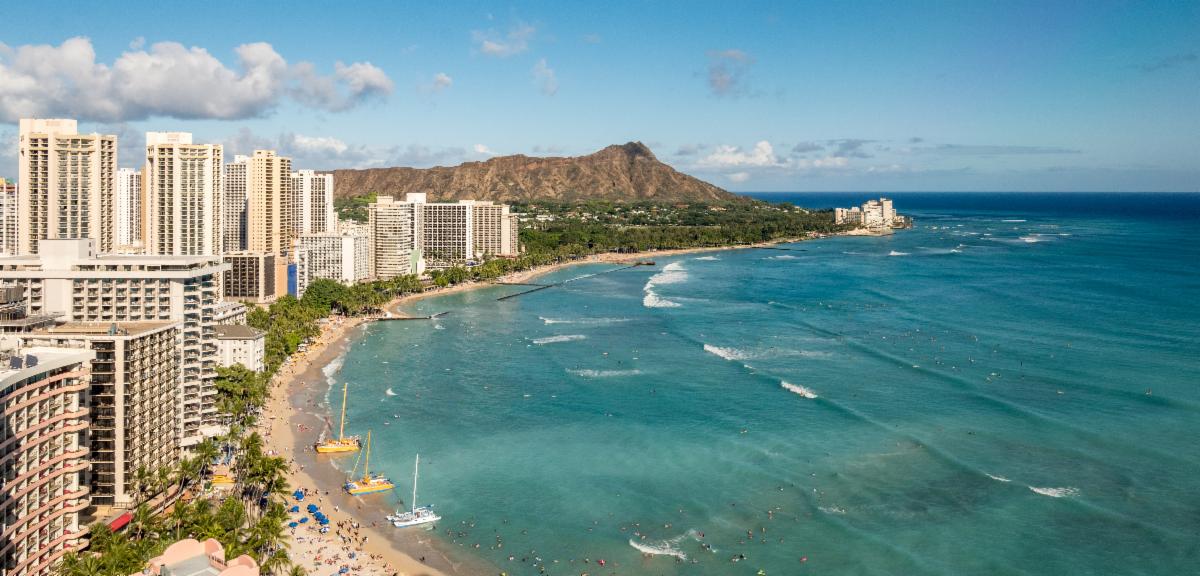
Behind the Surge: Why Investors Are Paying Top Dollar for Hawaii Hotel Land

In the past three months, more than half a billion dollars’ worth of leased fee interests beneath major Hawaii hotels have changed hands, signaling heightened activity and strategic repositioning in the hospitality real estate sector.


Notable recent transactions include the sale of the leased fee under the 96-room Oasis Hotel in Waikiki for $23 million, 87,000 square feet of land beneath roughly two-thirds of the 1,230-room Hyatt Regency Waikiki for $215 million, and the leased fee beneath the 249-room Four Seasons Hualalai for $400 million. Two key themes emerge from these deals.

Case Study #1: When It Makes Sense for a Lessee to Pay a Premium

The $400 million sale of the land under the Four Seasons Hualalai to entities affiliated with leasehold owner Michael Dell is instructive. Despite yielding around 2.5% based on estimated ground lease payments, the premium reflects logical economics. Hotels have a higher market value as fee simple properties than as leaseholds, chiefly because fee simple hotel transactions command capitalization rates 100 to 150 basis points lower than leasehold deals. Additionally, fee simple ownership enhances cash flow by eliminating ground rent obligations. Our calculations show that when applying the lower cap rate to projected income (less the rent payment), the differential in value of the property justifies the purchase price for the leased fee. Meanwhile, the landlord is able to utilize the funds in higher yielding projects. We see it as a win-win.

Case Study #2: Divergence Between Landlord Expectations and Investor Yield Requirements

The Steiner family’s $215 million sale of its 87,000-square-foot property beneath the Hyatt Regency Waikiki translates to $2,471 per square foot—one of the highest figures on record for Hawaii hotel land. Purchased by Montgomery Street Partners’ Ground Lease REIT, the investment offers a yield of approximately 4% from lease income, a structure mirrored in prior transactions involving the Alohilani Resort and the Courtyard by Marriott Waikiki. Institutional investors deem long-term ground leases a stable investment, often accepting yields in the 4% to 5% range.


By contrast, Hawaii landlords traditionally, via the arbitration process, benchmark ground rent at roughly 8% of underlying land value. With rising prices in recent leased fee transactions, a crucial question arises: Should these high-priced sales serve as comparables for rent renegotiations? If so, this could drive land valuations—and consequent ground rents—to unprecedented levels, especially given the significant gap between returns Hawaii landlords have historically received and those that sophisticated investors are now accepting.

Powell & Aucello Perspective

These transactions mark a period of transformation in Hawaii’s hotel investment landscape. At Powell & Aucello, the approach goes beyond transaction tracking—we provide analysis and guidance for owners, investors, and lenders to understand the broader implications. With decades of specialized experience in Hawaii hotel real estate, our team is well equipped to help stakeholders navigate the evolving dynamics of fee simple and leasehold ownership. The latest sales raise important questions for anyone exposed to Hawaii hotel land values. For those interested in the impact on portfolios or strategies for upcoming rent resets, industry consultation is strongly recommended.

Meet with Us at the Lodging Conference

We will be attending The Lodging Conference from October 6th ~ 8th at the JW Desert Ridge in Scottsdale AZ. We will launching some of our recent listings and available to discuss other Hawaii hotel opportunities.


1189 Waimanu Street, Suite 3302

Honolulu, HI 96814

(808) 466-3401

www.PowellAucello.com

Linkedin