|
The dogs are barking but the circus has moved on.
When things go wrong, the minister moves on, or quietly shuffled.
The organisation, the people who work in it and the public who depend on it, are left to sort out the consequences.
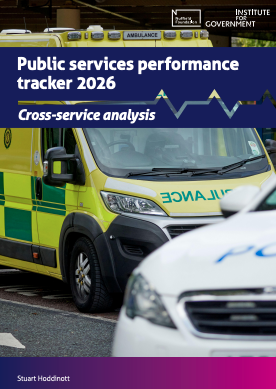
The Institute for Government's latest assessment of public services is uncomfortable reading for Labour.
It describes the abolition of NHS England as one of the most;
‘… egregious examples of poorly conceived and executed reform.’
The rationale kept changing, relationships with staff were damaged and eighteen months later, the process is drifting.
This is not an opposition press release. It's an independent assessment from people who study how government works.
For more than two years I’ve questioned Streeting's approach to running and changing the NHS.
In my opinion it was a very silly idea, with a very silly rationale, conducted by a very Silly Boy... blinded by ambition.
Yes, the NHS needs to change, evolve, keep-up, modernise, innovate but…
… it all requires;
- evidence,
- preparation,
- experience,
- engagement and an
- understanding of how complicated organisations actually work.
Announcing change is easy. Delivering it is hard-yards management.
Streeting announced the abolition of NHS England, enormous reductions in management capacity and another upheaval of the organisations responsible for commissioning and coordinating care...
... at precisely the time…
… when the NHS needed stability, relentless attention to waiting lists, a serious programme of operational improvement and social care stabilised.
No legitimate arguments were made for removing duplication between NHSE and the DH++…
… which insiders tell me was principally duplication in the DH because minister felt ‘outside the loop’ of the NHSE.
-
Where was the convincing implementation plan?
-
What risks were identified?
-
Who challenged the assumptions?
-
What benefits have materialised?
By the time HMG published an impact assessment the damage was underway, and ...
... doesn't settle the question of whether the decision was properly tested before it was announced.
Any hospital chief executive attempting a reorganisation on this scale would expect forensic scrutiny from their board. indeed...
... any hospital boss, wanting to change the location of a service would have to write an out-line business case, a business case and get it signed off...
... any Minister like Streeting, can throw the NHS up in the air and walk away without ever putting pen to paper.
And...
... let's not forget a futile attempt at the leadership of Labour, pretending he had support that plainly, he didn't. Naked ambition isn't pretty.
Now we have a much bigger problem.
Streeting's no longer health secretary. He's Defence Secretary.
Honestly and genuinely, I'm worried.
He's responsible for national defence policy, military capability, enormous budgets and decisions with global consequences far beyond anything encountered in the NHS.
I'm not suggesting that ministers must be experts in everything, but…
… judgment matters. Experience matters. The ability to listen, understand risk and distinguish political ambition from operational reality matters.
Burnham could not have understood the mess, and damage Streeting had done to the NHS, and entrusted him, in this turbulent world, with the nation’s safety.
It’s not as if there was no one to ask.
NHS managers, clinicians and civil servants understand organisational change. They know the dangers of removing capacity before replacements exist.
Too often their experience is treated as an obstacle rather than an asset.
The professional bodies, trade associations and think tanks should provide another safeguard. Some put up a half-hearted challenge. Others sat on their hands, knowing…
… their access to ministers is more important than challenging their decisions. Being inside the tent is pointless if nobody is prepared to say the roof is falling in.
Where were the formal safeguards?
What advice did the permanent secretary give? What did the accounting officer conclude about feasibility and value for money? What risks were put before ministers?
We should know. The health select committee should ask.
Government involves difficult choices and unavoidable risks, but the people making those decisions should be required to explain the evidence, accept challenge and account for the consequences.
Yvette Cooper has inherited an NHS with no time left, to deliver Labour’s promises.
Streeting has inherited responsibility for us, our nation and our family's security.
The IfG has provided an independent and excoriating assessment of what happened at Health.
Political accountability can’t simply mean answering questions while you're in office… leaving somebody else to deal with the consequences when you move.
In the NHS, patients live with the life changing consequences of decisions long after the minister has left the building.
Now, with national defence at stake, surely we should ask a question that applies to every government.
Who holds ministers accountable for the decisions they leave behind?
|