|
Bell & Gossett’s Little Red School
House Visits New York & New Jersey
______________________________________________________
ALL DAY IN-PERSON SEMINARS
HYDRONIC, STEAM, HVAC & PLUMBING SYSTEM DESIGN
______________________________________________________
0.6 CEU CREDITS In-Person | 0.5 CEU Credits Virtual Webinar
| | |
Welcome to the Little Red Schoolhouse®
Since its inception in 1954, Bell & Gossett’s Little Red Schoolhouse has offered training for hydronic and steam HVAC, and plumbing systems application, design and maintenance. Known as the industry’s educator, the Schoolhouse sets itself apart by emphasizing a systems-based
concept of teaching, rather than focusing on product features and benefits.
Our training curriculum is created using the core hydronic and steam engineering principles established by Gil Carlson and his Bell & Gossett engineering team back in the 1950s. Training modules are frequently updated to support advancements in equipment design and operation,
along with the evolving focus on sustainability, decarbonization, and electrification of hydronic systems.
| | |
Class Schedule
Notes:
• Classroom courses are the same on Tuesday in NJ and Wednesday in NYC
• The live-virtual webinar class on Thursday contains new material, not covered in Tuesday | Wednesday class
• Continental breakfast and lunch provided
| | |
Tuesday, June 9th
New Jersey
Time: 9AM - 4:30PM
Format: In person, Classroom
CEU: 0.6
Location: Delta Hotels by Marriott Woodbridge
515 US 1 South, Iselin, NJ 08830
Agenda Below
Register
| |  | |
Wednesday, June 10th
New York City
Time: 9AM - 4:30PM
Format: In person, Classroom
CEU: 0.6
Location: Club 101
101 Park Avenue, New York, 10178
Agenda Below
Register
| | | |
Thursday, June 11th
Live-Virtual Webinar
Time: 9AM - 4:15PM
Format: live-virtual
CEU: 0.5
Agenda Below
Register
| | | For help registering, call Elizabeth Woods 800.932-4454 | | All Day In-Person Class Sessions | | |
Hydronic Fundamentals
Join Xylem’s Bell & Gossett for a brief discussion on the basics of heat transfer in hydronic applications.
In this session, the Xylem team will summarize the following for attendees:
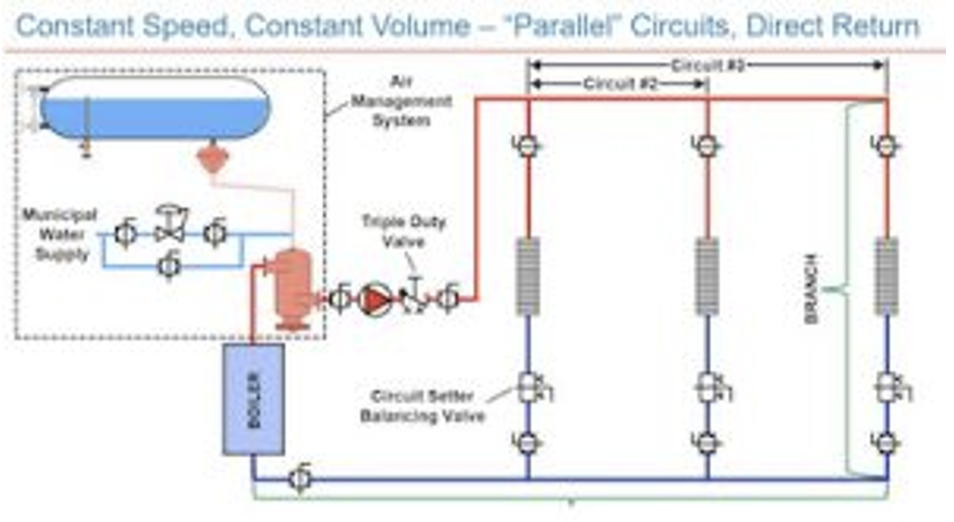
- Explain the concept of Zone Pumping
- Review flow and pressure drop relationship in pipe
- Summarize the System and Pump Curve interaction for pump flow determination
- Outline Distributed Pumping piping configuration options
- Discuss suggested pump control strategy for each layout
- Apply a design scenario to compare a pump versus control valve for coil flow control
0.1 CEU
Time: 1 hour
| | |
Flow Balancing
Attendees of this seminar will learn about system efficiency and the importance of system balancing. Xylem will discuss why balance is important to a well-designed and commissioned HVAC system.
In this session, the Xylem team will summarize the following for attendees:
- Discuss where balance and flow measurement is needed in closed and open hydronic systems
- Review the negative impacts of an unbalanced system
- Explore self-balancing techniques that can be utilized via system design
- Compare and contrast different balance valve technologies and the pros & cons associated with each
0.1 CEU
Time: 1 hour
| | |
Variable Speed Pumping Fundamentals
In this session, the Xylem team will summarize the following for attendees:
- Address the fundamental issue solved by applying variable speed operation to pumps.
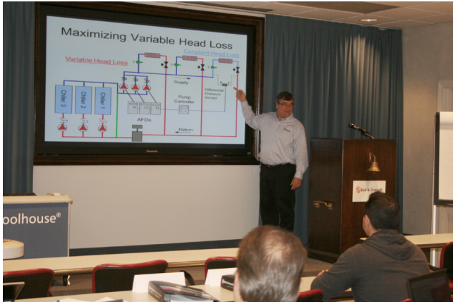
- Define variable and constant head loss and how these parameters physically correlate to a closed loop hydronic system.
- Introduce and demonstrate the different control strategies available when controlling variable speed pumps.
0.1 CEU
Time: 1 hour
| |
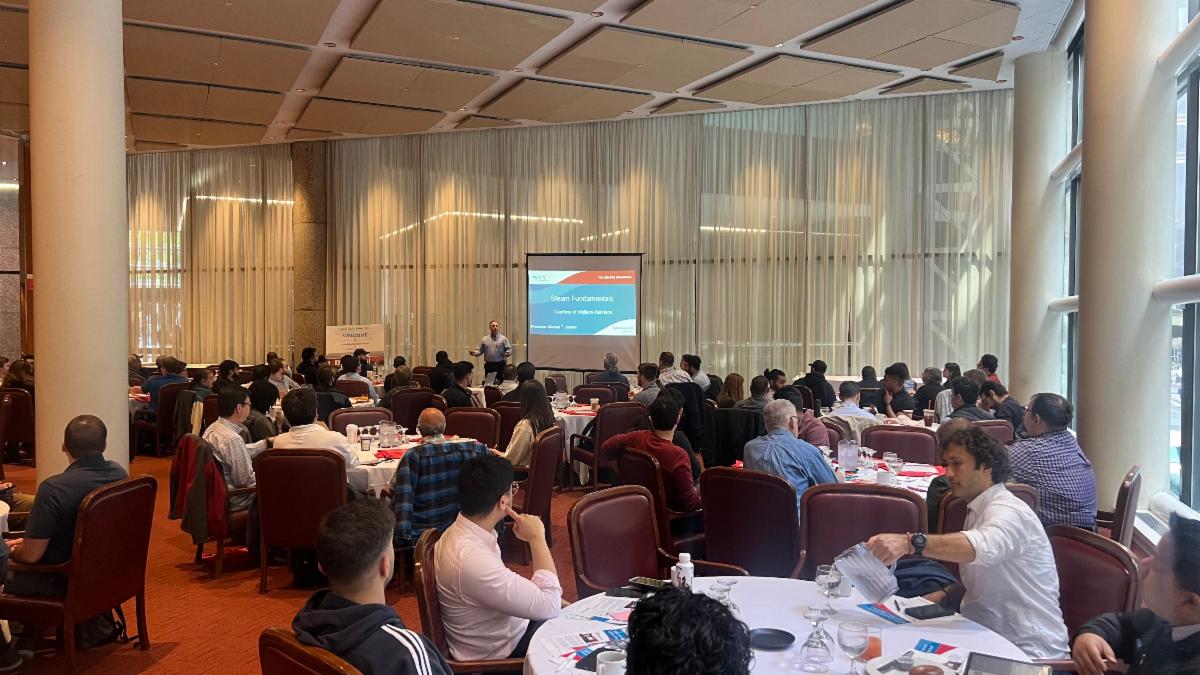
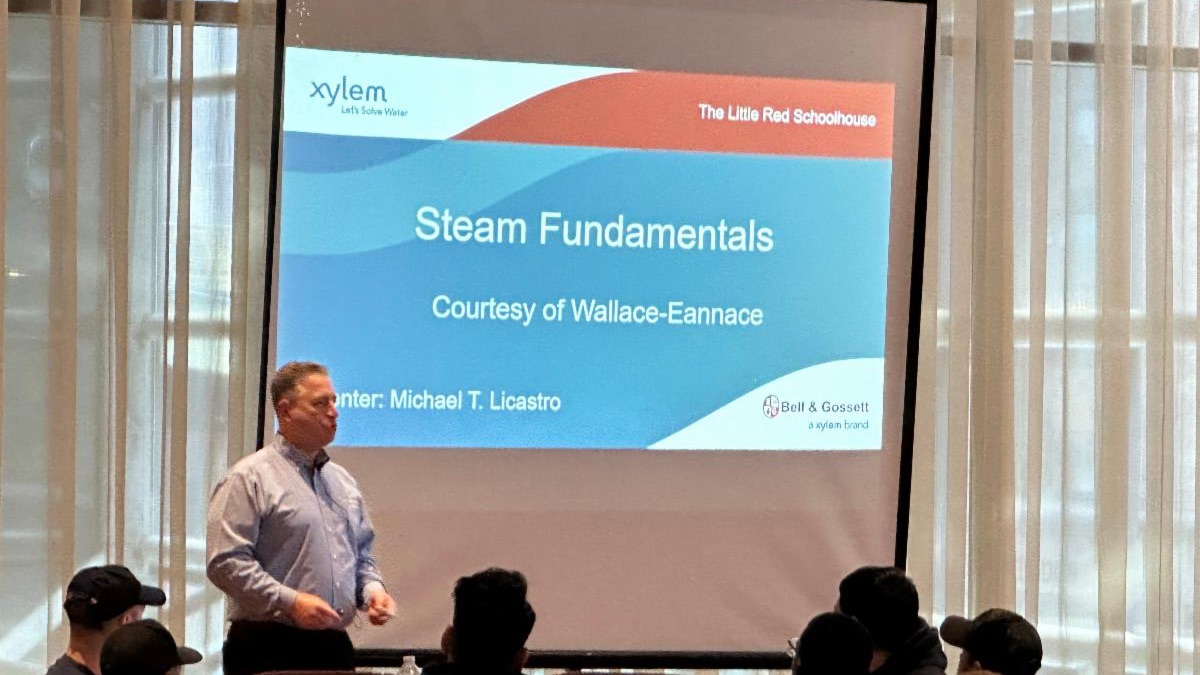
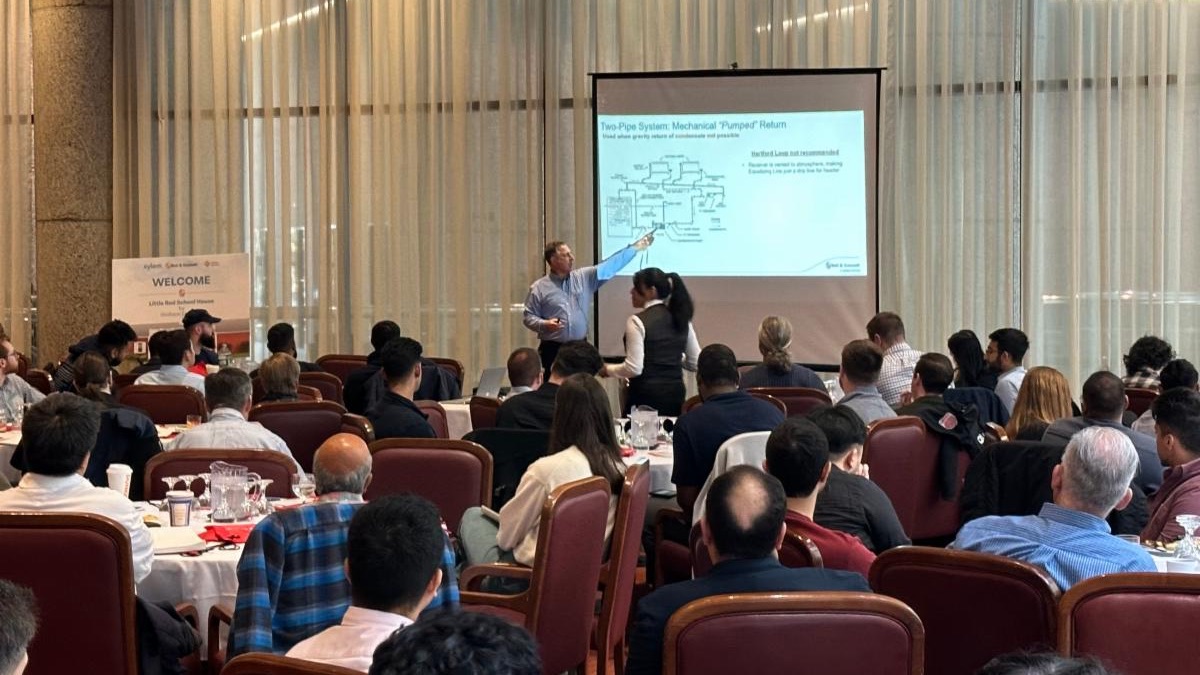
Steam System Design Fundamentals - Low Pressure Steam Heating
Attendees of this class will gain a thorough understanding of steam properties and how they are used in heating applications and pipe sizing. An example of how to size steam pipe utilizing ASHRAE’s sizing charts will be provided.
During this seminar, Xylem will:
- Explain why steam is used in heating applications.
- Define one pipe and two pipe heating systems.
- Analyze the thermodynamic properties of steam.
- Describe sensible and latent heat.
- Identify the effects of pressure on steam.
- Examine the systems required steam flow rate.
- Determine maximum pressure drop and velocity limits.
- Illustrate how to size steam pipe using ASHRAE’s sizing charts.
- Outline condensate return piping configurations
- Explain the purpose, sizing, and operation of Condensate Pumping System, Boiler feed Pumping System, Vacuum Producing System
0.1 CEU
Time: 1 hour
| | |
Air Management Basics
In this session, the Xylem team will summarize the following for attendees:
- Highlight the strategies used to control air and use it for the stability of any closed loop system.
- Describe a systems pressure band and required components
- Identify the difference between air control and air elimination
- Illustrate how to determine the systems initial cold fill pressure
- Calculate the required precharge pressure for a diaphragm or bladder tank
- Analyze the systems required tank size and discuss pump and tank location best practices
0.1 CEU
Time: 1 hour
| |
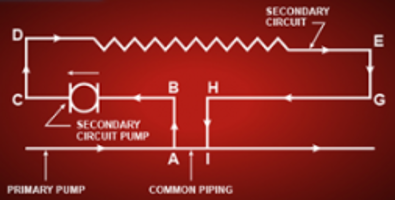
Basics of Primary Secondary Pumping System Design
Primary-Secondary Pumping
0.1 CEU
Time: 1 hour
| | Register Here for In-Person Sessions | | Live-Virtual Webinar "Master Class Sessions" | | |
Flow and Head Calculations
(Presenter: Mike Licastro)
- Teach how to evaluate a system’s flow rate based on critical fluid characteristics
- Identify the difference between series and parallel piping arrangements, and the impact this characteristic has on total system head loss
- Illustrate how to determine the system’s pump head requirements for design-day operation
0.1 CEU
Time: 1 hour
| | |
Parallel & Series Pumping
(Presenter: Mike Licastro)
- Compare pump choices based on projected building load profile
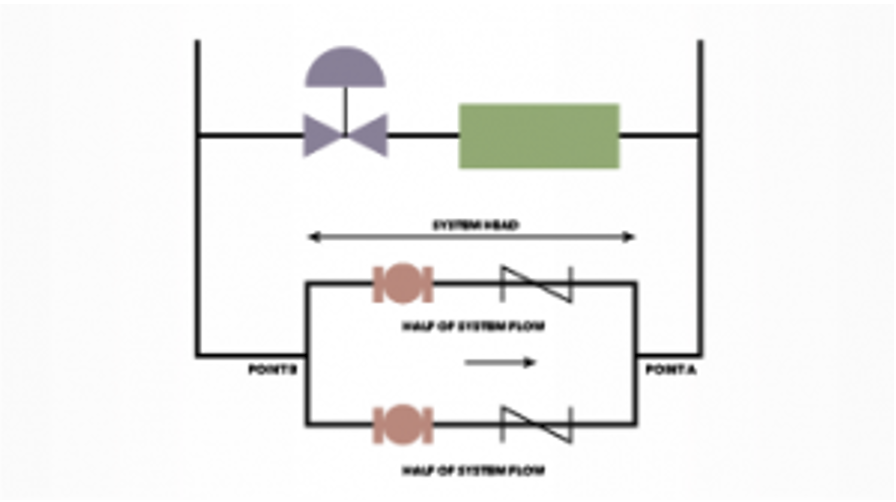
- Discuss the pump and system curve relationship relating to redundancy, standby capacity and pump staging control
- Review of procurement, installation and operational costs
- Outline proper pump and distribution pipe sizing procedures
- Compare installation footprint
0.1 CEU
Time: 1 hour
| | |
Systemwise Demo
(Presenter: Robert Barrett)
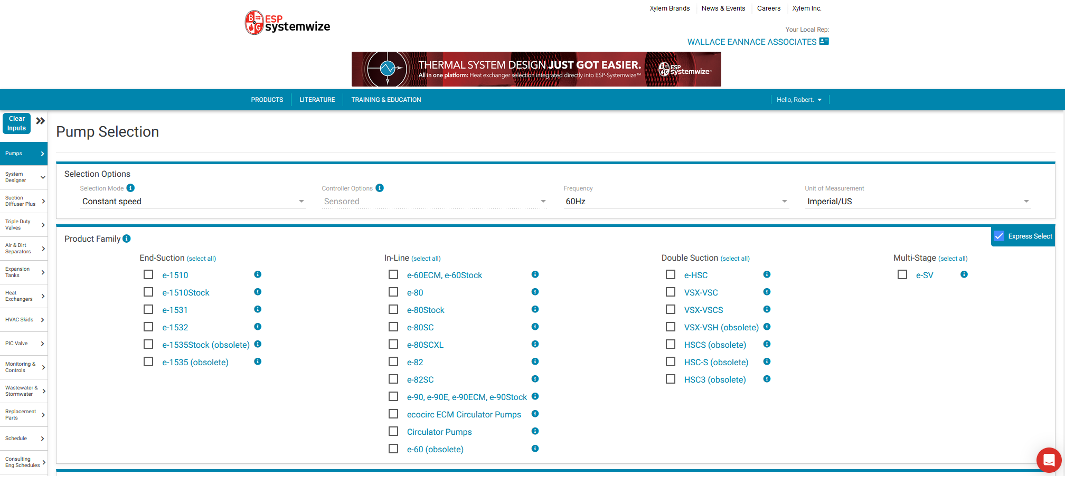
- Learn how to properly select equipment and design hydronic systems while learning to use B&G’s online selection tool “Systemwise.” Systemwise provides one location to select pumps, suction diffusers, triple duty valves, air separators, expansion tanks and PICV’s. The software generates schedules in Excel, provides 2D CAD files and REVIT files, CSI-format specifications, submittal sheets and more
- This presentation provides a demo of the system along with application knowledge every design engineer should know
- Learn the ins and outs of good pump selection
- Understand the functions of a triple duty valve and how to properly select it
- Understand the function of a suction diffuser and how it can be used to reduce fittings
- Select and air separator quickly
- Gain confidence in selecting expansion tanks for HVAC systems, potable hot water, and well tank (booster pump) systems
- Learn how to quickly select a pressure independent control valve
PDH-N/A
Time: 1-hour
| | |
Schedule Template
(Presenter: Robert Barrett)
- This presentation provides an overview of the WEA Schedule Template. This tool is a useful tool for specifying engineers. It provides preconfigured equipment schedules and standard notes for a plethora of HVAC and plumbing equipment. In addition, it provided pre-filled information for many products, hyperlinks to manufacturers websites, so users can quickly find and download product data
- There are also links to equipment selection tools,CAD libraries, etc.
Takeaway:
- Knowledge of the tool, how to navigate, and why it is useful
- Pro-tips on how to “hide” and “unhide” elements in the excel file
- Understanding of how to optimize searching or information and translating that into job schedules on projects
0.1 CEU
Time: 1 hour
| | |
Flow Control and Control Valves
(Presenter: Mike Licastro)
- Understanding the different types of control valves commonly used in hydronic systems
- Application of different valves, flow coefficients, and their impact on full system operation
- Introduction of inherent characteristic curves and how these curves are impacted by the valves authority
0.1 CEU
Time: 1 hour
| | |
Variable Speed Pressure Booster Basics
(Presenter: Mike Licastro)
- Explain why a pressure booster is required
- Identify ASHRAE energy requirements
- Describe a method for establishing the required system flow and pressure
- Analyze minimum and maximum pressure requirements
- Examine pump cut-in and cut-out pressures
- Determine the systems hydro-pneumatic tank size
- Calculate the required tank pre-charge pressure
PDH-N/A
Time: 30 Minutes
| | Register Here for Live-Virtual Webinar Session | | | | |
For over 100 years Wallace Eannace has brought innovative and cost-effective system solutions to the plumbing and HVAC industries through quality products and system design support.
Working with Engineers, Developers, Property Managers and Contractors, Wallace Eannace provides technical knowledge, sizing, design, and field support.
| | | | |