|
Upcoming Benchmarks' Events
Benchmarks' Child Welfare Webinar
Date: November 9, 2023
Time: 8:00 am thru 9:00 am
Register Here
Benchmarks' Friday Membership Webinar
Date: Friday, November 17, 2023
Time: 8:30 am thru 9:30 am
Register Here
| |
|
NC DSS Needs You
We at the North Carolina Department of Social Services regard you as a key member of our stakeholder community and your input is essential to our ongoing efforts to improve our services. One of the ways we evaluate our services is through the Child and Family Services Review (CFSR). A part of that process includes providing you an opportunity to give us your feedback through this survey. We greatly appreciate receiving your feedback on the survey link here: https://forms.office.com/r/FFq7AkQ9WR.
We would also request that you send this survey to your foster, kinship and adoptive families along with your community contacts to ensure that we receive the most comprehensive feedback. It will take you approximately 10 minutes to complete. If you have any questions, please do not hesitate to reach out to Kimaree Sanders, Section Chief for Regulatory and Licensing, at Kimaree.Sanders@dhhs.nc.gov.
Thank you again for your feedback, the survey will close on November 17, 2023.
| |
|
NC Medicaid Section 1115 Demonstration Renewal Application Submitted
The North Carolina Department of Health and Human Services submitted its final application to the Centers for Medicare & Medicaid Services to renew the NC Medicaid Section 1115 Demonstration Waiver for a second five-year period, from Nov. 1, 2024 through Oct. 31, 2029.
The 1115 Demonstration Waiver, initially approved in October 2018, gave the Department the authority to launch NC Medicaid Managed Care and the Healthy Opportunities Pilots. These and other initiatives support the state’s goal to improve the health and well-being of all North Carolinians through a whole-person, well-coordinated system of care that addresses both medical and non-medical drivers of health, while advancing health access by reducing disparities for historically marginalized populations.
Renewal of the 1115 Demonstration Waiver will allow North Carolina to build on successes and continue the work of the state and its partners. To help drive the state’s overall goals, the Department requested:
· extensions of ongoing managed care authorities
· expansion of and refinements to the Healthy Opportunities Pilot program
· implementation of several new initiatives focused on streamlining Medicaid enrollment for children and youth; improving care for justice-involved individuals; and investing in behavioral health
More information on the 1115 Demonstration Waiver renewal along with the final application and public comments are on the NC Medicaid website at medicaid.ncdhhs.gov/meetings-notices/proposed-program-design/nc-section-1115-demonstration-waiver.
| |
|
Feedback on draft content for DMHDDSUS strategic plan
Please take a moment to review the Draft Strategic Planning Slides for DMHDDSUS and submit feedback to director.dmhddsus@dhhs.nc.gov as soon as you are able.
Draft Plan Here
| |
|
Updated State Health Improvement Plan Addresses Social Drivers of Health, Medicaid Expansion and Behavioral Health
This week, NCDHHS announced recent updates to the NC State Health Improvement Plan (NC SHIP), which include priorities for addressing the full set of factors that impact a person’s health and updates data on the progress of improvement.
The plan addresses other factors that influence health, such as social and economic factors, and suggests interventions that support education, access to healthy food, air and water quality, and access to care. It also recognizes the pressing concerns related to behavioral health, including mental health, substance use disorders and suicide prevention, as part of whole-person health.
The 2023 NC SHIP places particular importance on Medicaid Expansion as a critical element in improving health care access and reducing disparities. On Dec. 1, 2023, NC will begin Medicaid Expansion, giving 600,000 North Carolinians access to health care.
The plan reflects the insights and contributions of the NC SHIP Community Council, which includes other government agencies, nonprofit organizations, faith-based groups, businesses, community members, philanthropies and academia. If you are interested in joining the council, fill out the NCSHIP Community Council Interest Form.
| |
|
NCDHHS Awards $4 Million to Enhance Inclusion Works )
We are excited to announce that NCDHHS will be partnering with Work Together NC to expand and enhance services that support individuals to work in their communities!
A few of the things that Work Together NC will be assisting with are:
- Creating an advisory group of individuals with I/DD, family members, service providers and community partners to update and implement the Inclusion Works Strategic Plan
- Conducting a thorough assessment of the current availability of competitive integrated employment opportunities in our state
- Updating Career Planning and Assessment tools used by providers
- Implementing a communication plan to help individuals and families learn about supported employment opportunities
- Supporting service providers who may want to transform their current models of employment supports
For more information, read the press release here: Inclusion Works Award
| |
|
Benefits Counseling is available through the Division of Vocational Rehabilitation Services (DVRS)
North Carolina’s Work Incentive Planning and Assistance (WIPA) program helps people with disabilities make informed decisions about work, benefits and the use of work incentives to achieve their employment goals. Our benefits counselors can provide:
- Information about available benefits
- Referrals to government programs and community resources
- Counseling about the impact of paid employment on your benefits and financial independence
- Planning assistance to help you establish and achieve your goals for employment
- WIPA services are provided at no cost for eligible SSDI/SSI beneficiaries.
Additional information on benefits counseling can be found in this presentation.
If you are interested in counseling services, contact your local VR office today.
| |
|
1915 (C) Innovations Waiver Amendment and Extended Appendix K Flexibilities
On September 1, the Division of Health Benefits (DHB) submitted an Innovations Waiver Amendment to extend various Appendix K flexibilities. DHB recognizes the work of each LME/MCO is integral to the beneficiaries’ wellbeing and health, promoting a meaningful life in their respective communities.
In August, Centers for Medicare and Medicaid Services (CMS) provided guidance that all Appendix K flexibilities will continue if a States Amendment is not approved by November 11, 2023. NC Medicaid will comply with CMS guidance and extend Appendix K if approval is not received before the end of Appendix K authority.
NC Medicaid acknowledges needed systems changes are required in preparation for the ending of Appendix K. NC Medicaid continues engagement with CMS to expedite the approval of the various flexibilities. We intend to keep all stakeholders updated.
The 1915 (C) Innovations Waiver was amended to include the following Appendix K flexibilities to continue after CMS approval:
- Add: Home delivered meals (up to 7 meals per week/1 per day).
- Amend: Remove the requirement for the beneficiary to attend Day Supports provider once per week.
-
Add: Allow real time, two-way interactive audio and video telehealth for Community Living Support; Day Support, Supported Employment; Supported Living and Community Network to be delivered via telehealth must follow the requirements and guidance in Clinical Coverage Policy 1-H.
- Amend: Community Navigator to note that individuals may not receive this support unless they are self-directing one or more of their services through the Agency With Choice or Employer of Record Model.
- Add: Allow Waiver Individuals to receive services in alternative locations: Hotel, Shelter, Church, or Alternative Facility Based Settings.
- Amend: Increase the Innovations Waiver Cap from $135,000 to $157,000 per waiver year.
- Amend: Allow parents of minor children receiving Community Living and Support to provide this service to their child who has been indicated as having extraordinary support needs up to 40 hours/week.
- Amend: Allow Supported Living to be provided by relatives.
- Amend: Allow Relatives as Providers for Adult Waiver individuals to provide above 56 hours/week, not exceeding 84 hours/week, of Community Living and Supports.
Please direct questions or concerns to Medicaid Ombudsman at 1-877-201-3650 or visit ncmedicaidombudsman.org.
| |
 | |
Attention Medicaid Providers Serving Children, Youth and Families Receiving Child Welfare Services
A Message from NCTracks on Behalf of NC Medicaid
The North Carolina Department of Health and Human Services (NC DHHS) is requesting that Medicaid providers who work with families involved with child welfare complete the NCDSS Statewide Assessment Stakeholder Survey. The survey solicits feedback about your unique experience and opinions about North Carolina’s statewide child welfare system as a Medicaid Provider. It takes 5-10 minutes to complete the survey. Once completed, results from the surveys will be utilized to help improve the safety, permanency, and well-being of North Carolina’s children and families. The survey will close on Nov. 17, 2023.
Please note, at the end of the survey (Question 14) you will have the opportunity to indicate if you are willing to attend a one-and-a-half-hour virtual focus group to provide the state with additional information as it pertains to your work with local Departments of Social Services, if you are interested please provide your name and email when responding to Question 15.
Thank you in advance for your partnership in completing this survey.
Division of Social Services, Child Welfare.
New Limits for CAP/CH Coming to NCTracks
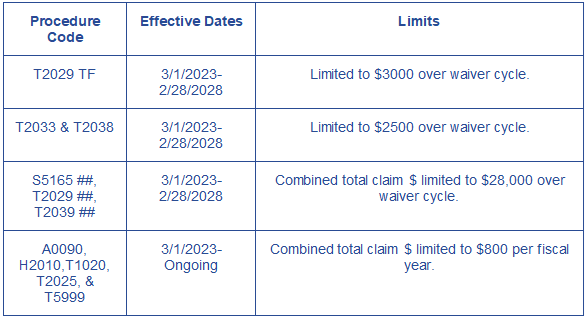
Effective March 1, 2023 the 1915(c) Home and Community Based Services (HCBS) Community Alternatives Program for Children (CAP/CH) waiver was renewed. The following new limits for procedure codes will be applied on Nov. 19, 2023 impacting claims with a retroactive effective date of March 1, 2023:
|  | |
NC Medicaid to Remove Copays for HIV Antiretroviral Medications
A Message from NCTracks on Behalf of NC Medicaid
Effective November 1, 2023, in preparation for the launch of NC Medicaid Expansion, NC Medicaid will remove all copay requirements for antiretroviral (ARV) medications, which decrease viral load in patients with HIV. This change applies to both NC Medicaid Direct and NC Medicaid Managed Care and covers all FDA-approved ARVs used to treat HIV.
Currently, an eligible Medicaid beneficiary who receives prescribed drugs through the Outpatient Pharmacy benefit is required to pay a $4 copay for each prescription received unless they are exempt for one of the reasons listed in the Outpatient Pharmacy Clinical Coverage Policy No. 9. This change in policy supports public health efforts to reduce the transmission of HIV.
NCTracks Log In Issue
NCTracks is aware of an issue occurring affecting the ability of some providers to log into the provider portal on NCTracks. We are actively working to resolve the issue and will provide updates as they become available.
November 2023 Provider Training Schedule Now Available
Registration is open for the November 2023 provider training courses listed below. NCTracks zoom courses can be attended remotely from any location. Courses offered this month include:
- Add Update Credentials
- ES User Role- Upload Documents- Abbrv. MCRs
- Submitting Professional Claims
- Submitting Institutional Claims
- Web Portal Applications
- OPR Enrollment
- Changes to Prior Approval Orthodontic Models
Please see the document linked below for more information on course schedule and access to zoom links:
November 2023 Provider Training Schedule
New Medicaid Bulletin Articles
Providers are encouraged to review this information. All bulletin articles, including those related to COVID-19, are available on DHB's Medicaid Bulletin webpage.
| |
|
Many youth in foster care struggle to form a strong identity because they have limited access to or knowledge of their own history. Developing a positive identity is a key component to the well-being of all youth, and it is essential that child welfare professionals provide opportunities and services that connect them to their backgrounds to support meaningful relationships.
This month let us recognize that empowering youth requires a multifaceted approach that considers the entirety of a youth's identity—their background and culture as well as their vision of permanency.
This year's theme, "Empowering Youth: Finding Points of Connection," emphasizes professionals' important role in building relationships and creating welcoming spaces that empower youth to forge lifelong connections that will support and affirm their identity.
Evidence shows that a strong identity is associated with lower rates of mental health needs and helps youth better handle adverse childhood experiences. We need to do all we can to nurture and reaffirm youth's identity, as it is crucial to their development and overall well-being.
Making small efforts, like sharing a favorite food, learning words from their native language, or incorporating their traditions during special events, can have a huge impact on youth feeling recognized and helps build their trust with professionals.
We encourage caseworkers to let youth lead discussions about their identity. Listen to their desires and welcome challenging questions. Build a relationship with youth to learn about their journey and connect them to opportunities and services that affirm their identity and needs. Engage youth in every step of permanency planning so that they can make informed decisions about adoption.
Professionals can make or break what opportunities are available to youth, so let's ensure we are working with youth toward their brightest future.
All month long, we will be sharing resources from the National Adoption Month website that will help you build relationships with and empower youth on their journey. I invite you to share these with your colleagues and the families you work with.
On behalf of the Children's Bureau, I want to thank you for your continuous commitment to this important work. Together, we will make a difference.
Sincerely,
June Dorn
National Adoption Specialist
Children's Bureau
| |
|
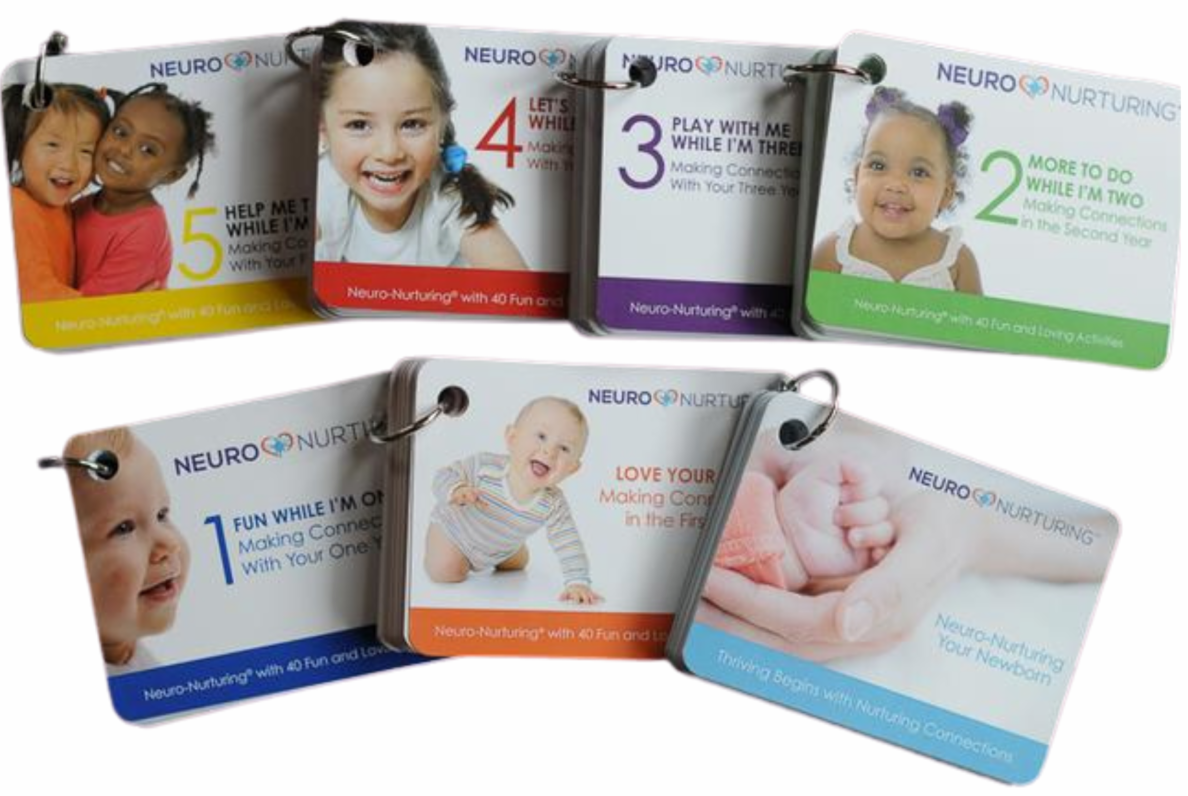
Thanks to our generous supporters at Healthy Blue and their partners at PACEs Connection, we have the opportunity to offer you some free materials that will be mailed right to your door! Complete the form below to receive a bundle of colorful, supportive, and insightful materials from early brain development specialist, Deborah McNelis. Her easily understood, trauma-informed prevention booklet and ringed books help parents and caregivers create positive experiences with infants and children in ways that promote optimal brain development. Deborah's way of promoting healthy brain development is called "Neuro-Nurturing®", which helps adults learn how to better nurture the healthy brain development of infants and children.
We are thrilled to send you a series of handy ringed books filled with free and positive in-the-moment activities for ages birth - five, as well as a beautiful booklet entitled "The First 60 Days". The booklet dispels 22 potentially harmful myths about newborns while supporting and inspiring you in your natural abilities to bond with precious infants who so need your consistent nurturing! Your consistent nurturing gives infants and children the best opportunity possible for the development of brain pathways leading to a lifetime of physical, emotional, relational, and mental health. Additional information regarding a webinar series with the author, Deborah McNelis, will be sent soon! Please fill out the form no later than November 8th if you wish to receive the free bundle. Thank you!
Get The Free Booklets
| |
Funding and Opportunities
DOJ/CDC Reaching Rural: Collaborative Solutions for Substance Misuse – December 15. The U.S. Department of Justice (DOJ) and the Centers for Disease Control and Prevention (CDC) provide a one-year training and technical assistance initiative to address substance use in rural communities.
ACL Small Business Innovation Research Program – December 18. The Administration for Community Living (ACL) provides funding for research and/or development that improves the abilities of individuals with disabilities to perform activities of their choice in the community. The program places particular emphasis on helping women, socially/economically disadvantaged individuals, and applicants from underrepresented or rural areas
| |
|
Legislative Changes Impact Who Is Required to Connect to NC HealthConnex
The North Carolina Regulatory Reform Act became law (N.C.S.L. § 2023-137) in early October 2023. This law contains updates pertaining to the N.C. Health Information Exchange Authority, which oversees and manages the state-designated health information exchange, NC HealthConnex.
The new law has expanded the list of providers who are no longer required to connect to NC HealthConnex to include chiropractors.
The HIE Act (N.C.G.S. § 90-414.4) requires that those providers who receive state funds, such as Medicaid and the State Health Plan, for the provision of health care services must initiate a connection to send data to NC HealthConnex. Previously, certain provider types were exempted from the mandatory requirement to connect and send data by N.C.S.L. § 2019-23.
The following is an expanded list of provider types that have the option to connect on a voluntary basis:
- Community-based long-term services and supports providers, including personal care services, private duty nursing, home health, and hospice care providers.
- Intellectual and developmental disability services and supports providers, such as day supports and supported living providers.
- Community Alternatives Program waiver services (including CAP/DA, CAP/C, and Innovations) providers.
- Eye and vision services providers.
- Speech, language, and hearing services providers.
- Occupational and physical therapy providers.
- Durable medical equipment providers.
- Nonemergency medical transportation service providers.
- Ambulance (emergency medical transportation service) providers.
- Local education agencies and school-based health providers.
-
Chiropractors licensed under Article 8 of this Chapter.
If you are no longer required to connect but submitted a Submission Only Agreement:
- The NC HIEA will reach out to you about terminating or replacing your agreement soon.
-
If your organization would like to voluntarily participate in NC HealthConnex in order to view patient records or utilize the NC HealthConnex value‐added features, your organization can complete a Full Participation Agreement, which is available on our website.
If you are no longer required to connect but have already submitted a Full Participation Agreement:
- You have the option to continue your relationship as an NC HealthConnex participant. No action is necessary at this time if you plan to remain a full participant of NC HealthConnex.
-
If you do not want to submit data to NC HealthConnex or access patient data, please send an email to HIEA@nc.gov to terminate your agreement or request that it not be processed. This will end your relationship with the NC HIEA and NC HealthConnex.
-
As a reminder, anyone with a Full Participation Agreement has access to our Suite of Services, regardless of your organization's connection status.
For more information about the benefits of participating in NC HealthConnex, visit our website or sign up for the next How to Connect Call that is hosted the last Monday of each month at noon.
Providers with questions may contact the NC HIEA at 919-754-6912 or hiea@nc.gov or see the FAQ section regarding connection exemptions for chiropractors on our website.
| |
|
CMS Finalizes Physician Payment Rule that Advances Health Equity
CMS Finalizes Physician Payment Rule that Advances Health Equity
Final policies will expand behavioral health services, advance the President’s Cancer Moonshot, support family caregivers, and accelerate value-based care
Today, the Centers for Medicare & Medicaid Services (CMS) announced it is finalizing policies to support primary care, advance health equity, assist family caregivers and expand access to behavioral and certain oral health care. These policies are included in the calendar year (CY) 2024 Medicare Physician Fee Schedule (PFS) final rule, which also provides payment for principal illness navigation services to help patients and their families navigate cancer treatment and treatment for other serious illnesses, supporting the Biden-Harris Administration’s Cancer Moonshot mission to accelerate the fight against cancer.
“The policies announced today aim to strengthen Medicare and advance health equity by expanding access to care and services for people who are part of underserved communities,” said U.S. Department of Health and Human Services Secretary Xavier Becerra. “In addition, we are bolstering our commitment to Biden-Harris Administration priorities including behavioral health care, supporting family caregivers, promoting value-based care, and advancing the President’s Cancer Moonshot.”
The CY 2024 PFS final rule includes updates to PFS payments for clinicians as required by law. In accordance with update factors specified by law, finalized payment amounts under the PFS will be reduced by 1.25% overall compared to CY 2023. CMS is also finalizing increases in payment for visits for many services, such as primary and longitudinal care. Overall, the finalized CY 2024 PFS conversion factor is $32.74, a decrease of $1.15, or 3.4%, from CY 2023.
“CMS remains steadfast in our commitment to supporting physicians and ensuring that people with Medicare have access to the care they need to stay healthy as well as navigate health conditions they are facing,” said CMS Administrator Chiquita Brooks-LaSure. “CMS is taking important steps toward those goals in this rule by improving payment for primary care and access to mental health care, paying for new navigation services to help people with cancer and other serious illnesses navigate their treatment, supporting family caregivers, paying for services
involving community health workers to address health-related social needs that impact care, and enhancing access to dental care for people with certain cancers.”
“The impact of these changes means that people with Medicare will be able to access Marriage and Family Therapists and Mental Health Counselors for behavioral health treatment, access culturally-sensitive care from community health workers, care navigators, and peer support workers, access primary care where the provider is invested in a long-term, trusting relationship, and that caregivers for persons with Medicare will have access to appropriate training,” said Meena Seshamani, MD, CMS Deputy Administrator and Director of the Center for Medicare. “Taken holistically, these are some of the largest changes ever towards a Medicare that recognizes people with Medicare as whole persons, with their own families and unique life stories. After all, people are more than the sum of their ailments and diagnoses.”
Advancing Health Equity and Caregiver Support
Building on the agency’s commitment to health equity, and the Biden-Harris Administration’s Executive Order to support caregivers, CMS is finalizing separate coding and payment for several new services to help underserved populations, including addressing unmet health related social needs that can potentially interfere with the diagnosis and treatment of medical problems. First, CMS will pay for certain caregiver training services in specified circumstances, so that practitioners are appropriately paid for engaging with caregivers to support people with Medicare in carrying out their treatment plans.
CMS is also finalizing separate coding and payment for community health integration services, which include person-centered planning, health system coordination, promoting patient self-advocacy, and facilitating access to community-based resources to address unmet social needs that interfere with the practitioner’s diagnosis and treatment of the patient. These are the first Physician Fee Schedule services designed to specifically include care involving community health workers, who link underserved communities with critical health care and social services in the community, and expand equitable access to care, improving outcomes for the Medicare population.
CMS is finalizing coding and payment for principal illness navigation services, which describe similar care navigation services for individuals with high-risk conditions, including cancer. A new diagnosis like cancer can be simultaneously challenging, confusing, and emotionally distressing — this action takes a large and important step in fulfilling the Cancer Moonshot goal of making navigation services available for every American with cancer. In addition, CMS is finalizing a subset of principal illness navigation services to support individuals with behavioral health conditions through use of auxiliary personnel such as peer support specialists.
This rule also finalizes coding and payment for social determinants of health risk assessments, which can be furnished as an add-on to an annual wellness visit or in conjunction with an evaluation and management or behavioral health visit.
Supporting Whole-Person Care
The CMS Behavioral Health Strategy endeavors to support a person’s emotional and mental well-being through their behavioral health care. This rule finalized some of the most important changes to improve access to behavioral health care in the Medicare program’s history. The rule allows marriage and family therapists and mental health counselors, including eligible addiction, alcohol, or drug counselors who meet qualification requirements for mental health counselors, to enroll for the first time in Medicare starting today and bill for their services starting January 1, 2024. (See link here for enrollment). The rule also increases payment for crisis care, substance use disorder treatment, and psychotherapy. Based on public comments, CMS is also finalizing increased payment for psychotherapy performed in conjunction with an office visit and for Health Behavior Assessment and Intervention services.
Primary care is instrumental in the delivery of high-quality, whole-person care. CMS is recognizing the value and inherent complexity in primary and longitudinal care by implementing payment and coding to more accurately and appropriately pay for these services, which aligns with the goals articulated in the HHS Initiative to Strengthen Primary Care. Based on interested party feedback, CMS also recognized that the redistributive impact could be lower than previously estimated for the originally finalized policy given that many office visits involve care that is discrete or time-limited, not the kind for which additional payment would be made.
CMS is also continuing to promote whole-person care in the Medicare Shared Savings Program, the largest Accountable Care Organization (ACO) program in the country. CMS is finalizing changes to the assignment methodology that will better promote access to accountable care for individuals who see nurse practitioners, physician assistants, and clinical nurse specialists for their primary care services. CMS is also finalizing changes to the financial benchmarking methodology to better encourage participation by ACOs serving complex populations, as well as changes that continue to support ACOs in their transition to digital quality measurement and use of interoperable digital data. In total, these changes are expected to increase participation in the Shared Savings Program by roughly 10% to 20%, which will provide additional opportunities for beneficiaries to receive coordinated care from ACOs.
CMS received over 20,000 comments on the proposed rule and values stakeholder feedback. Based on feedback, and recognizing that the CY 2017-2019 performance periods for the Quality Payment Program may not be truly reflective of clinicians’ performance, because many transition polices were still in place and recovery was ongoing from those significantly impacted by the COVID-19 Public Health Emergency, CMS is retaining the performance threshold for the CY 2024-Merit-Based Incentive Payment Systems (MIPS) performance period/2026 MIPS payment year at 75 points. However, CMS plans in the future, over time, to set the MIPS performance threshold to better reflect MIPS eligible clinicians’ performance and continue to encourage participation in Advanced Alternative Payment Models.
Payment for Dental Services Related to Certain Cancer Treatments
Access to oral and dental health services that promote health and wellness allows people with Medicare to achieve the best health possible. In this final rule, CMS is supporting the Biden-Harris Administration’s Cancer Moonshot initiative by finalizing that payment can be made for certain dental services linked to several different cancer treatments, including, but not limited to, chemotherapy.
Dentists who are interested in enrolling in Medicare to provide these services can find more information at https://www.cms.gov/medicare/coverage/dental.
Medicare Diabetes Prevention Program (MDPP) Expanded Model Enhancements
In addition, CMS finalized changes to promote care for individuals with diabetes by enhancing the Medicare Diabetes Prevention Program (MDPP) Expanded Model to further increase participation and access in underserved communities. This rule will extend the MDPP Expanded Model’s Public Health Emergency Flexibilities for four years, which will allow all MDPP suppliers to continue to offer MDPP services virtually through December 31, 2027, as long as suppliers maintain an in-person Centers for Disease Control and Prevention organization code.
For a fact sheet on the CY 2024 Physician Fee Schedule final rule, please visit: https://www.cms.gov/newsroom/fact-sheets/calendar-year-cy-2024-medicare-physician-fee-schedule-final-rule
For a fact sheet on final changes to the CY 2024 Quality Payment Program, please visit: https://qpp-cm-prod-content.s3.amazonaws.com/uploads/2540/2024QPPPoliciesFinalRuleResources.zip
For a fact sheet on final changes to the Medicare Shared Savings Program , please visit: https://www.cms.gov/newsroom/fact-sheets/calendar-year-cy-2024-medicare-physician-fee-schedule-final-rule-medicare-shared-savings-program
To view the CY 2024 Physician Fee Schedule and Quality Payment Program final rule, please visit: https://www.federalregister.gov/public-inspection/2023-24184/medicare-and-medicaid-programs-calendar-year-2024-payment-policies-under-the-physician-fee-schedule
For frequently asked questions on the Marriage and Family Therapists (MFT) and Mental Health Counselors (MHC) Provider Enrollment and information on how to enroll, please visit: https://www.cms.gov/files/document/marriage-and-family-therapists-and-mental-health-counselors-faq-09052023.pdf
| |
|
NC: Hendersonville child welfare agency raises $35M, nearing campaign goal to aid foster children (Includes video)
A child welfare agency with a location in Hendersonville has raised $35 million to help foster children. That's 85 percent of the campaign's $41 million goal. The money will provide support for all Crossnore Communities for Children locations. The campaign's co-chair Katheryn Northington said Crossnore's reach extends beyond the communities surrounding their physical locations. "Through this campaign and through ongoing investment, we can do this work not only in Winston-Salem and Hendersonville, but really our kids come from 70 counties in the state right now," Northington said.
Read Here
NC: After deadly fire, Guilford County releases Child Welfare Corrective Action Plan (Includes video)
North Carolina health officials released a 90-day progress report on a Corrective Action Plan for Guilford County Social Services. North Carolina health officials released a 90-day progress report on a Corrective Action Plan for Guilford County Social Services. In order to complete the goals of the plan, Guilford County still has to hire more staff for the child welfare section.
Read Here
NC: Crisis in children's mental health takes heavy toll in rural Southeast (Includes audio)
Each day, staff at the Columbus Regional Healthcare System tried desperately to secure a bed for the child at a pediatric mental health facility. But such placements can be hard to find in North Carolina. The girl had been in numerous foster homes where she experienced physical and mental abuse, said Dr. Jugta Kahai, the pediatric medical director at Columbus Regional in Whiteville. "Here is a 9-year-old who's been severely traumatized," Kahai recalled during a recent interview. "Yet, she's sitting in a concrete bunker with no window, no therapist and heavily medicated."
Read Here
NC lawmakers give authority over the state’s mental health care system to DHHS secretary and hope for better outcomes
North Carolina’s six local behavioral health management companies — known as LME-MCOs — will see some significant restructuring soon.
For years, patients, their families and mental health advocates have lodged repeated complaints about the lack of services some of the LME-MCOs provide and about the difficulty people have navigating the mental health system. State lawmakers have also had their share of frustrations with trying to hold the organizations accountable when problems arise.
In 2013, North Carolina shifted away from a county-based system to a regional managed care system to deliver behavioral health services to uninsured patients and people receiving Medicaid. At the time, health leaders wanted to better organize the publicly funded behavioral health system and save and use Medicaid dollars more efficiently. But lawmakers have struggled to control the local groups that manage the state dollars and services. When community services began to dry up, the complaints rolled in.
The state budget passed by the General Assembly last month includes a large section of policy changes about the LME-MCOs —changes that ultimately give the secretary of the state’s Department of Health and Human Services more control and oversight of the groups. Secretary Kody Kinsley said his department is already working on how to restructure the groups so they can focus on what they do best.
Read Here
| |
Upcoming Webinars & Events | |
|
New: Monday, November 6, 2023
Responding to the Youth Mental Health Crisis: Short-Term Stabilization & Hospital Diversion Programs ($$)
Time: 12:30 pm thru 2:00 pm
Register
| |
|
New: Tuesday, November 7, 2023
Talking About the Tough Stuff
Join ECAC for the Tool Time Tuesday Family Engagement Series. This session will focus on "Talking about the Tough Stuff." How do you talk about difficult topics with children who have disabilities? Hear practical suggestions for talking to your children about difficult subjects.
Learn how to communicate clearly and consistently about challenging issues. Facilitating this session will be Anne Harris from the Carolina Institute for Developmental Disabilities.
Time: 12:00 pm thru 12:30 pm
Register
| |
|
New: Tuesday, November 7, 2023
O'Neill Institute's Addiction and Public Policy Initiative
Recovery Housing/Americans with Disabilities Act
Record rates of overdose deaths involving fentanyl, along with the persistent issue of alcohol use disorder, demand a multi-faceted policy approach. Social determinants such as housing, and expanded access to medications for substance use disorder are part of effective, long-term solutions.
Please join the O’Neill Institute’s Addiction and Public Policy Initiative for a timely virtual conversation on the current state of recovery housing and opportunities for improving recovery housing in the United States. The panelists will discuss efforts at the state and federal levels to improve access to quality housing for people in recovery from substance use disorder
Time: 12:00 pm thru 1:30 pm
Register
| |
|
New: Tuesday, November 7, 2023 OR Tuesday November 14, 2023
Community Partners Webinar: An Overview of Medicaid Expansion
Time: 3:00 pm thru 4:00 pm OR 6:00 pm thru 7:00 pm
Register
| |
|
New: Tuesday, November 7, 2023
Partnership in Action: A Collective Impact Approach to Implementing Workforce Solutions
Time: 4:00 pm thru 5:00 pm
Register
| |
|
New: Wednesday, November 8, 2023
Message received: Using text and email to engage patients and keep your schedule full
Time: 1:00 pm thru 2:00 pm
Register
| |
|
New: Thursday, November 9, 2023
Benchmarks' Membership Child Welfare Webinar with Karen McLeod and NC DSS Team
Time: 8:00 am thru 9:00 am
Register
| |
|
New: Friday, November 10, 2023
Learning Collaborative Series
The North Carolina Housing Coalition (NCHC) webinar series convenes a set of Learning Collaboratives for practitioners, advocates, and community members, in order to provide education, build cross-sector relationships, and coalesce around shared policy goals. Topics cover critical issues within the realm of public health, housing, the justice system, and how communities in our state are addressing these challenges.
This month's topic features the initiatives of the North Carolina Healthcare Foundation which focuses on working with hospitals and health systems to advance alternatives to opioids, accelerate adoption of best practices and improve care continuity and coordination among hospitals and community partners.
Time: 10:00 am thru 11:30 am
Register
| |
|
New: Friday, November 10, 2023
Youth Engagement Webinar
The NC Voices Amplified team knows why it's so important to engage youth, and how challenging it can be at times. Through this free webinar, learn from youth partner experts on how to engage youth in a System of Care approach. This interactive webinar will provide tips and tricks from a lived experience lens, including tried-and-true strategies for engaging youth.
Time: 3:30 pm thru 5:00 pm
Register
| |
|
New: Monday, November 13, 2023
Money Follows the Person (MFP) Lunch and Learn
Time: 12:00 pm thru 1:00 pm
Register
| |
|
New: Tuesday, November 14, 2023
Listening Session on the proposed Title IV-E Prevention Services Clearinghouse Handbook of Standards & Procedures, Draft Version 2.0
Time: 3:00 pm thru 4:30 pm
Register
| |
|
New: Wednesday, November 15, 2023
Inclusion Works Lunch & Learn (Every 3rd Wednesday)
Topic: Pre-Employment Transition Services
Time: 12:00 pm thru 1:00 pm
Join Invite List
| |
|
New: Wednesday, November 15, 2023
Interactive Monthly Update
Time: 2:00 pm thru 3:00 pm
Register
| |
|
New: Wednesday, November 15, 2023
The Changing Regulatory Environment Around Mental Health Parity: Impact on Employers & Patients
Time: 2:00 pm thru 3:00 pm
Register
| |
|
New: Wednesday, November 15, 2023
How Does the Definition of "Rural" Impact Research?
Time: 2:00 pm thru 3:00 pm
Register
| |
|
New: Thursday, November 16, 2023
Nicotine Replacement Therapies: How to integrate them & afford them for clients & agencies
Time: 9:00 am thru 10:15 am
Register
| |
|
New: Friday, November 17, 2023
Benchmarks' Friday Membership Webinar with Karen McLeod & Jay Ludlam
Time: 8:30 am thru 9:30 am
Register
| |
|
New: Friday, November 17, 2023
Rural Community Voices & Medicaid Expansion
Time: 10:00 am thru 11:00 am
Register
| |
|
New: Monday, November 20, 2023
Side by Side with DMH/DD/SUS
Time: 2:00 pm thru 3:00 pm
Register
| |
|
New: Thursday, November 30, 2023
NC Medicaid Managed Care Webinar" Managed Care & Expansion for Advocates
Time: 1:00 pm thru 2:00 pm
Register
| |
|
New: Tuesday, December 5, 2023
Advancing Hepatitis C Elimination: A Coordinated National Approach
Time: 12:30 pm thru 4:00 pm (In Person & Virtual)
Register for In Person
Register for Virtual
| |
Tailored Care Management Educational Offerings
Ongoing Webinar Sessions and Trainings: Some are free, some require a fee, and some are for CMA organizations that have passed the desk review only.
NC AHEC has partnered with the NC Department of Health and Human Services and Division of Health Benefits to equip Tailored Care Management (TCM) candidates with the tools and knowledge to effectively provide care management services to North Carolina’s Tailored Plan beneficiaries through Continuing Professional Development (CPD) opportunities. Find a list of monthly offerings below and join us for one or for all!
| | | | |