|
Benchmarks' Written Friday Update
Jan 29, 2020
NC Cases: 733,010
Cases Hospitalized: 3,305
NC Deaths: 9,046
Positive Tests: 7-day average was 10.56%
NC Planning for Vaccinating Group 3
North Carolina plans to vaccinate frontline essential workers in Group 3, those who work with the public and are at higher risk of being exposed to COVID-19. That includes teachers, first responders, food and agricultural workers, grocery store workers and manufacturing workers, according to the Centers for Disease Control and Prevention. That means many of North Carolina's estimated 325,000 unauthorized immigrants - many who work in those industries - could be eligible next to get the vaccine. The state is currently making its way through Group 1, healthcare workers and nursing home residents and staff, and Group 2, anyone 65 years or older.
"The COVID-19 vaccine will be available per the state's rollout plan and free of charge, regardless of access to health insurance or legal status," the state Department of Health and Human Services said earlier this month. While the timeline for Group 3 depends on the speed of vaccine administration, which has been slower than expected so far, health leaders and immigration advocates are working now to ease the potential concerns and distrust around the vaccine.
Canceled Appointments
Anna Johnson, THE NEWS & OBSERVER, 1/23/21
Many North Carolina hospitals and local health departments will receive smaller or no new vaccine doses from the state this coming week, forcing hundreds of vaccination appointments to be canceled. Instead, a "large portion" of the state's 120,000 doses will go toward large-scale vaccination events, including events at Charlotte Motor Speedway and the Bank of America Stadium.
"We know this is causing pain among providers who did an incredible job working to vaccinate residents quickly," said Chris Mackey, director of communications for NC DHHS. "As long as we are getting such a small amount of vaccine as a state, there are going to be challenges and shortages as we try to ensure equitable access to vaccine, while getting shots into arms quickly. We understand this is hard for providers who are doing everything right."
Cone Health, a health and hospital system that serves many counties in the Triad, announced Friday that it had to cancel 10,400 vaccination appointments in the coming week. "We are deeply disappointed that we are forced to delay these essential vaccinations," said Cone Health CEO Terry Akin in a news release. "In order to maintain an aggressive vaccination strategy, we need predictability and regular vaccine shipments from the state as originally promised. I am very unhappy that the state appears to keep changing the rules for vaccination allocation."
Several Western North Carolina hospitals are canceling hundreds of appointments because they aren't getting their expected allocation from the state, said Sen. Julie Mayfield, D-Buncombe. "They have hundreds, collectively several thousand, people across the region lined up for appointments next week that they are now not going to be able to meet," Mayfield said. She and Guilford County Commissioner Chair Melvin "Skip" Alston said their area's allocations were being redistributed to large-scale events in Charlotte. "I think we are all frustrated at several things,"
Mayfield said. "We are frustrated that there is not enough vaccine coming from the federal level. We are frustrated that this has been an ever-changing landscape in terms of who are the priority people and how vaccines are being allocated out in any given week."
Vaccination appointments have been canceled across the country including in South Carolina, Texas and California, according to The New York Times.
U.S. Rep. Kathy Manning, who represents Greensboro, tweeted she was aware of the vaccine shortage at Cone Health. "I have reached out to the Governor's office, Cone Health and Biden Administration for more information," she said. "I share in the frustration felt by many people in our community and I will continue to monitor this situation closely."
Vaccine Supply
April Laissle, WFDD RADIO, 1/26/21
North Carolina's top health official says the state has nearly exhausted its supply of first-dose COVID-19 vaccines. State Health Secretary Mandy Cohen says 95% of those doses were administered last week. That number could reach as high as 99% by Wednesday. "An incredible achievement that demonstrates to the federal government that North Carolina is ready to take on more vaccine," Cohen says. "And we need those additional vaccines now." Cohen says vaccinations ramped up last week after the federal government said future allocations would depend on how many doses the state had on hand. More doses from the federal government are scheduled to arrive Wednesday. Cohen said the state will distribute supply to each county based on population.
COVID Legislation
Colin Campbell, THE INSIDER, 1/28/21
One of the first bills to reach the governor's desk this year will address COVID-19 - but don't look for much additional relief spending in this bill. House Speaker Tim Moore said the first COVID bill will include planned fixes for rural broadband internet grants and the "Extra Credit Grant" relief program for parents. Other COVID-related measures, including allocations from the latest federal relief package, will come later in a separate measure that could surface in committees as soon as next week.
Moore said the first bill will originate in the Senate and could get House floor votes by Wednesday or Thursday of next week. His chamber won't hold any voting sessions until Wednesday at the earliest. He says it's mostly technical, with extensions of provisions from previous COVID legislation that expired on Dec. 31. "This should be a really straightforward bill," said Rep. Donny Lambeth, R-Forsyth and a lead budget writer. "We don't anticipate any controversy. We want to get it done as quick as we can because there's a lot of people needing help in a lot of these areas."
The bill will include several measures lawmakers previously announced. One provision would make available the remaining $62 million allocated toward the $335 checks for parents issued last fall. The deadline for that was extended into December, but some eligible parents still didn't apply.
Sen. Brent Jackson, R-Sampson, told The News & Observer last month that he wants to extend the deadline a few more months. The provision for the $30 million in broadband "GREAT" grants is part of an agreement lawmakers reached with Gov. Roy Cooper last month to ensure the grants were issued as expected. Cooper's administration had raised concerns that the grants couldn't be paid for with federal coronavirus dollars. So the governor's office shifted some funds to solve the problem, and lawmakers will need to pass a budget adjustment to reflect that.
Last year's COVID legislation included Dec. 31 deadlines to spend federal dollars, and since Congress has now relaxed that requirement, state lawmakers will likely need to revise the deadlines here. Legislators also heard a request Tuesday from the state's unemployment office to again extend emergency unemployment benefits and temporarily drop a 13-week cap on the amount of time someone can receive benefits.
School Reopening
Dawn Baumgartner Vaughan and Colin Campbell, THE INSIDER, 1/28/21
Gov. Roy Cooper said Wednesday that he is asking school boards, superintendents and health officials to look at the latest Centers for Disease Control and Prevention study about safely reopening schools and mitigating COVID-19 spread. The governor did not have a timeline for any decision on schools yet. The state legislature is also looking at what legislation might be needed to help students with learning loss from daily, in-person education.
A majority of North Carolina's public schools started the year with remote learning. Since October, elementary schools have been allowed to reopen for full-time, daily in-person instruction. Middle and high schools may open under a Plan B, which has more restrictions on social distancing. All students and staff must wear masks. In the Wake County Public Schools System, the largest in the state, elementary schools had reopened for full-time in-person learning, with middle schools are open on a rotating schedule and high schools are fully remote learning. WCPSS also offers an all-remote Virtual Academy option. Plans to reopen in-person school in January was delayed now until at least mid-February for Wake County.
Senate leader Phil Berger told reporters on Wednesday that lawmakers are looking at options, but said there's no specific plan for legislation yet. He said it would be more appropriate to leave school opening to local school districts' discretion instead of a statewide policy. "My hope would be the governor calling for opening schools on full time, in person basis, with protocols," Berger said.
Berger lamented the time lost when schools were closed at the end of the 2019-20 school year, along with half of this year for full-time instruction in-person. "I'm fully convinced there are thousands of children who will never catch up as a result. It didn't have to be that way," he said.
House Speaker Tim Moore voiced similar concerns, but he didn't specifically address how lawmakers might intervene. "It's very clear our schoolchildren are falling behind right now," he said Wednesday. "You can be the best instructor with the best internet on the best computer. They are not going to learn as well through that medium." Moore said public schools already have enough resources to reopen safely, and he reiterate his call for summer instruction for students who haven't kept up.
NC Republicans promise bill to force schools open
By Laura Leslie, WRAL Capitol Bureau chief, & Travis Fain, WRAL statehouse reporter
RALEIGH, N.C. - Republican lawmakers are drafting legislation to reopen schools amid the pandemic and plan to release a proposal in the coming days, state Senate leadership said Thursday afternoon. The bill would likely require all public school districts to offer in-person learning but also give parents the option of virtual learning if they choose.
Such a measure would attempt to force Gov. Roy Cooper's hand, although the governor said this week that his education team is looking at the latest research that indicates little transmission risk if schools open with widespread masking and other precautions in place.
There's broad consensus in North Carolina that remote learning has not worked well for many students, educationally or psychologically. There's similarly broad agreement that local school districts should have the final say in how they reopen. What many don't agree on is when it's likely to be safe to do that.
A study published this month by Duke University and University of North Carolina at Chapel Hill researchers looked at 11 school districts in the state last fall and found little evidence that students in K-12 schools were spreading coronavirus. Cooper's existing emergency orders allow in-person, full-time classes only for students through fifth grade, with local systems deciding what to offer. Middle school and high school classes must be either all remote or a mix of in-person and remote learning. That could change.
"I know that our team is going to study the data and work with the State Board of Education, and I think you will hear more from educators and from our health team in the coming days looking at that study," Cooper said Wednesday, "and just remembering that we do want to get our children back in school as soon as we safely can."
Not all scientists agree on the risks posed by children attending school in person, though. Last week, according to The Wall Street Journal, European researchers raised alarms about transmission in schools, particularly in light of the arrival of two more infectious variants of the virus. The University of Geneva's director of global health, Antoine Flahault, told the newspaper, "In the second wave, we acquired much more evidence that schoolchildren are almost equally, if not more, infected by SARS-CoV-2 than others."
Senate President Pro Tem Phil Berger has been pushing for North Carolina schools to reopen since last fall. He says children are paying the price for remote learning, and not just in lost educational progress. "We're seeing indications that suicides are up [and] mental health issues are up. We've got all sorts of other problems that are out there that are just bubbling to the surface at the present time," Berger, R-Rockingham, told reporters Wednesday. "It didn't have to be like this."On Thursday, Berger said in a statement announcing the new bill that Cooper "has not acted decisively, and the public education bureaucracy has rejected its most fundamental task: educating our children.""It's time for this travesty to end," he said.
Berger wants Cooper to lift his statewide order and let local officials choose how and when they want to reopen schools for full-time, in-person learning for all students."There are some concerns about the adults that are in the classrooms, and I think there are protocols that can be put in place that will provide adequate and appropriate protection for those adults," Berger said. "I think the legislature will be looking at what we can do to try to move along the attendance of kids in person in classrooms, five days a week."
Senate Minority Leader Dan Blue agreed that local school districts, not state lawmakers, should have the final say on how and when to reopen schools. "We can't say - shouldn't say - that a school is going to open on Date X when we don't know all the circumstances around it," Blue, D-Wake, said. "So much of this depends on what is the availability of vaccine [and] how we can keep as many of our citizens as possible safe."
Blue said he worries about the safety of teachers, school staff and students' families as long as community transmission rates remain high. He said he thinks more vaccinations are needed to make reopening safer. "Everything goes back and focuses on the pandemic. That's why schools aren't open," he said on a call with reporters Wednesday. "We've got to do something to address the pandemic, and I think we've taken great strides over the last six days to start doing something."
|
The Bridge Between System of Care and Medicaid Managed Care: Looking at the Value Proposition Recording and Slide Deck
|
| |
The Bridge Between System of Care & Medicaid Managed Care
|
Upcoming Benchmarks' Webinars
Benchmarks' Friday Membership Webinar
Dave Richard Joins Karen McLeod
Date: Friday, February 5, 2021
Time: 8:30 am thru 9:30 am
Benchmarks' Membership Child Welfare Webinar Lisa Cauley Joins Karen McLeod Date: Thursday, February 11, 2021 Time: 8:00 am thru 9:00 am Benchmarks' Friday Membership Webinar Date: Friday, February 19, 2021 Time: 8:30 am thru 9:00 am Note: There are no Benchmarks' webinars scheduled for the rest of this week.
|
Recording and Presentation of NC Medicaid's Transition to Managed Care Webinar Now Available
|
| | DHHS: NC Medicaid Transition to Managed Care |
Innovations Supported Living Level 2 or 3 Workgroup
The Supported Living Levels 2/3 Action team wants to hear from Self Advocates or their Families:
If you are currently accessing Supported Living Level 2 or Supported Living Level 3, we would love to hear the challenges and successes you are experiencing in accessing this service. The focus group will be held in late March and we would like to invite you to participate! If you have an interest in being part of this effort, please send an email with "SL 2/3 Focus Group" in the subject line to Linda Kendall-Fields at lkfields17@gmail.com by COB February 12th. You will be contacted by a group member who will share more information about the Focus Group.
Supported Living 2/3 Workgroup Quarterly Meetings:
Anyone utilizing Innovations Supported Living levels 2 or 3; their providers or families/natural supports are all invited to participate in Quarterly meetings held regarding Innovations Supported Living Levels 2/3. To receive more information and be added to our listserv, please contact Christina Trovato at Christina.A.Trovato@dhhs.nc.gov and ask to be added to the SL 2/3 Listserv.
The group will meet next on March 26, 2021 from 2:30p-4:30p
NCDHHS Awarded Grant to Prepare for 988 Suicide Prevention Lifeline Number-Press Release
RALEIGH - The North Carolina Department of Health and Human Services' Division of Mental Health, Developmental Disabilities and Substance Abuse Services has been awarded the National Suicide Prevention Lifeline's 988 State Planning Grant through Vibrant Emotional Health, the nonprofit administrator of the National Suicide Prevention Lifeline (Lifeline). This grant, totaling $129,555, provides support to begin implementing the Lifeline's new 988 number. In July 2022, 988 will become the national three-digit dialing code for the National Suicide Prevention Lifeline, replacing the current phone number of 1-800-273-TALK (8255). Congress recently established the 988 number as a simplified resource for individuals in crisis who need assistance. Anyone needing support should continue to call 1-800-273-TALK (8255) until then. "Crisis intervention and stabilization are critical for suicide prevention, particularly as many North Carolinians are feeling more isolated, overwhelmed and experiencing higher levels of anxiety and depression due to the pandemic," said Kody H. Kinsley, NCDHHS Deputy Secretary for Behavioral Health and I/DD. "We are committed to partnering with the NC Suicide Prevention Call Center, state leaders and other key stakeholders to ensure North Carolina is prepared for the rollout of the national 988 Suicide Prevention Lifeline Number next year." In 2019, more than 1,300 people died by suicide in North Carolina. While final data for 2020 is not yet available, more than 37,000 callers received crisis intervention and were connected to community mental health resources to prevent suicide deaths through North Carolina's Call Center for the National Suicide Prevention Lifeline. This represents an 11.5% increase over 2019, with calls received from all of North Carolina's 100 counties. DMHDDSAS will work with National Suicide Prevention Lifeline network member REAL Crisis Intervention Inc. to develop clear roadmaps to address coordination, capacity, funding and communications surrounding the launch of 988. The grant will provide important support as the state anticipates volume growth once the new 988 number becomes operational. DMHDDSAS will collaborate with state leadership, suicide prevention experts, people with lived experience and others to create a 988-implementation plan and support the Lifeline's operational, clinical and performance standards that enables access to care. For more information about the National Suicide Prevention Lifeline, visit suicidepreventionlifeline.org. About the National Suicide Prevention Lifeline Funded by the U.S. Substance Abuse and Mental Health Services Administration and administered by Vibrant Emotional Health, the National Suicide Prevention Lifeline is a leader in suicide prevention and mental health crisis care. The National Suicide Prevention Lifeline provides free and confidential emotional support and crisis counseling to people in suicidal crisis or emotional distress 24 hours a day, 7 days a week, across the United States. The Lifeline is comprised of a national network of over 180 local crisis centers, uniting local resources with national best practices. Since its inception in 2005, the Lifeline has engaged in innovative public messaging, development of best practices in mental health, creative partnerships and more to improve crisis services and advance suicide prevention for all.
|
Reminder of Upcoming Changes and Pharmacy Newsletter Now Available
January Pharmacy Newsletter Now Available
The latest Medicaid Pharmacy Newsletter, dated January 2021, is now available on the N.C. Medicaid website. In addition to the February 2021 checkwrite schedule, this edition of the newsletter includes the articles:
- Coverage of Over-the-Counter Emergency Contraception at Point-of-Sale
- Special Medicaid Bulletin COVID-19 #152: Billing Guidance for COVID-19 Vaccines
- Preferred Brands with Non-Preferred Generics on the Preferred Drug List (PDL) Current as of Jan. 21, 2021
Reminder of Upcoming Changes in NCTracks
Several updates are coming to NCTracks this Sunday. Providers are encouraged to review these changes to be aware of the benefits they entail. Please see the details below.
Updates to NCTracks Prior Approval Attachment Functionality
Effective Jan. 31, 2021, an enhancement will be made to the existing provider attachment functionality during prior approval (PA) entries and inquiries. Providers will need to select the attachment type from the list provided based on the PA type. More information
Updates for Health Information Exchange Providers
As part of Session Law 2019-23, certain providers are required to connect to and participate in North Carolina's Health Information Exchange (HIE) Network known as NC HealthConnex.
Based upon the provider's taxonomy codes on file, some providers are voluntary to connect with the HIE while other providers are eligible for a Hardship Extension. Read more
OrthoCAD 3D Orthodontic Model Images to be Accepted as Prior Approval Attachments
Effective January 31, 2021, in addition to the current method of orthodontic model submission, providers will have the option to submit OrthoCAD 3D orthodontic model images as digital attachments to dental and orthodontic prior approval requests instead of submitting physical models. Please note that the only accepted image file type will be images with the .3DM file extension generated in OrthoCAD from iTero (providers must have an iTero scanner).
NCTracks will continue to allow plaster, stone, or acrylic (3D printed) models to be submitted for providers who do not have access to an iTero scanner. Additional information
|
Child Maltreatment 2019
This report presents national data about child abuse and neglect known to child protective services agencies in the United States during federal fiscal year 2019.
Table of Contents- Background of NCANDS
- New Reporting to NCANDS
- Annual Data Collection Process
- NCANDS as a Resource
- Structure of the Report
- Screening
- Report Sources
- CPS Response Time
- CPS Workforce and Caseload
- Exhibit and Table Notes
- Alternative Response
- Unique and Duplicate Counts
- Children Who Received an Investigation or Alternative Response
- Children Who Received an Investigation or Alternative Response by Disposition
- Number of Child Victims
- Child Victim Demographics
- Maltreatment Types
- Focus on Maltreatment Categories
- Focus on Single Types of Maltreatments
- Risk Factors
- Perpetrator Relationship
- Exhibit and Table Notes
- Number of Child Fatalities
- Child Fatality Demographics
- Maltreatment Types
- Risk Factors
- Perpetrator Relationship
- Prior CPS Contact
- Exhibit and Table Notes
- Number of Perpetrators
- Perpetrator Demographics
- Perpetrator Relationship
- Exhibit and Table Notes
- Prevention Services
- Postresponse Services
- History of Receiving Services
- Part C of the Individuals with Disabilities Education Act (IDEA)
- Exhibit and Table Notes
- Sex Trafficking
- Reporting Sex Trafficking Data to NCANDS
- Number and Demographics of Victims of Sex Trafficking
- Maltreatment Types
- Perpetrator Relationship
- Infants with Prenatal Substance Exposure
- Reporting Infants with Prenatal Substance Exposure Data to NCANDS
- Number of Infants with Prenatal Substance Exposure
- Screened-in Infants with Prenatal Substance Exposure Who Have a Plan of Safe Care
- Screened-in Infants with Prenatal Substance Exposure Who Have a Referral to Appropriate Services
- Exhibit and Table Notes
|
2021 Special Enrollment Period in Response to the COVID-19 Emergency
Today, in accordance with the Executive Order issued today by President Biden, the Department announced a Special Enrollment Period (SEP) for individuals and families for Marketplace coverage in response to the COVID-19 Public Health Emergency, which has left millions of Americans facing uncertainty and exceptional circumstances while millions of Americans have experienced new health problems during the pandemic. This SEP will allow individuals and families in states with Marketplaces served by the HealthCare.gov platform to enroll in 2021 health insurance coverage. Beginning February 15, 2021 and through May 15, 2021, these Marketplaces will operationalize functionality to make this SEP available to all Marketplace-eligible consumers who are submitting a new application or updating an existing application. State-based Marketplaces (SBMs) operating their own platform have the opportunity to take similar action within their states.
"The Department is committed to ensuring that we deploy every available resource during the Public Health Emergency. This Special Enrollment Period will ensure that more individuals and families have access to quality, affordable health coverage during this unprecedented time," said HHS Acting Secretary Norris Cochran.
To see the White House fact sheet, visit: https://www.whitehouse.gov/briefing-room/statements-releases/2021/01/28/fact-sheet-president-biden-to-sign-executive-orders-strengthening-americans-access-to-quality-affordable-health-care/
|
Starting, sustaining, or growing your anti-trafficking work?
The Human Trafficking Capacity Building Center exists to help organizations and tribes start, sustain, or grow their anti-trafficking work. The Center's free services are intended to provide immediate and sustainable benefits to organizations and Tribal Nations with minimal demands on their time. The Center is a coaching and development hub.
|
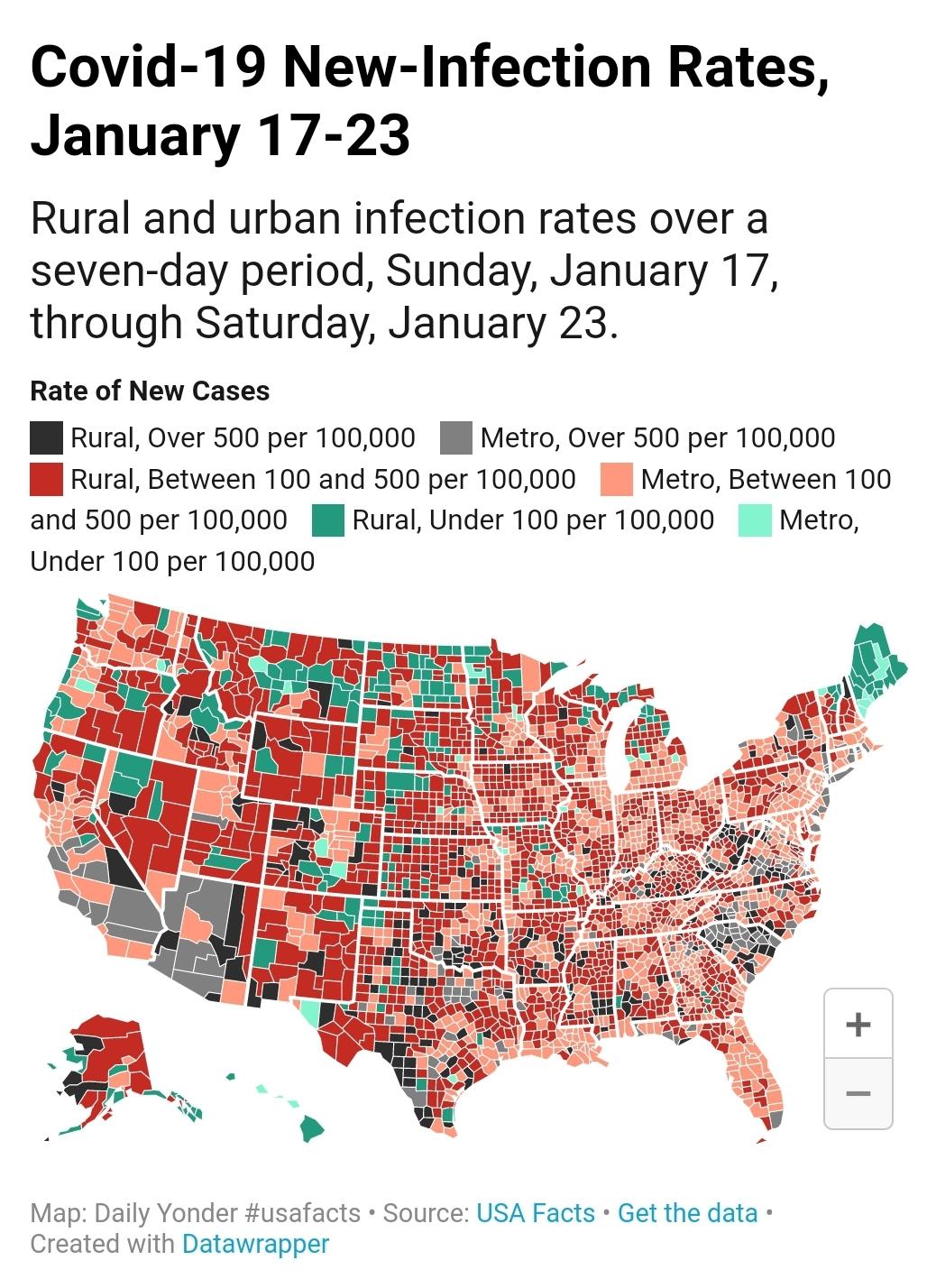
Rate of New Infections, Deaths Declines in Rural Counties
The number of new Covid-19 infections in rural counties fell by 20% for the second week in a row, dropping to levels not seen since early November.
The number of Covid-related deaths also declined, after reaching a record-setting high two weeks ago. The changes are in line with national data that shows the current Covid-19 surge, which began in rural counties in mid-September, is waning. New infections in nonmetropolitan counties last week totaled 148,302. The number is about 36% lower than the record high set three weeks ago. The number of deaths attributed to Covid-19 last week was 3,476. That's 13% lower than the previous week's death toll, which set a record high of 4,127. Since the start of the pandemic, 63,862 residents of rural America have died from causes related to Covid-19, according to the Daily Yonder's analysis of data compiled by USA Facts.
|
|
Health Data Standards: A Common Language to Support Research and Health Care
Every day we benefit from data standards, and every day most of us don't even notice it! Did you wear a seatbelt today? Take a precise dose of medicine? Send an email? Plug a laptop into an outlet? These are examples of activities that are made possible through data standards. At NLM, we think a lot about data standards, particularly health data standards.
NLM partners with organizations such as the Office of the National Coordinator for Health Information Technology (ONC) to promote health data standards for data captured in electronic health records (EHRs), clinical research, and other health information systems. With a focus on how health data are collected, stored, described, and retrieved, health data standards make up the backbone of interoperability. This provides the ability to connect and seamlessly share data between computerized systems and allows for the information exchange between other applications and databases.
|
|
e-News for Small Business Issue 2021-01
February 1 deadline: Employers to issue and file wage statements; Businesses to provide Forms 1099-MISC and 1099-NEC to recipients
Take advantage of the extended Employee Retention Credit
The Internal Revenue Service urges employers to take advantage of the newly-extended employee retention credit, designed to make it easier for businesses that, despite challenges posed by COVID-19, choose to keep their employees on the payroll.
Employers can withhold, make payments of deferred Social Security taxes from 2020
Read about IRS Notice 2021-11, which addresses how employers who elected to defer certain employees' taxes can withhold and pay the deferred taxes throughout 2021 instead of just the first four months of the year.
Eligible Paycheck Protection Program expenses now deductible
IRS issues standard mileage rates for 2021
The IRS issued the 2021 optional standard mileage rates used to calculate the deductible costs of operating an automobile for business, charitable, medical or moving purposes.
Upcoming tax season
2021 tax filing season begins February 12; IRS outlines steps to speed refunds during pandemic
IRS Free File available; claim Recovery Rebate Credit and other tax credits
IRS ready for the upcoming tax season; last-minute changes to tax laws included in IRS forms and instructions
The IRS assures taxpayers and tax professionals that updates to key federal tax forms and instructions are complete and will be available when Americans begin filing their tax returns.
IRS publishes Taxpayer First Act Report to Congress
After more than a year of research and feedback, the IRS submitted the Taxpayer First Act Report to Congress to Congress this week and released it to the public. The Taxpayer First Act, signed into law in July 2019, was designed to improve service to taxpayers and tax professionals and to ensure the IRS continues to enforce the tax law in a fair and impartial manner.
The report includes recommendations from the tax professional community, and the IRS will continue conversations with key stakeholders and congressional committees to secure funding and begin to work toward implementation of these recommendations over the next several years. The success of the Taxpayer Experience Strategy, Training Strategy and Organizational Redesign will make service improvements possible for taxpayers, tax professionals, small businesses, payroll tax professionals and many others.
A Closer Look: IRS efforts to help taxpayers and the nation in 2020; Maximizing the Earned Income Tax Credit; Improving taxpayer interactions with the IRS
Read the latest posts from the IRS executive column, "A Closer Look."
IRS efforts to help taxpayers and the nation in 2020
This column features IRS Commissioner Chuck Rettig, discussing the IRS Progress Update and how the agency helped taxpayers and the nation during 2020. "COVID-19 presented some of the greatest challenges to our country and the IRS in its history, both in terms of being able to carry out our mission and in protecting the health and safety of taxpayers and our own workforce." Read the full post here in English and here in Spanish.
Maximizing the Earned Income Tax Credit
This column features Deputy Commissioner for Services and Enforcement Sunita Lough, discussing the Earned Income Tax Credit (EITC) program and how the IRS works to maintain its integrity. Read the full post here in English and here in Spanish.
Improving taxpayer interactions with the IRS
This column features Jim Clifford, the Taxpayer First Act program director, discussing the steps IRS took to provide information to a diverse country. In serving the community in the language they prefer. Read the full post here in English and here in Spanish.
"A Closer Look" covers a variety of timely issues of interest to taxpayers and the tax community. Check for prior posts and new updates and share the two new "A Closer Look" e-Posters (available in English and Spanish).
|
|
Free Recording: Child Mind Institute Summit: Telehealth & the Coronavirus
On Tuesday, 1/26, we held the Child Mind Institute Summit on Telehealth and the Coronavirus. For those who were able to attend the Facebook Live event, we thank you and hope you enjoyed the conversation with Dr. Harold Koplewicz, president of the Child Mind Institute, and Dr. Nadine Burke Harris, surgeon general of the state of California.
|
| | Child Mind Institute Summit: Telehealth and the Coronavirus |
Below are links to some resources and publications mentioned in the discussion:
|
Upcoming Events
|
Friday, January 29, 2021
SESSION 3: Patient Engagement and Education
Time: 2:00 pm thru 3:30 pm
|
Tuesday, February 2, 2021
Learn about loan repayment assistance for nurses specializing in women's health.
Time: 2:00 pm thru 3:00 pm
|
Tuesday, February 2, 2021
Medicaid Managed Care Organization (MCO) Learning Hub - Webinar on MCO Investments in Affordable Housing
Time: 2:00 pm thru 3:00 pm
|
New: Wednesday, February 3, 2021
NC Rural Coalition Fighting COVID- 19
Time: 9:00 am thru 10:30 am
|
Wednesday, February 3, 2021
Addressing COVID-19 Vaccine Hesitancy
Time: 1:00 pm thru 2:15 pm
|
Wednesday, February 3, 2021
COVID-19 and the Legacy of Racism: Vaccine Hesitancy and Treatment Bias
Time: 3:00 pm thru 4:00 pm
|
New: Thursday, February 4, 2021
Joint NC DMHDDSAS and DHB COVID 19 Update for NC Providers
Time: 3:00 pm thru 4:00 pm
|
Thursday, February 4, 2021
Medicaid Managed Care Fireside Chat Series: Value-Based Payment/Advanced Payment Models & Quality
Time: 5:30 pm thru 6:30 pm
|
Friday, February 5, 2021
Benchmarks' Friday Membership Webinar
Dave Richard Joins Karen McLeod
Time: 8:30 am thru 9:30 am
|
Friday, February 5, 2021
SESSION 4: What's Next? A Roadmap for Telehealth Policy Beyond the Pandemic
Time: 2:00 pm thru 3:30 pm
|
New: Wednesday, February 10 AND 12, 2021
Virtual Training: 2- Day Person-Centered Thinking
Time: 9:00 am thru 4:00 pm (both days)
Cost is $50.00 per person
|
Thursday, February 11, 2021
Benchmarks' Membership Child Welfare Webinar
Lisa Cauley Joins Karen McLeod
Time: 8:00 am thru 9:00 am
|
Thursday, February 11, 2021
IER Webinar for Refugee and Asylee Service Providers Refugees' and Asylees' Right to Work
Time: 12:00 pm thru 1:00 pm
|
Thursday, February 11, 2020
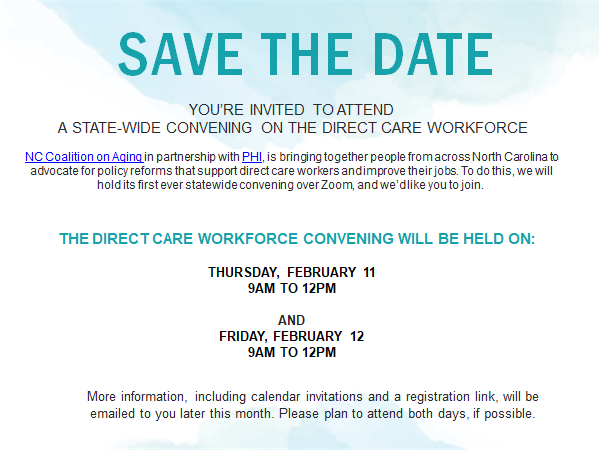
Save The Date: A State-Wide Convening on the Direct Care Workforce
Time: 9:00 am thru 12:00 pm
|
Thursday, February 11, 2021
Time: 10:00 am thru 12:00 pm
|
Thursday, February 11, 2021
What Does a Person-Centered System Look Like?
Time: 2:30 pm thru 4:00 pm
|
Friday, February 12, 2020
Save The Date: A State-Wide Convening on the Direct Care Workforce
Time: 9:00 am thru 12:00 pm
|
Wednesday, February 17, 2021
IER Webinar for Refugee and Asylee Service Providers Refugees' and Asylees' Right to Work (Identical to the webinar on 2/11/21)
Time: 2:00 pm thru 3:00 pm
|
Thursday, February 18, 2021
Clinical Quality Webinar Series-TBD
Time: 5:30 pm thru 6:30 pm
|
Friday, February 19, 2021
Benchmarks' Friday Membership Webinar
Time: 8:30 am thru 9:30 am
|
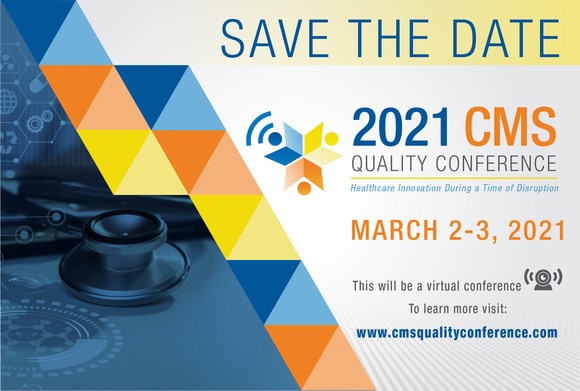
Tuesday and Wednesday, March 2 & 3, 2020
|
Thursday, March 4, 2021
Medicaid Managed Care Fireside Chat Series: Policy Approvals, Process Changes and Appeals
Time: 5:30 pm thru 6:30 pm
|
Please click on each of the following links to view details sent out from each LME/MCO.
Benchmarks' wants to be sure to make the following list handy for our members to visit and suggests a peek at least once per week to find information that may be pertinent to your agency and contracts.
|
|
|
|
|
|