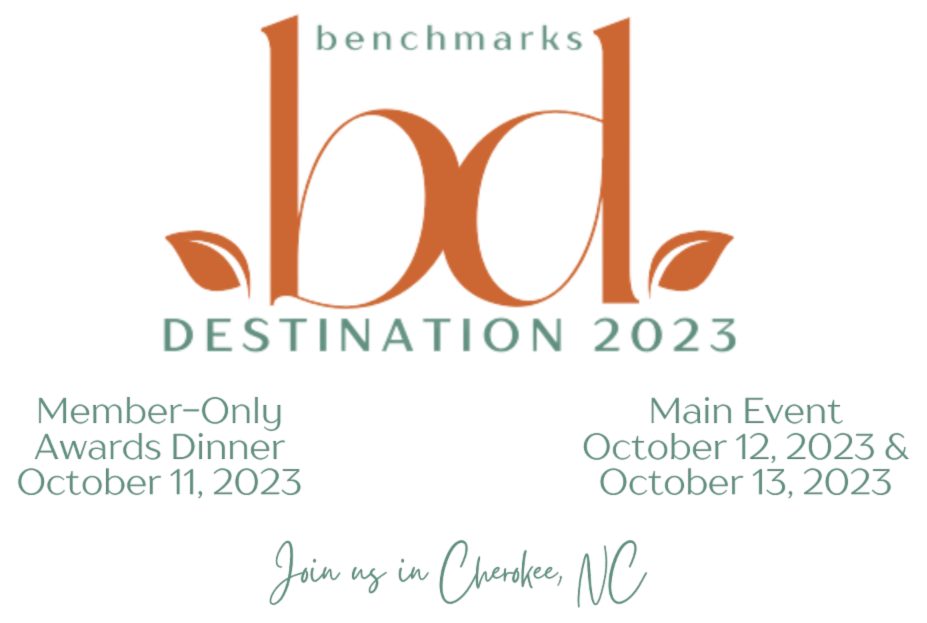
Note: Members receive free access to the "Member-Only" Awards Dinner on October 11, 2023 using the member-only access code sent yesterday, Thursday, July 13, 2023. Please reach out to Paige Wiggs if you require assistance. | |
|
Benchmarks' Upcoming Events & Webinars
Benchmarks' Friday Membership Webinar with Jay Ludlam
Date: Friday, July 21, 2023
Time: 8:30 am thru 9:30 am
Register
New: Benchmarks' Child Welfare Webinar with Lisa Cauley & Team
Date: Thursday, August 10, 2023
Time: 8:00 am thru 9:00 am
Register
New: Benchmarks' Friday Membership Webinar with Jay Ludlam
Date: Friday, August 18, 2023
Time: 8:30 am thru 9:30 am
Register
Benchmarks' Collection of Past Updates
| |
|
Benchmarks' Child Welfare Webinar:
Thursday, July 13, 2023
Slideshow and Associated Documents:
| |
|
Launch of Behavioral Health and Intellectual/Developmental Disabilities Tailored Plans Delayed
The Department of Health and Human Services is delaying implementation of the Behavioral Health and Intellectual/Developmental Disabilities Tailored Plans. Tailored Plan launch was scheduled for Oct. 1, 2023, but will now go forward at a date still to be determined.
Press Release
| |
|
NC Certified Peer Supports: New Certification Trainings
The Department of Mental Health, Developmental Disabilities, and Substance Use Services with the support of University of North Carolina School of Social Work Behavioral Health Springboard will be re-opening new course certifications for the full 50-hour training for North Carolina Certified Peer Support Specialist. The Policy for submissions is located on the North Carolina's Certified Peer Support Specialist website. Courses can be submitted for certification beginning on September 1, 2023, and ending on September 7, 2023. This will occur each year for a one-week period in September.
Virtual trainings will be held on July 21 and July 31 to discuss the policy and training requirements. The virtual training will provide instruction for the manual owners on what information is required in the course's content. The training will also allow for future course owners to ask any questions about the policy and submitting process.
DMH/DD/SUS and UNC BHS is mandating that anyone interested in submitting a new certification attend one of the training sessions below.
July 21, 2023, 10:30-12:00 p.m. - Click here to join
July 31, 2023, 2:00-3:30 p.m. - Click here to join
| |
|
NC Medicaid Obtains Approval of the 1915(i) State Plan Amendment
NC Medicaid has received approval from the Centers for Medicare & Medicaid Services (CMS) on the 1915(i) State Plan Amendment (SPA), to start 1915(i) services for eligible NC Medicaid members as of July 1, 2023. 1915(i) services are home and community-based services (HCBS) which provide opportunities for Medicaid enrollees to receive services in their own home or community rather than institutions.
The approval of 1915(i) services will allow NC Medicaid to continue to offer Medicaid beneficiaries a comprehensive array of behavioral health, intellectual/developmental disability (I/DD) and traumatic brain injury (TBI) services in NC Medicaid Direct and in the Behavioral Health I/DD Tailored Plan when they launch. Additionally, this approval allows NC Medicaid to extend coverage of the current 1915(b)(3) services to additional populations.
Read More
| |
1115 Substance Use Disorder Demonstration Waiver Policy Update
As a part of NC’s 1115 SUD Waiver implementation, service polices continue to be developed or revised to align with The American Society of Addiction Medicine (ASAM) Criteria: Treatment Criteria for Addictive, Substance-Related, and Co-Occurring Conditions (Third Edition, 2013) and the State Plan amended. One-Day Public Notices have been posted to the NCDHHS, NC Medicaid, Division of Health Benefits – 2023 Proposed Public Notices webpage for the following services:
Additional information is forthcoming as the demonstration wavier continues. Please contact June Freeman at june.freeman@dhhs.nc.gov if you have questions regarding the one-day public notices.
| |
|
1915(c) NC Innovations Waiver 30-day Public Comment Period
A draft application for § 1915 (c) NC Innovation Waiver is posted for a 30-day public comment period. The public comment period is from June 30, 2023, through July 30, 2023. The Waiver can be accessed at https://medicaid.ncdhhs.gov/meetings-notices/medicaid-state-plan-public-notices. Comments can be submitted to Medicaid.WaiverComment@dhhs.nc.gov.
Visit the Website
| |
|
NC Medicaid to Resume Annual Recertification Process
North Carolina began the renewal (recertification) process for Medicaid beneficiaries on April 1, 2023. Recertifications (renewals) will be completed over the next 12 months, as beneficiaries are up for renewal. Recertification could result in a beneficiary’s termination or reduction of benefits.
-
How NC Medicaid Eligibility Recertification (Renewal) Works Fact Sheet English l Spanish
-
What is NC Medicaid Recertification (Renewal) Video English l Spanish
-
Changes are coming to Medicaid, FNS and WIC Benefits English l Spanish
Actions Beneficiaries can take today:
Beneficiaries should make sure their local DSS has their current mailing address, phone number, email or other contact information. With an enhanced ePASS account, beneficiaries can update their address and other information for Medicaid online without having to call or visit their local DSS.
- Check their mail
- Local DSS will mail beneficiaries a letter if they need to complete a renewal form to see if they still qualify for Medicaid.
- Complete the renewal form (if they get one)
- If a beneficiary receives a renewal form, they should fill out the form and return it to their local DSS right away to help avoid a gap in their Medicaid coverage.
More information and additional resources:
North Carolina has a secure self-service website, called ePASS, where beneficiaries can apply for various benefits, view case details, renew their Medicaid and update their information without having to visit or contact their local Department of Social Services.
NC Medicaid encourages beneficiaries to create an enhanced ePASS account where they can make sure their contact information is correct and make any updates without having to go through their local DSS.
Correct addresses ensure that beneficiaries receive information about how the end of the federal COVID-19 Public Health Emergency (PHE) affects their eligibility for Medicaid benefits and other ways to receive health care (e.g., through the marketplace).
To help beneficiaries create an ePASS account, fact sheets are available with step-by-step instructions in English and Spanish.
| |
|
Making Care Primary Model Provider Update
On June 8, 2023, the Centers for Medicare & Medicaid Services (CMS) announced a new voluntary primary care payment model for Medicare called Making Care Primary (MCP) that will be tested in eight states, including North Carolina. CMS is offering this model for qualified Medicare providers in North Carolina beginning in July 2024. Medicare is a federal health insurance program for people age 65 or older, people under age 65 with certain disabilities and people with end-stage renal disease.
The MCP Model will provide a pathway for primary care clinicians with varying levels of experience in value-based care to gradually adopt prospective, population-based payments while building infrastructure to improve behavioral health and specialty integration and drive equitable access to care.
CMS hopes to partner with commercial and public payers in the eight pilot states, including state Medicaid programs, to offer models for their members that are aligned to MCP. CMS’ selection of North Carolina as a Medicare pilot state for MCP is a recognition broadly of our innovations and leadership in primary care, care management and addressing health-related social needs, and the goals of MCP align closely with North Carolina Medicaid’s existing population health priorities.
As NC Medicaid considers whether to offer a model for NC Medicaid providers that aligns more specifically with MCP, we will engage a broad range of community partners, including providers and prepaid health plans, for feedback.
| |
|
Temporary COVID-19 Rate Increases Ending June 30; New Temporary/Interim Estimated Budget Increases Added July 1
Consistent with the end of the federal COVID-19 Public Health Emergency, NC Medicaid is ending all* temporary COVID-19 rate increases and/or uniform adjustments included in rates through June 30, 2023, for the specific Medicaid services identified in SPECIAL BULLETIN COVID-19 #267: Temporary COVID-19 Rate Increases Ending June 30, 2023.
To maintain access to care for Medicaid members by supporting Medicaid providers whose temporary COVID-19 rate increases are ending while the General Assembly continues budget deliberations, NC Medicaid is implementing new temporary/interim rate increases, effective July 1, 2023,** through July 31, 2023, that estimate the permanent rate increases anticipated to be adopted by the General Assembly. As July 31 approaches, if a State budget has not yet been finalized, NC Medicaid will evaluate whether it is feasible to extend the new temporary/interim increases at some level.
Once a State budget has been finalized, NC Medicaid will implement any permanent increases at the levels appropriated in the budget and intends to systematically reprocess claims (or direct managed care organizations to reprocess claims, as applicable) retroactive to July 1 to adjust payments to the level of the appropriated permanent increases. This reprocessing will ensure that providers receive the full value of the legislated increases.
| |
|
Apply for the Community Health Worker Grant Program
The NC Office of Rural Health seeks a contractor to help develop and implement a mini-grant program that will fund six community-based organizations (CBOs) to hire Community Health Workers (CHWs) to build sustainability in the workforce.
The organizations funded will work with communities with high social vulnerability and historically marginalized populations in six Medicaid regions. The total funding for all awards will be $600,000, and the contractor will administer the grants and provide training and technical assistance through recruiting and hiring subject matter experts. Through COVID-19 relief funding, NCDHHS invested over $80 million in CHWs from 2020-2022 and had more than 550 CHWs employed throughout most of 2022. Now that COVID-19 funding has expired, this mini-grant program will support CBOs as they develop and refine sustainability plans for their CHW efforts.
Apply for the grant by July 17. To learn more about the CHW program, go to the NCDHHS website.
| |
|
Latest Dear County Director Letters (From Website)
| |
|
Information Regarding Highest Level of Education Verification on Applications for Re-verification, Enrollment, and Re-enrollment for Individual Providers
During the application processing for individual providers, it is mandatory to verify their highest level of education.
For physicians:
In the case of a board-certified provider, the board certification will be regarded as their highest level of education. Although the Accreditation Page does not explicitly mention the requirement of board certification, please include this information on the application to expedite the processing. If the provider was previously board-certified, but board certification is no longer active, please include this information on the application as well.
For providers who are not board certified, the Completion of Residency will be considered the highest level of education. Please indicate this as the highest level of education on the Supplemental Information Page in the Education section. A query will be conducted on the American Medical Association (AMA) website to confirm the provider's residency status. If the physician is found in the AMA records and their residency is confirmed, a residency letter will not be requested from the provider. However, if residency cannot be confirmed on the AMA website, the application will be returned, requiring a residency letter for further processing.
New Medicaid Bulletin Articles
Providers are encouraged to review this information. All bulletin articles, including those related to COVID-19, are available on DHB's Medicaid Bulletin webpage.
| |
|
CMS Proposes Policies to Expand Behavioral Health Access and Further Efforts to Increase Hospital Price Transparency
The Centers for Medicare & Medicaid Services (CMS) is proposing to expand access to behavioral health services through coverage of intensive outpatient services — an intermediate level of behavioral health care. To support practices to help curtail shortages of essential medicines, CMS is seeking comment in this rule on potential payment adjustments to hospitals for the additional costs of establishing and maintaining a buffer stock of essential medicines. CMS is also taking steps to increase hospital compliance with the requirements, to improve automated access to standard charge information, to further strengthen enforcement, and to improve the ability of the public to understand and meaningfully use hospital charges for items and services. Additionally, CMS is proposing actions to promote health equity for tribal communities.
These proposals are included in the calendar year (CY) 2024 Hospital Outpatient Prospective Payment System (OPPS) and Ambulatory Surgical Center (ASC) proposed rule released today.
“CMS is taking action to help shape a resilient, equitable, and high-value health care system,” said CMS Administrator Chiquita Brooks-LaSure. “This proposed rule expands access to behavioral health care and supports the Biden-Harris Administration’s priority to remove barriers that limit price transparency with a goal of increasing competition to bring down health care costs.”
Every year, CMS reviews and updates payment rates and policies for the OPPS and the ASC payment system. CMS is proposing to update OPPS payment rates for CY 2024 for hospitals that meet applicable quality reporting requirements by 2.8%. This update is based on the projected hospital market basket percentage increase of 3%, reduced by 0.2 percentage point for the productivity adjustment. Using the proposed hospital market basket update, CMS is also proposing to update the ASC rates for CY 2024 by 2.8% for ASCs that meet relevant quality reporting requirements.
Currently, Medicare covers and pays for various of behavioral health services, including inpatient psychiatric hospitalizations, partial hospitalizations services, and outpatient therapeutic services. However, there is a current gap in coverage when people with Medicare require levels of services more frequent than individual outpatient therapy visits, but less intensive than a partial hospitalization program. The CY 2024 OPPS and ASC Payment System Proposed Rule includes proposals to implement provisions of the Consolidated Appropriations Act, 2023 that created a new benefit category for Intensive Outpatient Program services. CMS is proposing to establish payment and program requirements for the benefit across various settings, including hospital outpatient departments, Community Mental Health Centers, Federally Qualified Health Centers, and Rural Health Clinics effective January 1, 2024. CMS is also proposing to establish payment for intensive outpatient program services provided by Opioid Treatment Programs (OTPs) effective January 1, 2024, and is clarifying that these intensive behavioral health services are available for individuals with mental health conditions and for individuals with substance use disorders.
“This proposed rule reflects CMS’ commitment to ensure Medicare is comprehensive in its ability to address patient needs, filling gaps in the health care system including behavioral health,” said Dr. Meena Seshamani, Deputy Administrator and Director for CMS’ Center for Medicare. “Through these proposals, we will ensure people get timely access to quality care in their communities, leading to improved outcomes and better health."
Over the past several years, CMS has implemented or is in the process of implementing complementary groundbreaking policies to promote transparency across the health care system. In this rule, CMS proposes to strengthen the hospital price transparency regulations, which require each hospital operating in the United States to make its standard charges public. CMS proposes to make it easier for the public to learn what a hospital charges for items and services and to further enhance the hospital price transparency enforcement process, building on actions taken to streamline enforcement earlier this year. These proposals include new requirements to standardize the hospital’s display of standard charge information in their machine-readable file and new requirements governing how hospitals must publicly post those files on their websites.
Additionally, CMS is proposing new policies to improve and streamline its enforcement capabilities, including certification by hospital officials as to the accuracy and completeness of data, requiring hospital acknowledgement of warning notices, reserving the right for CMS to communicate directly with health system leadership about all of its hospitals, not just one hospital at a time, and publishing other enforcement activities, in addition to civil monetary penalties, on a CMS website.
Furthermore, the Biden–Harris Administration has developed the National Strategy for a Resilient Public Health Supply Chain, which is a roadmap to support reliable access to products for public health in the future, including through prevention and mitigation of medical product shortages. CMS is taking concrete steps to help achieve this goal by seeking comment on a separate payment to hospitals for establishing and maintaining access to a buffer stock of essential medicines to foster a more reliable, resilient supply of these medicines. This builds on similar supply chain resiliency actions in last year’s OPPS rulemaking to create a separate hospital payment for domestic surgical N95 respirators.
In this proposed rule, CMS is also promoting equity and taking actions to support Indian Health Service (IHS) and tribal facilities. CMS is proposing that IHS and tribal facilities that convert to the new Rural Emergency Hospital (REH) provider type may continue to be paid per visit rate, in addition to receiving the monthly facility payment that applies to all REHs.
REHs are a new provider type that started in January 2023 to provide a more sustainable option for rural hospitals facing closure and support access to care in rural and underserved communities. This aligns with CMS’ work to advance health equity to make sure our programs support health for all people we serve, particularly those who are underserved. In addition, CMS is seeking comment on how to pay for high-cost drugs and services, such as oncology drugs, outside of the per visit rate that these facilities receive to provide equitable payment for high-cost drugs and services provided by IHS and tribal facilities.
For a fact sheet on the CY 2024 OPPS/ASC Payment System proposed rule, please visit: https://www.cms.gov/newsroom/fact-sheets/cy-2024-medicare-hospital-outpatient-prospective-payment-system-and-ambulatory-surgical-center
For a fact sheet on hospital price transparency, please visit: https://www.cms.gov/newsroom/fact-sheets/cy-2024-hospital-outpatient-prospective-payment-system-opps-policy-changes-hospital-price
Effective Date
CMS is proposing that its proposed policies, if finalized, would be effective January 1, 2024. CMS is also proposing to give hospitals an enforcement grace period for adoption of the CMS template and encoding additional data elements until March 1, 2024.
To view the full rule, please visit: https://www.federalregister.gov/public-inspection/2023-14768/medicare-program-hospital-outpatient-prospective-payment-and-ambulatory-surgical-center-payment
Please submit comments by September 11, 2023.
| |
-
GAO on Critical Access Hospitals and Behavioral Health Care. The federal agency that examines the effectiveness of government programs turns attention to the way that Critical Access Hospitals (CAHs) provide behavioral health services in rural communities. CAH administrators who were interviewed for the report expressed mixed views on how Medicare payment policies affect their ability to provide services in various care settings that are not paid solely based on cost.
-
ACL Proposes Update to Older Americans Act Programs – Respond by August 15. The federal Administration for Community Living (ACL) is seeking input on proposed updates to the regulations for its Older Americans Act programs. The proposed rule is the first substantial update in 35 years, addressing new issues that have emerged and clarifying a number of requirements for programs, such as ACL’s state and tribal caregiver support programs. Last year, the FORHP-supported Rural Health Research Gateway evaluated 50 State Plans on Aging, including common and innovative approaches for serving older adults.
-
The Built Environment and Social and Emotional Support Among Rural Older Adults. Previous studies on social infrastructure in the built environment – specifically, the physical places that facilitate social interaction and social tie formation – relied heavily on urban settings or samples with limited diversity. For this study, researchers examine whether social infrastructure is associated with well-being for older adults in rural areas and whether this relationship varies across race and ethnicity.
-
USDA Economic Research Service on Rural Access to Primary Care. Researchers at the U.S. Department of Agriculture (USDA) update their chart showing the number of physicians per capita in rural counties.
-
Commonwealth Fund on State Health System Performance. Learn why Massachusetts, Hawaii, and New Hampshire top the health policy nonprofit’s ranking based on 58 measures of access, quality, disparities, and outcomes among other factors. While there’s scant mention of health care in rural areas, many of the emerging crises at the center of the report – namely, avoidable deaths from preventable and treatable causes – are known to have higher incidence in these areas.
-
Mobilizing Health Care Workforce via Telehealth. ProviderBridge.org was created by the Federation of State Medical Boards through the CARES Act and the FORHP-supported Licensure Portability Grant Program. The site provides up-to-date information on emergency regulation and licensing by state as well as a provider portal to connect volunteer health care professionals to state agencies and health care entities.
-
CDC Foundation Seeking Community Data for Overdose Prevention – August 4. The philanthropic arm of the Centers for Disease Control and Prevention (CDC) seeks proposals from community-based organizations, local health departments, and trusted intermediary organizations. Multi-sector teams will collect data for a set of overdose prevention indicators and provide feedback on the ease of documenting and reporting this data for the communities they serve.
-
Addiction Policy Forum: Sites for Anti-Stigma Pilot – Ongoing. The national nonprofit will select 12 communities in 2023 for an ongoing project to test anti-stigma interventions.
| |
|
OMH Announces New Funding Opportunity: Health Equity Leadership Development Initiative
The U.S. Department of Health and Human Services (HHS) Office of Minority Health (OMH) anticipates funding for the Health Equity Leadership Development Initiative to implement a fellowship program at HHS to provide training in health equity issues and leadership to early career individuals to improve the health of racial and ethnic minority and other disadvantaged populations. The Health Equity Leadership Development Initiative aims to address the gap in federal fellowship opportunities for individuals to advance health equity and address the social determinants of health through health policies, programs, and practices.
Racial and ethnic minority and other disadvantaged populations suffer disparities in health services utilization. Experts have noted that ensuring diverse public health and healthcare workforce is a key strategy for increasing access to and quality of healthcare for vulnerable populations and decreasing health disparities. Efforts to establish, promote, and conduct health equity training programs are an important mechanism for achieving a diverse public health and healthcare workforce. This initiative is expected to develop a cadre of diverse health professionals with leadership skills and competencies necessary for improving the health of racial and ethnic minority and other disadvantaged populations.
General Information:
Announcement Number: MP-CPI-23-001
Opportunity Title: Health Equity Leadership Development Initiative
Award Amount: $600,000 - $700,000
Estimated Total: $2,000,000
Application Due Date: August 1, 2023, 6:00 p.m. ET
Learn More
| |
|
Engaging Survivors of Crime with Empathy and Compassion: A Toolkit for Establishing Homicide Support
CNA—in collaboration with the Office of Community Oriented Policing Services (COPS Office), the Richmond (Virginia) Police Department and the Charlotte-Mecklenburg (North Carolina) Police Department—developed this field-friendly resource providing law enforcement agencies with guidance on how to implement an effective Homicide Support Group program in their jurisdictions.
View Publication
| |
|
AHRQ releases TeamSTEPPS 3.0 Training Curriculum To Improve Safety
AHRQ has updated its TeamSTEPPS® training program, an evidence-based resource designed to improve patient safety by optimizing the performance of healthcare teams. The update was conducted in consultation with experts in TeamSTEPPS and team training that included patients and family caregivers. It addresses changes in healthcare delivery and learning methods, and emphasizes patient engagement. The updated curriculum is designed for use by team members in different roles, including frontline care providers, administrators, patients and caregivers and trainers. It also allows for virtual training. Explore the TeamSTEPPS 3.0 curriculum.
| |
|
Research Highlight: Mothers' Difficult Childhoods Impact Their Children’s Mental Health
In a recent study funded by the National Institute of Mental Health, researchers examined how trauma gets passed from one generation to the next.
Read Study
NOTEWORTHY: Major Update to Popular Facts and Statistics Resource
The National Institute on Alcohol Abuse and Alcoholism (NIAAA) has released a major update to the Alcohol Facts and Statistics webpage. The content of this popular online resource has been expanded with demographic and other data and is now reorganized for improved readability and easier navigability.
Read More
Important New NIAAA Resource Now Available - the Alcohol and Your Brain Virtual Reality (VR) Experience
NIAAA is pleased to share with you an exciting new resource – the Alcohol and Your Brain Virtual Reality (VR) Experience. This interactive activity is designed for teens (and adults) to learn about alcohol’s effects on five areas of the brain.
This immersive experience simulates a rollercoaster ride weaving and bobbing its way through the human brain. Control the rail car and pause at stations to learn about key brain regions affected by alcohol—and how alcohol, in turn, affects behavior.
You can access the Alcohol and Your Brain VR experience in two ways:
Free Download – For anyone age 13+ with Quest, Quest 2, or Meta Quest Pro VR headsets, the free NIAAA app can be downloaded through the App Lab.
On YouTube – Parents and educators can share the non-VR YouTube video version with students on any computer or mobile device. An audio-described video is also available.
| |
|
Pregnant Workers Fairness Act Requires Employers to Provide Reasonable Accommodations Effective June 27
The federal Pregnant Workers Fairness Act (PWFA) will take effect June 27, 2023. The Act requires “covered employers” to provide “reasonable accommodations” to a worker’s known limitations related to pregnancy, childbirth, or related medical conditions, unless the accommodation will cause the employer an “undue hardship.” The Equal Employment Opportunity Commission (EEOC) will start accepting PWFA charges June 27, 2023. Charges submitted to the EEOC must be based on events that occurred on or after June 27, 2023.
More on PWFA Requirements Here
| |
|
Introducing the EnviroAtlas Interactive Map
Human health and well-being are closely tied to the environment, which provides benefits such as clean water, clean air, and protection from natural hazards, also known as ecosystem goods and services. EnviroAtlas provides geospatial data, easy-to-use tools, and other resources related to ecosystem services, their chemical and non-chemical stressors, and human health.
EnviroAtlas is designed for staff from all levels of government, environmental and public health professionals, researchers, educators, non-governmental organizations, and anyone else with an interest in ecosystem services and their role in sustainable and healthy communities.
EnviroAtlas allows users to visually interpret ecosystem services and
understand how they can be conserved and enhanced. EnviroAtlas provides a way to screen and understand the potential implications of planning and policy decisions, and provides information to help raise awareness of the
importance, capacity, and fragility of natural systems.
In addition to informing planning decisions, EnviroAtlas can help guide where best to preserve or restore ecosystems. This includes the restoration of natural systems and the use of constructed ecosystems such as wetlands. EnviroAtlas data can also inform methods for the valuation of and payment for ecosystem services, which may also inform restoration decisions and project locations.
Interactive Map
| |
|
Guilford County social services submits Corrective Action Plan (Includes video)
Guilford County social services has submitted its Corrective Action Plan ahead of the Friday deadline. This comes in the wake of policy violations that were revealed in a letter from state leaders. Some of those violations are directly related to the deadly house fire on Grimsley Street in Greensboro on Dec. 12. Three children younger than five died, and their mother is in jail. She was charged with three counts of felony child abuse with serious physical injury. Friday was the deadline for Guilford County Department of Social Services leaders to get a plan of action in the hands of the state. If they did not, the department could have lost funding, and the state has the authority to take over operations.
Read Here
Guilford County shares details of DSS Corrective Action Plan (Includes video)
Guilford County released the details of its Corrective Action Plan (CAP) to address findings from a recent North Carolina Department of Health and Human Services, Division of Social Services (NCDSS) review of a December 2022 case involving child fatalities and subsequent review of child protection assessment and permanency planning files. Guilford County filed the proposed action plan on June 15, 2023, and has created a page on the County's website where the public can read the plan and track its implementation. The state will have up to 10 business days to review the proposed CAP and make adjustments. Updates to the CAP will be posted to the County's website as will updates on the county's progress in implementing the plan.
Read Here
Foster family needs are great
Of the 101 children that are in the custody of the Stokes County Department of Social Services, 20 are matched with foster families, according to Licensing and Permanency Planning Specialist Social Worker Sarah Essic. With only 15 licensed foster families in Stokes County - temporary living arrangements with an adult approved by the state or licensed agency for children who cannot live with their families (Child Welfare Information Gateway) - the remaining 81 children are currently placed in group homes, licensed foster homes or kinship homes. These numbers reflect a state-wide shortage of foster families in North Carolina. According to the independent, nonprofit youth and family news publication The Imprint, the number of foster homes in the state has decreased by 22.9% between 2021 and 2022 with 7,052 homes in 2021 and 5,436 in 2022. While the number of youths in care has also decreased in this time frame, it has only dropped by 4.3% with 10,710 children in 2021 and 10,246 children in 2022.
Read Here
Fractured: The effectiveness of psychiatric residential treatment facilities
There is a lot of variation between PRTFs settings. Keeping in mind that it is a treatment setting, what really matters for clinical effectiveness are the providers and what they do inside PRTFs. There is very little evidence on what interventions delivered inside PRTFs are most effective for which kids. Our review of the published research literature on this topic did not find evidence supporting the effectiveness of PRTFs, in general, for child behavioral health.
Read Here
Also: Psychiatric Residential Treatment Facilities for Child Behavioral Health Services in North Carolina Medicaid:
Read Here
NC child welfare report shows increase in suicide, anxiety and depression
A new report shows more than one in every ten high school students in North Carolina attempted suicide in 2021. The North Carolina Child Health Report card shows 67 children ages 0-18 died by suicide in North Carolina, and one in five North Carolina high school students reported seriously considering attempting suicide. The numbers are even higher for girls and LGBTQ students.
Read Here
Will NC finally move to quicker permanency for foster care children? (Opinion)
North Carolina has made little progress during Gov. Cooper's administration in helping foster care children find safe and lasting homes. Over 12,000 children now swell the ranks of "children in care" in this state. Perhaps the state's social-service agencies have better intentions than their track record shows. But the reality is that many children in North Carolina languish for years in foster care, waiting and waiting for the state to find a parent or relative with the capacity to care for them. A chorus of voices around the state are insisting on quicker permanency for children in foster care. House Bill 647, now before the N.C. Senate, would free a child for a permanent placement within 12 months of entering care. The state would have 30 days to find and notify relatives after a child is placed in care. And foster care parents, who currently have no standing in court, would become non-relative kin after the child has been in their care for nine months. In short, children would be eligible for adoption before they were irreparably damaged by the system itself.
Read Here
With nowhere else to go, kids needing foster care sleep on the floor in county offices
Dozens of children have been forced to sleep on the floor of Mecklenburg County offices over the past year because of a severe shortage of foster homes and crisis beds, according to the county Department of Social Services. The children, who come into county custody after allegations of abuse, neglect or abandonment, sleep on air mattresses in two conference rooms, said Charles Bradley, the county's youth and family services division director. Since July 2022, 55 foster children have slept in county offices, he said. Most are age 12 and older, Bradley said, but a few have been younger. Some have stayed as long as a few weeks.
Read Here
Forever Family: Couple focuses on helping teens prepare for life after foster care (Includes video)
Transitioning into adulthood can make or break the life of a young adult, especially those who grew up in foster care and have very little support. That is why Dr. Allen Griffin and his wife Hashmareen are committed to helping these young people here in North Carolina move forward with an idea that came as a vision, and a gift that would inspire and bring a greater sense of normalcy to their lives. They run Excellerate, a 16-week personal development program that focuses on five primary areas of growth: Professionalism, Financial Responsibility, Social Skills, Spiritual Enrichment, and Life Skills.
Read Here
State officials delay the rollout of specialty Medicaid plans – again
By Jaymie Baxley
The repeatedly delayed rollout of specialized health care plans for tens of thousands of Medicaid beneficiaries — those with complex, often behavioral health needs — has been postponed indefinitely, the N.C. Department of Health and Human Services announced Tuesday.
This marks the third time the state has pushed back the launch of so-called tailored plans for individuals who require more extensive care and support than average Medicaid enrollees. DHHS originally said these groups would be moved to tailored plans in December 2022 before delaying the launch to this April and then again to October. In a news release announcing the latest postponement, the agency said it is “not able to announce a certain go-forward date at this time.”
Read Here
| |
Upcoming Webinars & Events | |
|
New: Tuesday, July 18, 2023
Supporting Youth Through Text and Chat Services
Time: 1:30 pm thru 2:30 pm
Register
| |
|
New: Wednesday, July 19, 2023
NC Navigating Care Introduction to Our State's New Family Navigation Guide
Time: 12:00 pm thru 1:00 pm
Register
| |
|
New: Wednesday, July 19, 2023
Supporting Youth Through Text and Chat Services
Time: 1:00 pm thru 2:00 pm
Register
| |
|
New: Wednesday, July 19, 2023
NC Medicaid Ombudsman Monthly Update
Time: 2:00 pm thru 3:00 pm
Register
| |
|
New: Thursday, July 20, 2023
NCDHHS I/DD Stakeholder Wrokgroup Meeting
Time: 3:00 pm thru 5:00 pm
Register
| |
|
New: Thursday, July 20, 2023
NC Medicaid Managed Care Back Porch Chat
Time: 5:30 pm thru 6:30 pm
Register
| |
|
Friday, July 21, 2023
Benchmarks' Friday Membership Webinar
Time: 8:30 am thru 9:30 am
Register
| |
|
New: Wednesday, July 26, 2023
Improving Behavioral Health Services in Rural Communities through Medicaid
Time: 3:00 pm thru 4:00 pm
Register
| |
|
New: Thursday, July 27, 2023
Claims Support for Providers in Standard Plan and/or Tailored Plan Networks
Time: 5:30 pm thru 6:30 pm
Register
| |
|
New: Wednesday, August 9, 2023
Annual Virtual Statewide Quality Forum
Time: 12:00 pm thru 1:00 pm
Register
| |
|
New: Thursday, August 10, 2023
Benchmarks' Child Welfare Webinar
Time: 8:00 am thru 9:00 am
Register
| |
|
New: Monday, August 14, 2023
Money Follows the Person Lunch and Learn
Time: 12:00 pm thru 1:00 pm
Register
| |
|
New: Friday, August 18, 2023
Benchmarks' Friday Membership Webinar
Time: 8:30 am thru 9:30 am
Register
| |
Tailored Care Management Educational Offerings
Ongoing Webinar Sessions and Trainings: Some are free, some require a fee, and some are for CMA organizations that have passed the desk review only.
NC AHEC has partnered with the NC Department of Health and Human Services and Division of Health Benefits to equip Tailored Care Management (TCM) candidates with the tools and knowledge to effectively provide care management services to North Carolina’s Tailored Plan beneficiaries through Continuing Professional Development (CPD) opportunities. Find a list of monthly offerings below and join us for one or for all!
| | | | |