Register Now(Room Block Closes Monday, September 11)
Check Out Our Remaining Sponsorship Opportunities

Note: Members receive free access to the "Member-Only" Awards Dinner on October 11, 2023 using the member-only access code. Please reach out to Paige Wiggs if you require assistance.

Join us at the most anticipated event of the year, where brilliance converges and inspiration ignites!


Destination 2023 is not just any conference; it's a gathering of visionaries, thought leaders, and change-makers from North Carolina and around the country.


Prepare to embark on a journey of intellectual exploration, innovation, and inspiration as we bring together an extraordinary lineup of speakers who are at the forefront of their respective fields.


Our Stellar Lineup Includes:

Patch Adams

Lauren Potter

Danny Trejo

Sen. Jim Burgin

Sec. Kody Kinsley

Sen. Joyce Krawiec

Kelly Crosbie

Jay Ludlum

Susan Osborne

CAPT Michael King

SAMSHA

And more:

  • LME/MCOs
  • PHPS
  • 6 AMAZING break-out sessions
  • Additional federal partners from CMS, CDC, ACYF
  • NC Senators and House Representatives
  • Award winners including Dave Richard and others
  • Delicious food, exciting networking opportunities, and AWESOME sponsors and exhibitors


We hope to see you there!

North Carolina Medicaid Section 1115 Demonstration Renewal Posted for Public Comment 

North Carolina will be requesting the Centers for Medicare & Medicaid Services renew the NC Medicaid Section 1115 Demonstration Waiver for a second five-year period, from Nov. 1, 2024 through Oct. 31, 2029. The Demonstration Waiver application has been posted for public comment through September 20, 2023.


The Demonstration Waiver, initially approved in October 2018, supports the state’s goal to improve health and well-being for all North Carolinians through a whole-person, well-coordinated system of care that addresses both medical and non-medical drivers of health, while advancing health access by reducing disparities for historically marginalized populations.


Renewing the Demonstration Waiver will allow North Carolina to build on successes and continue the work of the state and its partners, in addition to requesting four new initiatives that will help drive the Department’s overall goals. North Carolina is requesting:

  •  extensions of ongoing managed care authorities;
  •  expansion of and refinements to the Healthy Opportunities Pilot program; and
  •  implementation of four new initiatives focused on streamlining Medicaid enrollment for children and youth; improving care for justice-involved individuals; and investing in behavioral health.

Announcement: LME-MCO Dashboard

Improving behavioral health is a top priority at NCDHHS. Guided by our values of transparency and stewardship, we’ve created a department-wide Dashboard of key outcomes for the state’s behavioral health system. This dashboard allows us to highlight shared priorities, showcase successes, and identify opportunities for improvement. Because it will help us see positive and negative outcomes more clearly, it will increase our accountability to the people we serve and ensure we invest time and resources effectively. It will also focus our collaborative problem-solving so that we can deliver the results North Carolinians need, which is even more important given the current behavioral health crisis in our state. 


We have provided a breakdown of each dashboard measure below. As you’ll see, our measures are people-focused and attentive to the essential link between individual health and the health of our system of care overall. The goal is to help ensure that people are getting the right services, in the right settings, at the right time. We will update these measures with fresh data by the 30th of each month.  


DMHDDSUS is in continuous conversation with our LME/MCO partners to evaluate these data and to troubleshoot technical issues as needed. If you have questions, please direct them to contactDMHquality@dhhs.nc.gov.  Please refer to this page for other DMHDDSUS reports including the monthly Dashboard: https://www.ncdhhs.gov/divisions/mental-health-developmental-disabilities-and-substance-use-services/reports.


NCDHHS is dedicated to the behavioral health of all North Carolinians, and we are excited about the progress this dashboard will help support. 


* * * 


About the Dashboard Measures 


Medicaid Children in Emergency Department & DSS Settings: Children should receive timely treatment in an appropriate clinical setting.  This measure is the average number of children boarded in emergency departments or county Department of Social Services offices/hotels over the most recent 3-month period measured who need treatment placement. 


Medicaid Children in Psychiatric Residential Treatment Facilities (PRTFs): Receiving services close to home is important for family connection and transition once a child no longer requires PRTF level of care. This is the number of children in PRTFs, including whether the placement is in-state, a border state, or another non-border state (out-of-state) and by whether the child is DSS-involved over the most recent 3-month period measured. A downward arrow shows improvement. 


Ready for Discharge: Patients who no longer need state psychiatric hospital level of care should be transitioned to the community with appropriate supports. The dashboard includes the number of patients waiting to be discharged and those who are not yet ready for discharge for each LME/MCO. A downward arrow shows improvement. 


People on Innovations Waitlist Receiving Medicaid or State-Funded Behavioral Health/IDD Services: People waiting for an Innovations Waiver slot should receive available services and supports to help them thrive in their communities. This shows people who are waiting to receive an Innovations Waiver slot that are currently receiving any Medicaid or State-funded BH/IDD service over the most recent 3-month period measured. 


Follow-Up Within 7 Days After Inpatient Discharge – Mental Health Treatment: After someone is discharged from a hospital or facility-based crisis program for mental health treatment, they need to receive community services quickly. The standard is within 7 days of discharge 40% will receive a follow-up service. A downward arrow shows improvement. 


Follow-Up Within 7 Days After Inpatient Discharge – Substance Use Disorder Treatment: This measure mirrors the previous one but focuses on follow up after discharge for Substance Use Disorder treatment from a hospital, ADATC or detox/facility-based crisis program. The standard is within 7 days of discharge 40% will receive a follow-up service. A downward arrow shows improvement.  

Telehealth Policy Evaluation Brief  

The North Carolina Department of Health and Human Services (NCDHHS) is pleased to share a policy evaluation brief, Tele-Transformation in North Carolina: Telehealth Policy Lessons Learned During the COVID-19 Pandemic and Beyond and companion chart pack, available under the heading “Academic and Policy Articles” on the NCDHHS Provider Telehealth Education webpage.


The brief highlights North Carolina’s approach to telehealth policymaking, both in response to the COVID-19 pandemic and thereafter, to serve as a model to other states undertaking telehealth policymaking and evaluation. This brief includes:

  1. an overview of North Carolina’s evolution in telehealth policy;
  2. the state’s decision-making criteria used to determine temporary and permanent telehealth policy changes;
  3. key findings from the state’s evaluation of telehealth utilization between March 2020 and December 2022 (with additional detail included in the chart pack); and
  4. considerations for other states.


For more information, visit the NCDHHS Provider Telehealth Education webpage.

NC Managed Care Capitation Rates – Updated Care Management Assumptions

The North Carolina Department of Health and Human Services (the Department) is releasing updated information about the assumptions underlying the care management component of capitation payments to NC Medicaid Managed Care Prepaid Health Plan (PHPs) Standard Plans. The PHP Standard Plan capitation rates developed by the Department reflect its belief that investment in robust community-based care management will drive improvements in care outcomes and achieve greater value from the state’s Medicaid dollar. The new document provides assumptions for the Standard Plan managed care capitation rates for State Fiscal Year 2024 (July 1, 2023-June 30, 2024). Rate updates will be considered as part of capitation rate setting for future state fiscal years. The rates in the document do not include any changes to rates related to Medicaid expansion.


Under the Advanced Medical Home (AMH) Tier 3 program, Standard Plans must delegate certain care management functions and responsibilities to certified practices that meet the program’s requirements. By providing additional information on the assumptions the Department used to develop components of the care management component of capitation payments, PHPs and AMH Tier 3 practices will be better positioned to enter into care management contracts that enable all parties to meet the Department’s expectations in the execution of care management responsibilities and achievement of improved health outcomes.


The Department has not established minimum care management fees and maintains the expectation that Standard Plans and practices will arrive at mutually agreeable rates that are commensurate with the intensity and breadth of the care management being provided.


Details on the current care management rate assumptions can be found in NC Managed Care Capitation Rates – Care Management Assumptions. Additional information on the AMH program can be found on the NC Medicaid Advanced Medical Home webpage.

DSS-5281 Critical Incident Reporting Form Rev. 6.2023 (updated for clarity)

Please find attached updated version of the DSS-5281 CIR form that should be used moving forward. Share with all colleagues/staff that will be reporting for your agency.


Download Here

Funding Opportunity: I/DD Community Living Mini-Grants RFA

The North Carolina Council on Developmental Disabilities (NCCDD) has issued a request for applications for several mini-grants aimed at increasing community living options for individuals with I/DD. Available funding for the period between Nov. 1, 2023, and Aug. 31, 2024, ranges from $5,000 to $25,000 per project, with a minimum 25% non-federal funds matching requirement. The application deadline is 5 p.m. Eastern time, Sept. 29, 2023.

1915(i) Updated Provider Fact Sheet and Assessment Tool 

On Aug. 31, 2023, NCDHHS published an updated fact sheet, North Carolina’s Transition of 1915(b)(3) Benefits to 1915(i), that includes implementation details, information about the timeline for transitioning members to 1915(i) services, training opportunities, and FAQ.


An updated NC Medicaid 1915(i) Assessment tool is also available under the “Other” documents on the Tailored Care Management page of the NCDHHS website.

NCID Website Migration Coming Sept. 17, 2023

Effective Sept. 17, 2023 all Provider and Recipient N.C. Identity Management (NCID) accounts will be automatically migrated to https://myncid.nc.gov/ in accordance with the NC DIT Citizen Identity Project. No action is required on the part of the user.


After Sept. 17, 2023, Provider and Recipient NCID users must manage their account, including password changes, on the new site: https://myncid.nc.gov/. In addition, new Provider or Recipient users must sign up at https://myncid.nc.gov/.


This change does not affect internal or State NCID users at this time.


For more information and training videos, visit the NCID Citizen Identity Project | NCDIT training page.


NC Medicaid Temporary Flexibilities Due to Hurricane Idalia

North Carolina Governor Roy Cooper issued Executive Order 284 on Aug. 28, 2023, which declared a state of emergency for North Carolina in anticipation of potential severe weather caused by the approach of Hurricane Idalia.


NC Medicaid is committed to North Carolina's response to and recovery from Hurricane Idalia. We are working with county and federal partners, utilizing many existing federal authorities in place due to the COVID-19 Public Health Emergency, to make it faster and easier for beneficiaries to receive— and for health care professionals to provide—Medicaid care and services.


This bulletin describes flexibilities effective Aug. 28, 2023, to the NC Medicaid program including NC Medicaid Direct and NC Medicaid Managed Care, as indicated below. Updates will be provided as they become available.


Flexibilities for both Medicaid Direct and NC Medicaid Managed Care


Reimbursement for medically necessary services during Hurricane Idalia


Medicaid Direct and NC Medicaid Managed Care will reimburse providers for medically necessary drugs and services, and equipment and supplies, provided during the Hurricane Idalia emergency without prior approval (PA) starting Aug. 28. 2023 through the end of the state of emergency.


Medical documentation must support medical necessity. In addition, beneficiaries who have been evacuated out-of-state (OOS), voluntarily or involuntarily, can receive medical care if needed and Medicaid Direct and NC Medicaid Managed Care will reimburse the OOS provider without PA. OOS providers must enroll as NC Medicaid providers in an abbreviated, expedited process on the NCTracks Provider Enrollment webpage.


Providers are encouraged to obtain a PA if it is possible to do so (and normally required for the service). All claims are subject to audit.


Medication prior approval overrides due to Hurricane Idalia


The potential for severe weather conditions may present situations where NC Medicaid beneficiaries in impacted areas may have difficulty obtaining necessary PA for certain medications. Therefore, NC Medicaid enrolled pharmacy providers have been approved to override PA requirements during the state of emergency. This override of PA is being allowed while the governor’s state of emergency order remains in place to ensure that all Medicaid beneficiaries have access to necessary medications.


For Medicaid Direct, NC Medicaid enrolled pharmacy providers should resubmit these claims with “09” (Emergency Preparedness) in the PA Type Code field to override a denial for PA required. Do not place any values in the Submission Clarification Code field. Additional questions can be directed to the NCTracks service line at 800-688-6696.


For NC Medicaid Managed Care, providers should contact the Standard Plan pharmacy service line (numbers below) to confirm if additional documentation or processes need to be completed to allow for prior authorization overrides due to Hurricane Idalia.


Pharmacy service line contact information:

·    AmeriHealth Caritas: 866-885-1406

·    Carolina Complete Health: 833-992-2785

·    Healthy Blue: 833-434-1212

·    United Healthcare: 855-258-1593

·    WellCare: 866-799-5318, option 3


Early prescription refills during the Governor’s state of emergency declaration


The potential for severe weather conditions may present situations where NC Medicaid beneficiaries in impacted areas may require an early refill of their medications. NC Medicaid enrolled pharmacy providers have been approved to early fill these prescriptions and will follow applicable co-pay requirements. Effective Aug. 28, 2023, the early refill is being allowed while the governor’s state of emergency order remains in place to ensure that all Medicaid beneficiaries have access to necessary medications.


For Medicaid Direct, NC Medicaid enrolled pharmacy providers should resubmit these claims with “09” (Emergency Preparedness) in the PA Type Code field and a valid value for an E.R. override in the Reason for Service, Professional Service and Result of Service fields to override a denial for an early refill. Do not place any values in the Submission Clarification Code field. This allows the beneficiaries to receive their medication during an emergency without using either of their limited-use Submission Clarification Code overrides. Additional questions can be directed to the NCTracks service line at 800-688-6696.


For NC Medicaid Managed Care, providers should contact the Standard Plan pharmacy service line (numbers below) to confirm if additional documentation or processes need to be completed to allow for emergency prescription refills during the state of emergency. 


Pharmacy service line contact information:


·    AmeriHealth Caritas: 866-885-1406

·    Carolina Complete Health: 833-992-2785

·    Healthy Blue: 833-434-1212

·    United Healthcare: 855-258-1593

·    WellCare: 866-799-5318, option 3


Flexibilities for Medicaid Direct Only


Community Alternatives Program for Children (CAP/C) and Community Alternatives Program for Disabled Adults (CAP/DA)


A critical role for case management entities serving CAP/C and CAP/DA beneficiaries is to provide support to ensure the health, safety and well-being of all CAP beneficiaries in the preparation for, during and immediately after, a natural disaster. To fulfill this requirement, NC CAP case management entities are directed to assist their assigned CAP beneficiaries in activating their emergency and disaster plans in preparation for the unknown impact of Hurricane Idalia.


When helping CAP beneficiaries activate their plans, it is imperative to emphasize checking and updating disaster kits. Ready NC is a valuable resource to use for additional information and assistance to prepare for a hurricane. Encourage beneficiaries to register with their special needs’ registry in their county.


It is our utmost concern that not only are our beneficiaries safe and accounted for during times of disaster, but that case management entities are equipped to communicate with staff and beneficiaries effectively as well as take the appropriate steps to remain safe. Please coordinate with local county emergency management departments if assistance is needed.


NC Medicaid gave notification to CAP case management entities that if the state is impacted by Hurricane Idalia, and to coordinate resources, Medicaid will request from case management entities an assessment of the health and well-being status of each CAP beneficiary. Case management entities will be required to complete in the eCAP systems the Disaster Wellness Check Documentation related to the health and well-being status of the CAP beneficiaries they serve. Below is the information that must be included in the Disaster Wellness report. 


·    Name of contact person for questions regarding the report 

·    Status of beneficiary (safe, sustained impact, unknown) 

·    Beneficiary current location (home, shelter, facility, relative – in/out of county/state) 

·    Beneficiary contact information, if displaced from home 

·    Documentation if the current service plan meets the needs of the beneficiary as a result of Hurricane Idalia

·    If it does not, specify what additional or replacement services are needed through a plan revision.


To seek technical assistance in managing a waiver beneficiary’s recovery from Hurricane Idalia, contact the CAP unit at medicaid.capc@dhhs.nc.gov or medicaid.capda@dhhs.nc.gov. 


Innovations and Traumatic Brain Injury (TBI) waiver flexibility due to Hurricane Idalia


The COVID-19 public health emergency (PHE) Appendix K flexibilities for the Innovations and TBI waiver may be used to support members impacted by Hurricane Idalia. These flexibilities below are intended for NC Innovations and TBI Waiver beneficiaries impacted by the hurricane either directly or due to their staff being impacted and unable to provide services. They are not intended to be utilized by every waiver beneficiary. They are intended to be utilized only as long as needed until further notice. LME/MCOs should be assessing the continued need for these flexibilities case-by-case. Please note that COVID-19 related Appendix K flexibilities will continue until six months after the end of the Federal PHE per SPECIAL BULLETIN COVID-19 #265: Ending Clinical Policy Flexibilities Associated with the Federal Public Health Emergency. 


The flexibilities below are specific to beneficiaries impacted by Hurricane Idalia.


NC Medicaid continues to allow the following approved flexibilities: 

·    Relatives of adult waiver beneficiaries and minor waiver beneficiaries who reside in the home and out of the home may provide services prior to background check and training for 90 days. 

·    It is understood that the background check will be completed by the agency as soon as possible after the service begins and training will occur as soon as possible without leaving the beneficiary without necessary care. 

·    Once conducted, if the background check demonstrates the individual should not continue working with the participant long-term, that individual will be immediately determined unqualified to render services. 

·    Relatives of adult waiver beneficiaries may provide community living and supports, day supports, supported employment, community networking and supported living. This should only be used for cases where the family is unable to be reached by provider staff or when staff is unavailable due to being displaced by the hurricane.

·    Services may be provided without PA due to issues related to Hurricane Idalia. This should only be in cases where additional services were needed by the beneficiary because of the hurricane and either the beneficiary could not reach the provider to notify them of this need or the provider did not have the time/ability to submit PA.

·    More than the maximum number of hours allowed for a relative who resides with an adult beneficiary may be provided by that relative for up to 90 days. The relative may also provide community networking, day supports and supported employment for 90 days. This can only be used for cases where the family is unable to be reached by provider staff or when staff is unavailable due to being displaced by the hurricane.

·    Direct care may be provided in a hotel, shelter, church, or alternative facility-based setting or the home of a direct care worker when the waiver participant is displaced from the home because of the hurricane, or the provider facility is inaccessible/damaged.

·    The $135,000 waiver limit may be exceeded due to additional services, equipment, or modifications during Hurricane Idalia.

·    Beneficiaries who receive fewer than one service per month for a period of 90 days will not be subject to discharge.

·    Annual reassessments of level of care initiated between Aug. 28, 2023, and the end of the state of emergency may be postponed by 90 calendar days to allow sufficient time to complete the annual reassessment and accompanying paperwork.

·    Payment for direct care services for purposes of supporting 1915(c) enrollees in acute care hospital or short-term institutional stay, and waiving time limits on institutional respite, which is currently limited to a 30-day stay.

·    Waive the monthly face-to-face care coordinator and beneficiary meeting for individuals receiving residential supports, new to waiver, or relative as provider. Waive the quarterly face-to-face care coordinator and beneficiary meeting case-by-case.

·    Innovations waiver services may be provided out of state without PA by the MCO. Respite may also be provided out of state for individuals who have been displaced.


LME/MCOs must provide an assessment of the health and well-being status of each Innovations and TBI waiver beneficiary to NC Medicaid at the conclusion of the state of emergency


1915(i) Option Services


For individuals whose (b)(3) service authorization are ending and who are unable to have an independent assessment for 1915(i) services may continue their (b)(3) services during this emergency period without PA starting Aug. 30, 2023, and may continue for up to 90 days after the end of the state of emergency. An independent assessment needs to be completed within 30 days of the end of the state of emergency to ensure services are in place prior to the end of the 90-day period.


Quarterly monitoring is waived during the state of emergency.


Providers should contact the LME/MCO providers service line for any additional information:


·    Alliance Health: 855-759-9700

·    Eastpointe: 888-977-2160

·    Partners: 877-398-4145

·    Sandhills: 855-777-4652

·    Trillium: 855-250-1539

Vaya Health: 866-990-9712 


New Medicaid Bulletin Articles


Providers are encouraged to review this information. All bulletin articles, including those related to COVID-19, are available on DHB's Medicaid Bulletin webpage.

Spotlight on Child and Family Services Review, Round 4

This issue of CBX highlights Round 4 of the Child and Family Services Reviews. Additionally, read a collaborative message from Associate Commissioner Aysha E. Schomburg and Maria Harker, senior advisor for kinship care, about the importance of kinship families and the need to prioritize kin-first child welfare practice. This issue also includes the latest resources and tools for child welfare professionals and the families they serve.


Read Here

CMS Announces Transformative Model to Give States Incentives and Flexibilities to Redesign Health 

Model aims to improve the overall health of a state population by ensuring providers are delivering efficient, high-quality, and coordinated care to patients

Today, the Centers for Medicare & Medicaid Services (CMS) unveiled a transformative step to test a state’s ability to improve the overall health care management of its state population. The States Advancing All-Payer Health Equity Approaches and Development Model (“States Advancing AHEAD” or “AHEAD Model”) aims to better address chronic disease, behavioral health, and other medical conditions. Under the AHEAD Model, participating states will be better equipped to promote health equity, increase access to primary care services, set health care expenditures on a more sustainable trajectory, and lower health care costs for patients.


The AHEAD Model represents the next iteration of the CMS Innovation Center’s multi-payer total cost of care models. States participating in AHEAD will be accountable for quality and population health outcomes, while reducing all-payer avoidable health care spending to spur statewide and regional health care transformation.


Through this new voluntary Model, CMS will partner with states to redesign statewide and regionwide health care delivery to improve the total population health of a participating state or region by improving the quality and efficacy of care delivery, reducing health disparities, and improving health outcomes. AHEAD also includes specific payment models for participating hospitals and primary care practices as a tool to achieve Model goals. Through AHEAD, CMS aims to strengthen primary care, improve care coordination for people with Medicare and Medicaid, and increase screening and referrals to community resources like housing and transportation to address social drivers of health.


“In our current health care system, fragmented care contributes to persistent, widening health disparities in underserved populations,” said CMS Administrator Chiquita Brooks-LaSure. “The AHEAD Model is a critical step towards addressing disparities in both health care and health equity while improving overall population health.”


“Primary care is the foundation of a high-performing health system and essential to improving health outcomes for patients and lowering health care costs. For that reason, the CMS Innovation Center has invested significant time and resources over the years testing models to strengthen primary care and improve care coordination and linkages to organizations that address health-related social needs,” said Deputy CMS Administrator and Innovation Center Director Liz Fowler. “Through AHEAD, more states will have the exciting opportunity to both improve the overall health of their population, support primary care, and transform health care in their communities.”


CMS will issue awards to up to eight states. Each state selected to participate in the AHEAD Model will have an opportunity to receive up to $12 million from CMS to support state implementation. Recognizing that some states are more ready than others to implement change, states interested in participating in the model may apply during two different application periods and elect to participate in one of three cohorts with staggered start dates and performance years.


The Notice of Funding Opportunity (NOFO), which includes the specific application requirements, will be released in late fall 2023. States will have 90 calendar days to apply for a cooperative agreement award during this first application period. The second NOFO application period is anticipated to open in Spring 2024 with a 60-day application period. States must apply to the NOFO during the application period to participate in the AHEAD Model. For additional information on the NOFO application timeline, please refer to the model website. The pre-implementation period is scheduled to begin for the first cohort in summer 2024. The model performance period for states is scheduled to begin in January 2026 or January 2027, depending on the cohort, and the model will conclude for all state participants in December 2034. CMS is offering a longer pre-implementation, or planning period, for states that need additional time to prepare for the care redesign required under the Model. CMS is also testing this Model over a longer period to allow time for early investments in primary care services and enhanced care coordination to result in better health and lower spending. 


Innovation Through Increased Investment

The AHEAD Model will test state accountability for constraining overall growth in health care expenditures while increasing investment in primary care and improving population health and health equity. More specifically, the AHEAD model will:

  • Focus resources and investment on primary care services, giving primary care practices the ability to improve care management and better address chronic disease, behavioral health, and other conditions.
  • Provide hospitals with a prospective payment stream via hospital global budgets, while including incentives to improve beneficiaries’ population health and equity outcomes.
  • Address health care disparities through stronger coordination across health care providers, payers, and community organizations in participating states or regions.
  • Address the needs of individuals with Medicare and/or Medicaid by increased screening and referrals to community resources like housing and transportation.


Unique Opportunity to Support Care Innovation

States have existing relationships with hospitals, primary care providers, payers, local government and communities, and non-profit organizations, which can be leveraged to improve population health and advance health equity. Under the AHEAD Model, participating states will take accountability for health care spending, population health, and health equity improvements. State participants will partner with hospitals and primary care practices to redesign care. Additionally, a primary role of states participating in the AHEAD Model will be to leverage existing relationships to recruit and partner with hospitals for purposes of the hospital global budgets — participating hospitals will receive a fixed payment amount in advance of a prospectively set budget per year.


These payments would be for both Traditional Medicare and Medicaid, while other payers may also choose to pay participating hospitals based on a global budget for their enrolled populations or specific patient groups. Additionally, states will recruit primary care providers to participate in multi-payer primary care transformation, which will include increased investment by Traditional Medicare and an advanced primary care program aligned between Medicaid and Traditional Medicare. Other payers may also choose to align with this advanced primary care program by offering prospective care management payments, rewarding performance on aligned quality measures, and focusing provider efforts on behavioral health integration and addressing health-related social needs. 


Each participating state will have a Medicare total cost of care growth target in the AHEAD Model determined by CMS and participating states during the pre-implementation period; this target should incentivize states to control unnecessary spending by reorienting care towards prevention and providing care in the safest, lowest acuity setting. The all-payer cost growth targets, which will be set by states, will encourage states to align payer efforts to slow the growth of health care costs while driving transformative change. States will also have a Medicare and an all-payer primary care investment target to enhance primary care delivery.


The AHEAD Model builds on lessons learned from existing state-based models, including the Maryland Total Cost of Care Model, the Vermont All-Payer ACO Model, and the Pennsylvania Rural Health Model. The Model’s flexible framework capitalizes on existing state innovations while testing one suite of interventions across all states. It offers additional states the opportunity to curb growth in health care spending, improve population health, and advance health equity by reducing disparities in health outcomes.

To learn more about the AHEAD Model and for more information on the application process, please visit the model webpage at https://innovation.cms.gov/innovation-models/ahead.

Upcoming Webinars & Events

New: Monday, September 11, 2023

Suicide Prevention Awareness


Time: 12:00 pm thru 1:00 pm


Register

New: Monday, September 11, 2023

Money Follows the Person: Lunch and Learn


Time: 12:00 pm thru 1:00 pm


Register

New: Tuesday, September 12, 2023

Overview of NC Benefits Website ePass


Time: 10:30 am thru 12:00 pm


Register

New: Thursday, September 14, 2023

Affordability Roadmap Series: The Federal Budget & Rising Health Care Costs


Time: 2:00 pm thru 3:00 pm


Register

New: Thursday, September 14, 2023

A Responsive Framework of Care for Children and Youth with Emotional and Behavioral Health Challenges (Five-Part Series on Thursdays)


Time: 1:00 pm thru 3:00 pm


Register

New: Thursday, September 14, 2023

CAARD & The Black Recovery Movement

The Center for African American Recovery Development (CAARD) offers an ongoing virtual series created to make space for impactful, solution-oriented conversation and empowering narrative about healing and recovery in the Black community. 


Recovery involves participating in family, neighborhood, community, and individualized healing that contributes to sustained health and wellness. Let's journey with some of the new champions on the horizon.


Time: 7:00 pm thru 9:00 pm


Register

New: Friday, September 15, 2023

Benchmarks' Friday Membership Webinar with Karen McLeod & Jay Ludlam


Time: 8:30 am thru 9:30 am


Register

New: Wednesday, September 20, 2023

NCCDD's Self-Advocate Discussion Series


Time: 1:00 pm thru 2:00 pm


Register

New: Wednesday, September 20, 2023

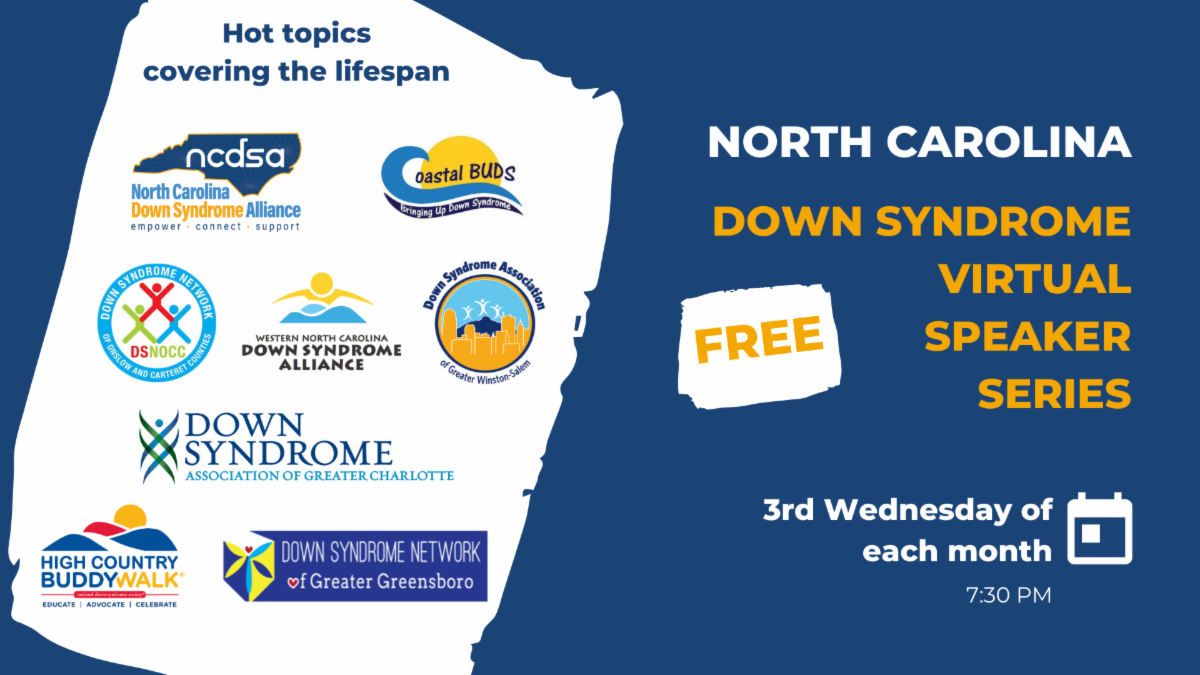
NC Down Syndrome Virtual Speaker Series


Time: 7:30 pm thru 8:30 pm


Register

New: Monday, September 25, 2023

4C's of Workforce Development: Culture, Competency, Capacity, & Community


Time: 3:00 pm thru 4:15 pm


Register

New: Thursday, September 21, 2023

NC Medicaid Managed Care Back Porch Chat


Time: 5:30 pm thru 6:30 pm


Register

New: Friday, September 22, 2023

Children with Complex Needs: NC START Education Session


Time: 12:00 pm thru 2:00 pm


Register

New: Tuesday, September 26, 2023

Celebrating the Contribution of Developmental Psychology to Public Policy (In person event)


Time: 4:00 pm thru 5:00 pm


Register

New: Tuesday, October 10, 2023

Crisis Assessment and Intervention: When Gun Violence & Trauma Strikes: A Five-Step Approach (4-part Series on Tuesdays)


Time: 1:00 pm thru 3:00 pm


Register

New: Thursday, October 19, 2023

I/DD Stakeholder Workgroup Meeting


Time: 3:00 pm thru 5:00 pm


Registration coming soon

Tailored Care Management Educational Offerings

Ongoing Webinar Sessions and Trainings: Some are free, some require a fee, and some are for CMA organizations that have passed the desk review only.

NC AHEC has partnered with the NC Department of Health and Human Services and Division of Health Benefits to equip Tailored Care Management (TCM) candidates with the tools and knowledge to effectively provide care management services to North Carolina’s Tailored Plan beneficiaries through Continuing Professional Development (CPD) opportunities. Find a list of monthly offerings below and join us for one or for all!