|
Upcoming Benchmarks' Webinars
Tomorrow: Benchmarks' Child Welfare Webinar with Lisa Cauley Date: Thursday, January 14, 2021 Time: 8:00 am thru 9:00 am
|
DHSR Updates from Michiele Elliot:
Fingerprint Checks and ABCMS
The North Carolina Department of Health and Human Services (NC DHHS) participated in a national Centers for Medicare & Medicaid Services (CMS) grant program to implement an online automated background check management system (ABCMS). The system is currently available to providers licensed by the Division of Health Service Regulation.
NC DHHS currently manages two background check management systems. At this time, NC DHHS is in the process of transitioning from Scantron sheets to the ABCMS. Beginning March 1, 2021, DHHS will no longer accept Scantron sheets from providers and applicants.
Vaccine Information
LTC Weekly Update Email - 01/11/2021 COVID-19 Vaccine Update (12/30/2020) If your facility did not enroll in the CDC Long Term Care Pharmacy Partnership with CVS and Walgreens, we have asked your local health department to reach out to you to coordinate on vaccine services for your facilities' staff and residents. Please coordinate with them to make arrangements to offer vaccine services to your residents and staff. These arrangements could include vaccination through your health department or another enrolled provider; or working with a long-term care pharmacy that has enrolled as a COVID-19 vaccine provider. The federal government has already paid for several hundred million doses of multiple COVID-19 vaccines through Operation Warp Speed, so the vaccine will be provided at no cost to your residents and staff. Providers may not bill for COVID-19 vaccine doses provided by the federal government, only for vaccine administration with no out-of-pocket for anyone, regardless of insurance status. The cost of vaccine will be covered by insurance or the federal government. LTC Facilities - Staffing Shortages NC DHHS acknowledges that staffing shortages are a difficult challenge faced by some LTC facilities during their outbreak response. NC DHHS does NOT recommend allowing positive HCP to work before completing their isolation period.
It is important for the facility to communicate with LHD and local emergency manager as soon as possible if there is potential for unmet staffing needs. - If the mitigation strategies listed below have been unsuccessful in meeting staffing needs the facility may consider allowing positive HCP to work with positive residents prior to completing their isolation period.
- Contact temporary staffing agencies/nursing pools
- Contact corporate leadership or other sister facilities for temporary staffing support
- Contact the local emergency manager and local healthcare coalitions for temporary staffing support
- Implement plans to allow asymptomatic HCP who have had a high-risk unprotected exposure to SARS-CoV-2 but are not known to be infected to continue to work
- Implement regional plans to transfer patients with COVID-19 to designated healthcare facilities or alternate care sites
- If staffing shortages continue despite pursuing the strategies listed above, consider implementing criteria to allow HCP with suspected or confirmed COVID-19 who are well enough and willing to work but have not met all the Return to Work criteria to work with positive residents and must follow all appropriate precautions.
Long Term Care PSAs We want to thank you for keeping so many North Carolinians safe during the COVID-19 pandemic. Your essential work has saved countless lives and we appreciate everything you do. As we continue to distribute and vaccinate people all across the state we wanted to share an initial PSA produced specifically for long-term care workers and residents. The PSAs are 30, 60 and 90 seconds and can be viewed on our YouTube channel. The YouTube links can also be directly embedded into your websites, email list serves and digital marketing materials. We've also made the videos available for download for you to upload to your own digital channels and display at your facilities. Here are the links for viewing/embedding and downloading our first round of PSAs:
YouTube Vimeo Thank you again for all that you do in our state and please reach out at news@dhhs.nc.gov if you have any questions about how best to use the videos.
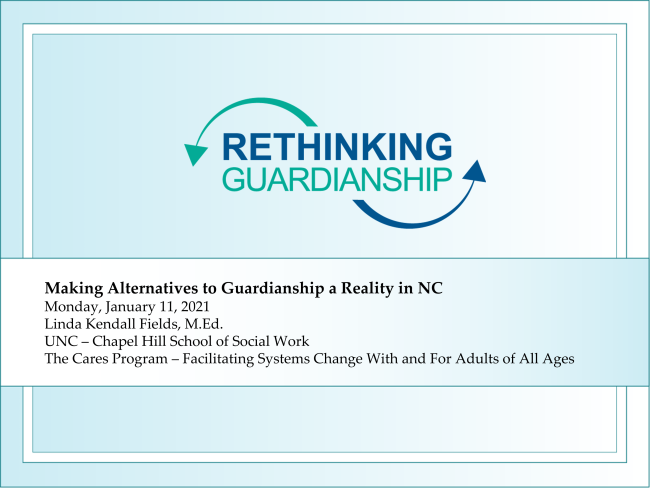
Monoclonal Antibodies for Treatment of COVID-19 The Food and Drug Administration (FDA) has recently given emergency use authorization to two monoclonal antibody drugs for the treatment of mild to moderate COVID-19 in adults and pediatric patients with positive test results of direct SARS-CoV-2 viral testing who are 12 years of age and older weighing at least 40 kg, and who are at high risk of progressing to severe COVID-19 and/or hospitalization. These two products, bamlanivimab (manufactured by Eli Lilly)Â and casirivimab/imdevimab (manufactured by Regeneron), are administered via one-time IV infusion, followed by 1-hour of direct patient observation and are intended to be given in an outpatient setting. Currently US Department of Health and Human Services, Office of the Assistant Secretary for Preparedness and Response (ASPR) controls the fair and equitable allocation of these products to State Departments of Health on a weekly basis. Skilled nursing facilities interested in obtaining access to these medications should reach out to their pharmacy provider. At this time, long term care pharmacies are eligible to receive bamlanivimab after completing a brief enrollment process. Casirivimab/imdevimab is currently only available to hospitals and hospital affiliated locations as per HHS/ASPR guidelines. For more information regarding access to monoclonal antibodies for the treatment of COVID-19 in North Carolina, please contact Tim Davis (tim.davis@dhhs.nc.gov). CDC Long Term Care Toolkit CDC has released a toolkit as a resource for explaining COVID-19 vaccination to both residents and staff in LTCFs. It includes resources for talking with staff, residents, and families, FAQs on the vaccines, and tips on how to prepare staff and vaccine safety monitoring and reporting. Access it here: https://www.cdc.gov/vaccines/covid-19/toolkits/long-term-care/index.html. January 11, 2021 COVID-19 Stakeholder Update PRESS RELEASES since the last update include: NEW resources since the last update include: UPDATED guidance since the last update include: UPDATED reports since the last update include: Slidedeck from the Disability Consortium Meeting Regarding Guardianship
|
Two Jan. 2021 Provider Training Classes Cancelled and 1099s Arriving Soon
Two Jan. 2021 Provider Training Classes Cancelled
The following Jan. provider training classes have been cancelled and will be rescheduled in Feb. 2021:
- Provider Re-credentialing/Re-verification Refresher (Zoom)
- Thursday, Jan. 21, 2021, 10:00 a.m. - 11:30 a.m.
- Provider Web Portal Applications (Zoom)
- Friday, Jan. 22, 1:00 p.m. - 4:00 p.m.
The new class dates and times will be noted in the Feb. training announcement when available; please check the Provider User Guides & Training page for future updates. Providers are also encouraged to review other trainings available in Jan. and register for these classes in SkillPort via the NCTracks Secure Portal.
1099s Arriving Soon
The 1099s will be mailed during the week of Friday, Jan. 15, 2021, and could go out as late as Jan. 20, 2021. The 1099s will be sent to the "1099 Reporting/Pay-To Address" location currently on the provider file. Due to postal service volume, providers should allow 7 to 10 business days to receive a 1099. For more information about the 1099s, refer to the 1099 Frequently Asked Questions on the NCTracks Provider Portal.
|
New Report: Caring for the Future
Caring for the Future: The Power and Potential of America's Direct Care Workforce provides a comprehensive, current-day analysis of the direct care workforce and outlines eight concrete recommendations to improve jobs for this rapidly growing workforce. This report was made possible by generous funding from the W.K. Kellogg Foundation, the Woodcock Foundation, and The John A. Hartford Foundation.
|
Navigating Caring for Women with Opioid Use Disorder: An Introductory Webinar
Social Determinants of Health: Challenges and Opportunities in Rural America Webinar Recording Now Available
|
| | Social Determinants of Health: Challenges and Opportunities in Rural America |
|
CMS Administrator Announces Withdrawal of MFAR
In the two-part announcement, Administrator Verma notes that CMS still supports the intent of MFAR, more work is needed to balance state accountability with protection of the safety net. She also notes that Congress passed supplemental payment reporting requirements which mirror some of MFAR's goals. Those reporting requirements were included in the late December FY 2021 omnibus spending and COVID-19 relief package.
CMS Unleashes Innovation to Ensure our Nation's Seniors Have Access to the Latest Advancements
Final rule will strengthen Medicare by bringing new medical technologies to Medicare beneficiaries faster
On Tuesday, January 12, 2021 the Centers for Medicare & Medicaid Services (CMS) issued a final rule that propels innovative technology so Medicare beneficiaries have access to the latest, most advanced devices. This action represents a step forward that will help smooth the Medicare coverage pathway for innovative products, resulting in faster access to new devices for America's seniors. This action delivers on CMS's Unleashing Innovation and Patients Over Paperwork Initiative.
For additional details, please read the full press release .
CMS Innovation Center Director, Brad Smith, 2020 Year-In-Review
This past year, 2020, marked the tenth anniversary of the Center for Medicare and Medicaid Innovation, and it proved to be a very important year both for the Innovation Center and the broader value-based care movement.
|
|
| | Tools That Teach: What is Human Trafficking? |
Blue Campaign is a national public awareness campaign, designed to educate the public, law enforcement and other industry partners to recognize the indicators of human trafficking, and how to appropriately respond to possible cases. Blue Campaign works closely with DHS Components to create general awareness training and materials for law enforcement and others to increase detection of human trafficking, and to identify victims.
Located within the Office of Partnership and Engagement, Blue Campaign leverages partnerships with the private sector, Non-Governmental Organizations (NGO), law enforcement and state/local authorities to maximize national public engagement on anti-human trafficking efforts. Blue Campaign's educational awareness objectives consists of two foundational elements, prevention of human trafficking and protection of exploited persons.
|
MANY SEXUAL ASSAULTS FOLLOW STALKING
Stalking is one of the four pillars of the Violence Against Women Act, the law that created the Office on Violence Against Women and has led to more than $9 billion in federal funding dedicated to the fight against domestic violence, sexual assault, dating violence and stalking.
January is Stalking Awareness Month to raise awareness about the crime of stalking. We have long known that many sexual assaults don't just spontaneously occur when the sexual assault happens --but rather stalking of the victim by the offender is a frequent precursor of the sexual assault. It is vital for every person to know the myriad ways a person can be stalked (e.g. phone calls, e-mails, social media, following victims to work/school/home, unwanted gifts, spreading rumors or posting information), recognize the numerous signs of stalking, and the importance of the value of taking action to prevent stalking and ultimately a possible sexual assault. When a victim of stalking turns their intuition into action, law enforcement, prosecutors, and the courts have the necessary tools to intervene. Stalking laws are in place and our criminal justice system is designed to give stalking victims a voice. When a victim feels afraid of the behavior of a stalker, the interaction becomes a crime. Fear by the victim is one of the key legal elements of stalking. The ability to successfully prosecute a stalking case may prevent future sexual assaults either through incarceration or issuance of a protective or stay away order against the offender. Friends and family can support victims who are being stalked. Please take some time to become aware of this issue and please widely share the information that is available so that we can keep people safe from domestic violence, sexual assault, dating violence, and stalking. Also, I want to share a podcast episode we recorded on stalking. In this episode, I discuss how I was stalked as a young professional, and I share information about how OVW works to help law enforcement, prosecutors, courts and victim advocates in their efforts to prevent violent crime. I hope you find the podcast helpful. If we work together, we can put a stop to stalking and help reduce sexual assault and other violent crimes.
|
AHRQ Releases a New Family of Data Files on Social Determinants of Health
A new online resource from AHRQ gives researchers access for the first time to a family of data files on social determinants of health.
The resource, which includes data organized by county and zip code, brings together linkable data files from the U.S. Census Bureau, the HHS/Health Resources and Services Administration, and more than a dozen additional data sources.
The tool provides researchers, policymakers and others with detailed data on a wide range of county- and zip code-level population characteristics, such as income level, race, housing, educational attainment, public transportation use, military service, health insurance coverage, types of household computer availability and language use. The new resource, funded by the Patient-Centered Outcomes Research Trust Fund, is currently in a beta, or test phase, and is expected to grow in upcoming months.
|
Doing With, Not Doing For: What it Takes to Facilitate Person-Centered Planning Slidedeck
What Works to Improve Care for Dual Eligible Individuals: An Evidence and Resource Review
Individuals who are dually eligible for Medicare and Medicaid often have multiple chronic conditions, behavioral health issues, and functional needs and frequently receive fragmented, uncoordinated care across both programs. People eligible for both programs include Medicaid beneficiaries who qualify for Medicare after turning 65 years old or individuals under 65 who are eligible based on a permanent disability. This population is both high need and high cost, making up a disproportionate amount of overall Medicare and Medicaid spending.
|
Adopting a cat can make a big difference for kids with autism, new research suggests.
Children with the developmental disorder showed increased empathy and experienced fewer problem behaviors after welcoming a pet cat into their homes. They also displayed less separation anxiety, externalizing, bullying and hyperactivity or inattention.
The findings come from a study published in the Journal of Pediatric Nursing looking at 11 families with children with autism ages 6 to 14. Four of the families adopted a cat from a shelter right away and were followed for 18 weeks. The remaining families were monitored for the initial 18-week period at which point they adopted shelter cats and were followed for another 18 weeks.
|
Upcoming Events
|
Wednesday, January 13, 2021
Session 1
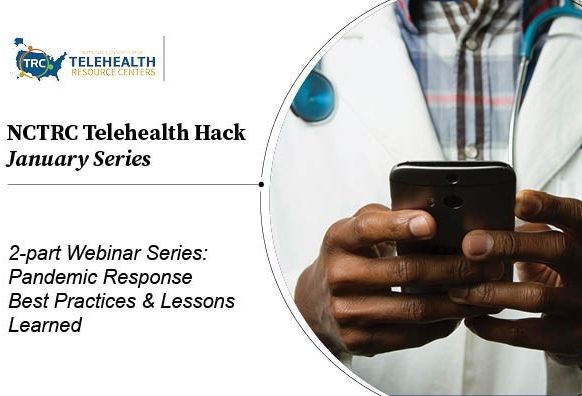
National Pandemic Response Best Practices and Lessons Learned
Time: 2:00 pm thru 3:00 pm
|
Tomorrow: Thursday, January 14, 2021
Benchmarks' Child Welfare Webinar with Lisa Cauley
Time: 8:00 am thru 9:00 am
|
Friday, January 15, 2021
The Challenges of Aging During COVID-19: Long Term Care, Vaccination and Isolation
Time: 1:00 pm thru 2:00 pm
|
Friday, January 15, 2021
SESSION 1: CMS Waivers and State Plan Amendments to Address COVID-19 (NC's Dr. Shannon Dowler will be presenting)
Time: 2:00 pm thru 3:30 pm
|
Tuesday, January 19, 2021
Using Innovative and Alternative Approaches for De-Escalating Individuals in Crisis Situations
Time: 2:00 pm thru 3:00 pm
|
Thursday, January 21, 2021
Clinical Quality Webinar Series-Diabetes
Time: 5:30 pm thru 6:30 pm
|
Friday, January 22, 2021
SESSION 2: Provider Engagement and Education (NC's Dr. Shannon Dowler will be presenting)
Time: 2:00 pm thru 3:30 pm
|
Wednesday, January 27, 2021
Session 2
Post-Acute Care and Long Term Care Facility Pandemic Response Best Practices and Lessons Learned
Time: 2:00 pm thru 3:00 pm
|
New: Wednesday, January 27, 2021
NC Medicaid Transition to Managed Care
Time: 3:00 pm
|
New: Thursday, January 28, 2021
Time: 1:00 pm thru 2:00 pm
|
Friday, January 29, 2021
SESSION 3: Patient Engagement and Education
Time: 2:00 pm thru 3:30 pm
|
Thursday, February 4, 2021
Medicaid Managed Care Fireside Chat Series: Value-Based Payment/Advanced Payment Models & Quality
Time: 5:30 pm thru 6:30 pm
|
Friday, February 5, 2021
SESSION 4: What's Next? A Roadmap for Telehealth Policy Beyond the Pandemic
Time: 2:00 pm thru 3:30 pm
|
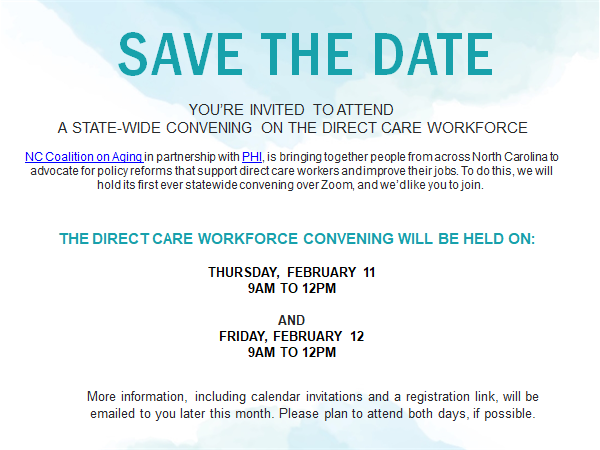
Thursday, February 11, 2020
Save The Date: A State-Wide Convening on the Direct Care Workforce
Time: 9:00 am thru 12:00 pm
|
Friday, February 12, 2020
Save The Date: A State-Wide Convening on the Direct Care Workforce
Time: 9:00 am thru 12:00 pm
|
Thursday, February 18, 2021
Clinical Quality Webinar Series-TBD
Time: 5:30 pm thru 6:30 pm
|
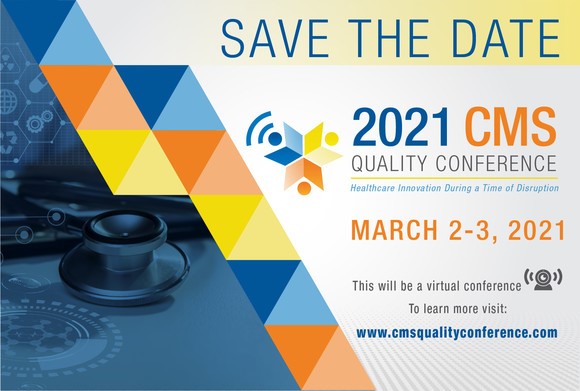
Tuesday and Wednesday, March 2 & 3, 2020
|
Thursday, March 4, 2021
Medicaid Managed Care Fireside Chat Series: Policy Approvals, Process Changes and Appeals
Time: 5:30 pm thru 6:30 pm
|
Please click on each of the following links to view details sent out from each LME/MCO.
Benchmarks' wants to be sure to make the following list handy for our members to visit and suggests a peek at least once per week to find information that may be pertinent to your agency and contracts.
|
|
|
|
|
|