|
Dear Benchmarks' members,
On behalf of the entire Benchmarks' Team, we want to express just how grateful we are for the work you and teams get up and do each and every day to support the children, adults and families in North Carolina.
During this holiday season, we must take a moment to also recognize all of the remarkable things we have been able to manage under the unprecedented circumstances over the past year.
We wish everyone peace, blessings and joy during the upcoming days as we turn the page on 2020 and look forward to a HAPPY NEW YEAR!
Sincerely with thanks,
The Benchmarks' Team
|
Innovations Waiver Direct Support Professional Wage Survey
From Deb Goda:
We've been asked by NC Direct Support Professionals Workgroup to work with them regarding the establishment of a base pay rate of $15 per hour for DSPs in the Innovations waiver. Specifically, they asked us for information on average pay rates for Innovations waiver staff across the state. Below is a link to a brief electronic survey to share this survey with the Benchmarks membership.
The closing date for this survey is January 7th, 2021.
Thank you so much for your participation.
LME-MCO Joint Communication Bulletin # J384
The Centers for Medicare and Medicaid Services - Medicaid Managed Care Regulations Revisions
H/T Eastpointe:
|
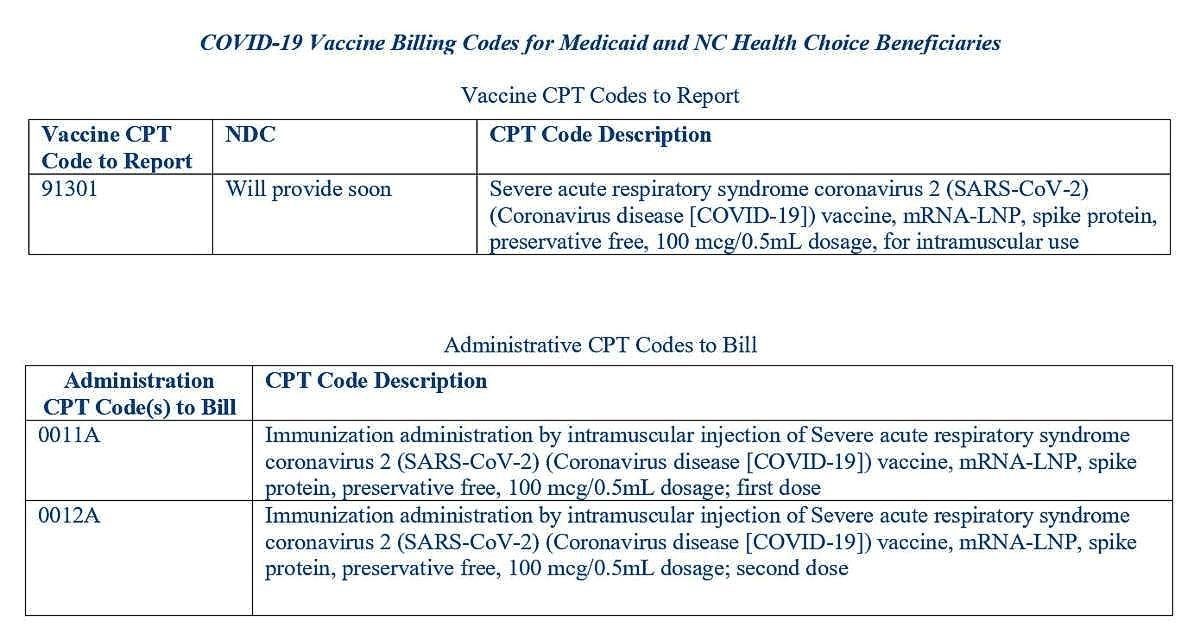
Moderna COVID-19 Vaccine (N/A) HCPCS code 91301: Billing Guidelines
Moderna COVID-19 Vaccine (N/A) HCPCS code 91301: Billing Guidelines (this information is for the Moderna COVID-19 vaccine only)
The following information is only for non-Long Term Care providers who have the means to handle the specific storage recommendations required of the Moderna COVID-19 vaccine and will be administering it. This is the first general communication regarding the COVID-19 vaccine. Medicaid will issue subsequent information related to the guidance of specific vaccination programs and/or specific FDA approved vaccines as information becomes available.
The CDC has released Interim Guidance for Immunization Services during the COVID-19 Pandemic. This guidance is intended to help immunization providers in a variety of clinical and alternative settings with the safe administration of vaccines during the COVID-19 pandemic.
If you have any questions about product specific information, please contact the Immunization Branch Help Desk at 1-877-873-6247 and press option 6. If you have any questions about billing NC Medicaid, please call the NCTracks Call Center at 1-800-688-6696.
For Medicaid and NC Health Choice Billing
- The ICD-10-CM diagnosis code required for billing is: Z23 - Encounter for immunization
- Providers must bill with HCPCS code: 91301 - Severe acute respiratory syndrome coronavirus 2 (SARS-CoV-2) (Coronavirus disease [COVID-19]) vaccine, mRNA-LNP, spike protein, preservative free, 100 mcg/0.5mL dosage, for intramuscular use
- One Medicaid and NC Health Choice unit of coverage is: 0.5 mL
- The maximum reimbursement rate per unit is: N/A
- Providers must bill 11-digit NDCs: unknown
- The NDC units should be reported as "UN1"
- The fee schedule for the PADP is available on Medicaid's PADP web page
Important Claims Information:
- Medicaid and NC Health Choice will reimburse at the Medicare approved COVID-19 vaccination administration rate at 1st dose $16.94 and 2nd dose $28.39
- Claims must have appropriate NDCs that correspond to the vaccine used for administration and corresponding CPT code
- Claims must contain both administration codes and vaccine codes to pay
- Vaccine codes should be reported as $0.00
- Claims for 1st vaccine dose must have been processed in NCTracks prior to processing a claim for 2nd dose
- Medicaid and NC Health Choice does not allow copays to be charged for COVID-19 immunization or administrations
- COVID-19 vaccines are exempt from the Vaccines For Children (VFC) program
- TJ modifier should be used for NC Health Choice claims (age 6 through 18 years)
- EP modifier should be used for all non-NC Health Choice (only Medicaid beneficiaries) younger than 21 years of age
CG modifier should be used for claims submitted by a pharmacy participating in the immunization program for both the vaccine and administration codes (EXCEPTION - CVS/Walgreens pharmacies participating in the Long-Term Care immunization program for beneficiaries residing at the participating LTC).
Special COVID-19 Bulletin #144 and #145 and New Medicaid Bulletins Available
SPECIAL BULLETIN COVID-19 #144: COVID-Nursing Facility Response Site Criteria Revised
This bulletin updates the COVID-Response Site criteria previously established in SPECIAL BULLETIN COVID-19 #82. This update will apply the following amended criteria when reviewing any COVID-Response Site designation request received on or after Dec. 1, 2020. More Information.
SPECIAL BULLETIN COVID-19 #145: Updated Guidance for PACE Organizations
Program of All-inclusive Care for the Elderly (PACE) organizations should continue to follow the guidance of local, state and federal officials regarding COVID-19 and thoroughly document reasoning for making decisions which may fall outside of the PACE program model. More Information.
New Medicaid Bulletins Available as of Dec. 23, 2020
The NC Division of Health Benefits (DHB) has recently published new Medicaid Bulletin articles:
|
North Carolina Department of Transportation Bicycle Helmet Initiative - 2021 Call for Applications
H/T Eastpointe:
To reduce bicycle injuries and deaths, the N.C. Department of Transportation is encouraging people to apply to receive free bicycle helmets as part of an annual initiative the agency conducts. In its Bicycle Helmet Initiative, NCDOT's Integrated Mobility Division uses funds from the sale of "Share the Road" specialty license plates to pay for bike helmets that are given to underprivileged children. Since its inception in 2007, the Bicycle Helmet Initiative has given out more than 40,000 helmets.
Helmets save lives. While less than half of all children typically wear one while biking, helmets can reduce the risk of severe brain injuries by nearly 90 percent. As part of the initiative, NCDOT distributes helmets to government and non-government agencies conducting bike safety events.
Examples of partners include police and fire departments, parks and recreation departments, health departments, community centers, churches and non-governmental organizations.
Applications must be submitted by 5 p.m. on Jan. 15. Applicants have the option of requesting 25, 50, 75 or 100 helmets, and awardees will receive them by April 30, 2021. Applicants are encouraged to partner with groups in the community to extend the outreach of bicycle safety awareness.
|
COVID-19 Update for Long Term Care Settings
LTC Vaccination and Infection Prevention Best Practices
Recording of Webinar from December 17, 2020
|
| | LTC Vaccination & Infection Prevention Best Practices |
|
New RCORP Funding Opportunity
Rural Communities Opioid Response Program-Implementation (RCORP-Implementation)-March 12. The Health Resources and Services Administration's (HRSA) Federal Office of Rural Health Policy (FORHP) will be making approximately 78 awards of $1 million each to rural communities to enhance substance use disorder (SUD), including opioid use disorder (OUD), service delivery.
Over the course of a three-year period of performance, grant recipients will implement a set of core prevention, treatment, and recovery activities that align with the U.S. Department of Health and Human Services' Five-Point Strategy to Combat the Opioid Crisis.
Award recipients are strongly encouraged to leverage workforce recruitment and retention programs like the National Health Service Corps (NHSC). All domestic public and private entities, nonprofit and for-profit, are eligible to apply and all services must be provided in HRSA-designated rural areas (as defined by the Rural Health Grants Eligibility Analyzer).
The applicant organization must be part of an established network or consortium that includes at least three other separately-owned entities. A majority, or at least 50 percent, of members in each consortium must be located within HRSA-designated rural areas. Applicants are encouraged to include populations that have historically suffered from poorer health outcomes, health disparities, and other inequities, as compared to the rest of the target population, when addressing SUD/OUD in the proposed service area.
FORHP will hold an hour-long webinar for applicants on Tuesday, January 26, 2021 from 1-2 p.m., ET. A recording will be made available for those who cannot attend. Please reference page ii in the NOFO for the dial-in information for the webinar and contact ruralopioidresponse@hrsa.gov with programmatic questions and bmirindi@hrsa.gov with fiscal/budget-related questions.
|
Transforming Child Welfare and the Family Well-Being System
This recently released report provides a framework and description of a prevention-aligned, public health approach to child welfare and provides some examples of innovations states and communities are implementing in their efforts to become a 21st century model of child welfare and to focus on the family well-being system.
|
Infant opioid withdrawal therapy varies widely by treatment site
Medical care for newborn infants who were exposed to opioids in the womb varied widely across 30 hospitals nationwide, according to a study funded by the National Institutes of Health. The study authors say that the findings underscore the need for clinical trials to determine the most effective treatments.
The study was conducted by Leslie Young, M.D., of the University of Vermont and colleagues in the Advancing Clinical Trials in Neonatal Opioid Withdrawal Syndrome (ACT NOW) Program, part of NIH's Helping to End Addiction Long-term Initiative. It appears in the journal Pediatrics. Opioid use disorder during pregnancy increased(link is external) from 1.5 to 6.5 for every 1,000 hospital deliveries from 1999 to 2014, according to the U.S. Centers for Disease Control and Prevention. Opioid use during pregnancy increases the risk for maternal death, miscarriage, poor fetal growth and preterm birth. Newborns who are exposed to opioids in the womb may also have withdrawal symptoms that require medication treatment. ACT NOW study sites varied widely in the proportion of pregnant women who received medication-assisted treatment (from roughly 6% to 100%) and prenatal counseling (roughly 2% to about 75%). Sites also varied greatly in the proportion of newborns receiving therapy with a replacement opioid (about 7% to 100%) and therapy with a secondary medication to further ease the infants' withdrawal symptoms (roughly 1% to roughly 70%). The study authors concluded that understanding the wide variation in treatment offered to opioid-addicted mothers and their infants is an important first step for planning future studies and treatment programs. Funding for the study was provided by NIH's Eunice Kennedy Shriver National Institute of Child Health and Human Development (NICHD) and the Environmental influences on Child Health Outcomes (ECHO) Program in NIH's Office of the Director.
|
2019 Drug Spending Dashboards Now Available!
Today, the Centers for Medicare & Medicaid Services (CMS) released our annual update to the Drug Spending Dashboards with data for 2019. The dashboards focus on average spending per dosage unit for prescription drugs in the Medicaid, Medicare Part B, and Medicare Part D programs, and track the change in average spending per dosage unit over time. Information is presented in an interactive web-based tool, so researchers and consumers can easily sort the data to identify trends.
In addition, CMS released our annual update to the Medicare Part B Discarded Drug Units Report with data for 2019. CMS requires all physicians, hospitals, and other providers submitting Medicare Part B drugs claims to report any discarded amount of a single use vial or other single use package drug on its claim for reimbursement. This report presents data on spending for discarded drug units covered under Medicare Part B.
CMS Issues Final Rule to Empower States, Manufacturers, and Private Payers to Create New Payment Methods for Innovative New Therapies Based on Patient Outcomes
The Final Rule updates provisions to promote value-based payment for prescription drugs, while furthering the Trump Administration's efforts to combat the opioid crisis
As part of President Trump's longstanding commitment to lowering drug prices, today the Centers for Medicare & Medicaid Services (CMS) finalized regulatory changes to modernize Medicaid prescription drug purchasing and propel payment innovation by providing states, private payers and manufacturers more flexibility to enter into value-based purchasing (VBP) arrangements for prescription drugs.
By law, state Medicaid agencies are entitled to manufacturer rebates for the prescription drugs provided to Medicaid beneficiaries, which is operationalized by drug manufacturers reporting their "best price" to CMS for brand name drugs, and providing rebates to the federal and state governments under the Medicaid Drug Rebate Program (MDRP). Many insurers are experimenting with value-based payment approaches due to the proliferation of new therapies coming to market today that fight disease in an entirely new way, which could not have been imagined at the start of the MDRP 30 years ago. The potentially transformative impact of these new therapies has prompted insurers, including Medicaid, to rethink innovative payment approaches.
"Rules on prescription drug rebates and related reporting requirements have not been updated in thirty years, and are thwarting innovative payment models in the private sector," said CMS Administrator Seema Verma. "Medicaid's outdated rules have consistently stymied the ability of payers and manufacturers to negotiate drug reimbursement methods based on the actual outcome of the treatment. A new generation of approaches to payment methods is needed to allow the market the room to adapt to these types of curative treatments while ensuring that public programs like Medicaid remain sustainable and continue to receive their statutorily required discounts."
Under current regulations, prescription drug manufacturers face challenges accounting for VBP arrangements in their Medicaid best price reporting to CMS. This has the unintended consequence of hindering providers, insurers and prescription drug manufacturers in their efforts to develop innovative payment models for new drug therapies and other innovative treatments. Current regulations also discourage payers and manufacturers from designing new payment arrangements based on the value their product may provide.
With the new flexibilities under this final rule, manufacturers will be more willing to negotiate with payers, including Medicaid, with drug pricing being driven by the value of their drug to the individual patient. This is significant, especially in the era of new genetic-based treatments which may initially be expensive, yet in the long run offer significant value to the patient and payer. Payers will be able to negotiate prices with manufacturers for these genetic-based treatments based upon outcomes and evidence-based measures such as reduced hospitalizations, lab visits, and physician office visits, ensuring that if such measures fail to support the value of a drug, the payer is not held accountable for the full price.
Today's final rule codifies a broad definition of VBP, which can better align pricing and payment to observed or expected evidence and/or outcomes-based measures in a targeted population. The final rule also allows manufacturers to report multiple best prices instead of a single best price when offering their VBP arrangements to all states. By making these changes, effective in January 2022, CMS hopes to encourage VBP arrangements and negotiations to help make new, innovative therapies more available to all patients. As a result, it is estimated that these new VBP approaches could save up to $228 million in Federal and state dollars through the year 2025.
Basing payment on the effectiveness of a given therapy can foster innovation in the treatments that are most impactful to patients, while reducing overall healthcare spending and hospital visits. When payers are positioned to be stronger negotiators with drug manufacturers, Medicaid beneficiaries will benefit from better access to prescription medications.
In addition to furthering value-based payment, this final rule also furthers the Trump Administration's efforts to combat the opioid crisis. The changes that we are finalizing implement provisions under the Substance Use-Disorder Prevention that Promotes Opioid Recovery and Treatment (SUPPORT) for Patients and Communities Act (Pub. L. 115-127), and under the existing Medicaid drug utilization review program, to promote safe prescribing of opioids and other medications through state Medicaid Drug Utilization Review (DUR) programs, which is essential to prevent and reduce opioid misuse and abuse. For example, we are finalizing minimum standards that will enhance states' ability to help identify inappropriate prescribing of opioids if a beneficiary is already receiving medication-assisted treatment for a substance use disorder (SUD).
The regulation also finalizes a regulatory definition of a line extension, which will become effective on January 1, 2022 for the purposes of the alternative rebate calculation under the Medicaid Drug Rebate Program. Manufacturers of line extension drugs are required to make such a calculation on these drugs under section 1927(c)(2)(C) of the Social Security Act. The final definition will create incentives for manufacturers to continue to bring new innovative therapies to market, but protect the Medicaid program from excessive manufacturer inflation on some older drugs. It is estimated that these new final policies clarifying the definition of line extension drugs could produce savings of $2.3 billion through the year 2025 in the form of additional manufacturer rebates to states.
In addition, the final rule protects patients by clarifying requirements that help to ensure that cost sharing assistance, including copayment assistance cards, has the effect of lowering the out of pocket costs for patients as intended. The new rules make clear that if the discounts are not benefiting the patient and instead lower the costs for health insurance companies and their pharmacy benefit managers (PBMs), they must be counted in drug manufacturers' reporting to CMS for Medicaid rebate purposes, as required by law. Drug manufacturers are generally required to report an Average Manufacturer Price (AMP) as well as their "best price," accounting for any discounts or rebates provided to such entities as health plans and PBMs. This change will help ensure that when patients use a copayment assistance card provided by a drug manufacturer, the value is passed through to the patient's deductible or cost sharing obligations in full, as opposed to offsetting what the health insurance company would have to normally reimburse the pharmacy. CMS is delaying the effective date of this policy until January 1, 2023 to give manufacturers and payers time to make any necessary changes to their patient assistance programs and reporting mechanisms to help ensure that these discounts are accounted for appropriately. Further instructions regarding those provisions whose effective dates will be delayed are described in the final regulation.
Finally, this final rule also builds on the steps that the Trump Administration has already taken to lower drug prices, including the following actions:
- In Medicare Part D, which covers prescription drugs that beneficiaries pick up at the pharmacy, the average basic premium for Medicare Part D prescription drug plans was projected to decline to the lowest level in seven years, saving beneficiaries about $1.9 billion in premium costs over that time.
- Announced the Senior Savings Model where, starting in 2021, participating enhanced Part D prescription drug plans across the country will provide Medicare beneficiaries access to a broad set of insulins at a maximum $35 copay for a month's supply, saving beneficiaries on average $446 for their insulins.
- Allowing Part D plans to substitute certain generic drugs onto plan formularies more quickly during the year, so beneficiaries immediately have lower cost sharing for these drugs.
- Increasing competition among plans by removing the requirement that certain Part D plans have to "meaningfully differ" from each other, making more plan options available for beneficiaries.
- Providing more information on out-of-pocket costs for prescription drugs to beneficiaries by requiring Part D plans to adopt, starting no later than January 2021, tools that provide clinicians with information that they can discuss with beneficiaries on out-of-pocket drug costs at the time a prescription is written.
- Implementing Part D legislation signed by President Trump to prohibit "gag clauses," which keep pharmacists from telling beneficiaries about lower-cost ways to obtain prescription drugs.
- Approved Medicaid state plan amendments from nine states to negotiate supplemental rebate agreements involving innovative value-based payment arrangements with drug manufacturers, so states can demand results from manufacturers in exchange for payment.
- Issued guidance intended to help states monitor and audit Medicaid and Children's Health Insurance Program (CHIP) managed care plans to address spread pricing and appropriately incorporate administrative costs of the PBM when calculating their medical loss ratio (MLR).
|
Justice Department Alleges Conditions at Iowa Institution for Individuals with Disabilities Violate the Constitution
The Justice Department today concluded an investigation into conditions at the Glenwood Resource Center (Glenwood), an institution for individuals with intellectual disabilities operated by the State of Iowa in Glenwood, Iowa.
The Justice Department determined that there is reasonable cause to believe the conditions at Glenwood violate the Fourteenth Amendment of the U.S. Constitution and that these violations are pursuant to a pattern or practice of resistance to the full enjoyment of rights protected by the Fourteenth Amendment. "Individuals with disabilities are not human guinea pigs, and like all persons, they should never be subject to bizarre and deviant pseudo-medical 'experiments' that injure them. Human experimentation is the hallmark of sick totalitarian states and has no place in the United States of America. The U.S. Constitution protects the right of all persons in this free country who are in the care of the state to be reasonably free from harm or the risk of harm," said Assistant Attorney General Eric Dreiband for the Civil Rights Division. "We intend to work with the state to ensure that reforms are instituted at Glenwood so that these vulnerable individuals, who depend upon the state for their care, receive the care, support, and treatment that they deserve and to which they are entitled." The department found reasonable cause to believe that Iowa subjects Glenwood residents to unreasonable harm and risk of harm by subjecting residents to uncontrolled and unsupervised experimentation, inadequate physical and behavioral healthcare, and inadequate protection from harm, including deficient safety and oversight mechanisms. Specifically, the department concluded that the state violated Glenwood residents' constitutional rights by conducting experiments on them without their consent. The department found that one experiment, which involved overhydrating residents, caused physical harm. In addition, the department concluded that Glenwood residents receive constitutionally inadequate physical health care. The department found that residents fail to receive timely or clinically appropriate medical assessments or treatment, at times resulting in severe physical harm. The department also concluded that Glenwood's behavioral health care, including its use of restraints, violates residents' due process rights. The department found that, from 2017 to 2019, Glenwood's use of restraints increased by more than 300 percent. Finally, the department found severe deficiencies in the oversight and quality management at both Glenwood and the Iowa Department of Human Services and that these deficiencies fostered an environment in which the constitutional violations could and did routinely occur. As required by the Civil Rights of Institutionalized Persons Act (CRIPA), the Department provided the State of Iowa with written notice of the supporting facts for these alleged conditions and the minimum remedial measures necessary to address them. The Department of Justice's comprehensive investigation involved review and analysis of documents, including policies and procedures, health care records, investigations, and oversight reports. The department also conducted tours of Glenwood and conducted interviews of current and former staff and management at Glenwood, Iowa's Department of Human Services, and other stakeholders. The department initiated the investigation in November 2019 under CRIPA, which authorizes the department to act to address a pattern or practice of deprivation of constitutional rights of individuals confined to state or local government-run residential institutions. The department is continuing to investigate whether the state violates the rights of residents of Glenwood and Woodward Resource Centers under Title II of the Americans with Disabilities Act to receive services in the most integrated setting appropriate. This investigation was conducted by attorneys with the Special Litigation Section of the Justice Department's Civil Rights Division and the U.S. Attorney's Office for the Southern District of Iowa. Individuals with relevant information are encouraged to contact the department by email at Iowa.Investigation@usdoj.gov. Additional information about the Civil Rights Division of the Justice Department is available on its website at www.justice.gov/crt.
|
Upcoming Events
|
Thursday, January 7, 2021
Medicaid Managed Care Fireside Chat Webinar Series-Behavioral Health
Time: 5:30 pm thru 6:30 pm
|
Friday: January 8, 2021
Dave Richard Joins Benchmarks' Friday Membership Webinar
Time: 8:30 am thru 9:30 am
|
Friday, January 15, 2021
SESSION 1: CMS Waivers and State Plan Amendments to Address COVID-19 (NC's Dr. Shannon Dowler will be presenting)
Time: 2:00 pm thru 3:30 pm
|
Thursday, January 21, 2021
Clinical Quality Webinar Series-Diabetes
Time: 5:30 pm thru 6:30 pm
|
Friday, January 22, 2021
SESSION 2: Provider Engagement and Education (NC's Dr. Shannon Dowler will be presenting)
Time: 2:00 pm thru 3:30 pm
|
Friday, January 29, 2021
SESSION 3: Patient Engagement and Education
Time: 2:00 pm thru 3:30 pm
|
New: Thursday, February 4, 2021
Medicaid Managed Care Fireside Chat Series: Value-Based Payment/Advanced Payment Models & Quality
Time: 5:30 pm thru 6:30 pm
|
Friday, February 5, 2021
SESSION 4: What's Next? A Roadmap for Telehealth Policy Beyond the Pandemic
Time: 2:00 pm thru 3:30 pm
|
New: Thursday, February 11, 2020
Save The Date: A State-Wide Convening on the Direct Care Workforce
Time: 9:00 am thru 12:00 pm
|
New: Friday, February 12, 2020
Save The Date: A State-Wide Convening on the Direct Care Workforce
Time: 9:00 am thru 12:00 pm
|
New: Thursday, February 18, 2021
Clinical Quality Webinar Series-TBD
Time: 5:30 pm thru 6:30 pm
|
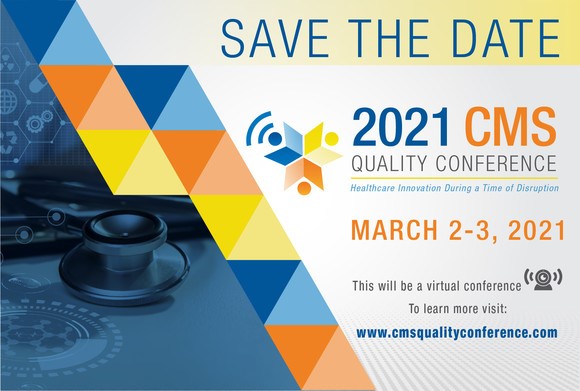
Tuesday and Wednesday, March 2 & 3, 2020
|
New: Thursday, March 4, 2021
Medicaid Managed Care Fireside Chat Series: Policy Approvals, Process Changes and Appeals
Time: 5:30 pm thru 6:30 pm
|
Please click on each of the following links to view details sent out from each LME/MCO.
Benchmarks' wants to be sure to make the following list handy for our members to visit and suggests a peek at least once per week to find information that may be pertinent to your agency and contracts.
|
|
|
|
|
|