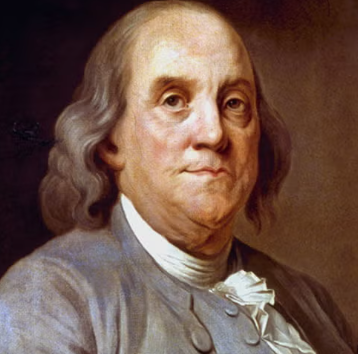
Benjamin Franklin: The Inventor of Possibility in a New Nation
As part of the Founding Fathers series, we highlight Benjamin Franklin. An inventor, diplomat, writer, and statesman whose influence on American life reaches far beyond the 18th century. Franklin’s story is one of relentless curiosity and public service, making him a symbol of the American spirit and a key architect of the nation's foundation.
Born in Boston in 1706, Franklin was largely self-taught and rose from humble beginnings to become one of the most respected minds of his time. In politics, he helped draft the Declaration of Independence and was instrumental in securing French support during the Revolutionary War. His diplomatic skill also shaped the Treaty of Paris, which officially ended the conflict and secured American independence.
Franklin played an important role at the Constitutional Convention in 1787. Though he was the oldest delegate in attendance, his wisdom and calm demeanor helped mediate the intense debates that shaped the U.S. Constitution.
Outside of politics, Franklin’s scientific curiosity led to groundbreaking discoveries. He demonstrated the electrical nature of lightning through his famous kite experiment and invented the lightning rod to protect buildings. He also created practical tools like bifocal glasses and the Franklin stove.
One of Franklin's most lasting legacies lies in his contributions to public life. He helped establish the first public library in America, the University of Pennsylvania, and the first volunteer fire department. These efforts reflected his strong belief in education, civic responsibility, and community service.
Benjamin Franklin owned enslaved people for much of his life and profited from slavery through his printing business. Although he later became an advocate for abolition, this shift came late and is viewed more as a personal evolution than early moral leadership. He also expressed racist views in his writings and opposed the immigration of non-English groups, particularly Germans, fearing they would not assimilate.
Benjamin Franklin died on April 17, 1790, at the age of 84, in Philadelphia. His final major public act was signing an anti-slavery petition in 1790, just two months before his death.
Join us at the GlobalMindED 2026 Conference, June 9–11, as we celebrate 250 years of American democracy and look ahead to the next 250 years of opportunity and progress.
|