|
In Defense of Celebration

It says a lot about the ethos of my religious tradition that I often find myself needing to defend the efficacy of fun. It's not that my upbringing was devoid of laughter, feasts, or simple enjoyment of many things - quite the contrary! But I found that outside my home, carefree celebration was frequently met with the kind of mild suspicion one might have if offered a decadent cake while being assured it was "healthy" - you want to believe it's good for you, but you can't quite get there. If you're like most people, you eat the cake anyway with a side of subtle guilt.
I'd like allay your fear of fun, not only to assuage your guilt but also to commend the tremendous value of celebration - both in general and in the practices of Christian worship.
I recognize that there are few things one can do to more swiftly kill the vibe of a good party than announcing how important all this festivity is going to be for our well-being. But too many of us need more than just permission to party; we need a prescription. So here you go! I trust you'll recover before Sabbath.
Here are three ways to celebrate in worship (and why they matter):
|
|
Worship and Music Resource
|
|
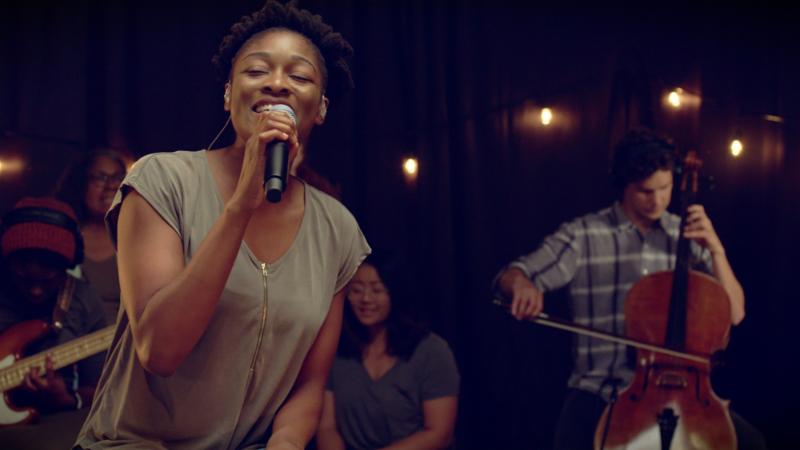
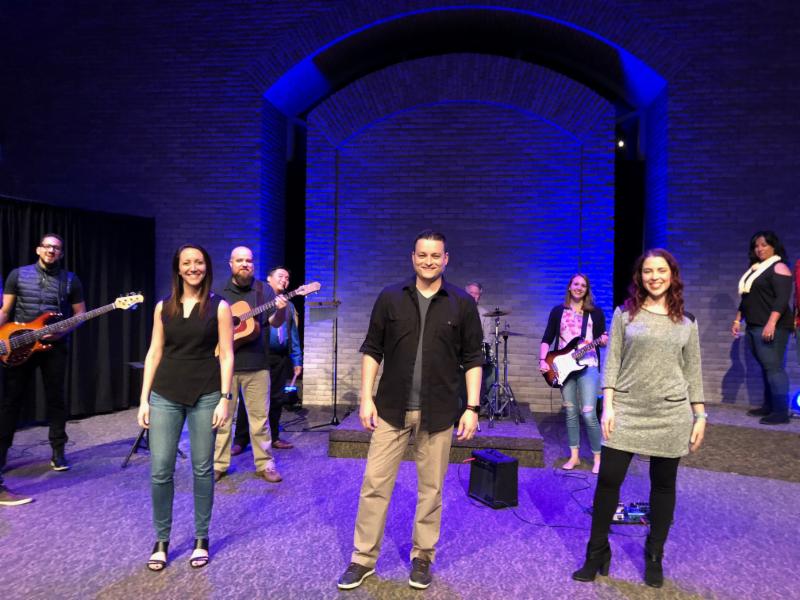
Hymneo is a new music ministry launching from Pioneer Memorial Church on the campus of Andrews University. From the Greek word to sing praises or hymns, Hymneo seeks to capture faith experiences within new songs of praise. This songwriting collective was birthed by a hunger of the worship leaders of PMC to write congregational music that is contemporarily relevant and shares the distinctive faith of the Seventh-day Adventist Church. Music, which originates from the throne of God, has the powerful ability to capture the understanding of a generation, to recapitulate the emotion of an experience, and to draw us closer to the heart of God.
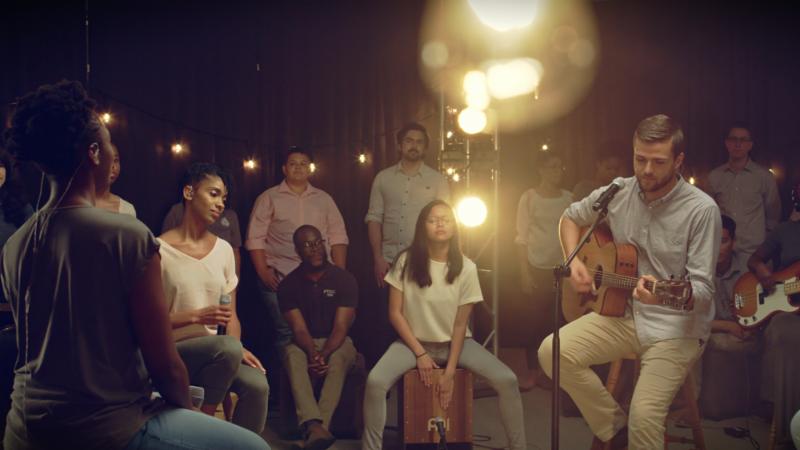
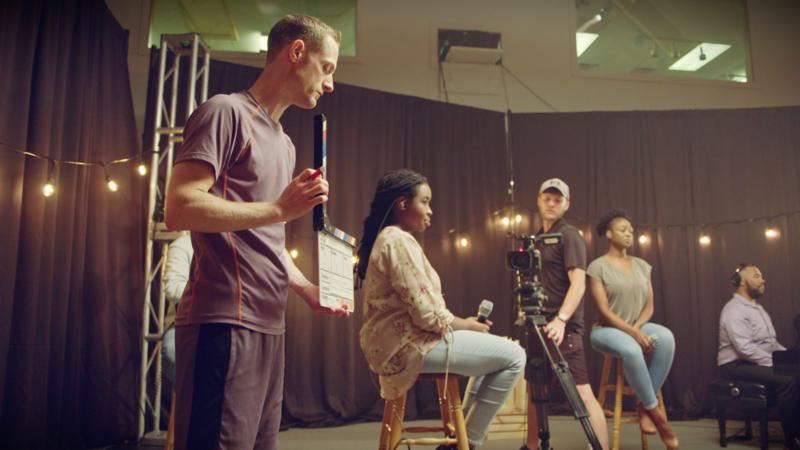
Recently, Hymneo has been able to record music videos for two original songs and is looking at a release date in the early fall. Continuing on, Hymneo will be writing and collecting lyrics, poems, arrangements and compositions for future publication. New songs and hymns will be considered for publication through Adventist Worship Music. Look for more information soon on how to contribute your original pieces to Hymneo and join the songwriting collective. You can find Hymneo on Facebook, Instagram, and Twitter @Hymneo.
|
By Beholding We Become Changed: Privilege, Diversity, and Inclusion in Worship
Presented at the 2018 Andrews University Music & Worship Conference

As my parents tell it, I have been praising the Lord through song for much of my life. For family worship, I would pronounce I had a new song for us to sing and promptly meander through a "
melody" supported by stories from the Bible, the color of the tights I had worn to church, or most often, an amalgamation of the two. It is as a joyous, musically-inclined worshiper, but also as a scholar of race and representation, that I speak to you today, bringing together my experiences as a worshipper, a worship leader, and a researcher passionate about interrogating issues of diversity.
I once sat on a church committee where the chair requested that we be more creative with our worship planning. In response, a member from Africa, let's call her Esther, asked if she could invite a choir who sings African music to perform (I realize Africa is a continent and not a country, but Esther did not specify beyond saying "African choir."). Many of us met her question with enthusiasm. But after sharing our encouragement, a member paused, let's call him Bob, and then came a word many of us on committees or any other organizational groups dread when we think that the discussion has been resolved: "well..." Bob proceeded to caution that not all church members may like "that kind of music" and therefore suggested we should be wary of inviting the choir. "Well"
indeed.
After a moment of awkward silence, someone spoke up, remonstrating, "Let's just be honest here, you're addressing black music. That's not even what the choir sings." There is a lot I could unpack here, from proper committee etiquette to the conflation between "black" and "
African" music to the issue of whether all participants in any given worship service need to be comfortable with the music on everySabbath. But when thinking about and praying over what to share tonight, I decided to discuss some of the issues underlying the assumptions made in Bob's comment, namely, that worship styles unfamiliar to us may pose a threat, and that that threat should be excluded. His comment, in other words, leads to questions about privilege, inclusion, and worship. In this day and age, we may think of issues concerning racial and/or ethnic distinction as political, thereby meriting no place in church or in discussions of worship. But tonight, I propose that as we craft ourselves as a body of believers, an attention to diversity and inclusion proves crucial to us as Christians.
|
|
Culturally Diverse, Convergence Worship at the Florida Hospital Church: Journeying Beyond Traditional, Contemporary, Blended, & Monocultural Worship
According to a 2015 Pew study, Seventh-day Adventism was named as the most diverse religion in the United States. However, that doesn't mean its people are racially worshiping together.
Six years ago the
Florida Hospital Church (FHC) moved from a traditional and a contemporary service to two identical multicultural, convergent worship services. After an initial decline in attendance, the church has had sustained growth every year since. This format is unusual in the Seventh-day Adventist denomination.
There is essentially a four-pillared framework that undergirds worship services, which Robert Webber integrated with a convergence model. The four pillars are: gathering, Word, response, and sending. We apply the normative principle of worship - whatever is not forbidden in Scripture and seems to be in harmony and peaceable to the body. This allows for tremendous flexibility when you start to apply the rich cultural elements of your congregants for the greater whole. A new level of understanding and appreciation for the body of Christ begins . . . when it is done with excellence.
|
|
|
 |
|
|
|