|
"Not Racist" Is Not Enough
|
|
|
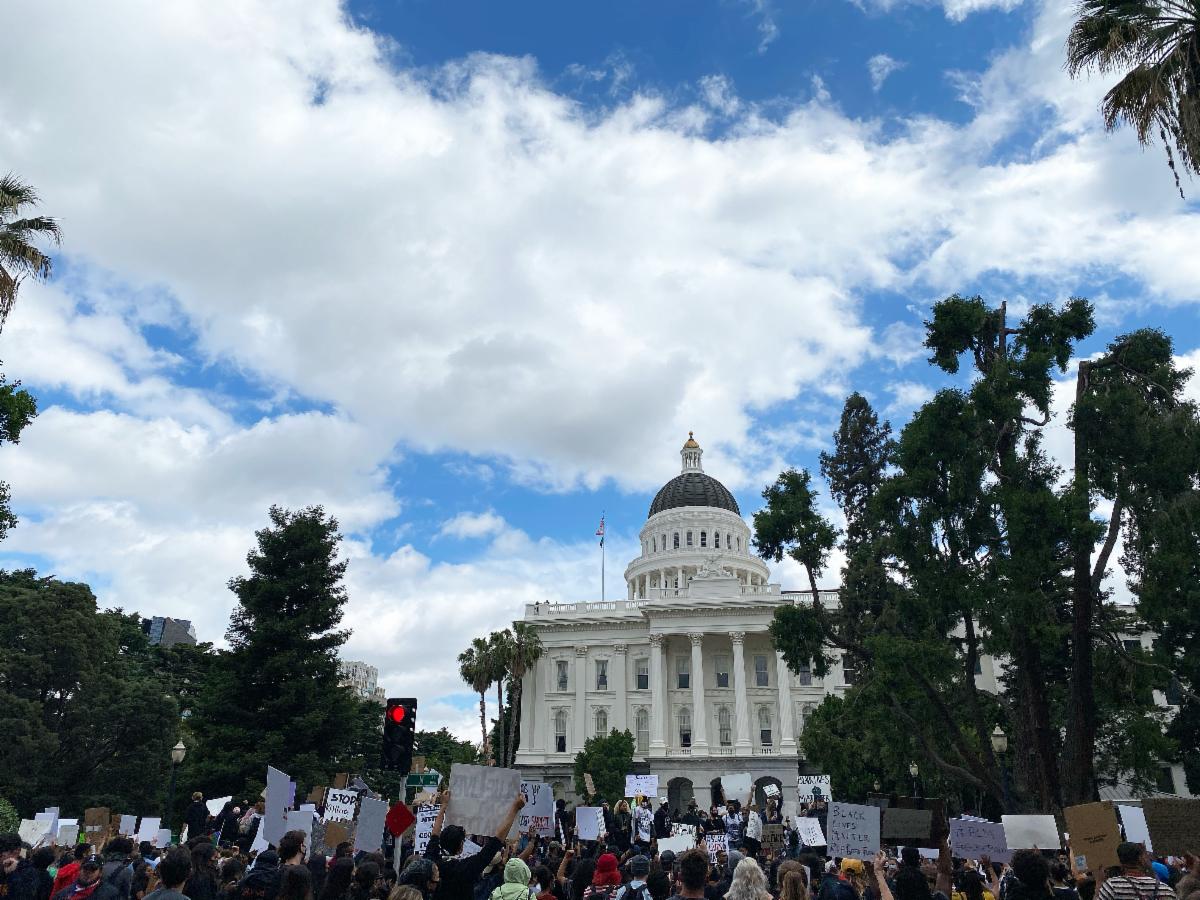
California State Capitol. Photo credit: Alexander Carpenter.
|
I'd like to believe that growing up in a diverse community and being taught from birth that we are all equal would make me somehow immune from being racist. It doesn't. Sure, I haven't engaged in the types of racist behavior that camera phones have made socially unacceptable. But the horrifying, unjust killings of George Floyd, Breonna Taylor, and Ahmaud Arbery are not isolated incidents of evil. They are the diseased fruit of racism's systemic structures and practices, perpetuated less by the vociferous support of the few than by the deafening silence of the many. I've spent much of my life trying to cultivate diverse, inclusive communities, where mutual respect is fostered and racial injustices are overtly challenged. I've marched with protesters in New York City. But as a White American, I've always had the privileged option to leave the march -literally and metaphorically - and return to the sidelines. It's an option I've taken at times because it's more comfortable there. But I'm increasingly learning that there are no sidelines; there are no passive observers in this struggle. There is no ethically or morally neutral position. "Not racist" is not enough. "Not racist" inaction is racist action. Comfort costs lives. It's for this reason that, as Ibram X. Kendi writes in his book, How to Be an Antiracist, "The opposite of 'racist' isn't 'not racist.' It is 'antiracist.'"
|
Let Justice Roll: How Pastors Can Make a Difference in the Midst of Systemic Racism
Register today for "Let Justice Roll: How Pastors Can Make a Difference in the Midst of Systemic Racism." This virtual conference will take place on Wednesday, June 10, at 1 pm (EDT) and address actions you can take to make a tangible difference. Please plan to
join us.
|
Adventist Risk Management Resources for Reopening Church Buildings
Join Adventist Risk Management, Inc. and the North American Division for a
free webinar to learn valuable strategies for providing a safe environment for worship once we are allowed to return to the physical church building. Additional
COVID-19 resources are also available at
this dedicated page, which will soon include answers to FAQs from the
webinar.
|
Pandemic of Racism
NAD Ministerial's Jose Cortes Jr. hosted "Pandemic of Racism,"
a conversation with Michael Nixon, David Sedlacek, Jesse Wilson, and Claudia Allen, discussing strategies for confronting the evil of systemic racism as a church community. You can watch the video
here.
|
|
|
Best Practices for Adventist Worship (BP): In addition to following the Adventist Church's
recommended strategies and abiding by state and local law, New Hope Seventh-day Adventist Church has established a committee to consider how and when to safely reopen the physical church building. Can you tell me why you set up this committee, which experts you included, and how you plan to proceed?
Jason Decena (JD): There are many sources of information regarding reopening safely, and that information regarding best practices continues to evolve, sometimes rather quickly. In addition to the recommended strategies that you referred to above, we're also paying attention to CDC guidelines, State of Maryland guidelines, and Howard County guidelines. Each of these sources may also change their recommendations at any moment, for multiples reasons. For example, the State of Maryland entered Stage 1 of their 3-stage plan to reopen. However, our local county delayed entering Stage 1 by two weeks because of the local infection rate trend.
Because of the volume, disparity, and changing nature of the information that we're receiving, we've formed a Reopening Committee to guide us through our protocols and procedures at every stage and iteration of reopening the building. Our committee includes a cardiologist, a nurse practitioner (who recently retired from working at an elderly care facility that experienced a COVID-19 outbreak), an allergist (currently working with immunocompromised people with COVID-19), and our head deacon (who works for a medical supply company). We've recently had our first meeting and we started the process of talking through the recommended guidelines from each entity and how we will incorporate and implement them.
|
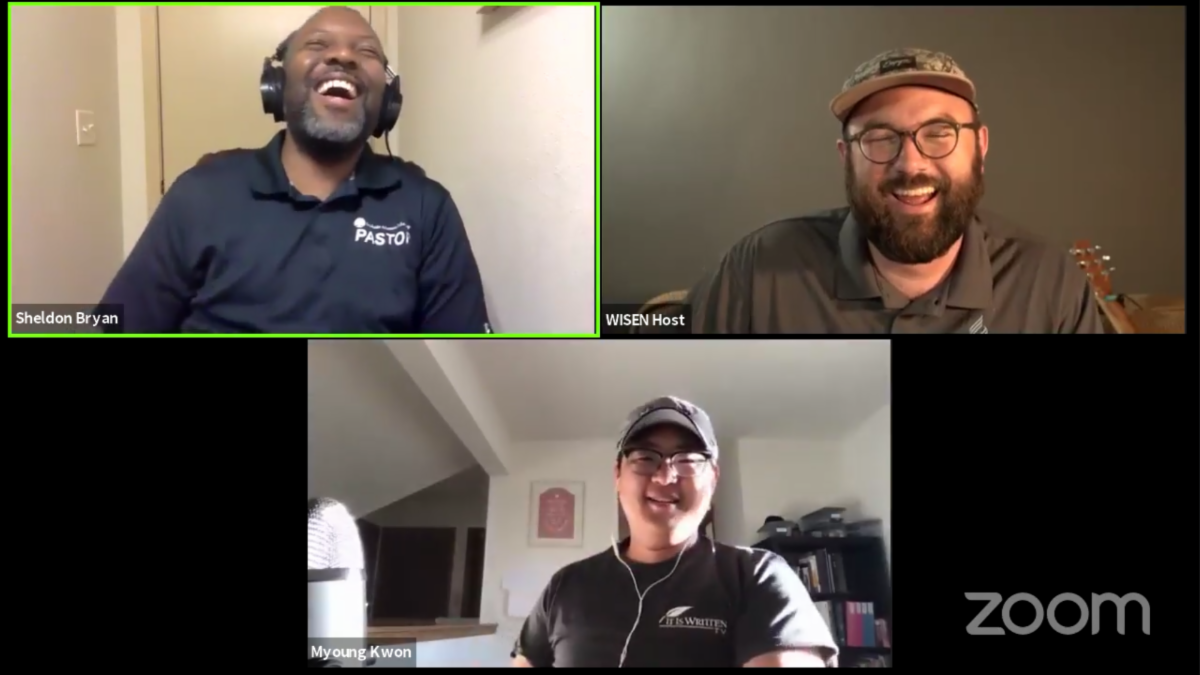
Zachary Payne (ZP): When Pastor Sheldon Bryan, Pastor Myoung Kwon and myself first started planning this out, one of our main goals was community. For many of our church members, going to church is a significant part of their weekly human interaction, and we knew it would be a huge loss for them to give that up for a long period of time. While others tried similar approaches to ours in the form of a public page on Facebook - which, admittedly has the potential to reach more people beyond a local area - we made our Facebook group private. This, we thought, created the potential that at least most of the members of the group would be local people we invited, and therefore a more realistic local community.
|
|
|
 |
|
|
|