The Canadian Celiac Association (CCA) was invited for a Farm Tour at the beginning of August in Saskatchewan. We had the opportunity to learn more about how farmers and millers are working to bring safe gluten-free oats to market. CCA would like to thank
Avena Foods
and
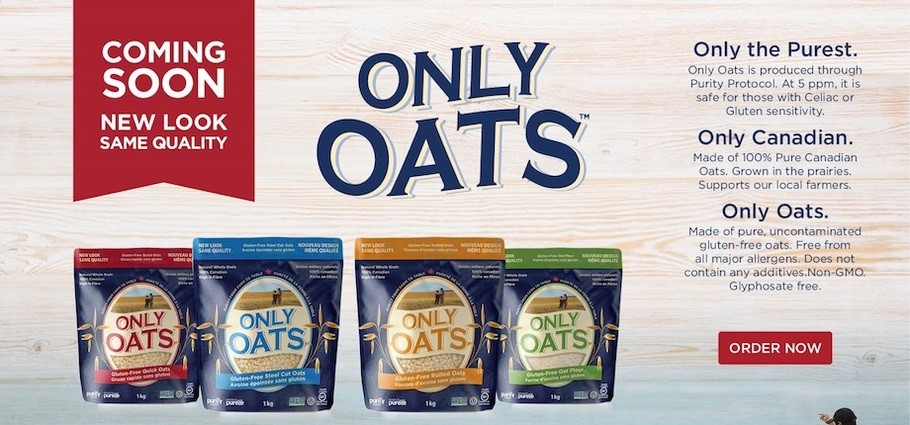
West Oak Naturals (Only Oats)
for sponsoring this opportunity.
|
|
The safety of oats in individuals with celiac disease has been extensively investigated. Health Canada has reviewed the clinical evidence from numerous international studies and has concluded that the consumption of oats, uncontaminated with gluten from wheat, rye or barley, is safe for the vast majority of patients with celiac disease. Read more below about how and when to incorporate gluten-free oats into your diet.
Most commercially available oats in North America are contaminated with gluten-containing grains (wheat, rye, barley). We are fortunate in Canada and the USA that specially-produced pure, uncontaminated oats have been available in the marketplace for many years. These oats are grown on dedicated fields; and are
harvested, stored, transported and processed in dedicated gluten-free facilities.
In addition, they are accurately tested for their gluten content to be under 20 ppm. This entire process is often referred to as a
purity protocol.
When shopping, you need to look for oats specifically marked gluten-free oats. If you see products labelled only as 'oats', 'oatmeal' or 'oat flour', they have not be specially made for people with celiac disease.
Health Canada does not prescribe the methods or controls by which oat producers should use in order to meet the Marketing Authorization requirements. Many producers of gluten-free oats use the purity protocol which has been proven to be effective. Some producers may use other methods such as mechanical and/or optical sorting to remove gluten-containing grains from oats rather than a purity protocol. The Professional Advisory Council is not aware of any published North American data that demonstrates the levels of gluten in oats that have been cleaned only using mechanical and/or optical sorting. The Canadian Grains Commission (CGC) is reviewing the option of developing a standard so that GF-grains can be sold on the world markets.
Enhancing Access to Safe Grains
CCA partnered with Agri-Food and Agriculture Canada on a three-year project to help bring more gluten-free grains to market which ended in 2018. You can read more about the results
here
.
|
|
Oats weren’t always an option for people requiring a gluten-free diet. Not all individuals with celiac disease can tolerate oats but for many it is a good way to get some key nutrients into a diet. How did we get to this point? Watch this short video with CCA Professional Advisory Council member, Shelley Case as she explains how far we've come in Canada thanks to the efforts of CCA volunteers and experts.
|
|
Farmers, who take on producing gluten-free oats under the purity protocol, follow high standards and require vigilant ongoing management of their crops. They have many elements to contend with from wind and storms blowing seed and debris, neighbouring farmers and their crops, animals transporting seeds, to how they harvest and transport their grains. All of these add tremendous complexity to farming but added value to the crop
.
Cody Ermel shares his challenges of farming in today’s climate and requirements for gluten free...
“You need 85 days for oats. There is no normal this year. We had no rain until June 20 and then we had 6 inches of rain in 5 days. We had flooding and then hail," says Ermel. We had to plough under 1,000 acres because of weeds, hail and a bad spring. We are hoping for a good fall for harvest.”
“We have to work with our neighbours to ensure there is a gap between our fields not only for
gluten-free requirements but also our organic certification.”
“Our crop rotation consists of oats, then flax. We give the field a break and then put in alfalfa for three to four years. Sometimes we plough peas under for added nitrogen and nutrients and then we can go back to GF oats.”
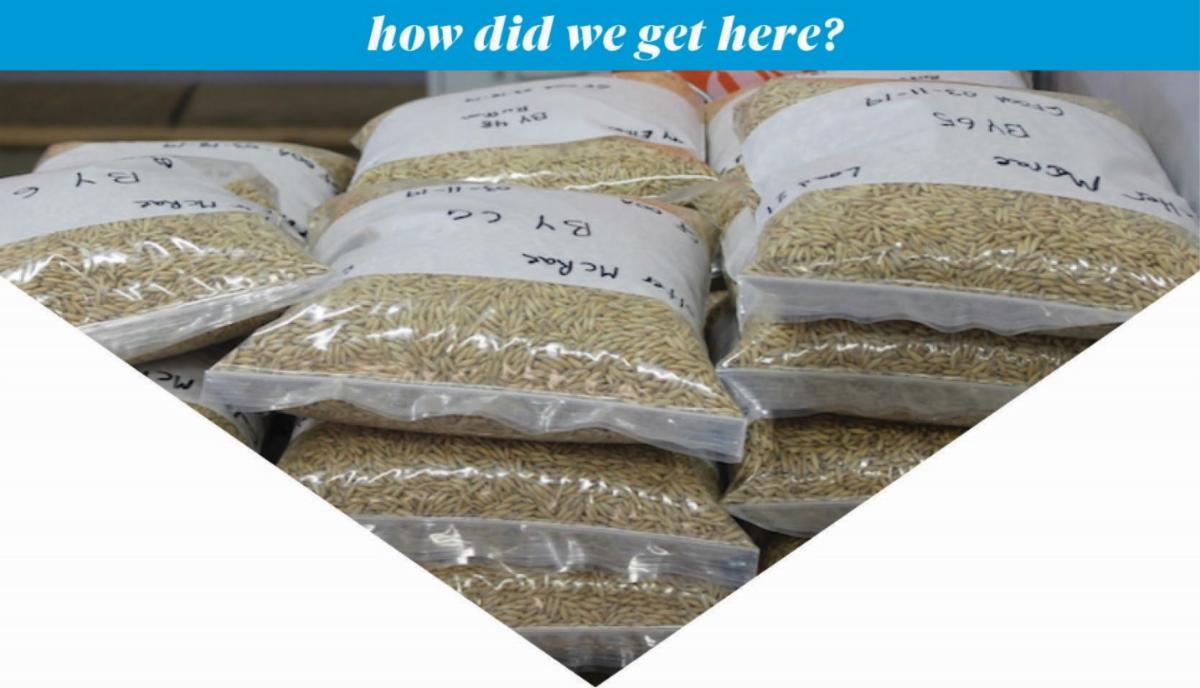
Ermel's oats are handled and stored by lot in their own bins with Avena Foods to ensure traceability right back to the very field it was grown. A lot is approximately 60-300 acres depending on the farm. "Those lots never change from harvest, shipping to cleaning and storage."
Hear more from the Ermel and Klym family farms in our short video from the Avena Farm Day Tour as they share their dedication and experiences farming gluten-free crops.
|
|
Health Canada's position statement indicates that pure oats, which they defined as oats that are
harvested, transported, stored, processed, and manufactured
under good manufacturing practices (GMPs) to minimize the presence of gluten, can safely be consumed by some persons with celiac disease.
|
|
Health Canada nor the Canadian Grains Commission (CGC) prescribe the specific guidelines or methods to produce these grains. It is up to the manufacturers of gluten-free oat products to demonstrate that their products meet the gluten-free labelling requirements.
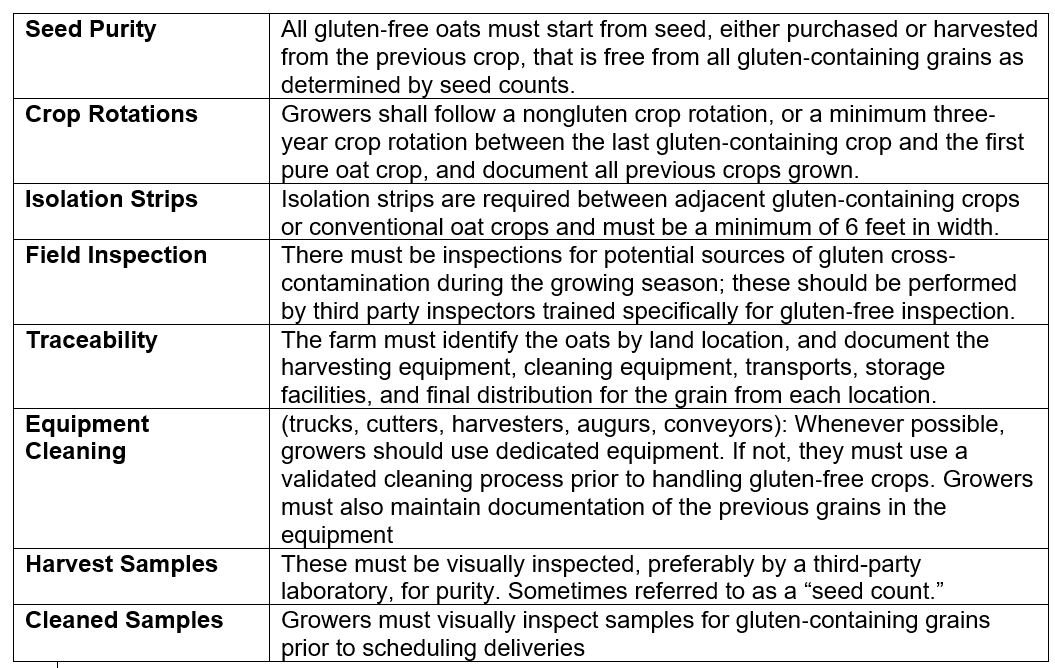
According to a review of purity protocols in the journal
Cereal Chemistry
, oat packagers/processor/millers must ensure that their grower network is adhering to the following farm requirements (as specified in grower agreements):
|
|
Laura K. Allread, et al. Cereal Chemistry, Volume94, Issue3, May/June 2017, 377-379.
|
|
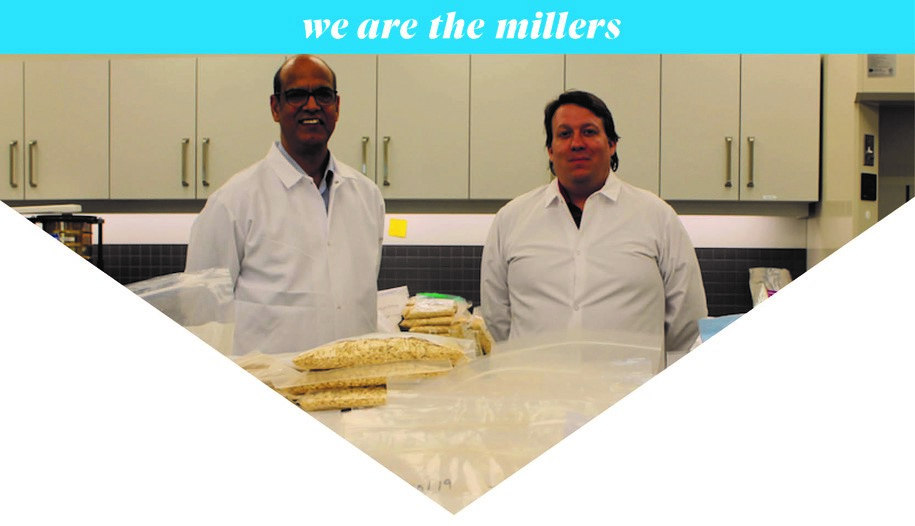
CCA had an opportunity to have an extensive tour of one of the newest purity protocol millers in Canada,
MGM Seed and Grain.
The tour was part of an effort to offer full disclosure and instill more confidence in consumers who purchase products from their mill.
The mill started operations in Saskatoon in 2018 as a GFCO-certified oat miller. They provide purity protocol oat products, both conventional and organic, to customers in Canada and the U.S. Some of their major clients include Made Good and Bob’s Red Mill and is 35% owned by Bay State Milling in Boston, Massachusetts. Ron Blazeiko, president and a former seed grower has had a long-standing career in food ingredient and handling.
.
Click the image to watch a short overview of our tour.
|
|
The CCA Professional Advisory Council (PAC) recommends the following guidelines for individuals with celiac disease and other gluten-related disorders who wish to add gluten-free oats in their diet:
• The individual should be stabilized on the gluten-free diet and their celiac antibody levels should have normalized. This process may take 6-18 months, although there is considerable variation among individuals.
• The fibre content of an oat containing diet is often higher than the typical gluten-free diet. When adding oats to the diet, individuals may experience a change in stool pattern or mild gastrointestinal symptoms, including abdominal bloating and gas. These symptoms should resolve within a few days. Therefore, it is advised to start with a small amount of oats per day [adults 25-70 grams (1/4-3/4 cup dry rolled oats) and children 10-25 grams (1/8-1/4 cup)] and gradually increase as tolerated.
• There are case reports of individuals with celiac disease relapsing from the consumption of gluten-free oats. Individuals should be aware of this possibility. If symptoms occur and/or persist, they should discontinue consuming oats.
• If a reaction to gluten-free oats has occurred, it is worthwhile to do a
re-challenge
if the individual wants to try oats again. Development of symptoms at the time of the second challenge would strongly suggest intolerance to oats. Research suggests that intolerance to oats occurs but is quite rare. The mechanism for this intolerance is unknown at this time.
• A consultation with a dietitian who can carefully review the diet to ensure that the individual is not consuming foods that contain gluten is highly recommended.
|
|
If a person with celiac disease believes they have had a reaction with gluten-free oats or any other product, notify your physician, as well as the Canadian Food Inspection Agency (CFIA) about the reaction. It was because of consumers, encouraged by CCA, reporting to CFIA that Cheerios were flagged, tested and ultimately General Mills voluntarily removed the GF claim in Canada.
When making a report, the CFIA requires:
• contact information of the individual.
• brand name
• package size
• UPC code
• best before date
• name and address of store where product was purchased
• date of purchase
• concern
|
|
As a small charity, CCA does not have the facilities or expertise at this time to test product. Our Gluten-Free Certification Program (GFCP) that carries our CCA mark, is operated by a third-party company with expertise in manufacturing facilities. Brands that are manufactured under the CCA Gluten-free Certification Program meet some of the high manufacturing standards in the world.
|
|
Everyone has a part to play in food safety. It is up to ingredient producers, farmers and millers to create, inspect and maintain gluten-free ingredients. Manufacturers must inspect, test and/or review management practices of ingredient producers and then ensure processing, handling and packaging integrity in order to carry the gluten-free declaration. Customers who purchase the product are encouraged to report to CFIA when they become ill due to a potential cross-contamination. Once reported, CFIA works quickly under the arm of Health Canada with the manufacturer to remove contaminated product and perform testing to discover where the issue may have occurred. Health Canada oversees the food system and offers changes in policy to keep Canadians safe. CCA advocates for the community at all levels to keep the community’s concerns heard.
CCA offers a special message on our CCA phone line for people who suspect they have been cross-contaminated. Call 905-507-6208 and press ‘9’ when you hear the prompt.
You can also read our article on '
Understanding Food Recalls
'
here
.
|
|
The following FREE webinars are available through CCA and supporting partners.
PARTICIPATING IN CLINICAL RESEARCH
October 8, 2019
Time: 8 – 9pm EDT
Sponsored by Gold Partner, Takeda and ProventionBio
Speakers: Dr. Dan Leffler, Medical Director Takeda and Dept. of Gastroenterology at Boston Beth Israel Deaconess Medical Centre and Doug Jacobstein, ProventionBio
Learn about some of the new advancements in celiac disease research from two leading international companies, Takeda and ProventionBio.
Understand the processes and requirements to bring drugs and therapeutics to market in Canada including the process for clinical trials. Learn more about how you can participate in clinical research, what are often the expectations and whether you could be a candidate.
GLUTEN FREE 101 – NAVIGATING THE GLUTEN FREE DIET
October 20, 2019
Time: 11 -12noon Eastern
Speaker: Gauri Bawa, Registered Dietitian and CCA Client Support Desk
UNDERSTANDING GLUTEN-FREE OATS
November 20, 2019
9 – 10pm EDT
Sponsored by Gold Partner, Only Oats & West Oak Naturals
Speaker: Mike Marshall, President of West Oak Naturals (Only Oats) and Jessica Wu, Registered Dietitian, Alberta Health Services
This publication was brought to you by the Canadian Celiac Association, a registered charity and national voice for people who are adversely affected by gluten.
To contact us with questions or comments, email us at i
nfo@celiac.ca.
In order to continue to assist individuals, advocate for the community and invest in research, CCA relies on individual donations.
|
|
|
|
|
|
|