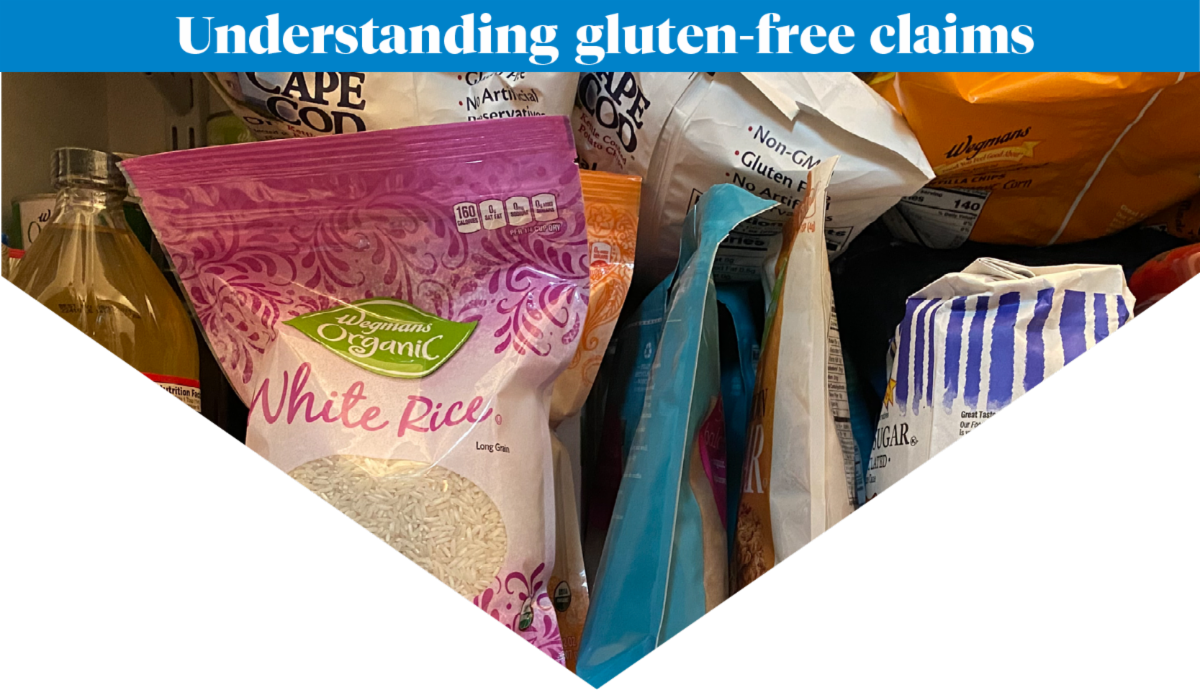
Over the past six months, many of us have suddenly found ourselves with a lot more time to cook and bake. You might even be experimenting with new food ingredients or brands. And that might leave folks wondering: exactly which products are safe for those with celiac disease or gluten disorders? Navigating the grocery store for gluten-free foods can be daunting especially if you are newly diagnosed, but that’s where the Gluten-Free Certification Program (GFCP) comes in. In this issue, we’ll take a closer look at the certification process, who’s involved in making sure products are safe for people with celiac disease, and what happens when a gluten-free product must be recalled – and we'll introduce the CCA's new gluten-free product finder.
THIS ISSUE HAS BEEN GENEROUSLY SPONSORED BY SILVER HILLS BAKERY
|
|
SETTING THE STANDARD IN GLUTEN FREE
The first key players in gluten-free safety are BRCGS (Brand Reputation Compliance Global Standards), based in the United Kingdom. BRCGS are known as program owners, which means they develop and manage programs internationally that take specific precautions and use detailed methods for safety. These methods help suppliers achieve safe and verifiably gluten-free production, allowing your favourite brands to label their products with the trademarks you know and trust. The BRCGS manages the Gluten-Free Certification Program (GFCP) and meets with the Canadian Celiac Association regularly, to ensure this program maintains the highest standard of safety for Canadians eating foods with its branded mark.
We asked BRCGS five major questions our consumers might want to know. They will help clarify what processes and procedures are involved to keeping food gluten free. Learn who is involved in ensuring the safety and certification of gluten-free foods, what process companies go through to obtain a certification for their products, what is required to meet standards, what happens in an audit and what to do in the event of a recall.
|
|
GFCP EMPOWERS CANADIANS WITH CELIAC
GFCP represents a hallmark accomplishment for the CCA, empowering Canadians with celiac disease to make safe food choices with confidence. The program was conceptualized by the CCA in 2007 and later, the Allergen Control Group (ACG) was brought on board to develop the program. Since then, BRCGS has taken over the business, making the GFCP part of a world-wide standard in food safety. GFCP is the only gluten-free certification program based in Canada, and has been adopted in the US, making it a leading standard across North America.
It’s not just the company saying products are gluten free. Their processes are verified by independent auditors who are also certified.
The certification program stands out because it is site-based, rather than product-based. Simply testing finished products for gluten can be tricky. Therefore, it is much more effective for a management program to be site-based, monitoring all steps of production to ensure gluten-free safety (in addition to product testing at the end). The GFCP uses a management framework called Hazard Analysis and Critical Control Points (HACCP), providing a system of checks and balances throughout all stages of production. This allows any suspected contamination that might occur to be swiftly traced back to its origin and resolved. When a company wants to become Gluten-Free Certified, they must complete an audit of their manufacturing site by one of BRCGS’s GFCP-approved certification bodies.
|
|
CCA’s NEW GLUTEN-FREE PRODUCT FINDER
This month, the CCA has been hard at work creating a GFCP Product Finder. This will be available on our website from now on, and is designed to help you find products from companies that are part of the GFCP.
|
|
HOW DO YOU KNOW IF A PRODUCTS CLAIMS ARE TRUSTWORTHY?
There are more and more products out there with gluten-free claims, but how do you know if a product’s claims are trustworthy? Here’s where it’s important to distinguish between a Gluten-Free Certified (GFC) product and a self-declared gluten-free product.
Self-declaration - A self-declared gluten-free product is a food product that makes a gluten-free claim on its packaging but isn’t affiliated with any specific trademark. While these products may go through internal reviews for safety, they are not verified by independent, third-party programs. Self-declaration on products is required by law to be truthful, so if a product claims to be gluten free, the manufacturer will still need to ensure their product meets the legal definition of gluten-free in Canada.
Certification – GFCP trademark assures consumers that a product’s safety has been managed at every stage of the process, from the sourcing of ingredients to packaging for sale, and that its safety has been independently verified. To learn more about the GFCP, check out the CCA website’s page on the program:
|
|
UNDER HEALTH CANADA, CFIA WORKS TO KEEP YOUR FOOD SAFE
The second team working to keep Canadian gluten-free consumers safe is the Canadian Food Inspection Agency (CFIA). The CFIA is a branch of Health Canada which is dedicated to safeguarding food, animals and plants, which enhances the health and well-being of Canada's people, environment and economy. Let’s take a quick look at an example of the type of work they do.
In addition to surveillance, inspections and enforcement of Health Canada regulations, they carry out Targeted Surveys. A recent survey was complete on Undeclared Allergens and Gluten in Herb and Spice Products. These surveys involved food safety tests of ground, single herb and spice products sold in six cities across Canada. The first survey (in 2015-2016) found undeclared gluten in 25 per cent of the 598 samples they analyzed. The second, done two years later, looked at 359 samples and found undeclared allergens in 18 per cent of these products. As a result of the two surveys, five products were then recalled, because they contained quantities of gluten higher than the 20 parts per million limit deemed safe for people with celiac disease. Surveys like these can help the CFIA ensure that Canadians with celiac disease, gluten disorders and food allergies stay safe.
|
|
To read the full report released this month from the CFIA, see the following link to their website:
|
|
THE CFIA CONDUCTS AROUND 3,000 FOOD SAFETY INVESTIGATIONS EVERY YEAR
Fortunately, fewer than 10 per cent of these result in a product being recalled, and the vast majority of investigations are merely precautionary. What should we do when a gluten-free product is recalled?
Consumers can sign up for food recall alerts from CFIA. Click here to learn more:
When a product is recalled, it will be listed on the CFIA’s Recalls Page, along with details on the reason for the recall and instructions for consumers to follow. Often, the company will offer a refund, but the BRCGS also recommends saving a small sample of the product in the freezer, since independent testing of samples is sometimes needed. If you suspect that a certified gluten-free product has been contaminated, here are some steps to take:
- If you are ill after eating the product, first seek medical attention.
- Contact the retailer (this information can be found on the product packaging).
- Contact the CFIA. Phone numbers vary by province and can be found at this link:
- If the product packaging has the CCA’s Certified Gluten-Free Trademark, contact the BRCGS at enquiries@brcgs.com.
UPDATE ON LOBLAW RECALL
|
|
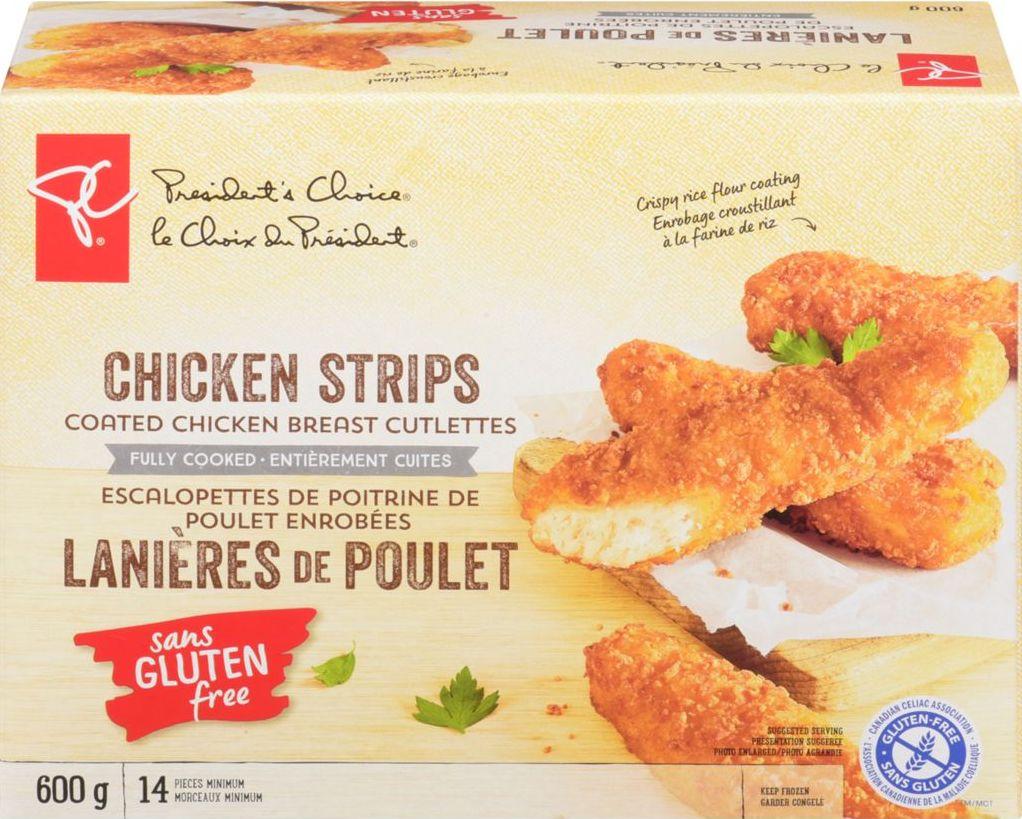
Recently PC-brand gluten-free chicken strips were recalled.
|
|
The CCA started the Better Living Gluten Free newsletter just over one year ago, to help empower readers to find a better quality of life with celiac disease, and now we’d like your feedback. Help the CCA with insights on how to provide the best support, evidence-based information, education and advocacy for the Canadian gluten-free community by taking this quick survey:
|
|
GF 101: GETTING STARTED ON THE GLUTEN FREE DIET
When: Oct 15, 2020 07:00 PM Eastern Time
Register in advance for this webinar:
|
|
CCA NATIONAL VIRTUAL CONFERENCE – EXPANDING YOUR HORIZONS II
Date: Sunday, November 15
|
|
As a national charity, CCA is the leading advocate in Canada for individuals with celiac disease and gluten disorders. Help continue efforts for the best gluten-free standards in the world along with better labelling and more healthy options for you. Please support the CCA to help give your family a voice for safe gluten-free foods and treatments. |
|
Better Living Gluten Free is a monthly electronic publication of the Canadian Celiac Association.
Copyright © Canadian Celiac Association
The contents of Better Living Gluten Free (BLGF) are provided in good faith, for information purposes only, and using the most current information available subject to amendment and should not be used as a substitute for the advice of a qualified health professional. The Professional Advisory Board of the Canadian Celiac Association (the “CCA”) has not reviewed the contents of BLGF. Use of the information is at your own risk. The CCA does not endorse any product referenced in BLGF. To the fullest extent permitted by law, the CCA, its local Chapters and all persons involved in compiling this publication disclaim any responsibility for, and make no representations or warranties regarding, the information provided. In no event will the CCA, its Chapters, or those persons involved in compiling this publication be liable for any damages of any kind resulting from the use of the information. Please review the CCA’s disclaimer policy on its website at https://www.celiac.ca/privacy-policy/
|
|
|
|
|
|
|