|
Click on image for better resolution
Bid protests are often treated like legal emergencies that appear after an award. But most protest problems start much earlier—when the procurement process is unclear, inconsistent, poorly documented, or simply not followed.
The strongest protest defense is not a brilliant legal argument. It is a disciplined procurement process.
That starts with one basic rule: say what you are going to do, then do exactly what you said.
If the RFP identifies evaluation criteria, weights, submission requirements, deadlines, or mandatory qualifications, those rules must guide the evaluation. Once proposals arrive is not the time to reinterpret the process, invent new considerations, or apply criteria differently between vendors.
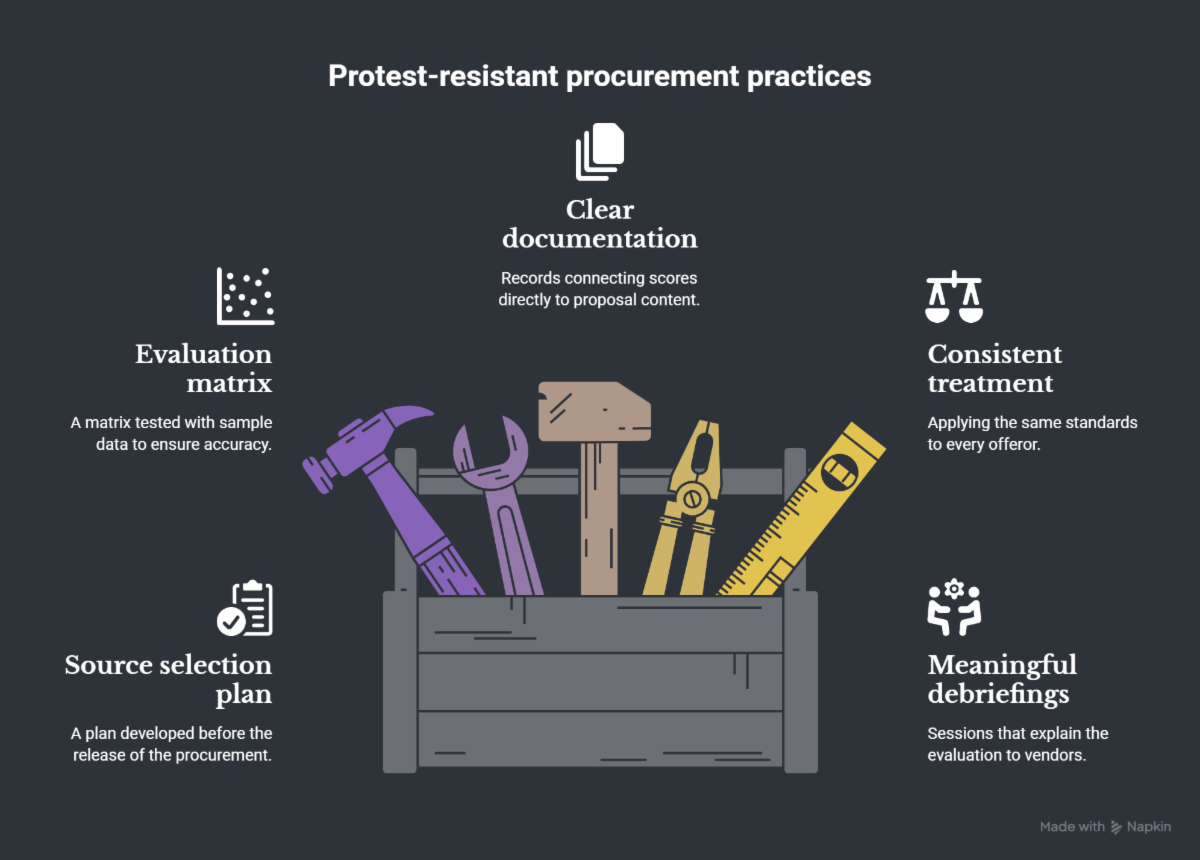
A protest-resistant procurement should also include:
- A source selection plan developed before release
- An evaluation matrix tested with sample data
- Clear documentation connecting scores to proposal content
- Consistent treatment of every offeror
- Meaningful debriefings that explain the evaluation
Documentation matters because a reasonable decision is difficult to defend if the record does not show how the team reached it. Scores alone are not enough. Evaluator comments should connect published requirements, proposal responses, and specific findings.
Debriefings are another important risk-reduction tool. Vendors usually want to know where they performed well, where they fell short, and how the evaluation reached its conclusion. A substantive debriefing can reduce confusion, improve future proposals, and strengthen supplier trust.
The goal is not to eliminate every protest. That is unrealistic.
The goal is to build a procurement so transparent, consistent, and well documented that when someone asks, “Why did you make this decision?” the agency can clearly show the answer.
Say what you’ll do. Do what you said. Document all of it.
|