|
There’s a perennial itch in NHS policy circles…
… if only we changed how we pay for it, everything else would fall into place.
No one really says how, but it’s enough to get a headline.
Insurance, co-payments, continental models… the debate somehow rolls on like a supermarket trolley with a wonky wheel.
A new report from the Institute for Public Policy Research looks across 22 developed countries and finds no evidence that insurance-based systems outperform tax-funded ones.
Not on access, not on quality, not on efficiency, not on equity. Its goes further....
'... changing to an insurance system would be a pointless distraction.'
In fact, the differences within systems are bigger than the differences between them.
In other words, how you run the system matters far more than how you fund it.
There are some uncomfortable details.
- Tax-funded systems like the NHS are actually cheaper for patients;
- about 2.6% of household income versus 3.5% in insurance systems.
- Administrative costs are lower; 2.2% compared to 3.5%.
The Islington dinner party idea that Europe has cracked it and we’re the poor relation? Not borne out by the evidence.
And yet, the NHS still performs badly on some key measures. On avoidable mortality, it sits near the bottom of the league.
The IPPR’s answer is not structural tinkering but something much less politically attractive…
… chronic underinvestment and how money has been spent.
We’ve poured money into revenue;
- staff pay,
- agency costs,
- inflation, but…
… starved capital;
- beds,
- scanners,
- buildings…
… the dull, unglamorous backbone of a functioning system.
Capital spending is now lower as a share of GDP than it was in 2010, and roughly half that of comparable countries.
-
You don’t need a new funding model.
-
You do need kit that works, and…
… here’s the inconvenient truth for ministers of all flavours;
'... changing the funding model would cost billions, take years, probably decades, and distract from the real work.'
Take yer taxes out of your right hand pocket, and insurance premiums out of the left and it’s still your trousers, and... you still have to pay.
'Change', a classic policy mirage. Big, bold, headline-grabbing, and entirely beside the point.
The report’s prescription is familiar but no less urgent for that;
- Invest in infrastructure.
- Shift care out of hospitals.
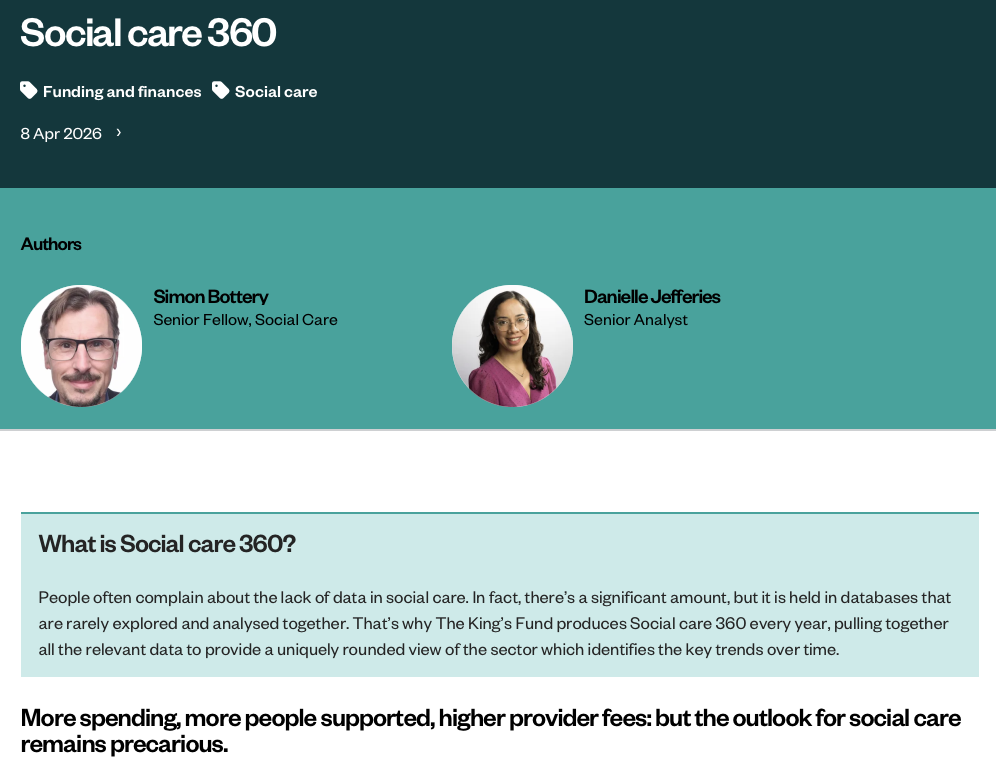
- Fix social care.
- Strengthen primary care.
In other words… do the hard yards.
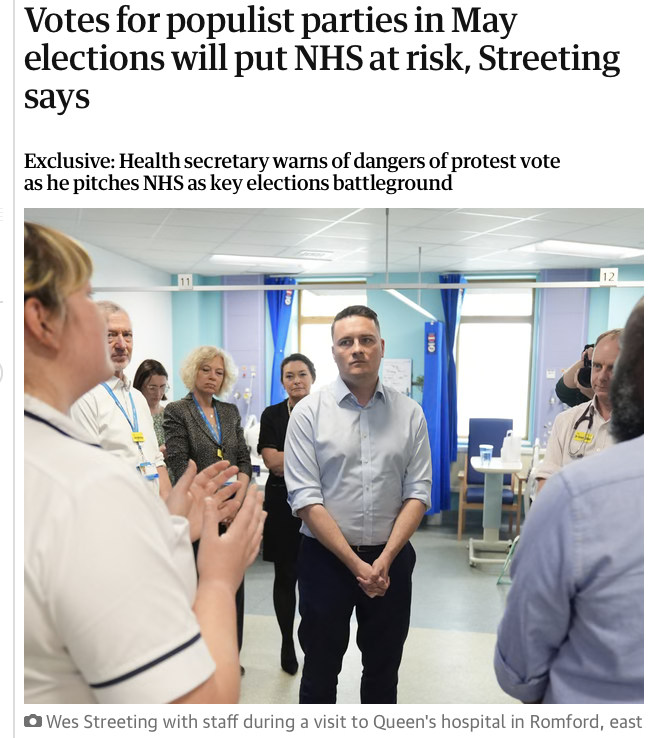
This is where politicians fail. Streeting a prime example. Spending millions on a reorganisation without a real plan.
Why?
Simples… funding reform is seductive because it looks like action. It offers the illusion of a reset. A fresh start. Ministers love a lever they can pull, but…
… the NHS doesn’t need a new lever. It needs someone to get under the bonnet.
There’s a deeper lesson to learn. We have to break a habit; reaching for structural solutions to operational problems. Move the boxes around. Redraw the org-chart. Rename the system.
Over the years I’ve seen a dozen attempts, sold as progress. There’s a simple question… if any of them had worked, why are we changing it all again?
The NHS’s problems are not primarily architectural. They are about flow, capacity, capital, workforce, and critically…
… what happens outside the hospital;
- Admissions
- Discharge
- Social care
- Prevention…
… the messy, unglamorous interfaces that no funding model will magically fix.
The IPPR is right to call this out. There is no ‘structural silver bullet’, but…
… there is a danger…
… by closing down the funding debate, we risk ignoring the public’s growing unease about how the NHS is paid for and what it can realistically deliver.
While changing the model may be a distraction… doing nothing differently isn’t an option either.
The NHS despite it’s failings, foibles and critics, does a pretty good job at fixing us up, but…
… until we realise, stopping people getting sick in the first place, is the real job, and invest and organise ourselves accordingly, nothing much will change.
We don’t have to learn how other systems fund themselves and work...
... we have to learn how to make the system we are already funding, work better.
|