|
March 2026 Newsletter from the 30 Mile River Watershed Association
Photo: Parker Pond Sunset by Josh Robbins
| | |
Urgent: Contact your legislators to vote
in support of LD 2141
| | |
The Maine Legislature has an opportunity to protect the water quality of our lakes and the long-term viability of farmland. LD 2141 follows the lead of other states with beverage container redemption programs (“Bottle Bills”), where unredeemed bottle deposits are invested in high-priority conservation programs. This bill will provide $4 million annually for lake and farmland protection.
LD 2141 will be up for a floor vote and debate any day now, and the beverage industry is lobbying hard to stop it from passing. We need your help contacting legislators. Here’s how:
1. Find your legislators – Enter your address on this page to find your state senator and representative.
2. Craft a short and personal message – Share the work you do for lakes and the needs you see for funding. Points to consider highlighting:
- Unredeemed bottle deposits are public funds that belong to the people of Maine, not the beverage industry.
- This bill is wildly popular, with 120+ citizen testimonies and 1400+ signatures.
- VT, MA, MI, and NY all use funds from unredeemed deposits to support environmental programs.
- Risks to lake health are growing. Investing in lake health today will save us billions of dollars in future restoration costs.
3. Email or call your legislator – include "Support LD 2141" in your email subject line and mention the Maine town where you live or spend time in your message.
Thank you for reaching out to your legislators, and to all who submitted testimony and signed the letter. Please continue to spread the word – if everyone who receives this message takes action, we will have a meaningful impact when this bill comes up for a floor vote.
For more information, reference this One-Pager from the Lake Protection Coalition and this Factsheet from the Natural Resources Council of Maine. Both can be included in emails to your legislators.
| | We recognize that you may receive a similar message from other groups. Our organizations are coordinating with the Lake Protection Coalition to amplify our lake advocacy efforts. Thank you for supporting healthy lakes! | | |
Order spring live stakes today to
build a better buffer on your shoreline
| | |
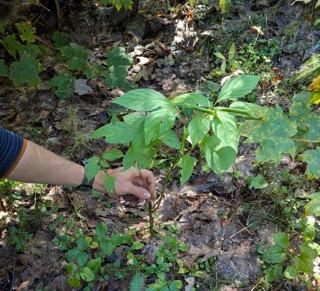
Looking for a way to protect your lake from harmful algal blooms? Building your shoreline buffer with woody vegetation is a key step you can take to help keep polluted stormwater runoff from getting into the lake. Using live stakes, which are woody-shrub cuttings, is a low-cost, low-maintenance, and easy way to build your buffer. Once plugged into the ground, live stakes root quickly to help establish buffer vegetation and stabilize hard-to-plant shorelines. For more information, including potential species, click here.
We are now taking orders for live stakes to be planted in early May! You have the option to plant them yourself, or we will plant them for you. Please fill out this online form to claim yours while supplies last. Supplies are limited and priority will be first-come, first-served.
If you have questions about our Live Stakes program or the form, please contact our Water Quality Specialist, Sara, at sara@30mileriver.org.
| | Working to prevent swollen bladderwort from spreading downstream | | |
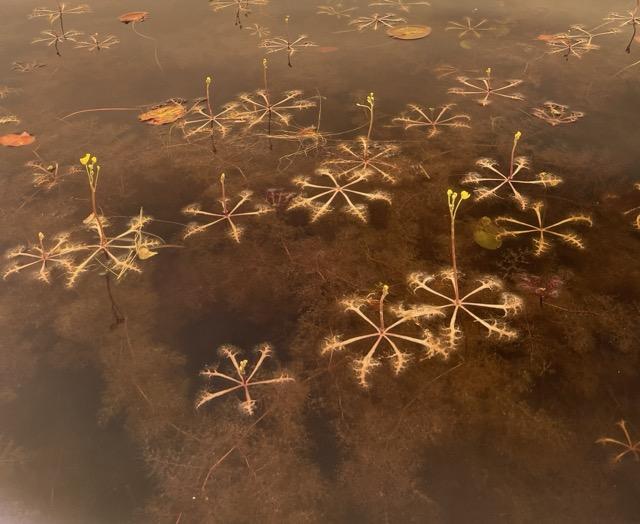
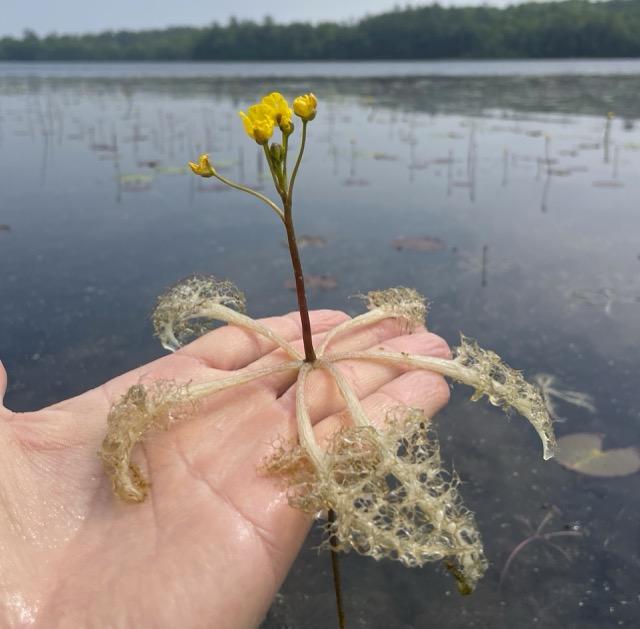
30 Mile is committed to preventing the spread of swollen bladderwort from Tilton Pond, at the top of our watershed, and to finding solutions that effectively manage and reduce this invasive species’ impact on the pond’s ecology, recreation, and property values.
We work closely with the Maine Department of Environmental Protection (DEP) to implement best management practices. The DEP provides guidance for our work, assists us in the field, and helps to continue and refine the management plan.
This winter, we worked with DEP to install posts across the pond’s outlet that will support wire mesh to reduce risk of swollen bladderwort moving downstream to the culvert at Jackman Mills Road. In June, our staff will remove any invasive bladderwort in the area between the screen and culvert to further reduce risk of spread.
| |
Additional work planned for our staff for the upcoming season includes:
- Maintaining four fragment nets in the outlet stream between Jackman Mills Road and East Road
- Conducting multiple early-detection surveys of David Pond (including a diver survey)
- Completing high-priority area surveys of Parker Pond
- Continuing ongoing outreach and education to foster long-term community engagement in prevention, early detection, and control of this invasive.
Currently, large-scale mechanical removal of swollen bladderwort from Tilton Pond is not feasible. Before such work can be considered, the overall abundance of the plant must be reduced dramatically to a manageable level, potentially through herbicide treatment. Because there is no history of herbicides being used on swollen bladderwort in Maine, the DEP is tracking the effectiveness of an herbicide currently being used on swollen bladderwort in Massachusetts. Once they have seen these results, likely by the end of this coming season (one year post-treatment), they will decide about approving its use in Maine.
News coverage on DEP’s recent public message regarding Tilton Pond can be found here.
| | |
Now Hiring!
Community Engagement and Development Coordinator
| | We are seeking applicants for the new role of Community Engagement & Development Coordinator. This is a fulltime position based in our newly renovated building in Mount Vernon Village. The role blends community outreach, relationship-building, and behind-the-scenes coordination to keep our fundraising and engagement efforts running smoothly. | | | Erosion and Sediment Control Workshop | | |
When: Thursday, April 30th from 8:00 am-4:00 pm (Lunch and refreshments provided)
Where: Starling Grange Hall, Fayette
Who: Contractors, CEOs, public works employees, consultants, engineers
| | |
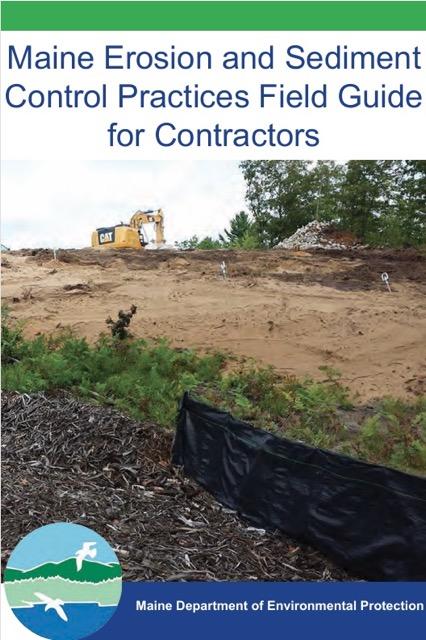
On Thursday, April 30th, 30 Mile will host a Basic and Advanced Erosion and Sediment Control Workshop through the Maine DEP’s NonPoint Source Training Center. This course is required for contractors to become certified in Erosion and Sedimentation Control Practices by the DEP*, but is also useful for code enforcement officers, public works employees, consultants, and engineers.
In this 8-hour course, participants will learn 1) why erosion control practices are important, 2) the principles of erosion and sedimentation, 3) how to properly install and maintain Erosion & Sedimentation Control (ESC) Best Management Practices (BMPs), 4) regulations requiring ESC, 5) how to use the DEP’s Permit By Rule process, 6) in-water work procedures, and 7) ESC planning.
Questions about the course or registration process? Contact our Land Use Coordinator, Ellie, at gabrielle@30mileriver.org.
*This class qualifies for 6 Continuing Education Hours (CEH) for individuals certified in Erosion Control Practices by Maine DEP.
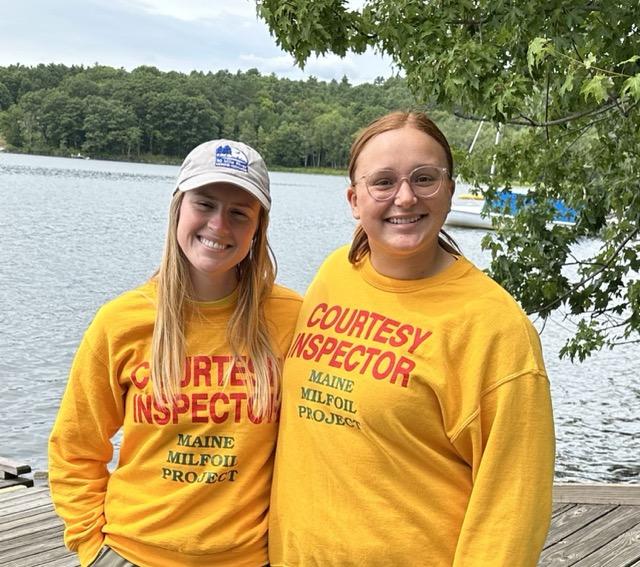
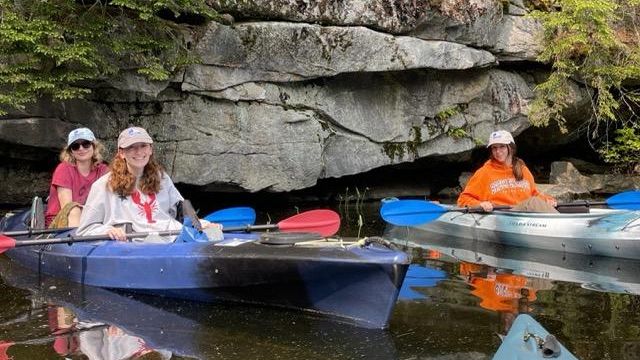
| | Work with us this summer! | | Spend your summer gaining hands-on experience in lake protection and conservation! We’re hiring Courtesy Boat Inspectors, Aquatic Invasive Plant Surveyors, and a Water Quality Intern. These are great opportunities for those looking for summer work. | | |
Wishlist Items: Donations Needed for Summer Staff
As we get ready for summer staff, we’re looking for a few items:
- Portable canopy tent (Preferably 10 ft x 10 ft)
- Office desks
- Chairs with canopy
- 2 or 3-drawer filing cabinet
If you have any one of these items to donate (or know someone who might), please email Silas Mohlar at silas@30mileriver.org. Thank you!
| |
|
Question of the Month:
What is Big Night?
| | |
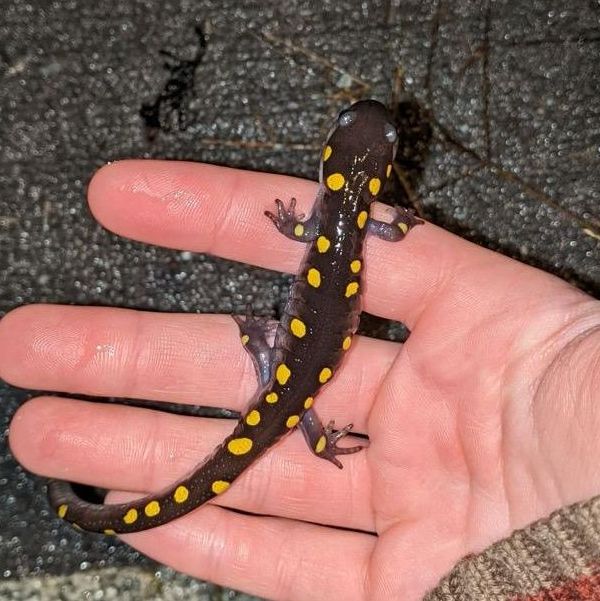
As the official first day of spring (March 20th!) is rapidly approaching, so are warm and rainy nights. For thousands of amphibians – vertebrate animals with wet, mucus-covered skin, such as frogs and salamanders – this also means the beginning of a critical event in their life cycle.
Under perfect spring conditions (rainy with temperatures 45°F or higher), you may see dozens, even hundreds of migrating amphibians crossing the road at night. Prompted by these environmental cues, “Big Night” is the mass migration of amphibians moving from winter habitats to breeding sites, such as wetlands and vernal pools. Vernal pools are temporary bodies of water that dry up by summertime, but during the springtime provide a refuge from aquatic predators, such as fish, increasing the survival chances of amphibians’ young. While the term “Big Night” implies a singular event, migration occurs throughout early to mid-April across Maine. You can still find smaller numbers of migrating amphibians outside of these “Big Night” conditions.
Unfortunately, successful migration can be challenging, as many migratory routes intersect with our roads. Maine Big Night is a community science project that aims to reduce amphibian road mortality by assisting them safely across roads, all while collecting vital data. Not only do volunteers save thousands of amphibians each year, this data also helps inform wildlife conservation, better understand our road infrastructure's impact on wildlife connectivity, and improve road planning.
Road improvements that provide wildlife passage also make roads much more resilient to damage from major weather events. These roads can then reduce wildlife-vehicle collisions and the potential for road washouts, making it safer for animals, drivers, and water quality. If you notice a large number of amphibians on a road near you and want to get involved in this project, visit mainebignight.org to learn more.
| | Reducing Runoff and Strengthening Lake Health: Clean Water Act “319” Grant Project Updates | | |
For more than a decade, 30 Mile has partnered with the Environmental Protection Agency (EPA) and Maine Department of Environmental Protection (DEP) through Clean Water Act Section 319 grants to reduce polluted runoff and protect lakes within our watershed. These projects continue to make a meaningful difference to the health of our lakes, with community involvement continuing to be a key factor in their success.
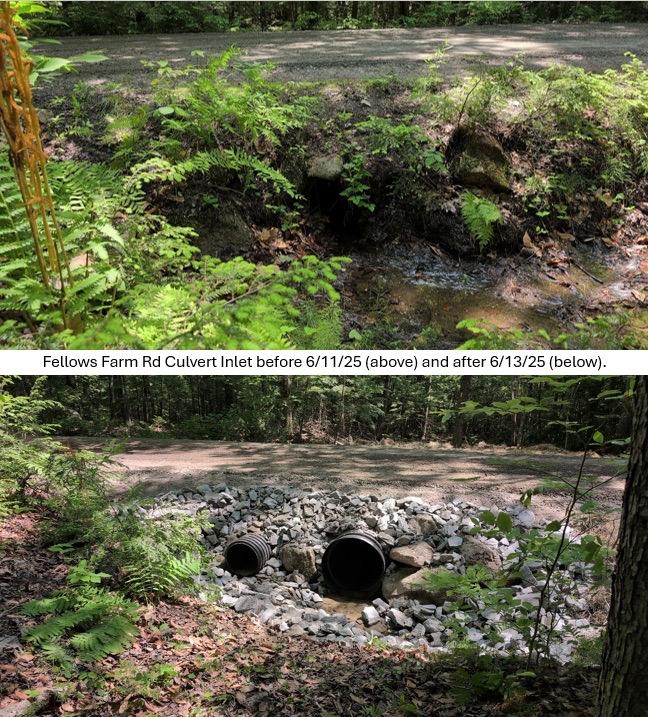
We currently have two active grants focusing on erosion control efforts around Parker Pond and Androscoggin Lake. Recent projects completed on private roads, town roads, and residential properties with these matching grant funds have already prevented significant sediment and nutrient runoff from entering the lakes.*
How You Can Get Involved
Androscoggin Lake residents: Funding is still available for work on residential projects in 2026! Property owners can receive up to $1500 in matching funds (covering up to 50% of project costs) to address runoff issues that are directly affecting the lake.
All lakefront property owners: Request a “LakeSmart” evaluation of your property. These free evaluations provide resources and recommendations for lake-friendly living. Learning how to prevent erosion is just one of the many benefits.
All residents: Simple actions like improving driveways, stabilizing paths to the water, installing gutters, and planting native vegetation, all to manage stormwater runoff, can make a huge impact across the watershed.
Keep an eye out for announcements about upcoming events: Septic Socials, Live Stakes Workshops, Erosion Control Classes, Gravel Road Workshops, and more!
To learn more about the work that has been done under these grants, click here.
Contact our Land Use Coordinator, Ellie: gabrielle@30mileriver.org for any questions or additional information regarding this grant program.
| | *Funding for these projects, in part, was provided by the U.S. Environmental Protection Agency under Section 319(h) or 604(b) of the Clean Water Act. The funding is administered by the Maine Department of Environmental Protection in partnership with EPA. | | |
Volunteers Still Needed!
Androscoggin Algal Bloom Work Groups
| | |
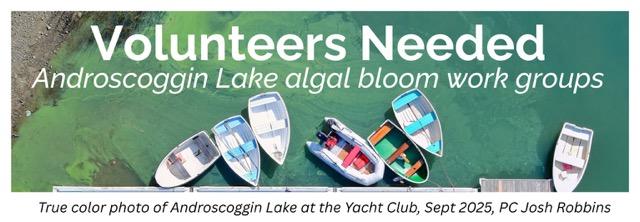
There is still time to join the effort to address frequent algal blooms and restore the health of Androscoggin Lake by getting involved in one of the volunteer work groups. These work groups include focus areas of science, fundraising, communications, and government, and will be guided by the Androscoggin Lake Steering Committee. Interested in joining the effort? Please fill out the Work Group Volunteer Interest Form today!
The Androscoggin Lake Steering Committee represents organizations, towns, businesses, lakefront owners, and lake users – all working together to provide a forum for meaningful citizen dialogue and discussion to foster a realistic and timely action plan to restore the health of Androscoggin Lake. The committee will work to coordinate, guide, and steer four work groups and the broader community toward positive action.
| | Lakes Conference registration is now open | | |
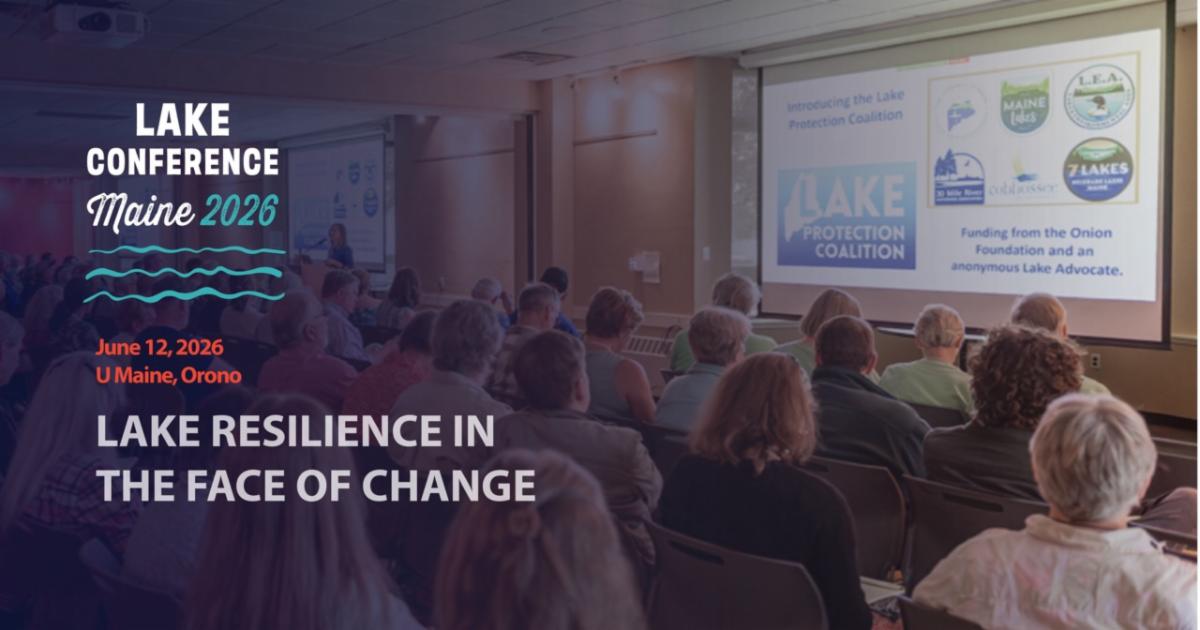
Join volunteers and professionals from around the State for a day of learning and networking at the 2026 Lakes Conference. This is an annual event, hosted by Maine Lakes and Lake Stewards of Maine. This year’s conference theme is Lake Resilience in the Face of Change. Speakers will focus on ways we can adapt our shorelines (and our behaviors) to meet future changes. From climate to land-use to funding to demographic change, how can we best protect our lakes and make them resilient for an uncertain future?
When: June 12th, 2026
Where: Wells Conference Center, University of Maine at Orono
| | In January, we answered the question, how harmful is road salt for our lakes? This month, the Maine DEP released an online resource about chloride (from road salt) in Maine waters. Their StoryMap provides an overview of the current status of chloride in Maine's streams, wetlands, lakes, and groundwater. You can access it here. | | Support 30 Mile! Your gift today will make a difference in protecting our lakes from phosphorus pollution, invasive species, and other threats. Find the giving level that works for you. | | Follow us on Facebook and Instagram! | | | | |