|
"[T]he street works harder than any other part of downtown. It is the nervous system; it communicates the flavor, the feel, the sights. It is the major point of transaction and communication," wrote Jane Jacobs, the author of The Death and Life of Great American Cities.
We often overlook the importance of streets, which serve cities as much more than single-function traffic corridors hastily moving cars from one end of the city and back. They often contain (underground) critical utilities like water and sewer. They subdivide land and determine the type of developments that fit on city blocks. Streets are also a public space, determining how citizens and visitors experience the city.
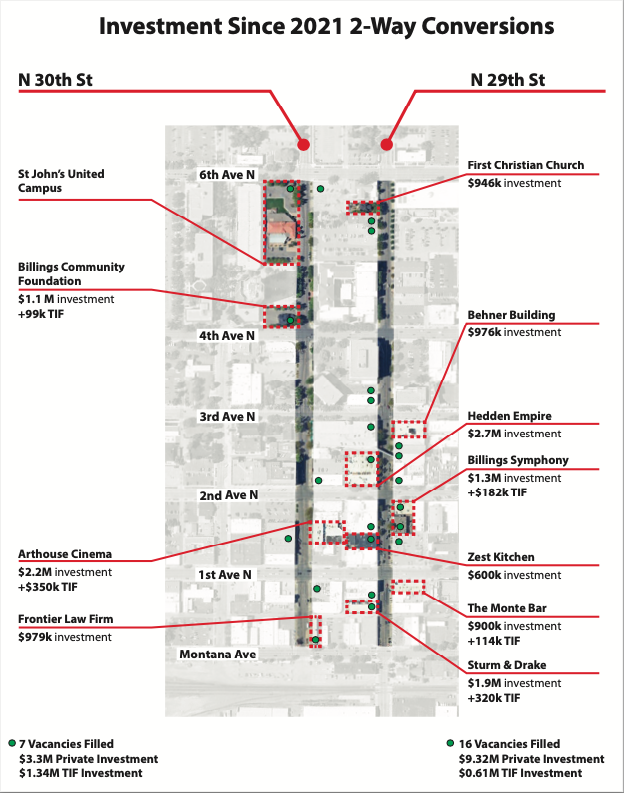
Perhaps the most important function of the 560 miles of streets in Billings is to provide access to property. Streets are the conduits of commerce, helping people access our businesses. It's especially important in our business districts like downtown that our streets help to facilitate commerce by allowing greater and more diverse access to storefronts. One way to do that is by converting downtown streets back to two-ways. Easier navigation, traffic calming, and greater safety are all reasons why many cities are moving back to two-way streets. Tonight, City Council will be discussing further conversion of one-ways to two-ways in our downtown.
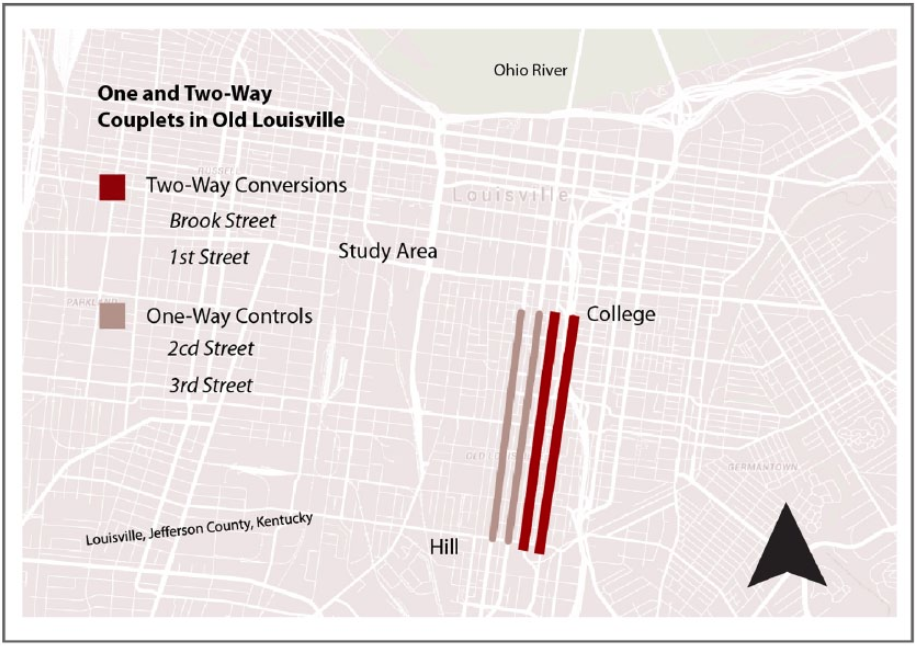
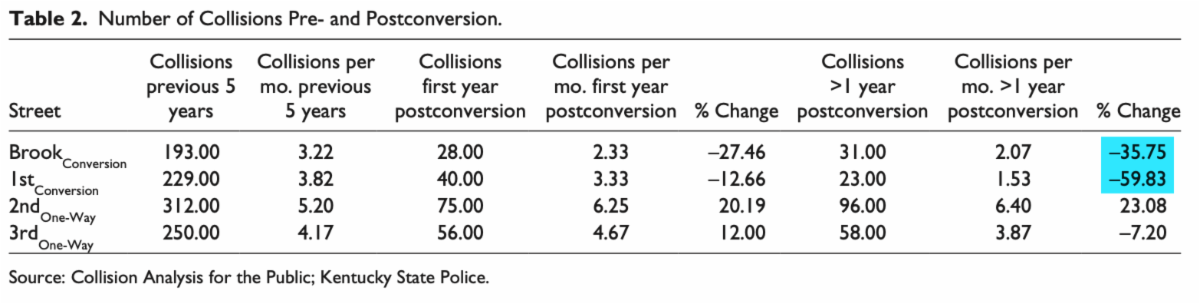
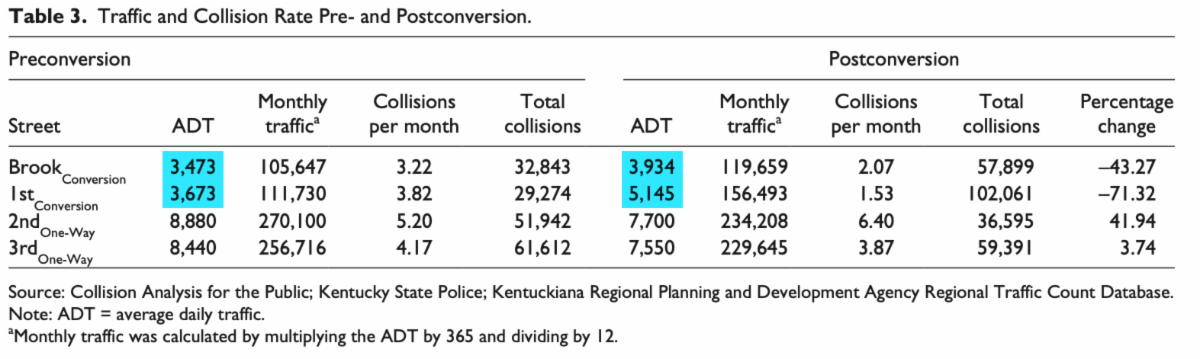
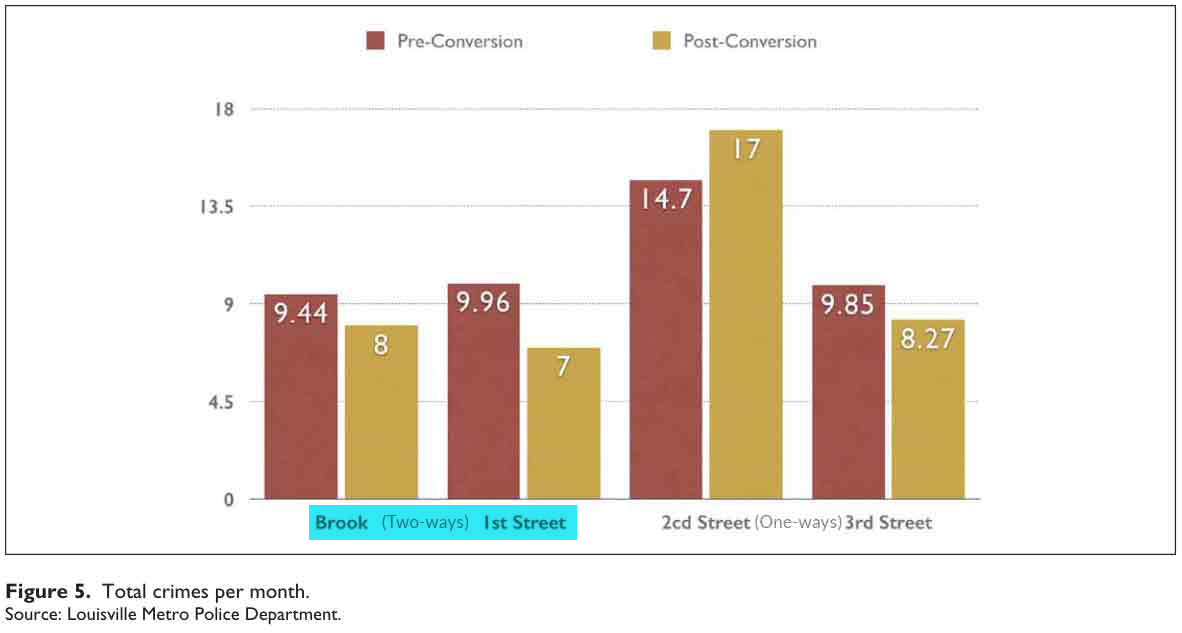
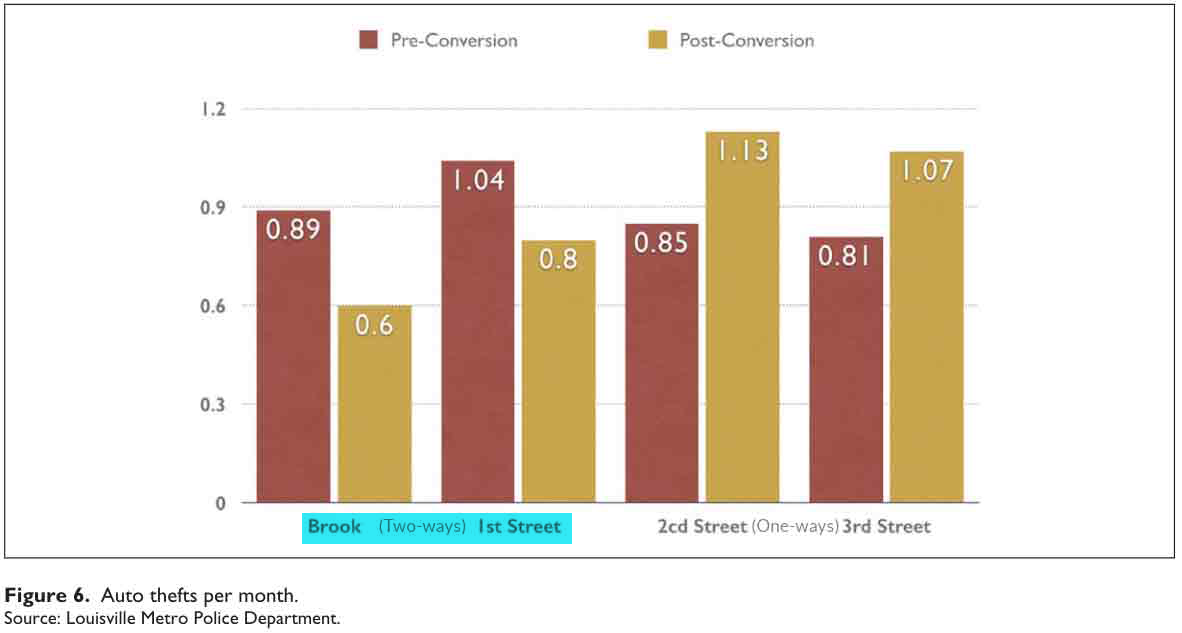
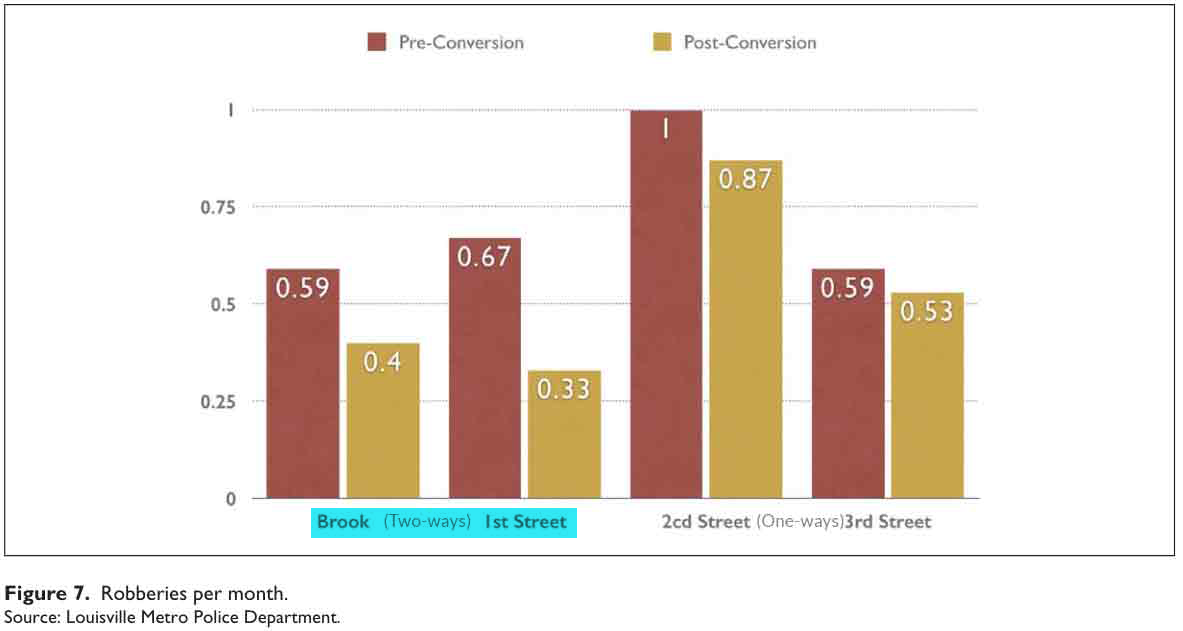
One of the cities to recently re-convert one-ways to two-ways is Louisville, KY, which had one-way "couplets" similar to what we see in Billings. In 2011, they converted two of those one-ways back to two-ways. Curious about the impacts of the conversion, researchers at Cal Poly and the University of Louisville decided to study the effects. They were able to measure the changes of the converted two-ways (Brook & 1st) against the unchanged one-ways (2nd & 3rd), which provided a good control, or constant. Essentially, if the converted two-ways saw benefit while the remaining one-ways did not—or benefited to a significantly lesser degree—they could reasonably attribute the changes to the two-way conversion.
|