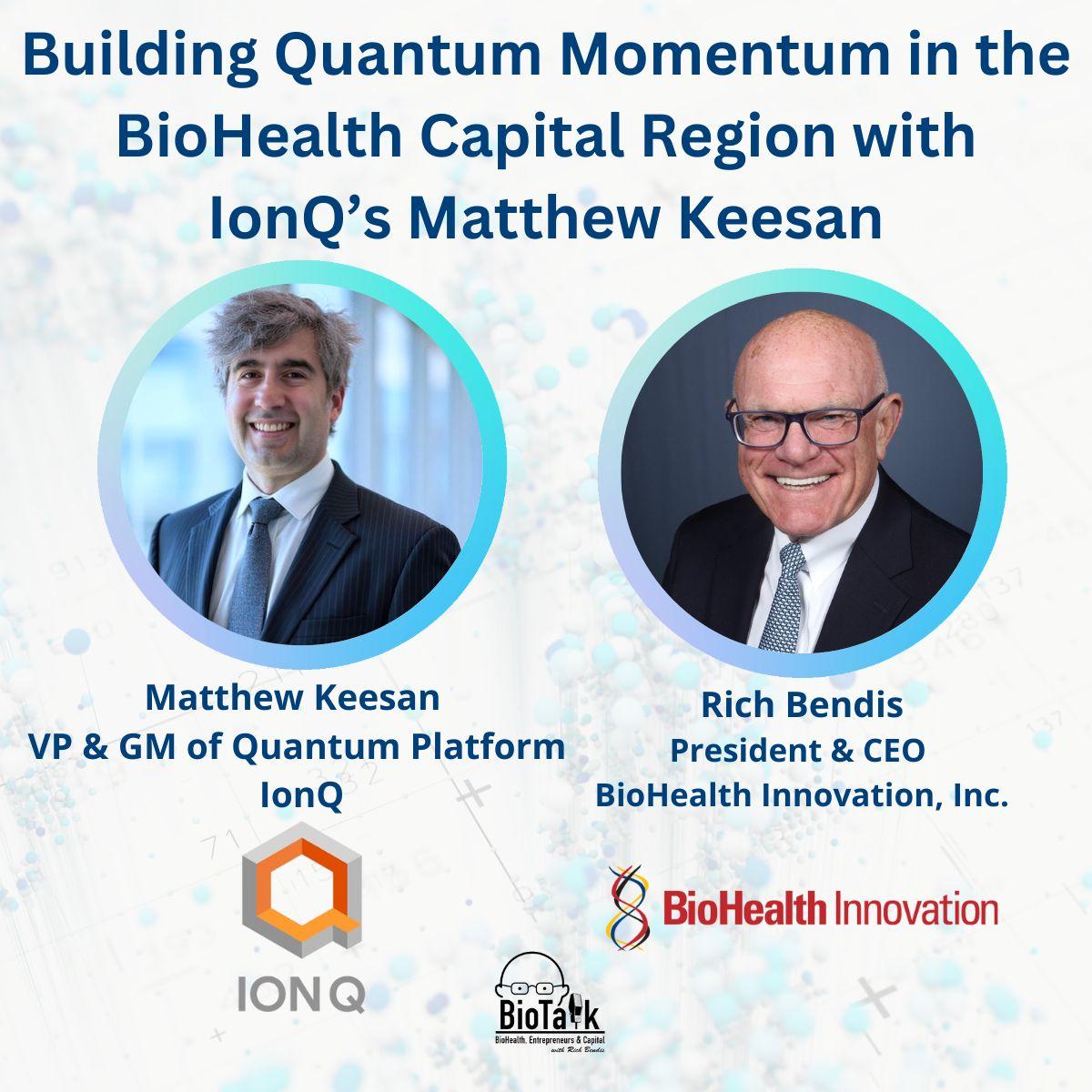
| | Building Quantum Momentum in the BioHealth Capital Region with IonQ Vice President and GM of Quantum Platform, Matthew Keesan | IonQ Vice President and GM of Quantum Platform Matthew Keesan joins BioTalk for a clear look at how they are advancing quantum computing from its home base in the BioHealth Capital Region. He shares the story of IonQ's Maryland roots and explains quantum computing in straightforward terms for listeners seeking a high-level understanding. The conversation moves into why biohealth leaders should track the hardware race, what distinguishes IonQ's approach, and how quantum is already being paired with AI to strengthen modeling and analysis. Keesan walks through early use cases showing traction today, challenges common myths about timelines, and shares which biohealth applications he expects to gain mainstream momentum by 2030. | | BHI EIR Insights: 7 Tactics to Optimize Launch Messaging – Part I | |
by Jonathan Kay, MPP, Managing Partner, Health Market Experts & BioHealth Innovation, Inc. Entrepreneur-in-Residence
Healthcare is complicated. Communicating effectively doesn’t need to be.
For a new medical technology, biologic, pharmaceutical, or digital health solution, a critical element of go-to-market strategy (GTM) and initial commercial success is messaging.
But messaging often doesn’t get the attention it deserves.
GTM messaging could include messages to any: physicians, hospital administrators, policy makers, patients, caregivers, payers, and more.
This post kicks off our 7-part series on Optimizing Launch Messaging 🚀, where we will share 7 valuable tactics...
| |  | BHI is Recruiting Entrepreneurs in Residence with Biohealth, AI, and Quantum Commercialization Experience | |
BioHealth Innovation is expanding its Entrepreneurs in Residence (EIR) network and is seeking experienced leaders at the intersection of biohealth and advanced technologies, including artificial intelligence and quantum computing.
This call is for seasoned operators with a strong commercialization background. Ideal candidates have taken innovations from concept through market entry, licensing, spinout, or acquisition, and understand the realities of regulatory pathways, customer discovery, fundraising, and scale. Experience working with startups, academic technologies, government labs, or early-stage venture-backed companies is essential. EIRs serve in a part time advisory role with BHI, working flexibly alongside other professional commitments while contributing hands on commercialization expertise.
| | | High Tech and High Growth at the UM BioPark | |
Maryland Commerce Secretary Harry Coker Jr. visited the University of Maryland (UM) BioPark to learn how the Department of Commerce can continue to strengthen Maryland’s burgeoning life sciences industry.
During his visit, leadership from the University of Maryland, Baltimore (UMB) – Roger J. Ward, EdD, JD, MSL, MPA, Provost and Exec. Vice President; James Hughes, MBA, Chief Enterprise and Economic Development Officer and Sr. Vice President; Jane Shaab, MBA, UM BioPark Executive Director; and Mary Morris, Director of The Baltimore Fund – led Secretary Coker on a tour of 4MLK, the University of Maryland BioPark ’s newest facility which opened in January 2025, and facilitated a discussion with leaders from BioPark companies.
| | | Bethesda Today: New CEO of MoCo Economic Development Corp. says business community ‘ready to get busy’ | |
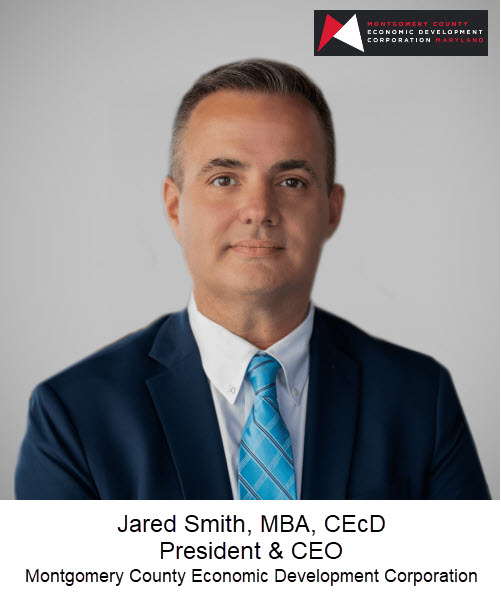
The new head of the Montgomery County Economic Development Corp. (MCEDC) is a left-handed, Louisiana native with a seemingly boundless sense of optimism about the county’s ability to bounce back from recent federal job losses and other fiscal woes.
“This county is blessed with talent,” Smith said. “It is readily apparent that people are ready to get busy. That willingness and that commitment to make a difference in a community doesn’t happen everywhere. And that excites me here.”
MCEDC, a nonprofit public-private partnership, last month announced the selection of Jared Smith as its president and CEO following a months-long search conducted by consulting firm Korn Ferry and overseen by the MCEDC’s Board of Directors Search Committee. Smith is succeeding Bill Tompkins, who stepped down on Aug. 15 after three years in the position.
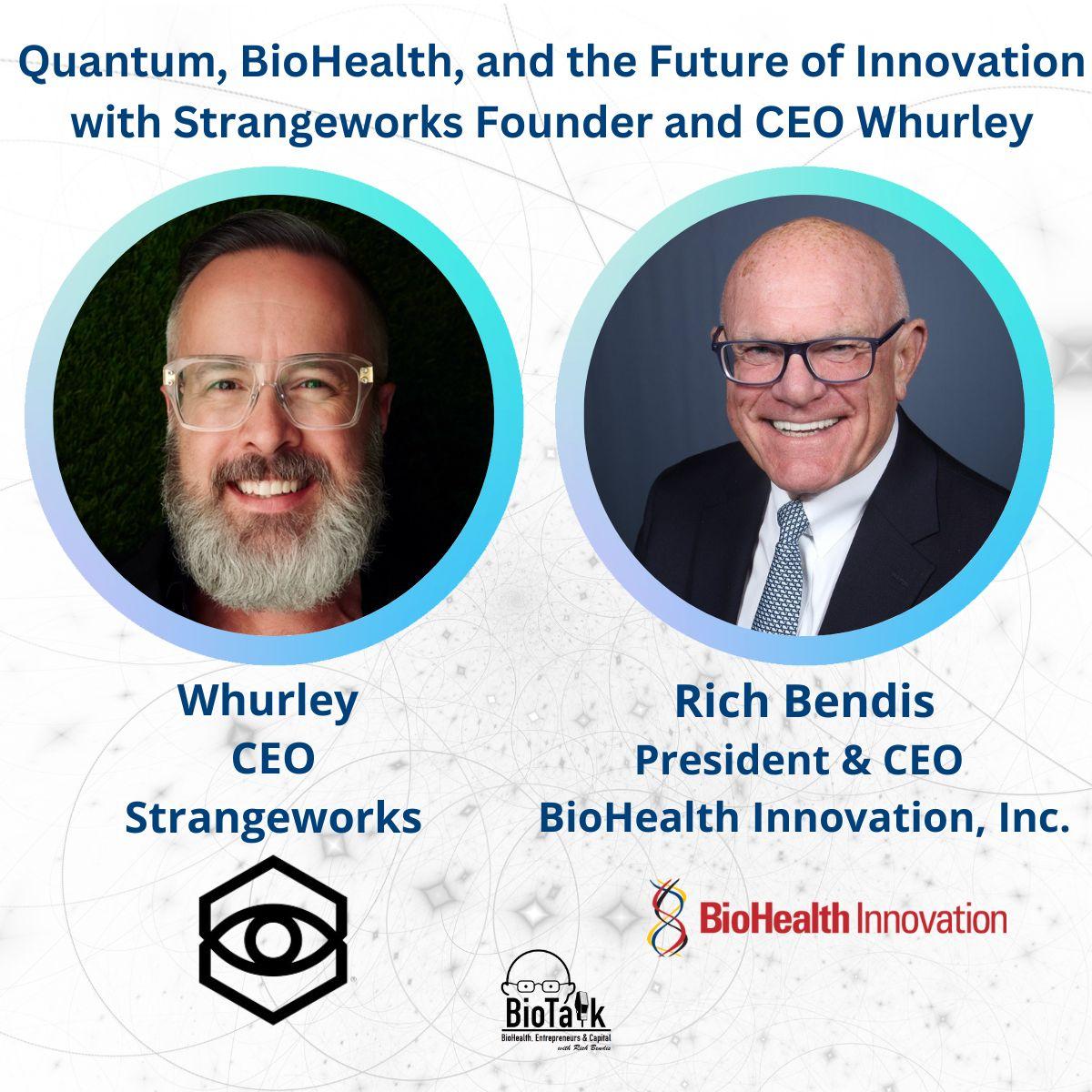
| | | Quantum, Biohealth, and the Future of Innovation with Strangeworks Founder and CEO Whurley | William Hurley, known widely as Whurley, joins BioTalk for a deep look at how quantum computing is moving from theory into practical use across the biohealth landscape. He opens the conversation with an introduction to Strangeworks and explains why the company is focused on making quantum more accessible for real-world problem solving. The discussion explores how quantum could support breakthroughs in genomics and personalized medicine, improve the way clinical trials are modeled, and strengthen manufacturing and supply chain operations. | | | Secure Your 2026 BHCR Week Sponsorship | |
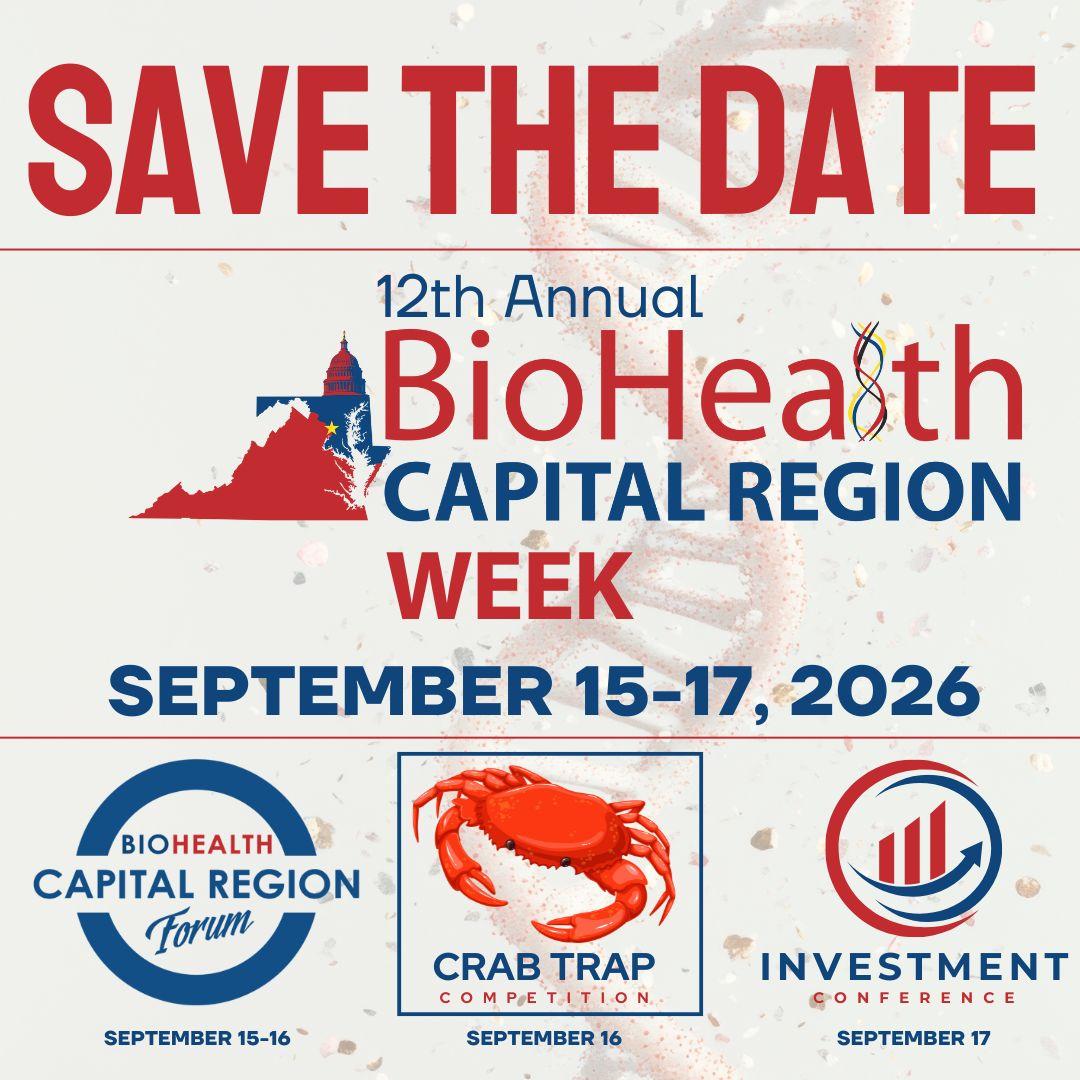
If your organization follows a calendar-year budget and has funds that need to be committed before the end of 2025, you can lock in your sponsorship for the 2026 BioHealth Capital Region Week now. Early confirmations help us plan next year’s program and allow you to reserve your place in advance.
We are already reviewing improvements for 2026, including moving table sponsors to a higher-traffic area and shifting the registration desk closer to the front entrance. Suggestions for speakers, panels, and themes are welcome.
To confirm your support or share ideas, email Rich Bendis at rbendis@biohealthinnovation.org and Andy Eckert at aeckert@biohealthinnovation.org.
We appreciate your partnership and look forward to building another strong BHCR Week together.
| | | Non-opioid ‘Pain Sponge’ Therapy Halts Cartilage Degeneration and Relieves Chronic Pain | |
The announcement was made at the International Society for Stem Cell Research (ISSCR) Symposium Accelerating PSC-Derived Cell Therapies: Starting with the End in Mind
Session Highlight
SereNeuro Therapeutics, a preclinical biotechnology company developing non-opioid pain therapies, unveiled new data today on a novel approach to chronic pain management and joint tissue preservation. The data highlights SN101, a first-in-class induced pluripotent stem cell (iPSC)-derived therapy.
SN101 utilizes mature iPSC-derived peripheral pain-sensing neurons (nociceptors) to treat chronic osteoarthritis joint pain. The data highlights a scientific approach that challenges traditional pain management logic.
“Our approach utilizes high-purity, iPSC-derived...
| | | TEDCO Awards a Total of $875,000 in SBIR/STTR Matching Funds to Two Rounds of Recipients | |
COLUMBIA, Md., (December 15, 2025) — TEDCO, Maryland’s economic engine for technology companies, announced the latest two rounds of awardees for the Small Business Innovation Research and Small Business Technology Transfer (SBIR/STTR) Matching Funds (Matching Funds) program.
“The two recent competitive rounds brought several brilliant companies to the forefront,” said Julia Deng, director, SBIR Programs. “We look forward to the awardees’ continued growth and development that this supplemental funding offers, and we encourage others who have received a SBIR/STTR award within the past six months to apply for the current cycle.”
Created to strengthen the power of the SBIR/STTR awards, the Matching Funds program fosters job creation and economic development in Maryland by promoting the commercialization of research, facilitating technology transfer and encouraging SBIR/STTR program applications.
The awardees include:...
| | | Alphyn Closes $25M Oversubscribed Series B Financing Round to Advance Dermatology Pipeline | |
ANNAPOLIS, Md., Dec. 12, 2025 /PRNewswire/ -- Alphyn Biologics, Inc., a clinical-stage dermatology company developing first-in-class Multi-Target Therapeutics®, today announced the close of its $25 million, twice-oversubscribed Series B financing. Proceeds will fund the Phase 2b global clinical trial of Alphyn's lead drug candidate, Zabalafin Hydrogel, for atopic dermatitis (AD), initiate a second Phase 2 clinical program for the treatment of the molluscum contagiosum virus (MCV), and expand the company's supply of drug raw material.
The round was led by QCA Investment Group and included existing investors Angel Physicians Fund, Serial Stage Venture Partners, a corporate fund, and several new investors.
| | | VLP Therapeutics awarded US$ 2.8 million grant to develop novel malaria vaccines that improve protection, reduce costs, expand equitable access | |
Maryland, US-based biotech company VLP Therapeutics, Inc. (VLPT) announced today that it has been awarded a two-year grant of over US$ 2.8 million (about JPY 433 million) from the Gates Foundation to develop next-gen multi-stage malaria vaccines. As an additional site for this work, a portion of the budget will also be earmarked for VLPT Japan, Inc., a VLPT subsidiary.
This funding will enable VLPT to advance pre-clinical research and development of such vaccines using its proprietary platform technologies. These efforts aim to enhance protection, lower costs, and expand equitable access for people in low‑ and middle‑income countries. At this stage, VLPT will design and screen vaccine candidates and evaluate their immunogenicity in rodent models.
| | | ITIF: How NIH-Funded Science Supports US Biopharmaceutical Innovation | |
NIH-funded research supports the foundation for industry to develop vaccines and therapies, exemplifying deep public-private R&D complementarity. As global competition intensifies, expanding NIH funding will be key to protecting American health, supporting U.S. biopharmaceutical competitiveness, and ensuring national power and security.
Introduction
The National Institutes of Health (NIH) is the federal government’s primary agency for biomedical and public health research, and the world’s largest public funder of biomedical research.1 Established in the early 20th century, NIH has evolved into a network of 27 institutes and centers that support research on a wide range of conditions—from cancer and heart disease to rare genetic disorders and mental health.2 Each year, NIH invests nearly $50 billion in its own laboratories and in research conducted at more than 2,500 universities, hospitals, and medical centers across the United States.3
Crucially, NIH plays a role that is complementary to private-sector research and development (R&D). Public investment supports basic and translational science...
| | | CNBC: House passes INVEST Act to ease investment standards and boost capital in markets | |
Private markets could get an influx of capital and investors under legislation approved by the House on Thursday
The package of capital-formation bills, called the INVEST Act, passed the House 302 to 123. Eighty-seven Democrats joined every Republican in the House to support the bill.
The wide-ranging package of legislation would allow more investors access to private markets. Lawmakers say the measure will help more companies go public and increase capital formation for startups.
Instead of only wealth or income determining who can be an accredited investor, investors could become accredited by taking an exam approved by the Securities and Exchange Commission.
House Financial Services Chairman French Hill, R-Ark., said the bill was needed in part because of the decrease in the number of public companies in America.
“We make it easier to be a public company in America,” Hill said on the House floor during debate on the bill. ”
| | | | | |