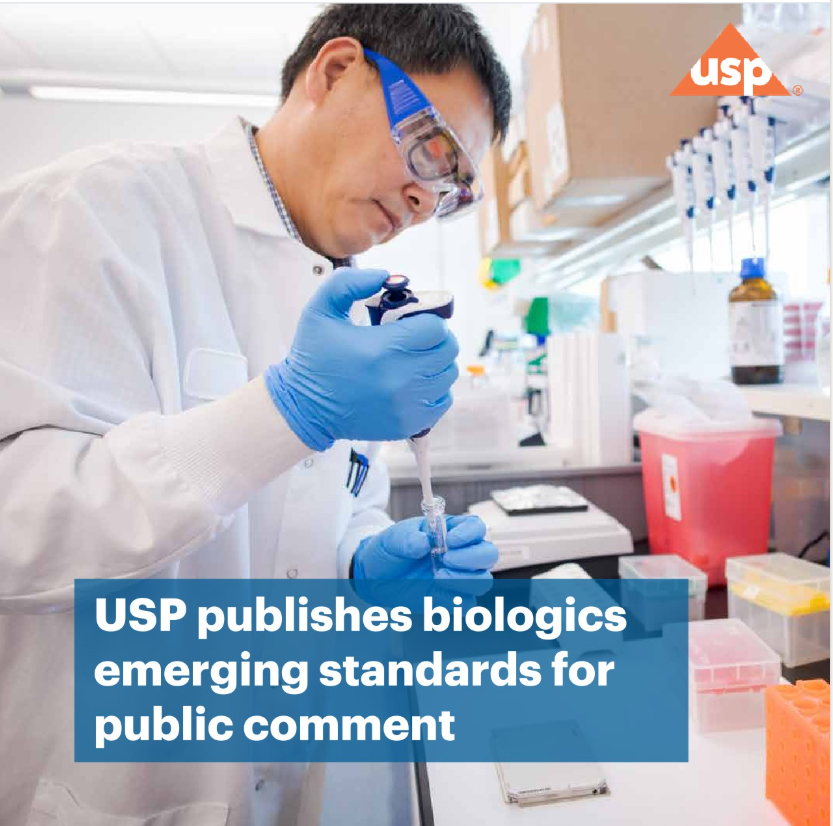
| | USP Invites Public Comment on Product-Specific Emerging Standards for Biologics | The U.S. Pharmacopeia (USP) has announced the publication of a set of product-specific emerging standards for biologics, now available for public comment through the Emerging Standards Platform. The initial set of emerging standards includes analytical methods for epoetin, interferon beta 1a, rituximab, and bevacizumab, along with accompanying physical reference standards. USP invites manufacturers, regulators, academia, healthcare providers, and other stakeholders to review the methods, share practical feedback, and submit input, including alternative methods, through the Emerging Standards Platform. Please consider providing your input. Input received during this stage will inform how these concepts evolve. | | ARPA-H awards up to $160 million to advance personalized curative medicines for rare genetic diseases | |
The Advanced Research Projects Agency for Health (ARPA-H), an agency within the U.S. Department of Health and Human Services, today announced the teams for the Treating Hereditary Rare Diseases with In Vivo Precision Genetic Medicines (THRIVE) program — a critical investment toward bringing new treatments to patients faster and cure rare genetic pediatric diseases. THRIVE will accelerate solutions across multiple technological approaches, clinical trial designs, and deployment models for a diverse set of rare genetic diseases, all of which are devastating and life-threatening.
“By transforming precision genetic medicines through platforms that can test multiple treatments for multiple diseases in a single clinical trial, THRIVE reflects the kind of groundbreaking health innovation needed to help children and families facing life-threatening genetic diseases,” said Alicia Jackson, Ph.D., ARPA-H Director. “This ARPA-H program takes on one of the toughest challenges in medicine — and could change the trajectory of genetic disease, expand access to advanced treatments, and reinforce U.S. leadership in the future of medicine.”
Life-threatening rare genetic diseases affect millions of Americans, many of them newborns, infants, and children, with no treatments for the root cause. Despite their critical unmet treatment needs, about 95% of rare diseases have no approved medicines and the traditional model of one disease, one treatment, one trial adds cost and time to a research process where every dollar and everyday count.
| |  | Sponsorship Opportunities Available for BioHealth Capital Region Week 2026 | |
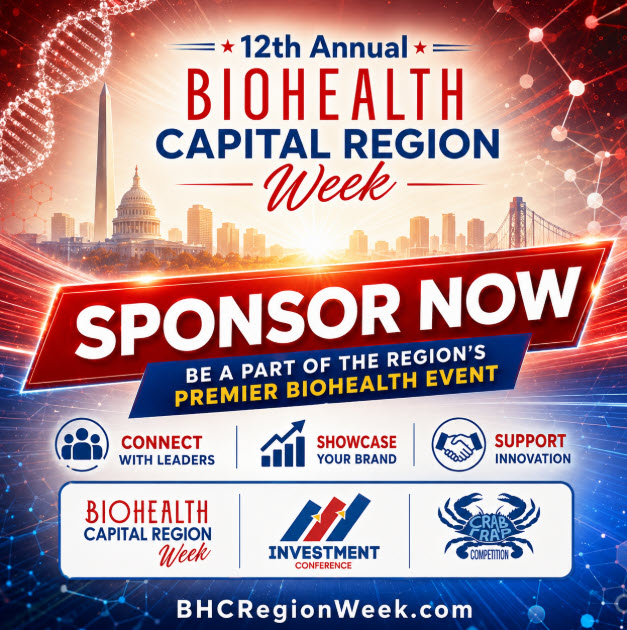
Sponsorship opportunities are available for the 12th Annual BioHealth Capital Region Week, September 15–17, 2026, at US Pharmacopeia in Rockville, Maryland.
Sponsors help keep BHCR Week free to attend while gaining visibility with biohealth leaders, investors, emerging companies, academic institutions, government partners, and regional collaborators across the BioHealth Capital Region Forum, Crab Trap Competition, and Investment Conference.
Sponsorship also provides access to one of the most valuable parts of the week: the VIP Leadership Dinner. This smaller, invite-only gathering brings together senior executives, investors, speakers, public-sector leaders, university partners, and key opinion leaders in a more focused setting than the daytime program. For sponsors, it is an opportunity to build relationships, have higher-value conversations, and connect directly with people who are helping shape the future of the BioHealth Capital Region.
BHCR Week sponsors are recognized across event materials, signage, the registration site, and BHI communications, providing visibility before and during the event. Sponsorship is a strong way to support regional collaboration while positioning your organization in front of the companies, investors, researchers, and partners driving biohealth growth.
To learn more, contact Rich Bendis at rbendis@biohealthinnovation.org and Andy Eckert at aeckert@biohealthinnovation.org.
| | | Big4Bio Spotlight: Inside the BioHealth Capital Region's Climb to Top 3 | |
The BioHealth Capital Region’s growth over the past decade continues to stand out nationally.
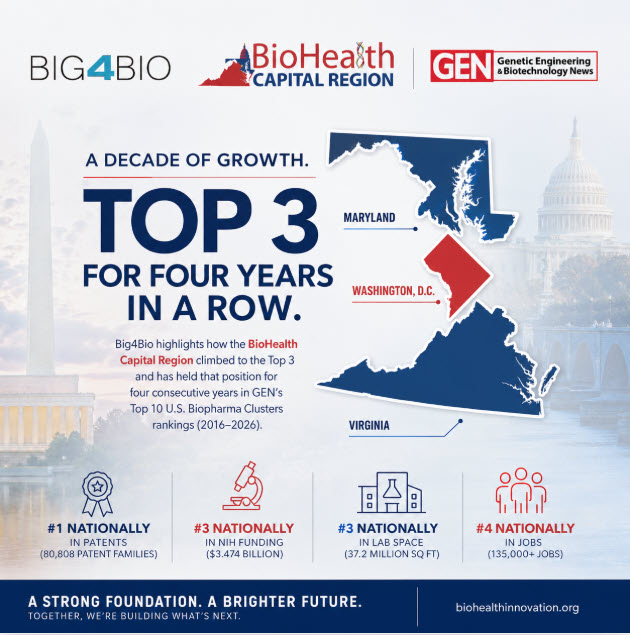
A new Big4Bio spotlight looks at how the regions it covers have moved in Genetic Engineering & Biotechnology News' Top 10 U.S. Biopharma Clusters rankings from 2016 through 2026. For the BioHealth Capital Region, the story is clear: our region made a deliberate climb into the Top 3 and has now held that position for four consecutive years.
That progress reflects the strength of Maryland, Virginia, and Washington, D.C. across the full biohealth ecosystem. GEN’s 2026 ranking highlights the region’s national leadership in patents, top-tier NIH funding, deep lab-space base, and more than 135,000 biohealth jobs.
The article also points to one of the biggest opportunities shaping the region’s next chapter: biomanufacturing. Major investments from AstraZeneca, Merck, and Eli Lilly and Company across Maryland and Virginia show how the BioHealth Capital Region is becoming an even more important part of the national push to expand U.S.-based manufacturing capacity.
| | | SPARK Pediatric Medical Countermeasures Summit Prize Competition 2026 Now Accepting Applications | |
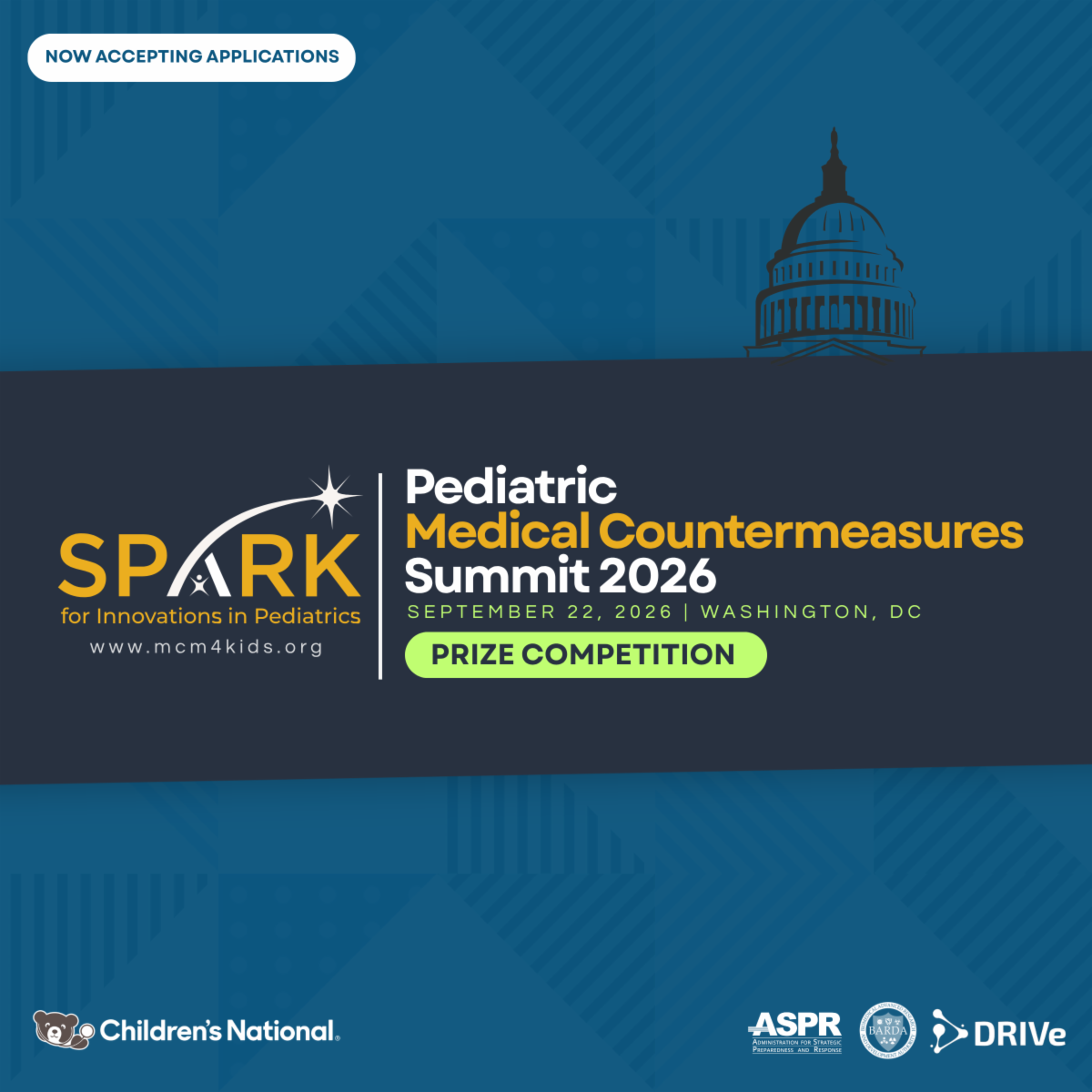
SPARK for Innovations in Pediatrics, a BARDA Accelerator Network hub led by Children’s National Hospital in Washington, DC, is now accepting applications for the SPARK Pediatric Medical Countermeasures Summit Prize Competition 2026. The competition seeks breakthrough technologies that can help protect pediatric populations from health security threats, including chemical, biological, radiological, and nuclear threats, pandemic influenza, and emerging infectious diseases. Eligible focus areas include diagnostics, therapeutics, vaccines, medical devices, digital health tools, and enabling technologies that address BARDA mission-relevant pediatric health security threats, as well as tools that support pediatric evidence generation, such as digital twins, organoids, organ-on-chip systems, PK/PD models, and clinical trial simulation platforms.
Up to $50,000 in non-dilutive prize funding is available. Applications are due July 22, 2026, and finalists will be invited to pitch live at the SPARK Pediatric Medical Countermeasures Summit in Washington, DC, on September 22, 2026. A virtual information session will be held on July 1, 2026.
| | | August 5, 2026: Research Parks as Catalysts for Technology Transfer and Commercialization | |
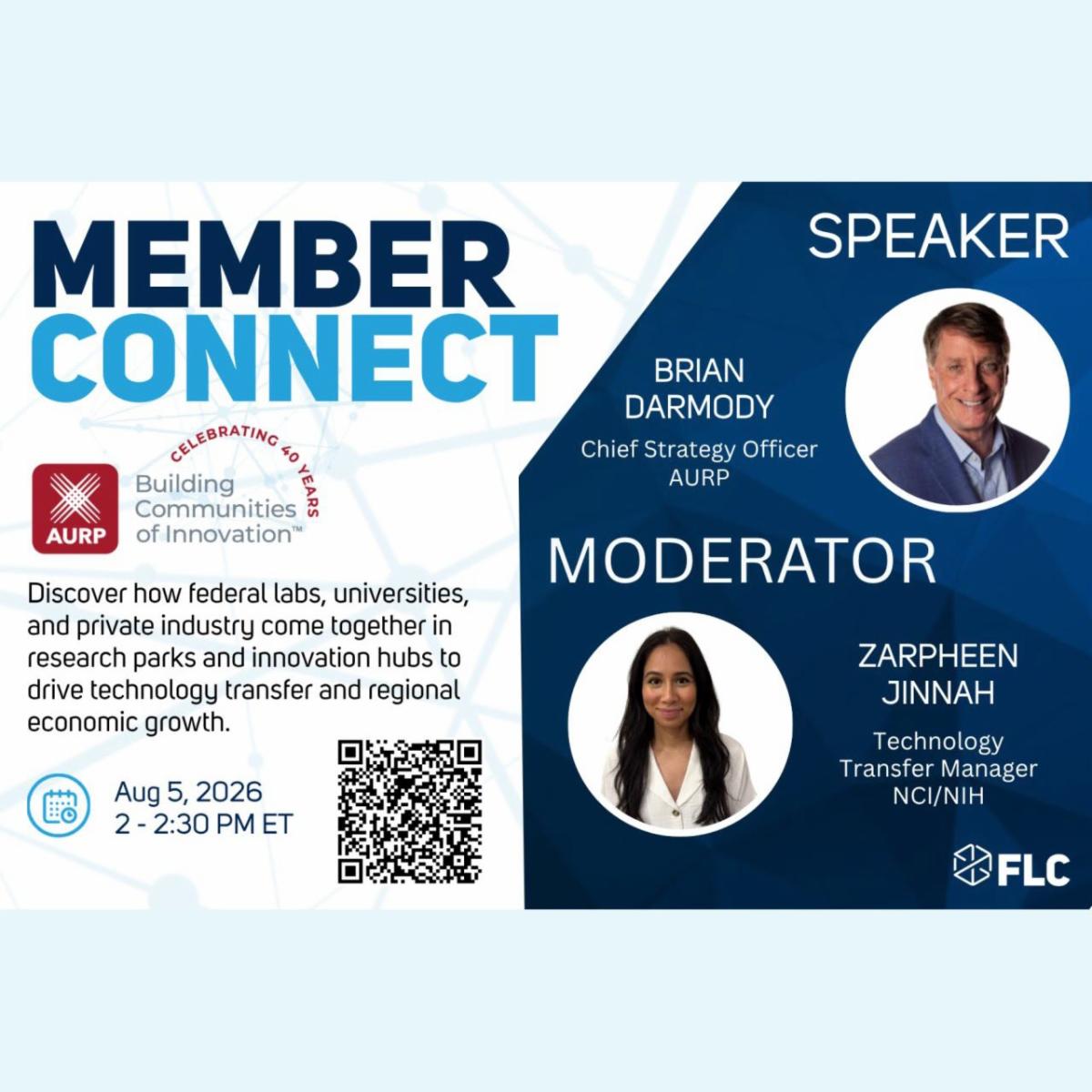
The Federal Laboratory Consortium will host its next Member Connect session on August 5, 2026, from 2 to 2:30 p.m. ET, spotlighting AURP, the Association of University Research Parks. This free virtual event will introduce participants to AURP’s work supporting research parks, innovation districts, and the communities that connect discovery with practical application.
Featuring Brian Darmody, Chief Strategy Officer at AURP, the session will examine how these place-based innovation ecosystems help strengthen technology commercialization. Research parks create space for universities, federal laboratories, startups, established companies, and economic development partners to work in closer alignment.
For federal researchers and technology transfer professionals, AURP member parks offer a valuable bridge between early-stage discovery and market readiness. These environments can help promising technologies find development partners, industry collaborators, entrepreneurial support, and pathways toward broader public benefit.
The session will be moderated by Zarpheen Jinnah, Technology Transfer Manager at NCI/NIH. Attendees will gain insight into how federal, academic, and private-sector partners can collaborate through research parks and innovation districts to move ideas beyond the lab and into real-world use.
| | | BioHealth Capital Region Crab Trap Competition Now Accepting Applications | |
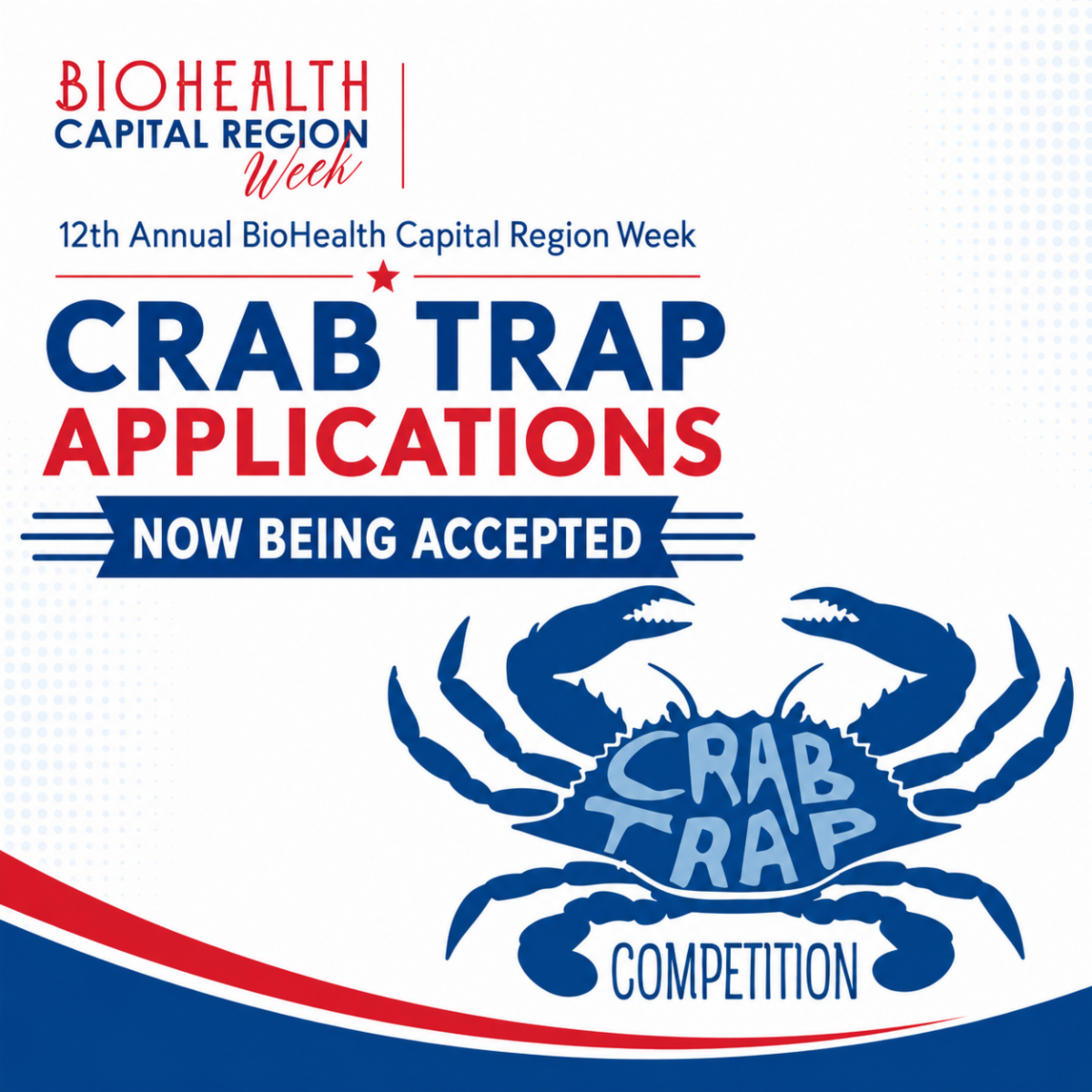
Applications are now being accepted for the BioHealth Capital Region Crab Trap Competition, returning as part of the 12th Annual BioHealth Capital Region Week, taking place September 15, 16, and 17, 2026, at US Pharmacopeia in Rockville, Maryland. Apply today at https://bit.ly/CrabTrap2026.
The Crab Trap Competition highlights promising early-stage biohealth companies developing new technologies, products, and solutions across therapeutics, diagnostics, medical devices, digital health, research tools, and other areas of life sciences innovation. Each year, the competition gives selected entrepreneurs the opportunity to present their companies in front of experienced investors, industry leaders, subject matter experts, and regional ecosystem partners.
Five finalists will be selected to pitch live during BioHealth Capital Region Week. Each finalist will deliver a seven-minute company presentation, followed by a three-minute question-and-answer session with the judges. The format gives entrepreneurs a focused opportunity to explain the problem they are solving, the strength of their technology, market opportunity, commercialization strategy, management team, funding progress, and key milestones.
| | | Longeviti Launches ClearFit AI™, a Brain Ultrasound Interface (BUI) to Advance Platform Solutions for Neurological Disorders | |
BALTIMORE, Md.--(BUSINESS WIRE)--Longeviti Neuro Solutions, a neurotechnology company focused on advancing innovative solutions that unlock post-operative ultrasound access to the brain, today announced the launch of two strategic initiatives, ClearFit AI™, a Brain Ultrasound Interface (BUI). Together, these technologies create a persistent acoustic interface to the brain, enabling real-time bedside imaging and supporting future advances in AI-assisted neurosurgical care.
This platform enables the Brain Ultrasound Interface (BUI) — a new category of post-operative neuro access that may reduce reliance on CT and MRI transport, integrate into existing neuro workflows, and position the implant site as a potential foundation for future applications currently under investigation.
Operational and Economic Potential
As healthcare systems continue to evaluate scalable and cost-conscious technologies, ultrasound-enabled imaging approaches may offer operational advantages in select care environments.
For clinicians, BUI means the ability to assess the brain at the bedside — possibly reducing operational burdens such as scheduling imaging, transporting a post-operative patient, or waiting for results. ClearFit AI™ makes that possible by turning the implant site into a persistent sonolucent interface, with AI-assisted imaging optimization only available on Clarius Ultrasound units.
For patients, that access may mean fewer trips to the scanner, less radiation exposure, and bedside visualization that may extend from the ICU into outpatient and recovery settings.
“The mission was always in the name,” said Jesse Christopher, CEO. “Longeviti exists to pursue scalable platform technologies that help create new possibilities for clinicians, researchers, and patients while supporting the broader goal of protecting cognitive function and improving quality of life.”
| | | Welldoc Launches on CMS ACCESS Model for Digital-First Chronic Care | |
COLUMBIA, Md. – July 8, 2026 – Welldoc®, a leader in AI-powered health technology focused on complex conditions, today announced that it is officially live as an approved Participant in the Centers for Medicare & Medicaid Services (CMS) Advancing Chronic Care with Effective, Scalable Solutions (ACCESS) Model. As a credentialed Medicare Part B supplier, Welldoc joins the first cohort of digital health solutions going live with the CMS July 5 launch. Eligible beneficiaries navigating traditional Medicare can now access the clinically validated Welldoc App directly through the centralized Medicare App Library on Medicare.gov, with all out-of-pocket beneficiary coinsurance entirely waived under the CMS Medicare Fee Schedule. Welldoc is participating in both the Cardio-Kidney-Metabolic (CKM) and Early CKM (eCKM) tracks to support individuals managing diabetes, obesity, hypertension, and prediabetes.
The ACCESS program introduces a strict Outcome-Aligned Payment (OAP) framework, structurally shifting traditional Medicare by tying financial reimbursements directly to objective, longer-term clinical outcomes. Welldoc’s digital-first approach was explicitly engineered for this exact type of value-based framework.
“Welldoc exemplifies the kind of innovation the ACCESS Model is designed to encourage: FDA-cleared, clinically validated digital health platforms backed by a strong body of evidence that empower beneficiaries to better manage chronic conditions while giving clinicians actionable insights between visits,” said Aneesh Chopra, former U.S. Chief Technology Officer and Welldoc Strategic Advisor. “By combining open standards, beneficiary choice, and outcome-based payment, CMS is creating the conditions for a market where trusted digital health solutions compete on outcomes, enabling proven technologies like Welldoc to improve health outcomes while making Medicare more sustainable.”
| | | BioSpark Applications Open for Early-Stage Life Sciences Companies | |
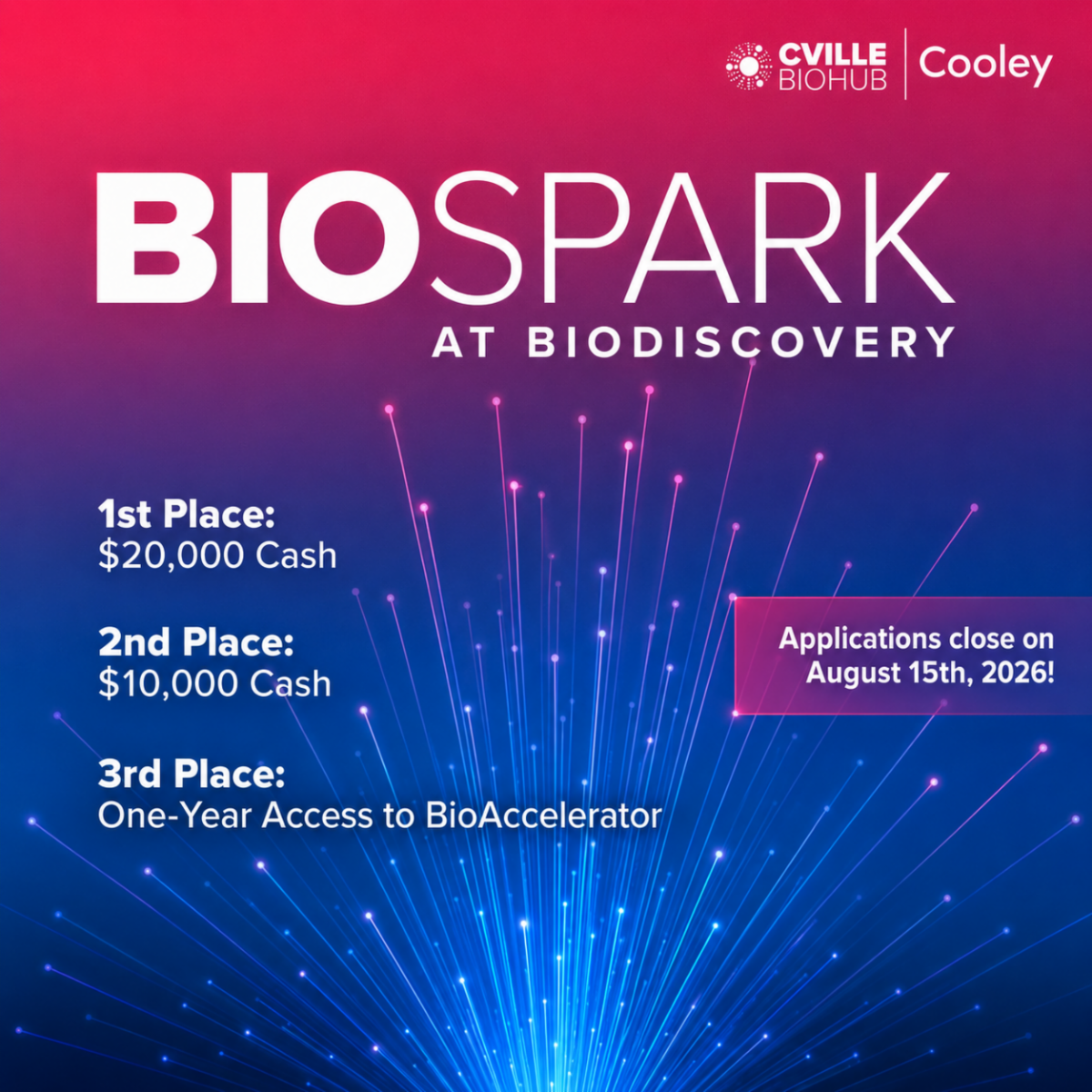
CvilleBioHub is now accepting applications for BioSpark, a competitive live pitch event for early-stage life sciences startups taking place during the 2026 BioDiscovery Summit on September 17 in Charlottesville, Virginia.
Eight companies will be selected to pitch before a panel of judges and an audience of life sciences investors, industry leaders, and summit attendees. Eligible companies should be U.S.-based, pre-seed or seed-stage, have a formal entity, own the rights to their technology, and have raised no more than $10 million to date.
BioSpark is open to companies working across therapeutics, digital health and analytics, medical devices, diagnostics, healthcare delivery, AI healthcare services, and related healthcare technologies. This year’s prize pool includes $20,000 for first place, $10,000 for second place, and a year of access to CvilleBioHub’s Commonwealth BioAccelerator for third place.
Applications close August 15, 2026.
Learn more and apply through CvilleBioHub.
| | | business.maryland.gov: Life sciences thrive in Maryland’s innovation ecosystem | |
There’s no slowing Maryland’s thriving life sciences sector. In 2026, the BioHealth Capital Region – which spans Maryland, Virginia, and Washington, D.C. – was named one of the nation’s Top 3 biopharma clusters by Genetic Engineering & Biotechnology News (GEN) for the fourth consecutive year.
Maryland stands out for its unparalleled concentration of scientific talent, world-class research institutions, and a dynamic network of innovators advancing biotechnology and life sciences. Industry leaders including AstraZeneca, Samsung Biologics, and Kite Pharma, combined with proximity to federal agencies such as the National Institutes of Health (NIH), the National Cancer Institute (NCI) and the Food and Drug Administration (FDA), create an environment where discoveries rapidly translate into real-world solutions, a growing workforce and improved health outcomes.
“We take pride in fostering an ecosystem where both discovery and applied innovation thrive, ensuring a lasting impact for our communities and the global health landscape,” stated Stefanie Trop, Ph.D., director of life sciences at the Maryland Department of Commerce. “By promoting inclusive pathways to STEM careers and supporting startups and established companies alike, Maryland remains a premier destination for biomedical innovation and long-term investment.”
| | | RoosterBio & Qkine Partner to Deliver a Single-Source Platform of Cells, Media, & Growth Factors to U.S. Customers | |
FREDERICK, MD., July 6, 2026 — RoosterBio, Inc., a leading supplier of cellular starting materials, bioprocess media, and advanced therapy manufacturing solutions for hMSCs, iPSCs, and exosome therapeutic developers, today announced a distribution agreement with Qkine Ltd., a Cambridge, UK–based manufacturer of high-purity, animal origin-free recombinant growth factors, cytokines, and complex bioactive proteins. Under the agreement, customers in the United States can now order Qkine’s full range of translation-friendly research use only (RUO) growth factors and cytokines directly from RoosterBio.
The partnership makes RoosterBio a one-stop source for the core inputs that cell therapy and exosome product developers rely on every day. Developers in the US can now benefit from simplified access to high-quality ancillary materials for their process development from a US-based supplier, providing fast, reliable sourcing of these complex reagents essential for advanced therapy development.
RoosterBio’s high-quality cell products, engineered bioprocess media, and exosome production solutions streamline manufacturing workflows and enable commercially viable processes that move stem cell and exosome product developers from concept to manufacturing faster and at reduced cost. Qkine’s proteins are manufactured using proprietary recombinant production processes combined with advanced protein engineering, delivering the high purity and lot-to-lot consistency that demanding cell and exosome workflows require. Supported by RoosterBio’s bioprocessing expertise, the combined portfolio gives developers a reliable, quality-focused foundation for efficiently advancing their programs. RoosterBio and Qkine share the design philosophy of translation-readiness: our products are manufactured such that the RUO versions utilized in product development are entirely consistent with corresponding GMP grade products, enabling seamless transition to large scale GMP manufacturing.
| | | Ohio State University Research Highlights Linshom Medical Respiratory Sensor Data at the 2026 Anesthesiology Meeting | |
BALTIMORE, MD, UNITED STATES, July 7, 2026 /EINPresswire.com/ -- Research data from The Ohio State University Wexner Medical Center has been selected as one of twenty-four oral abstract presentations from a field of 1,473 submissions for presentation at the annual Anesthesiology meeting. Data on the Linshom Medical respiratory sensor will be presented in the “Best Abstracts” session on October 19, 2026 in San Diego, CA.
The NIH funded clinical study, “Advance Prediction of Respiratory Depression Events Using a Prospective Observational Study of a Continuous Predictive Respiratory Monitor”, proved the Linshom Medical sensor’s ability to detect respiratory depression episodes (RDEs) eleven minutes sooner than current standard of care.
Richard Urman, MD, MBA, Principal Investigator and the Jay J. Jacoby Endowed Professor and Chair, Department of Anesthesiology at The Ohio State University Wexner Medical Center will present the data. “Linshom Medical detected 132 (83.3%) of RDEs, outperforming standard of care, which detected only 59 (44.7%),” commented Dr. Urman. “This early detection window may help the clinical care team to intervene sooner vs. later when patients experience respiratory decline and are in trouble.”
“This data presentation is the culmination of 4 years and 2 years of work for Linshom Medical and Ohio State respectively”, said Richard Hughen, CEO of Linshom Medical. “We really tested the value of the Linshom device in this study with use in the post anesthesia care unit (PACU) where every patient has continuous pulse oximetry monitoring and a dedicated nurse observing them. Despite this intense level of care, our sensor identified RDE’s much better than standard of care. RDE’s are not short sleep apnea events; they are patients who stop breathing for 30 seconds and longer”.
| | | FDA Clears Ashburn's Quoin Pharmaceuticals to Start Testing New Drug for PSS | |
ASHBURN, Va., July 09, 2026 (GLOBE NEWSWIRE) -- Quoin Pharmaceuticals Ltd. (NASDAQ: QNRX), a late clinical-stage specialty pharmaceutical company focused on rare and orphan diseases, today announced that the U.S. Food and Drug Administration (FDA) has cleared the Company's Investigational New Drug (IND) application for QRX003 for the treatment of Peeling Skin Syndrome (PSS), enabling initiation of its planned Phase 2 clinical study. Quoin expects to initiate the study in the second half of 2026. Potential clinical sites, clinical investigators and study participants have already been identified.
The Phase 2 study is expected to recruit 6-8 pediatric and adult patients with PSS in both the United States and Europe. In the Phase 2 study, QRX003 will be applied twice-daily to greater than 80% of the patients’ body surface area (BSA) over a 52-week period. The Company is targeting the approval of QRX003 as a potential treatment for PSS in 2028.
"For families living with Peeling Skin Syndrome, there is still no approved treatment and no other active clinical development of a potential treatment for the disease. This is what makes FDA clearance to initiate our Phase 2 study so meaningful for this community," said Dr. Michael Myers, CEO of Quoin Pharmaceuticals. "We are excited to start this Phase 2 study of QRX003 and take yet another step toward developing a treatment for another disease that has long been overlooked. This is now the second rare dermatologic indication for QRX003, and it fully reflects Quoin’s mission to provide hope to patient communities and families where none has previously existed. We are particularly encouraged by the FDA expressing no safety concerns in terms of study design and dosing duration which we believe is a very positive indicator as we seek to reach alignment with the agency for our upcoming Phase 3 study in Netherton Syndrome."
| | | CEL-SCI to Launch FDA Registration-Enabling Phase 3 Confirmatory Study to Bring Multikine® to Market for Newly Diagnosed Head and Neck Cancer | |
VIENNA, Va.--(BUSINESS WIRE)--CEL-SCI Corporation (NYSE American: CVM) today announced it is launching its global Confirmatory Registration Study of Multikine® (Leukocyte Interleukin, Injection)* as a neoadjuvant treatment for newly diagnosed, previously untreated, resectable, locally advanced primary head and neck cancer.
The global, multi-center study will enroll patients in the United States, Europe, Asia, and South America. Orient EuroPharma, CEL-SCI's strategic partner in Taiwan, will oversee and fund patient enrollment within its territory. The study is highly optimized and designed with approximately 97% statistical power to detect a previously observed 0.34 hazard ratio based on overall survival (OS).
The Confirmatory Study will enroll approximately 212 patients presenting with newly diagnosed, previously untreated, resectable, locally advanced squamous cell carcinoma (head and neck cancer) whose tumors exhibit low or zero PD-L1 expression and who present with no clinical lymph node involvement at entry. This precise cohort represents the patient population that demonstrated the most profound clinical benefit in CEL-SCI’s completed 928-patient randomized controlled Phase 3 study. The patients in the confirmatory study will be required to possess the same disease characteristics as the patients who showed the excellent survival benefit in the completed Phase 3 study. By isolating this specific high-responder group of patients identified in the prior randomized controlled trial, the confirmatory study maintains robust statistical power while requiring a substantially smaller, more efficient patient enrollment target.
| | | | | |