| | Sponsorship Opportunities Available for BioHealth Capital Region Week 2026 | |
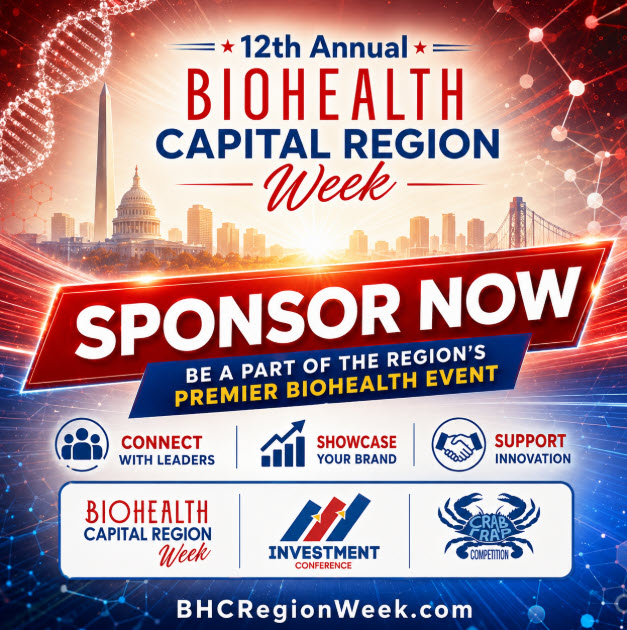
Sponsorship opportunities are available for the 12th Annual BioHealth Capital Region Week, September 15–17, 2026, at US Pharmacopeia in Rockville, Maryland.
Sponsors help keep BHCR Week free to attend while gaining visibility with biohealth leaders, investors, emerging companies, and regional partners across the Forum, Crab Trap Competition, and Investment Conference.
To learn more, contact Rich Bendis at rbendis@biohealthinnovation.org and Andy Eckert at aeckert@biohealthinnovation.org.
| | Welldoc Recognized by Modern Healthcare as One of the Best Places to Work in Healthcare for Second Consecutive Year | |
COLUMBIA, Md. – June 30, 2026 – Welldoc®, an AI-powered health technology leader, today announced it has been named one of Modern Healthcare’s Best Places to Work in Healthcare for 2026. This marks the second consecutive year Welldoc has received this honor, reflecting a sustained corporate culture focused on employee well-being, clinical rigor and scalable health tech innovation.
The annual award program identifies and honors 150 outstanding healthcare workplaces that empower employees to excel and grow while providing industry-leading products and services. Modern Healthcare partners with Workforce Research Group on the assessment process, which includes an extensive employee survey. Highlights from the survey reveal the core strengths of Welldoc’s workplace culture, including:
- Shared Mission and Vision: Welldoc team members remain deeply aligned with the company’s objective to improve health outcomes through healthcare-ready AI. The latest survey indicates that 99% of employees derive strong personal satisfaction from their daily work and feel like they are part of a team with a common purpose.
| |  | MacroGenics Completes Sale of GMP Manufacturing Operations to Bora Pharmaceuticals | |
ROCKVILLE, MD, July 02, 2026 (GLOBE NEWSWIRE) -- MacroGenics, Inc. (NASDAQ: MGNX), a clinical-stage biopharmaceutical company focused on developing innovative antibody-based therapeutics for the treatment of cancer, and Bora Pharmaceuticals Co., Ltd. (TWSE: 6472; OTCQX: BORAY), a global leader in pharmaceutical manufacturing, today announced completion of the sale of MacroGenics’ good manufacturing practice (GMP) drug substance manufacturing operations to Bora.
Under the terms of the Asset Purchase Agreement, Bora paid MacroGenics $122.5 million, before transaction fees and expenses and subject to customary post-closing adjustments. Effective today, Bora has assumed responsibility for MacroGenics’ manufacturing operations supporting clinical and commercial production. As part of the transaction, MacroGenics’ manufacturing site in Rockville, Maryland, and warehouse in Frederick, Maryland, have transferred to Bora, and approximately 140 former MacroGenics employees have been hired by Bora. MacroGenics has also entered into a supply agreement with Bora, under which Bora will support process development and drug substance production for MacroGenics’ internal pipeline needs.
| | | AURP Expands Maryland Presence with New Members from Morgan State University and Columbia Gateway Innovation District | |
Tucson, Ariz. and College Park, Maryland, June 24, 2026—The Association of University Research Parks (AURP) today announced the expansion of its Maryland membership with the addition of two new members: Morgan State University in Baltimore and the Columbia Gateway Innovation District in Howard County.
Morgan State University becomes AURP’s first currently active Historically Black College and University (HBCU) member, while Columbia Gateway Innovation District joins a growing network of county-based innovation districts nationwide that are advancing regional economic development through innovation-driven growth.
“As one of the country’s fastest-growing HBCUs, we are delighted to join our peer research universities across the nation as an AURP member,” said Dr. Willie E. May, Vice President for Research and Economic Development at Morgan State University.
Morgan State University recently joined 14 other Historically Black Colleges and Universities to launch the Association of HBCU Research Institutions, a national coalition established to accelerate world-class research, strengthen institutional research capacity, and expand opportunities for innovation and economic impact.
| | | SPARK Pediatric Medical Countermeasures Summit Prize Competition 2026 Now Accepting Applications | |
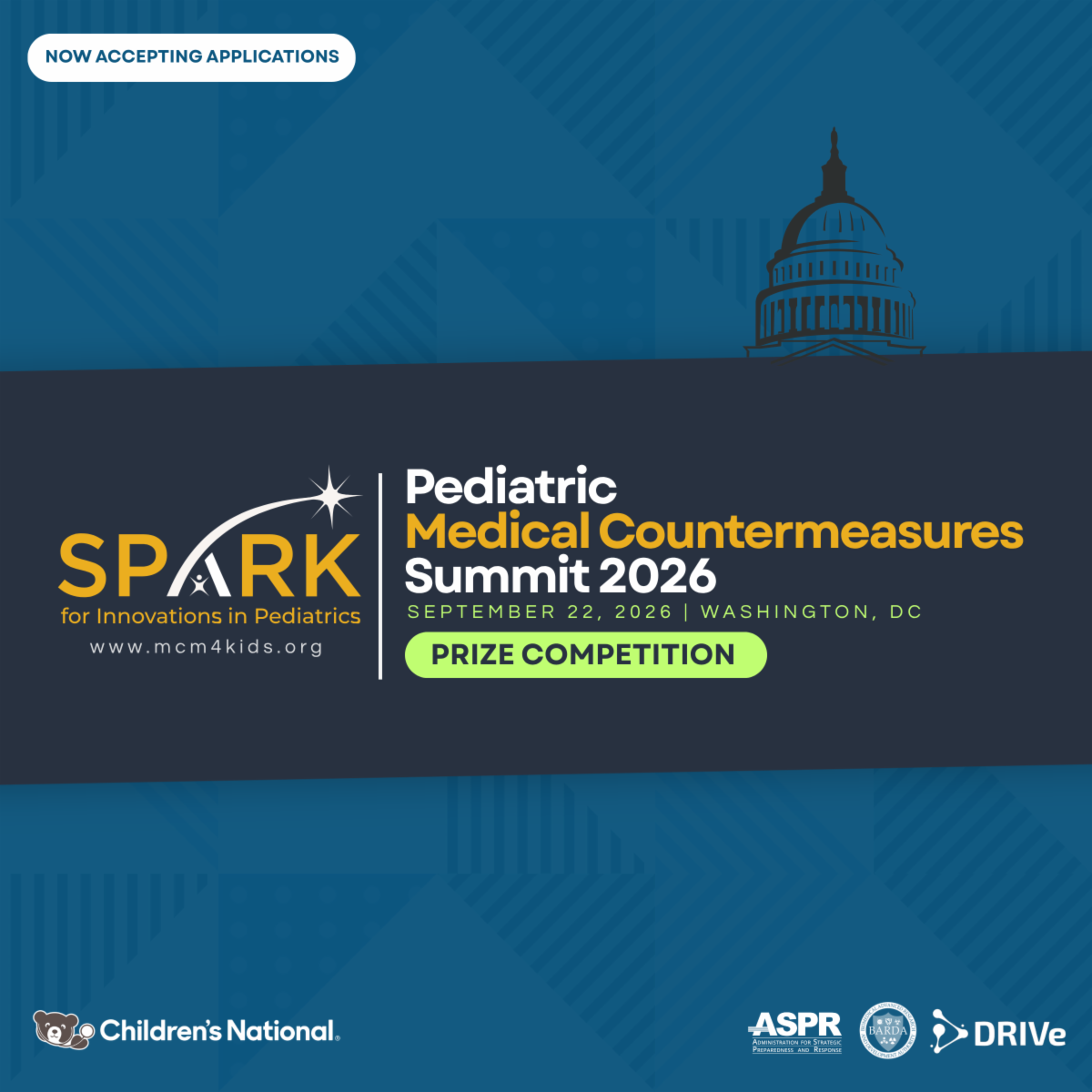
SPARK for Innovations in Pediatrics, a BARDA Accelerator Network hub led by Children’s National Hospital in Washington, DC, is now accepting applications for the SPARK Pediatric Medical Countermeasures Summit Prize Competition 2026. The competition seeks breakthrough technologies that can help protect pediatric populations from health security threats, including chemical, biological, radiological, and nuclear threats, pandemic influenza, and emerging infectious diseases. Eligible focus areas include diagnostics, therapeutics, vaccines, medical devices, digital health tools, and enabling technologies that address BARDA mission-relevant pediatric health security threats, as well as tools that support pediatric evidence generation, such as digital twins, organoids, organ-on-chip systems, PK/PD models, and clinical trial simulation platforms.
Up to $50,000 in non-dilutive prize funding is available. Applications are due July 22, 2026, and finalists will be invited to pitch live at the SPARK Pediatric Medical Countermeasures Summit in Washington, DC, on September 22, 2026. A virtual information session will be held on July 1, 2026.
| | | August 5, 2026: Research Parks as Catalysts for Technology Transfer and Commercialization | |
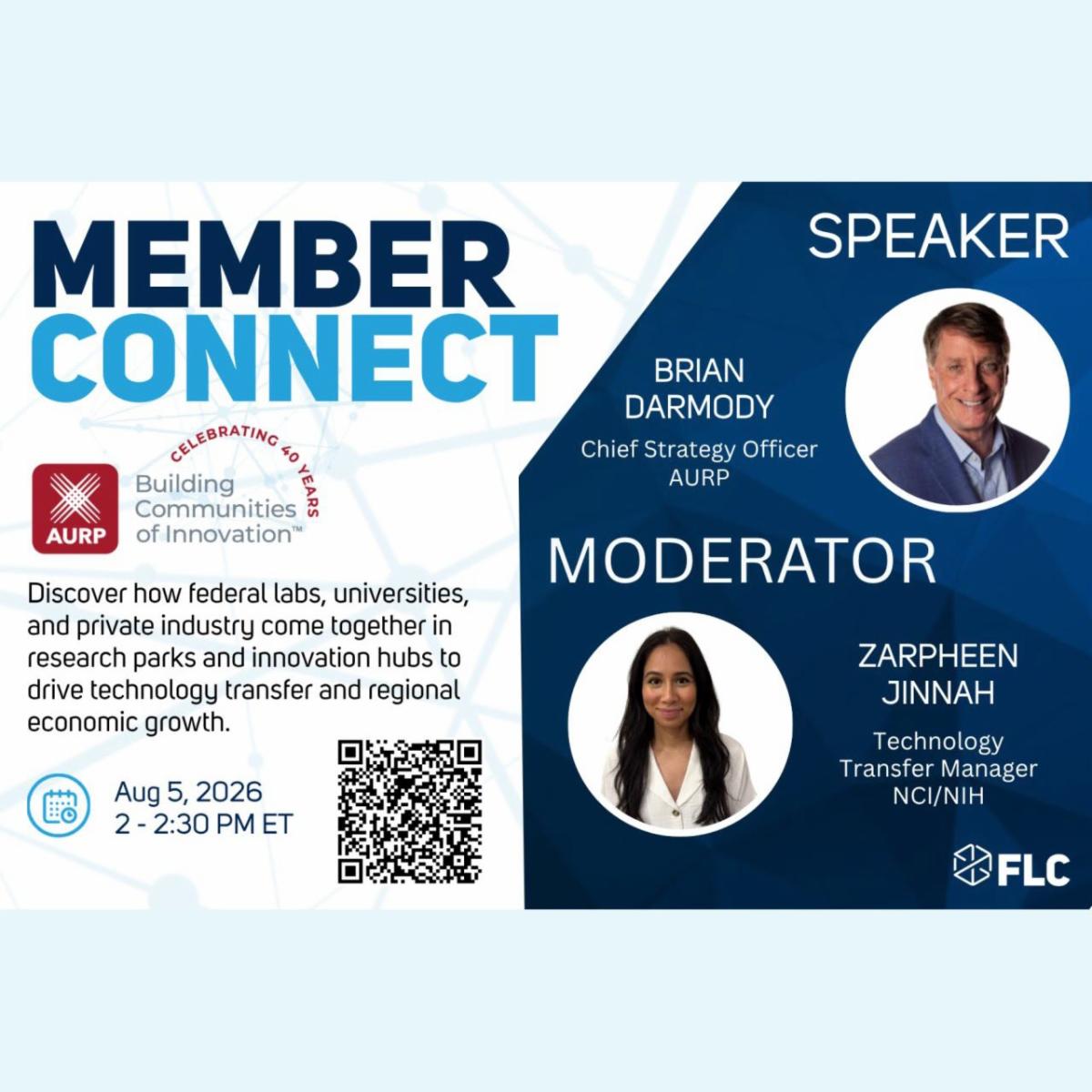
The Federal Laboratory Consortium will host its next Member Connect session on August 5, 2026, from 2 to 2:30 p.m. ET, spotlighting AURP, the Association of University Research Parks. This free virtual event will introduce participants to AURP’s work supporting research parks, innovation districts, and the communities that connect discovery with practical application.
Featuring Brian Darmody, Chief Strategy Officer at AURP, the session will examine how these place-based innovation ecosystems help strengthen technology commercialization. Research parks create space for universities, federal laboratories, startups, established companies, and economic development partners to work in closer alignment.
For federal researchers and technology transfer professionals, AURP member parks offer a valuable bridge between early-stage discovery and market readiness. These environments can help promising technologies find development partners, industry collaborators, entrepreneurial support, and pathways toward broader public benefit.
The session will be moderated by Zarpheen Jinnah, Technology Transfer Manager at NCI/NIH. Attendees will gain insight into how federal, academic, and private-sector partners can collaborate through research parks and innovation districts to move ideas beyond the lab and into real-world use.
| | | BioHealth Capital Region Crab Trap Competition Now Accepting Applications | |
Applications are now being accepted for the BioHealth Capital Region Crab Trap Competition, returning as part of the 12th Annual BioHealth Capital Region Week, taking place September 15, 16, and 17, 2026, at US Pharmacopeia in Rockville, Maryland. Apply today at https://bit.ly/CrabTrap2026.
The Crab Trap Competition highlights promising early-stage biohealth companies developing new technologies, products, and solutions across therapeutics, diagnostics, medical devices, digital health, research tools, and other areas of life sciences innovation. Each year, the competition gives selected entrepreneurs the opportunity to present their companies in front of experienced investors, industry leaders, subject matter experts, and regional ecosystem partners.
Five finalists will be selected to pitch live during BioHealth Capital Region Week. Each finalist will deliver a seven-minute company presentation, followed by a three-minute question-and-answer session with the judges. The format gives entrepreneurs a focused opportunity to explain the problem they are solving, the strength of their technology, market opportunity, commercialization strategy, management team, funding progress, and key milestones.
| | | Aug 11 - BioHorizons: Partnering to Secure the Future of Biotechnology | |
BioHorizons: Partnering to Secure the Future of Biotechnology is an invitation-only forum taking place on August 11, 2026, from 9:00 AM to 4:00 PM at the Johns Hopkins Applied Physics Laboratory in Fulton, Maryland. The event is hosted by APL and is designed to bring together senior leaders across the biotech and national security sectors for a full day of immersive engagement.
The forum is grounded in priority areas aligned with the National Security Commission on Emerging Biotechnology, with a focus on two key themes: Biomanufacturing and Response Technologies, and Advanced Sensing for Detection and Triage. Attendees will have the opportunity to experience live technology demonstrations from APL experts, gain insights into national security-driven biotech priorities, and explore joint initiatives aimed at mobilizing public and private resources.
BioHorizons is built for relationship-building and strategic alignment, connecting innovators, scientists, engineers, and decision-makers from across the biotech ecosystem. The event offers a unique opportunity to shape investment and innovation strategies in alignment with national security goals. Registration closes July 31, 2026, and interested participants can register through the Johns Hopkins APL event portal.
| | | United Therapeutics Corporation Acquires Thymmune Therapeutics | |
SILVER SPRING, Md. & RESEARCH TRIANGLE PARK, N.C.--(BUSINESS WIRE)--United Therapeutics Corporation (Nasdaq: UTHR) announced today it has acquired Thymmune Therapeutics, Inc. (Thymmune), a privately held, preclinical stage biotechnology company developing scalable, regenerative thymic cell therapies for the potential treatment of post-transplant organ tolerance, immunodeficiencies, and autoimmune diseases.
The thymus is a critical organ for the development and proper function of key parts of the immune system, including training T-cells, which are essential for fighting infections and other diseases. Thymmune has a proprietary process for converting human-induced pluripotent stem cells (iPSC) into thymic cells, which — once inside the body — mature into cell types that can restore healthy T-cell function.
Thymmune’s lead candidate, THY-100, is in preclinical development for congenital athymia, an ultra-rare and life-threatening condition in which infants are born without a functional thymus. Animal studies have shown that treatment with THY-100 results in the in vivo formation of a neo-thymus that is capable of facilitating T-cell development. The clinical proof of concept and further development of THY-100...
| | | BioSpark Applications Open for Early-Stage Life Sciences Companies | |
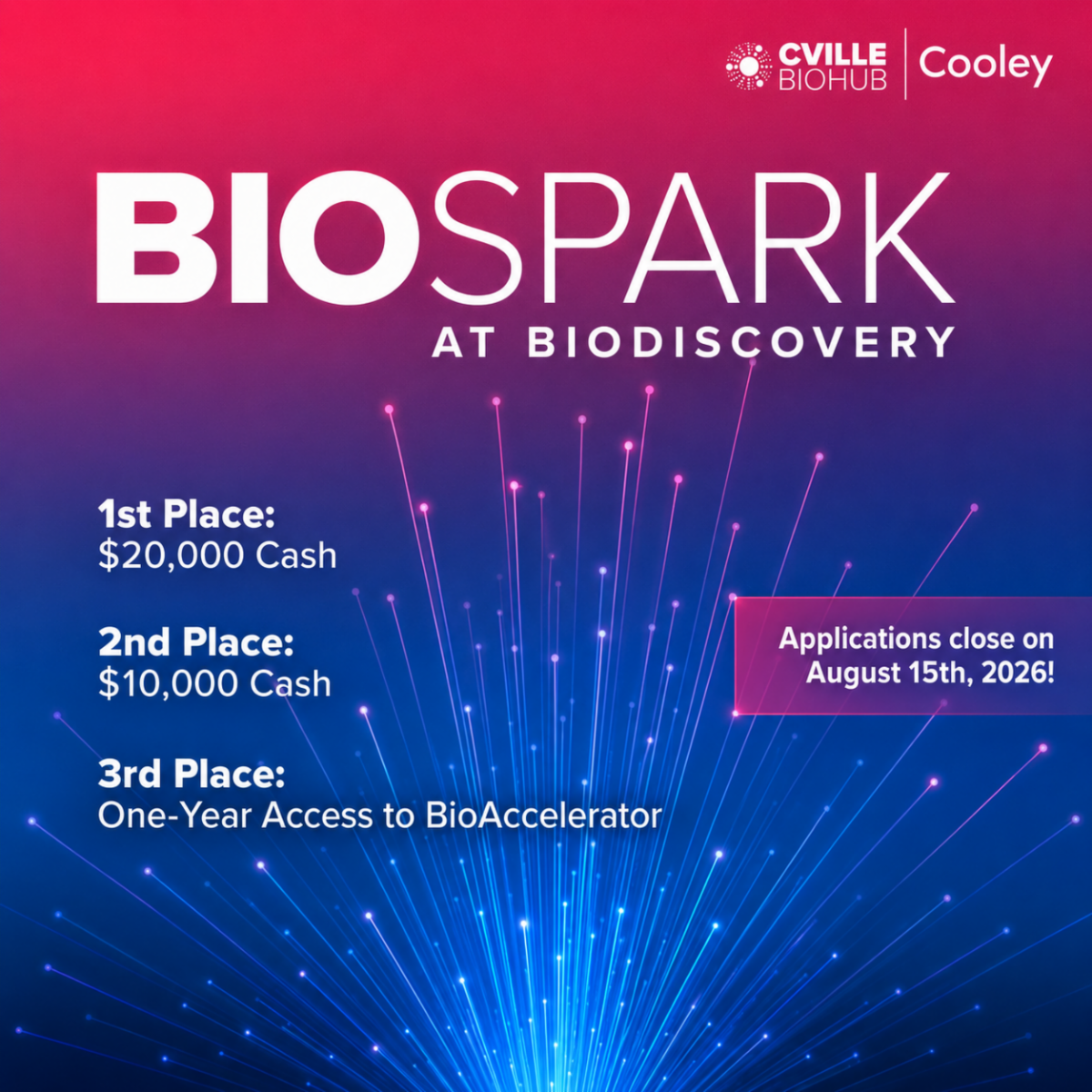
CvilleBioHub is now accepting applications for BioSpark, a competitive live pitch event for early-stage life sciences startups taking place during the 2026 BioDiscovery Summit on September 17 in Charlottesville, Virginia.
Eight companies will be selected to pitch before a panel of judges and an audience of life sciences investors, industry leaders, and summit attendees. Eligible companies should be U.S.-based, pre-seed or seed-stage, have a formal entity, own the rights to their technology, and have raised no more than $10 million to date.
BioSpark is open to companies working across therapeutics, digital health and analytics, medical devices, diagnostics, healthcare delivery, AI healthcare services, and related healthcare technologies. This year’s prize pool includes $20,000 for first place, $10,000 for second place, and a year of access to CvilleBioHub’s Commonwealth BioAccelerator for third place.
Applications close August 15, 2026.
Learn more and apply through CvilleBioHub.
| | | Gain Therapeutics Cleared by FDA to Begin Phase 2 Testing of Parkinson's Drug | |
BETHESDA, Md., June 29, 2026 (GLOBE NEWSWIRE) -- Gain Therapeutics, Inc. (Nasdaq: GANX) (“Gain”, or the “Company”), a clinical-stage biotechnology company leading the discovery and development of the next generation of allosteric small molecule therapies, today announced that the U.S. Food and Drug Administration (FDA) has authorized the Company’s Investigational New Drug (IND) application for GT-02287. The FDA’s decision will allow initiation of the Company’s Phase 2 clinical development of GT-02287 in Parkinson’s disease with or without a GBA1 mutation in the U.S.
Both the Phase 1a and Phase 1b studies of GT-02287 were conducted in Australia. The sites in Australia are expected to also participate in the Phase 2 study along with new sites in the U.S. and select European centers.
“We appreciate the FDA’s guidance throughout the IND review process and look forward to initiating our Phase 2 study, which is anticipated to occur during 3Q26,” said Gene Mack, President and CEO of Gain Therapeutics...
| | | NIH Awards Up to $4 Million to CraniUS Therapeutics to Advance Skull-Embedded Platform Designed to Bypass the Blood-Brain Barrier | |
BALTIMORE, June 29, 2026 /PRNewswire/ -- CraniUS Therapeutics, a neurotechnology company developing a skull-embedded drug delivery platform designed to bypass the blood-brain barrier, today announced it has received an initial $1.1 million award through the NIH Blueprint MedTech Optimizer Program, with the opportunity to secure up to $4 million in total funding. The award will support advancing the NeuroPASS™ platform toward a first-in-human study in recurrent glioblastoma (GBM).
Glioblastoma is the most common malignant primary brain tumor in adults. The blood-brain barrier prevents therapies from reaching effective concentrations in brain tissue, a central contributor to the unmet need in neuro-oncology. When glioblastoma recurs, median overall survival is approximately six to nine months. ¹
"The blood-brain barrier remains one of the greatest challenges in medicine," said Dr. Chad Gordon, Founder and Executive Chairman of CraniUS Therapeutics and Director of Neuroplastic and Reconstructive Surgery at Johns Hopkins. "Our vision is to create a practical, repeatable way to deliver therapies directly to the brain."
NeuroPASS is a refillable implant placed within the skull. It is designed to deliver therapy directly into brain tissue while reducing systemic exposure, with a concealed refill port intended to support outpatient dosing and repeated administration over time.
| | | George Mason University and Phase Inc. receive NSF grant to advance 3D-printed microfluidic technology | |
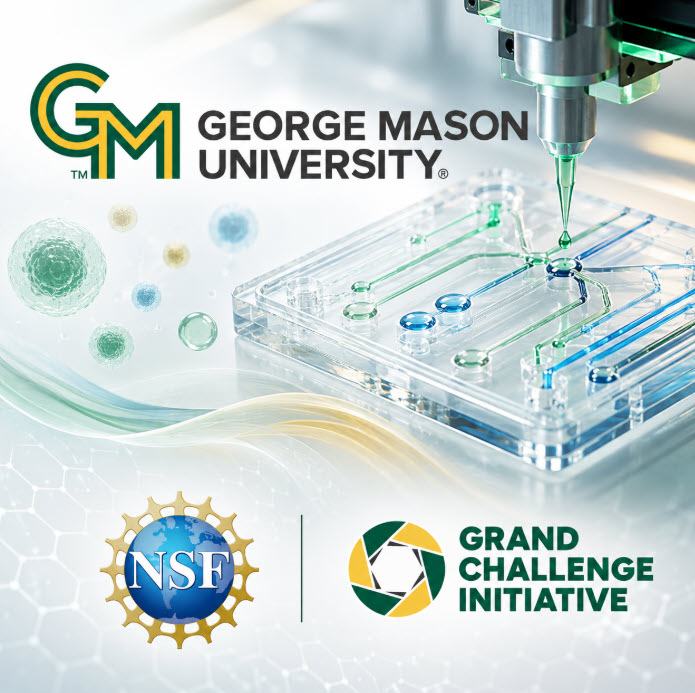
George Mason University and Phase Inc. have received a National Science Foundation (NSF) STTR grant to advance a new generation of 3D-printed microfluidic devices that could help move the technologies from the research lab toward broader commercial and scientific use.
The project combines the expertise of College of Science Professor Ramin M. Hakami’s group in extracellular vesicle (EV) biology, and that of College of Engineering and Computing Associate Professor Remi Veneziano’s group in bioengineering and materials characterization, at George Mason University with Phase’s vision to create an end-to-end, automated microfluidic platform that brings together custom device design, scalable 3D-printed polydimethylsiloxane (PDMS) chip manufacturing, and automated fluid handling. Specifically, this project leverages the microfluidic EV platform jointly developed and published by the Veneziano and Hakami groups.
Microfluidic devices use tiny channels to control small amounts of fluid and recreate environments on a cellular scale. They model human biology more realistically than flat cell cultures, making them important for drug discovery, disease research, and toxicology. Microfluidics are especially timely as the FDA has announced plans to phase out some animal testing requirements and encourage more human-relevant methods.
| | | Immunomic Therapeutics Doses First Patient in Trial of Japanese Cedar Pollen Allergy Vaccine | |
ROCKVILLE, Md.--(BUSINESS WIRE)--Immunomic Therapeutics Inc. (ITI), a clinical-stage biotechnology company and a subsidiary of HLB, today announced that the first participant has been dosed in the Phase 1 clinical trial of ITI-9001, its investigational vaccine designed to treat Japanese cedar pollen allergy.
The first patient was dosed less than one month after the clinical trial application was cleared by Japan's Pharmaceuticals and Medical Devices Agency (PMDA), demonstrating the company's ability to rapidly advance clinical development activities. The participant completed the initial post-dose monitoring visit, and no significant adverse events or safety concerns have been observed to date.
The Phase 1 study is a single-center, randomized, placebo-controlled trial enrolling adults aged 18 to 65 years with Japanese cedar pollen allergy. Japanese cedar pollen allergy impacts an estimated 48 million people in Japan. The study will first evaluate the safety and tolerability of low- and high-dose cohorts to determine the optimal dose, followed by an assessment of safety and immunogenicity by comparing the selected dose with placebo.
| | | MCEDC Unveils Updated Brand and Website Showcasing Montgomery County's Innovation Economy | |
Today, MCEDC unveiled an updated brand identity and website that more fully reflects the strength, diversity, and global competitiveness of Montgomery County, Maryland.
Inspired by the intersection of people, ideas, and opportunity, MCEDC’s evolved visual identity reflects Montgomery County, Maryland, as a place where discovery and innovation thrive.
The refreshed website aligns with MCEDC’s evolving strategic direction and provides a more intuitive, user-focused experience for businesses, investors, entrepreneurs, and site selectors. The platform showcases Montgomery County’s key industry sectors, available sites and development opportunities, workforce strengths, diverse communities, and business resources, serving as a gateway for companies looking to start, grow, relocate, or invest in the County.
The brand refresh comes at a pivotal moment for MCEDC and Montgomery County. Since the organization’s leadership transition in August 2025, MCEDC’s Board of Directors, County leaders, and key stakeholders have worked to strengthen coordination and alignment across the County’s economic development ecosystem. The new brand reflects that commitment and supports ongoing efforts to elevate Montgomery County’s visibility and competitiveness in the global marketplace.
| | | TEDCO Announces State Small Business Credit Initiative Investment in Irazú Oncology | |
COLUMBIA, Md., (July 7, 2026) — TEDCO, Maryland’s economic engine for technology companies, announced a recent $250,000 investment in Irazú Oncology through the State Small Business Credit Initiative (SSBCI). The funding was provided through TEDCO’s Seed Funds, a group of funding initiatives dedicated to investing in eligible technology and life sciences companies with strong potential for continued growth.
"Cancer immunotherapy has transformed care, but it still reaches too few patients and takes too long and too much capital to develop," said Jeff Strovel, CEO of Irazú Oncology. "Our outer membrane vesicle platform is built to change that — delivering multiple tumor targets in a single, self-adjuvating therapy designed to drive a durable anti-tumor response. TEDCO's investment helps us advance that work toward the clinic."
Located in the University of Maryland BioPark in Baltimore, Md., Irazú Oncology aims to develop faster, more cost effective and versatile cancer immunotherapies. Through the Outer Membrane Vesicle (OMV) platform technology, Irazú utilizes outer membrane vesicles – non-replicating, self-adjuvanted, clinically validated, bacteria-derived engineered nanoparticles – to display and deliver tumor antigens for antigen presentation.
| | | Fierce Biotech: AstraZeneca pens $1.7B kidney drug discovery pact with go-to Chinese partner CSPC | |
AstraZeneca has added another piece to its sprawling interface with CSPC Pharmaceutical, paying the Chinese biotech $30 million upfront to jointly discover and develop two kidney disease drug candidates.
The agreement is built on CSPC’s siRNA drug discovery platform and delivery toolkit for targeting organs beyond the liver. Harnessing the capabilities, CSPC and AstraZeneca will advance small nucleic acid drug candidates against two undisclosed renal disease targets. The targets are relevant to multiple indications, CSPC said (PDF) in a filing to disclose the deal, but further details have yet to emerge.
AstraZeneca has committed $540 million in development milestones to enter into the partnership, which features a further $1.2 billion tied to product sales. The Anglo-Swedish drugmaker has the option to bag exclusive rights globally or outside of China. CSPC will retain rights to one of the assets in China.
The collaboration leverages CSPC’s AI molecular design model and automated high-throughput screening system. The capabilities support efficient screening of nucleic acids with high activity and enhanced potential to target organs beyond the liver, CSPC said. Early nucleic acid delivery systems achieved higher accumulation in the liver than other organs, creating a need for tools to unlock extrahepatic diseases.
| | | | | |