|
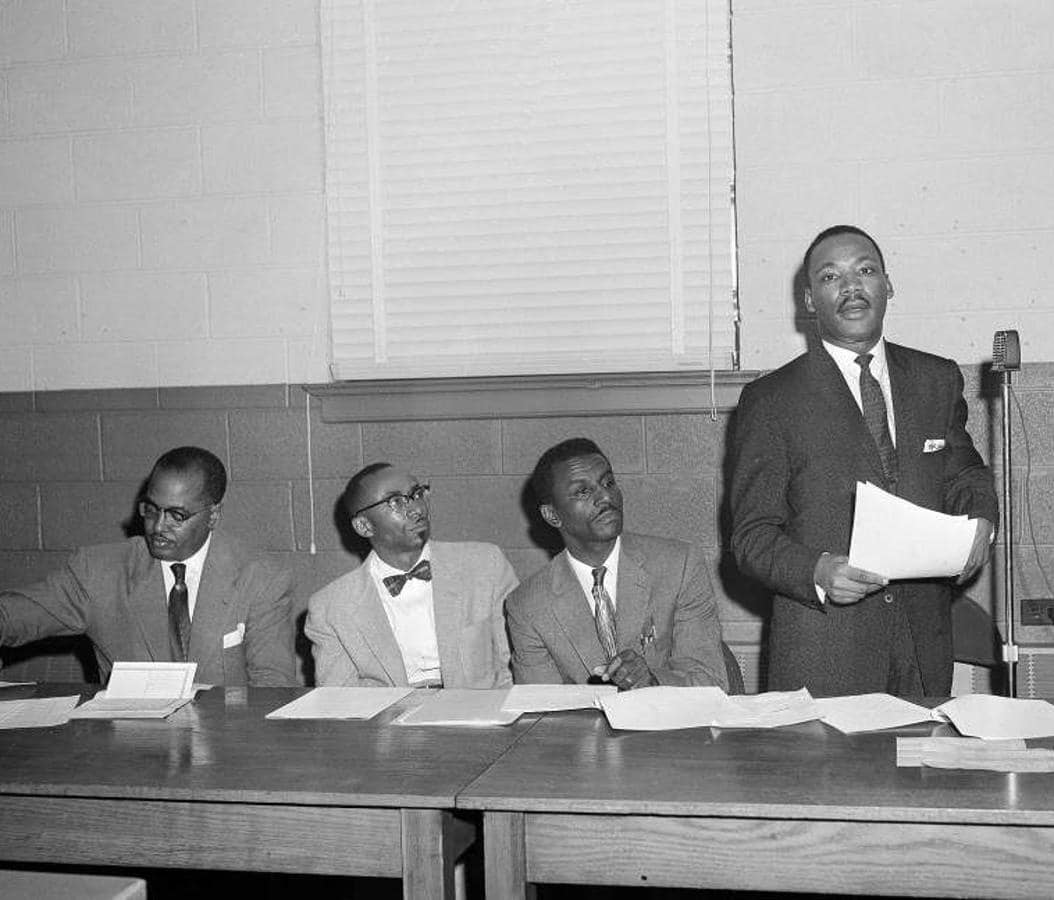
SCLC was a coalition of pastors and churches all over the country that collaborated on strategies to desegregate cities in the South. Their initial press conference was communicated through telegrams sent to President Eisenhower, Vice President Nixon, and Attorney General Brownell.
During its early years, SCLC struggled to gain footholds in black churches and communities across the South. Social activism in favor of racial equality faced fierce repression from the police, White Citizens' Council and the Ku Klux Klan. Only a few churches had the courage to defy the white-dominated status-quo by affiliating with SCLC, and those that did risked economic retaliation against pastors and other church leaders, arson, and bombings.
SCLC called for massive protests in Washington, DC, to push for new civil rights legislation that would outlaw segregation nationwide. A. Philip Randolph and Bayard Rustin issued similar calls for a March on Washington for Jobs and Freedom. On July 2, 1963, King, Randolph, and Rustin met with James Farmer Jr. of the Congress of Racial Equality, John Lewis of SNCC, Roy Wilkins of the NAACP, and Whitney Young of the Urban League to plan a united march on August 28.
The media and political establishment viewed the march with great fear and trepidation over the possibility that protesters would run riot in the streets of the capital. But despite their fears, the March on Washington was a huge success, with no violence, and an estimated number of participants ranging from 200,000 to 300,000. It was also a logistical triumph—more than 2,000 buses, 21 special trains, 10 chartered aircraft, and uncounted autos converged on the city in the morning and departed without difficulty by nightfall. The crowning moment of the march was King's famous "I Have a Dream" speech in which he articulated the hopes and aspirations of the Civil Rights Movement.
As we celebrate Black History Month and look back at the sacrifices of many before us to achieve equality for all, we must continue to work to ensure their efforts are realized and that Diversity, Equity, and Inclusion of all people are respected and represented. My grandfather would preach their is more that unites us than divides us, and as a Unifier, I will continue to carry that message.
Together we will!
Edward Pollard
|