|
1661
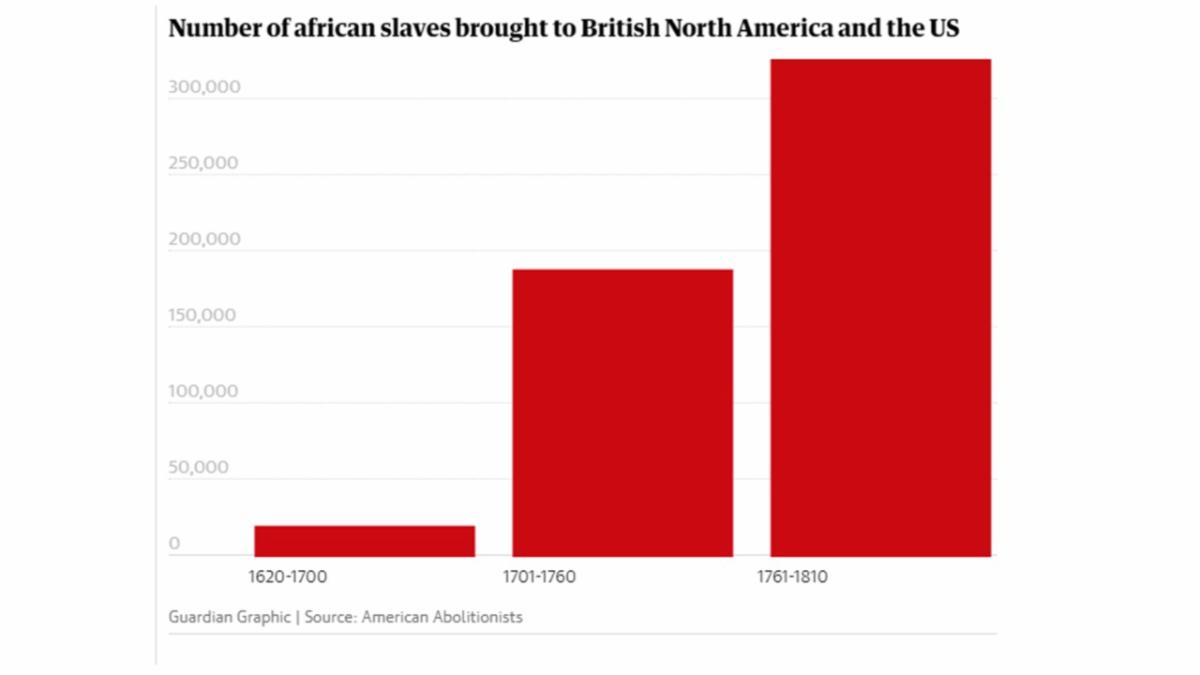
The first anti-miscegenation statute – prohibiting marriage between races – was written into law in Maryland in 1661, shortly after enslaved people were brought to the colonies. By the 1960s, 21 states, most of them in the south, still had those laws in place. Alabama was the last state to repeal the ban on interracial marriage, in 2000.
1776
The Declaration of Independence, which embraced in its first lines “that all men are created equal, that they are endowed by their creator with certain unalienable rights”, did not extend that right to slaves, Africans or African Americans, with the final version scrapping a reference to the denunciation of slavery. Thomas Jefferson, a slaveowner himself, penned those lines rejecting slavery; he removed the reference after receiving criticism from a number of delegates who enslaved black people. This could represent “the fabric of the American political economy” ever since, some historians have said.
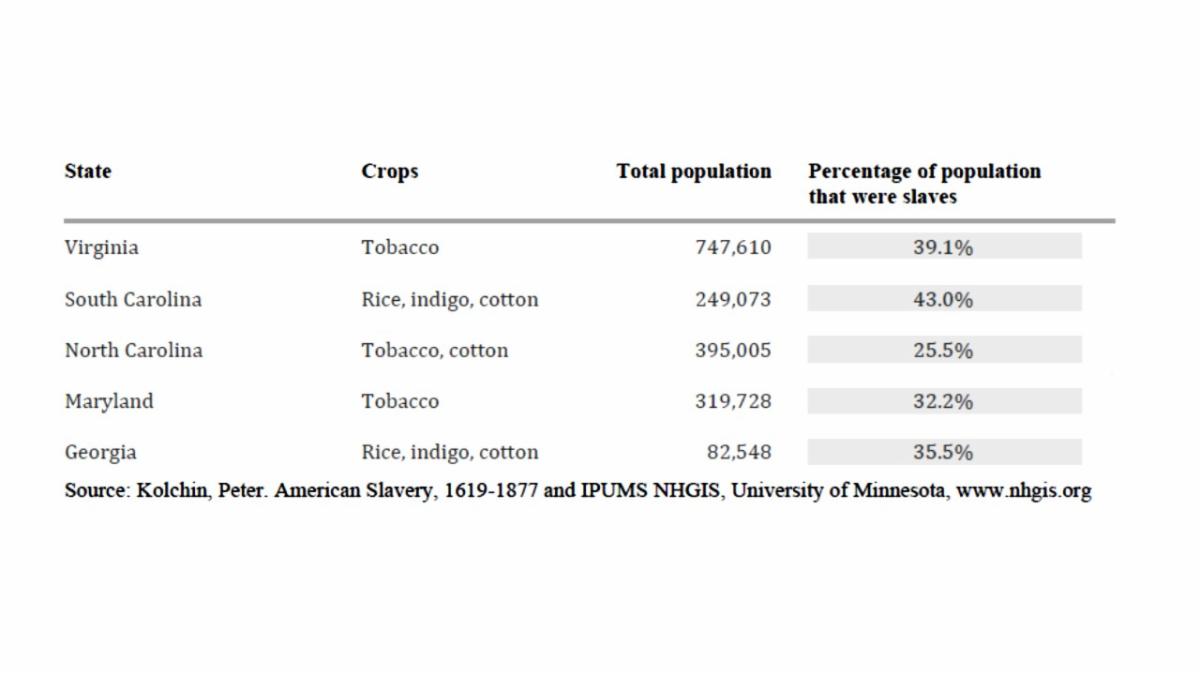
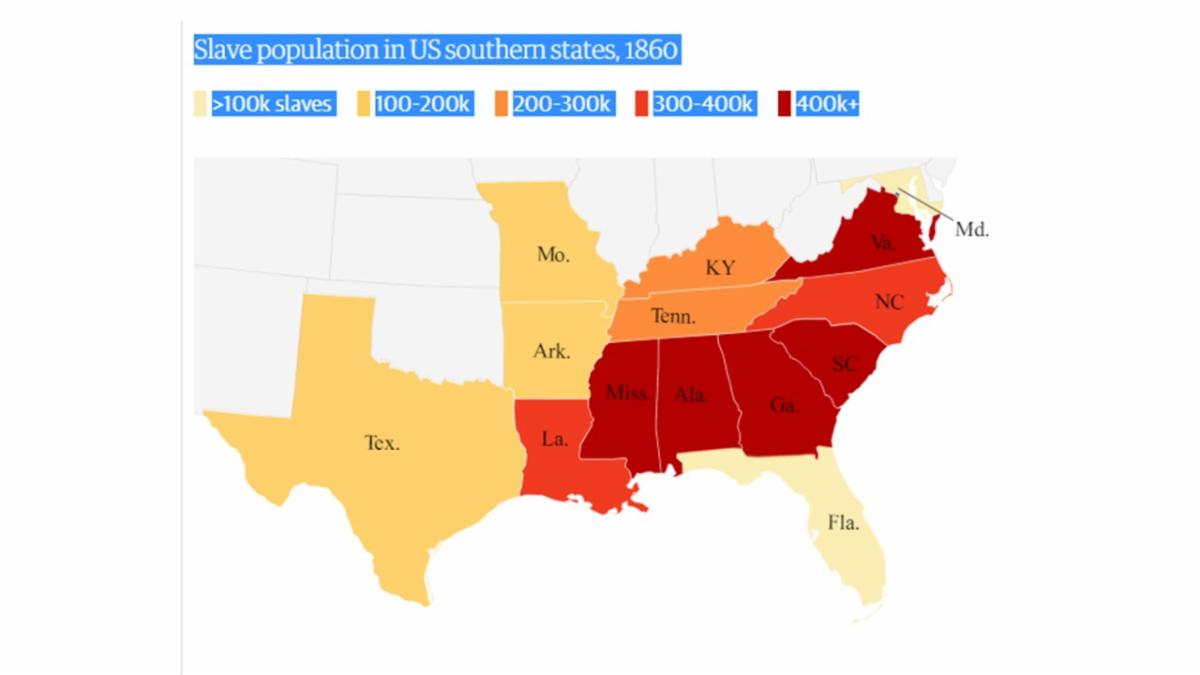
Slavery flourished initially in the tobacco fields of Virginia, Maryland and North Carolina. In the tobacco-producing areas of those states, slaves constituted more than 50% of the population by 1776. Slavery then spread to the rice plantations further south. In South Carolina, African Americans remained a majority into the 20th century, according to census data.
|