Alabama stands at a crossroads. Families across the state, particularly single parents and those in rural counties, face childcare costs that consume large shares of household income and force many parents, especially mothers, out of the workforce. If Alabama treats childcare as essential infrastructure, rather than as a private expense, it can both ease family budgets and strengthen the state economy. Achieving affordable universal childcare for all Alabama families is politically and fiscally feasible, but it requires a deliberate mix of revenue sources, careful program design, and a phased rollout that prioritizes quality and workforce support. >>>Read More | |  | |
Just north of Mobile Bay, on the banks of the Mobile River, sits one of the Southeast’s largest repositories of coal ash, which is the toxic by‑product left behind when coal is burned for electricity. This vast impoundment, estimated at over 600 acres and containing 21 million tons of ash, in a hurricane prone unlined pit, has been described by environmental advocates and scientists alike as a “huge environmental bomb.” The potential consequences of a breach, whether caused by flood, structural failure, or hurricane, would be catastrophic for the ecosystem, the economy, and the communities that depend on the Mobile River and Mobile Bay.
>>> Read More
| | | |
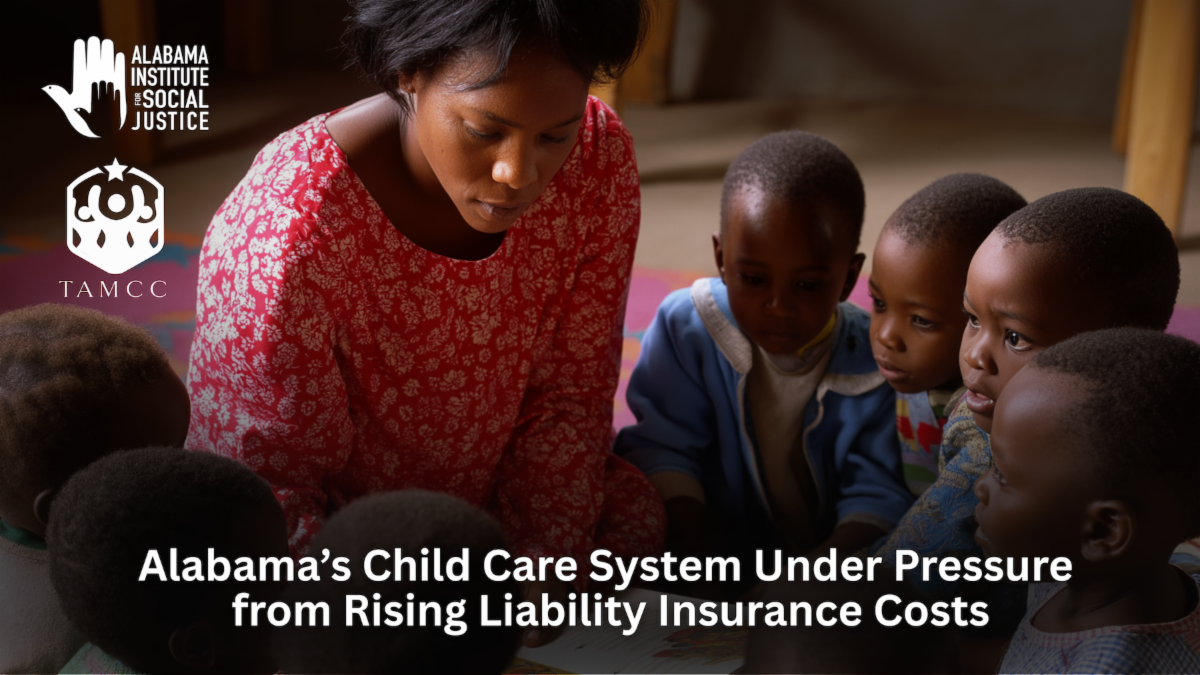
Child care providers across Alabama are confronting a growing crisis: liability insurance costs are soaring, coverage is shrinking or harder to obtain — and for many, it’s starting to determine whether centers stay open at all.
For providers in the state’s Wiregrass region — and beyond — the crunch is already painful. “Insurance for my child care business has tripled since 2023, I’m now paying $70,000/year for three centers in the Wiregrass area,” says Kishia Saffold, TAMCC Dothan leader and owner of Kiddie Care Learning Center. >>> Read More
| | | |
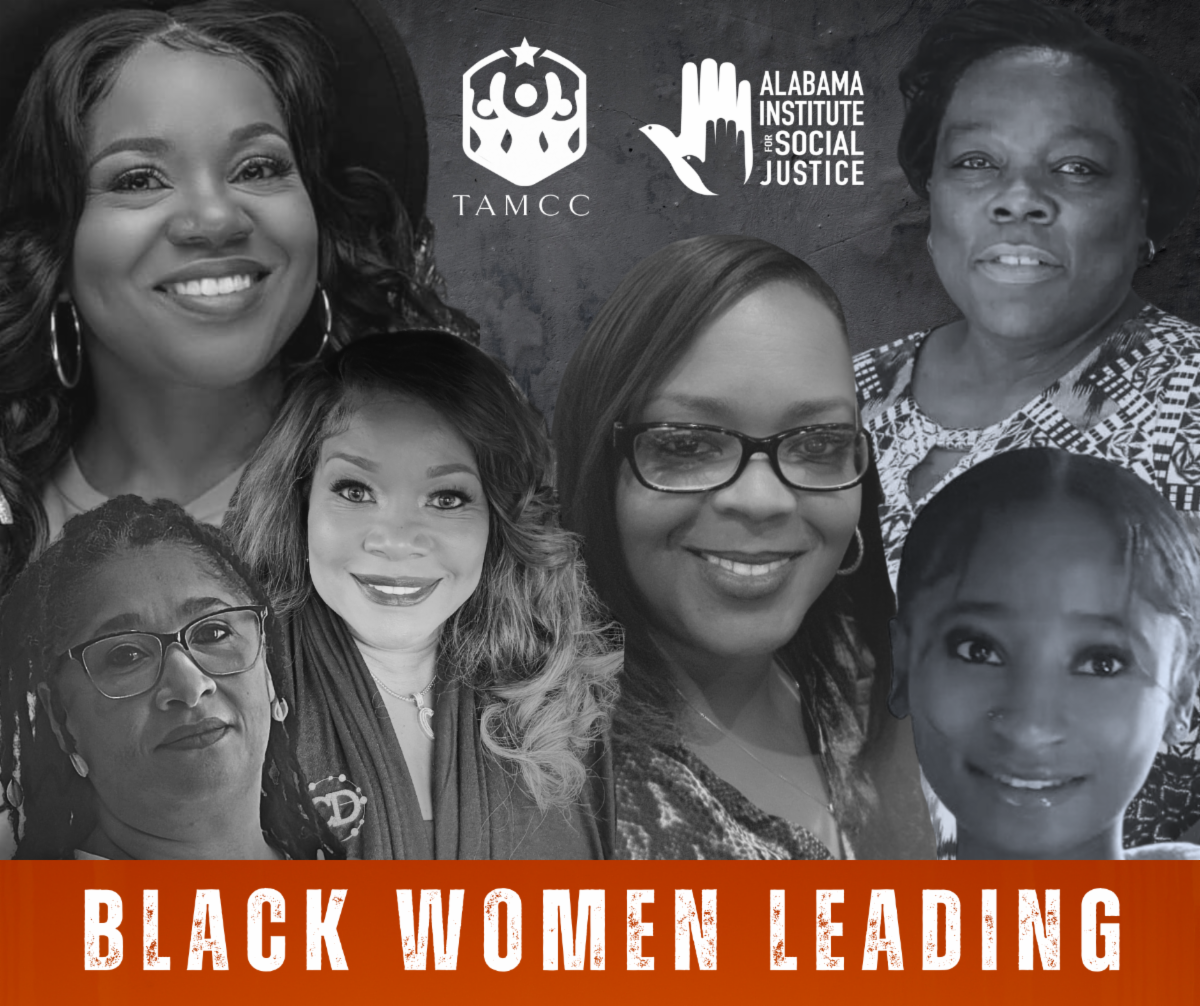
Black Women Leading: The Power Behind Alabama’s Child-Care Movement
Across Alabama, Black women are shaping the future of child care with a clarity of purpose, a depth of experience, and a commitment to justice that has become the backbone of The Alabama Movement for Child Care Coalition (TAMCC). These leaders—providers, advocates, business owners, and community anchors—are advancing a vision of care that honors both the children they serve and the educators who make that care possible.
From Huntsville, leaders Arlean Cole and Demetra Hughes continue to model what it means to build strong networks of educators who support one another while pushing for policy change. In Mobile, Dr. Constance Dial brings the weight of decades of experience to the movement, ensuring that coastal communities are represented and heard. Katina Surles, working across Lowndes and Montgomery counties, maintains the steady drumbeat for rural equity and the needs of families in underserved areas. In Birmingham, Joanevia Eason lifts up the intersection of child care, economic opportunity, and community stability. And in the Dothan/Wiregrass region, Kishia Saffold remains a tireless advocate, sounding the alarm about rising costs—including the staggering insurance increases that threaten the survival of many centers.
| | | |
These women—and many others within TAMCC—are not just providing child care. They are shaping the landscape of advocacy, policy, and community power in Alabama. Most recently, providers gathered in Harvest, Alabama, for a TAMCC planning meeting. The room was filled with strategy, urgency, and shared purpose as leaders charted advocacy priorities for 2026, including:
-
Roundtable conversations with families, business owners, and policymakers.
-
Public demonstrations to highlight the crisis facing providers.
-
Coordinated statewide advocacy efforts to address funding, workforce stability, and operational challenges.
The Harvest gathering reflected what has always been true in Alabama: Black women have long been the architects of care, resistance, and community survival. Through TAMCC, they continue to lead, organizing cities, rural counties, and entire regions toward a child-care system that is equitable, accessible, and worthy of the children it serves. Their leadership is not only reshaping child care, it is reshaping Alabama’s future.
| | | |
Black Women Activists: Reclaiming the Meaning of Care
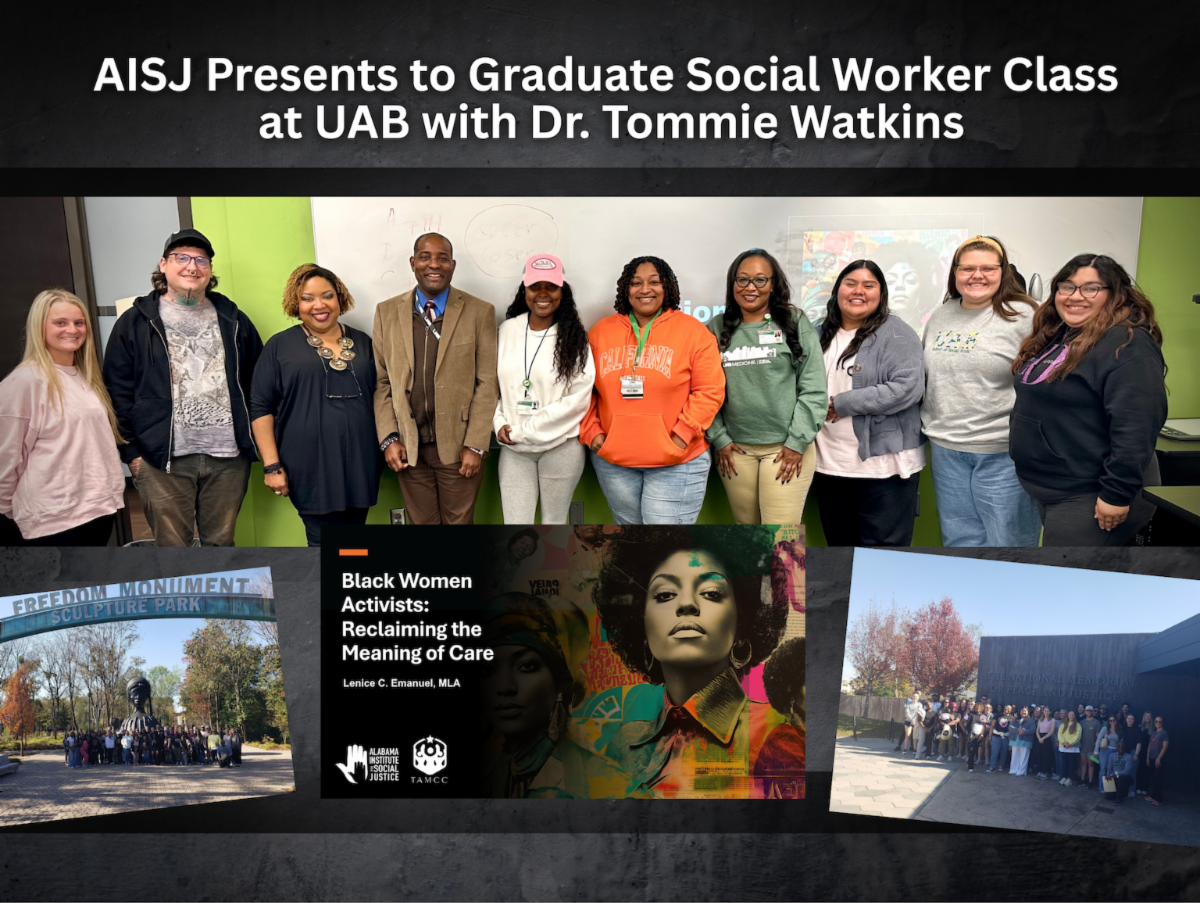
Graduate students in the University of Alabama at Birmingham’s (UAB) School of Social Work recently engaged in a compelling lecture led by Lenice C. Emanuel, MLA, Executive Director of the Alabama Institute for Social Justice (AISJ). Her presentation, Black Women Activists: Reclaiming the Meaning of Care, invited students to explore how Black women have historically transformed care from an assigned duty into a strategic tool for liberation, survival, and community power.
Emanuel dismantled the notion that care is merely emotional labor or household responsibility. Instead, she positioned care as infrastructure—a force that undergirds Alabama’s workforce, anchors families, and sustains democracy. She argued that the chronic underfunding of child care, particularly in communities of color, is a direct continuation of policies that have long devalued the labor, leadership, and intellect of Black women.
Her framing resonated deeply with the course’s emphasis on systemic and historical analysis, under Rev. Dr. Tommie L. Watkins, Jr.'s leadership. Emanuel’s presentation was one of several powerful learning experiences in a semester-long exploration of how social structures are built, maintained, and challenged. It pushed students to consider: What does it mean to fight for care in systems intentionally designed to withhold it? Who benefits when care is undervalued? And what is required to reclaim it?
As part of this broader pedagogical arc, students later visited The Legacy Sites in Montgomery, Alabama—including The Legacy Museum and the National Memorial for Peace and Justice. The trip served as an immersive encounter with the nation’s historical continuum of racialized control, labor exploitation, and social exclusion. Students traced how these systems—from enslavement to mass incarceration—shape contemporary realities, including the undervaluation of care work overwhelmingly performed by Black women.
Rather than offering an ending, the Legacy Sites experience expanded the questions Emanuel posed. It affirmed that reclaiming care is not a sentimental project—it is a confrontation with history and an assertion of agency: Care is not ancillary. Care is political. And when Black women reclaim it, they also reclaim power, authorship, and the right to define their futures.
| | | | |