 |
|
Wednesday, Sept. 23, 2015 For Immediate Release
|
|
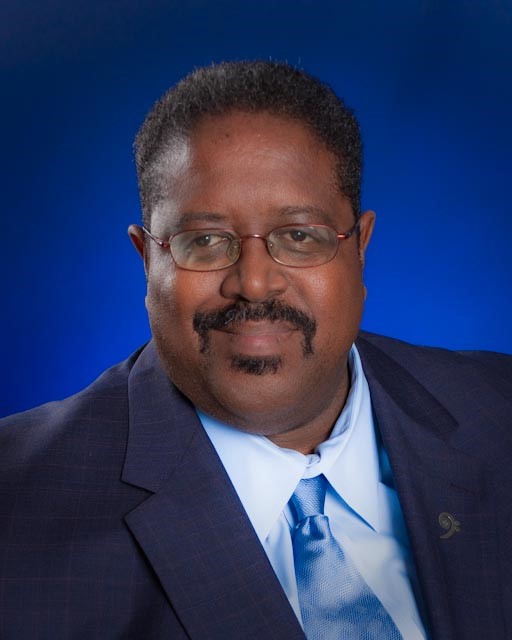
Blair Boutte: From Iberville to Brown University
|
|
Excerpts from ESPN The Magazine Wright Thompson's
Beyond The Breach: A summer in search of saints, sinners and lost souls in the New Orleans that Katrina left behind.
|
Chapter III
The Downside Of Building Back Up
|
|
|
|
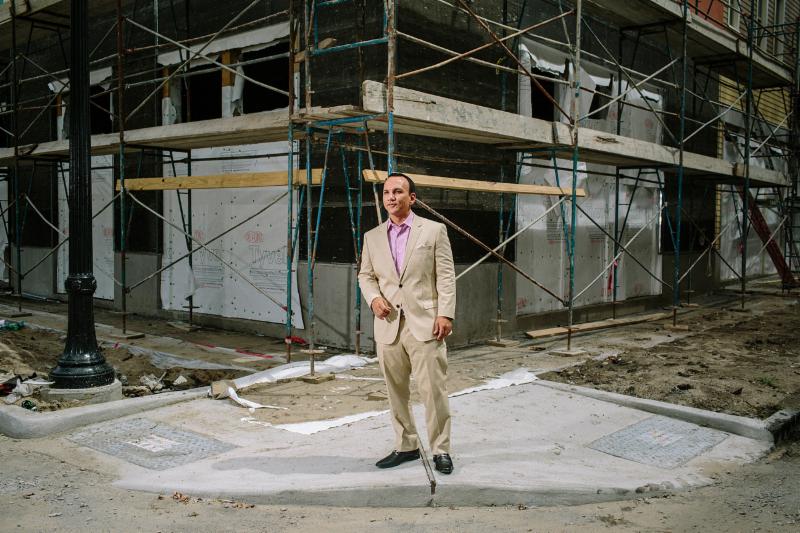
Blair Boutte -- bail bondsman, political consultant and real estate developer -- at the reconstruction of the Iberville housing projects where he grew up. William Widmer for ESPN
|
ESPN The Magazine
- NEW ORLEANS HAS never been one static thing. The city has both died and been reborn with every agent of change that lands on its shores, immigrants and floods alike. Its people fled revolutions and dictators and famine, arriving in waves from Haiti and Ireland, Italy and Vietnam. The immigrants re-created the city, as did the levee breach of 1849, the flood of 1927 and Hurricane Betsy in 1965. That's how it's always been. New Orleans is a port city, a slave market, a river town and, since an assistant engineer of Sieur de Bienville's laid out the French Quarter's grid almost 300 years ago, a place that has never been sentimental about what it was. Ten years after the flood of '27, the local papers did not run a single anniversary story. Anniversaries are a modern invention, as is the idea of holding on to one New Orleans instead of just embracing whatever rises in its place. Katrina lives, and so does the New New Orleans, until another agent of change comes to erase them both.
The only television show to ever really get the city, David Simon's "Treme," revolved around a theme common to Simon's work: People in urban America aren't Shakespearean characters with free will but actors in a Greek tragedy, all subject to the whims of postmodern gods: cops, mayors, schools, newspapers, oil company CEOs -- and in New Orleans two more, Rebirth and Recovery, the most powerful local gods of all. They bless some lives, curse many others, controlling the future of people who are rebuilding what was taken away...
***
With the lack of affordable housing, activists tried to save some of the projects, among them the Iberville, the last project to come down. One group came a few years ago to meet with Blair Boutte, Shack Brown's friend and former boss. They wanted his help in stopping the demolition. Boutte not only runs a prominent bail bonds company but also has built significant real estate holdings and a political and business consulting firm. He knows the streets better than anyone else, and politicians pay for that knowledge and influence. During the activist group's meeting, everyone sat around Blair's conference room table, in his office across from the Orleans Parish Prison in Mid-City. Only one or two people he recognized. Everyone else was from out of town. He listened and, when they finished, he asked one question.
"Why?"
A hush came over the room.
One person he didn't recognize answered, "That's our home, and we can't let them just come in and take it."
"Ma'am," Blair said. "Can I ask you a question? Where are you from?"
"I live here now," she said.
"Well," Blair replied, "where are you from?"
"I'm from Boston."
"How long have you been here?"
"A year."
Boutte took a breath, and before ushering everyone out of his office, he told the group his only regret about the Iberville was that he couldn't tear it down himself. "I discount everything you said," he told them, "because I realize you weren't here when the Iberville project was a death trap to many people. The poorest of the poor, the most uneducated, were all boxed into one geographic location. And we suffered through that. And for anyone to come in and suggest somehow that that is a great thing, that we should preserve it, they did not live through it."
Gentrification is a weaponized word, swung around New Orleans by all manner of people with all manner of agendas. There are no easy answers and no readily assignable villains or heroes. The Iberville should come down, and whatever rises in its place will not be designed to help the people who used to live there. Battling to save the projects is really a proxy fight against the helplessness that poor citizens feel. The decisions about their future will be made by unseen people in unseen rooms, then handed down like tablets, their tomorrows already carved in stone.
***
THROUGHOUT THE SUMMER,
the state continues debating how to use the vacant Charity Hospital building on Tulane Avenue, even as its replacement hospital prepares to open just before the anniversary of the storm. The state fought FEMA in the halls of Washington and eventually secured around $475 million to build new hospital complexes for University Medical Center and the VA about a mile away. Although UMC's complex will continue to serve as the gunshot emergency room for the city, the spirit of serving the poor mostly died with the nuns whose ranks at Charity began to dwindle in the 1990s. Katrina merely destroyed what little of that mission remained. Charity stands empty now, while the new hospital stretches over three blocks in upper Treme, on the Mid-City line, which will soon be home to the Lafitte Greenway. The plan is working. Real estate prices in nearby Treme are the fastest growing in the city. This was a dangerous, blighted neighborhood before Katrina. In just 21 days this summer, from June 10 to July 1, the average price of a Treme listing rose a stunning $126,913, from $220,000 a house to nearly $347,000 a house. These prices will only continue to climb. In two generations, nobody will remember the dangerous back-of-town streets between Orleans and Esplanade -- or the people who died defending tiny pieces of forgotten turf -- and nobody who grew up in the shadow of Willie Mae's Scotch House and Dooky Chase's will be able to afford to live there again.
***
Boutte has brought me here because he has a story to tell.
A MILE AND A HALF
up Broad from Dooky Chase's, there's a music club on the narrow wedge of land where North Broad and Hope Street intersect.
Blair Boutte is waiting at a table in the back.
There's little he's not connected to in New Orleans. His bounty hunters can find bail jumpers who remain invisible to the police. The famous Rebirth Brass Band started in his house, he says, with Blair on the saxophone, and when he left the projects for college, the band re-formed without him -- was reborn, you might say, hence the name. In his office on South Broad Street, two photographs hang on the conference room wall. The first is Boutte with Nelson Mandela, taken when the South African leader visited Louisiana. The second is a close-up of the street signs at the intersection of Crozat and Iberville, so he can look up at that wall and remember how far he's come.
Boutte has brought me here because he has a story to tell.
"A tale of two parks," he says.
He leans toward the middle of the table and begins to talk. The parks in the city, he says, are the knife's edge. In a place where the most disenfranchised group is young black males, a good park is sometimes the only thing holding someone upright. "Let's not say making it," Boutte says. "Let's say surviving. It's about surviving in my neighborhood. It's about ... 'Who's gonna get the right break? Who's gonna be able to avoid the land mines?' There are many in the neighborhoods of New Orleans. Having a coach, having a team, having something to do after school can minimize the risk."
He points to the first park, Harrell, in Hollygrove, where the rapper Lil Wayne grew up. Coaches got together and raised money, building a thriving youth league, drawing kids from the neighborhoods in the 17th Ward: Hollygrove, Pigeontown and Gert Town, the last a shortened version of the racial slur that gave the place its name. They got a concession stand up and running, which allowed the park to become self-sufficient, and when the Super Bowl came to the city, the NFL installed a field. That's a success.
Then there's his friend Shack Brown.
In 2009, Brown came to Boutte asking for help. The men from the neighborhood wanted to start some organized sports at Lemann Playground near the Iberville projects where Blair and Shack grew up. "These are guys of very humble means," Boutte says. "Let's just talk candidly. When you're dead broke, now you're gonna try to figure out how to finance a playground? Helmets and shoulder pads and jerseys and mouthpieces, the whole deal from scratch. I admire these guys. They came to me: 'Blair, how do we get the money?'"
He gave them the first donation.
Shack Brown took on this impossible task and damned if he didn't get the park running. They had four to five age groups playing football by 2013, more than a hundred kids running around.
Then Shack and Blair began dreaming bigger.
They figured the boys and girls needed restrooms. First they tried a port-a-potty, but it got filled with junkies and drug needles. Blair decided to build a cinder-block concession stand, which would provide restrooms and a way for the park to make enough money to survive. He got an architect involved while Shack found bleachers to set up by the field. Boutte wanted the kids in the Iberville to have the same opportunities available to the boys and girls growing up around Blair's new neighborhood Uptown. He says the biggest threat to a child's future is the two hours after school and before practice. Empty warehouses sat useless across the street from the field, and Blair made plans to buy or lease them. He wrangled retired teachers and started thinking of tutoring programs to go with the field. By the overpass, in between the old Iberville and Lafitte projects, he says, a little organic miracle was flourishing.
Then it all fell apart.
"We're gonna run the Lafitte Greenway through that park," the city told Brown and Boutte. The parks department tore down the makeshift concession stand and forbade them from building a permanent one, according to Brown. Without a way to support itself, Shack's football program died. The people who'd spent their own money on the league felt powerless and impotent, as if they weren't residents of a neighborhood but a problem to be solved so the neighborhood could reach its potential. They felt in the way, which they were.
Now the program that Shack built is gone. By the time the greenway is completed, Boutte and Brown won't be able to find all the scattered kids.
Sitting in the jazz club, Boutte sighs.
"What they are calling 'a better New Orleans,'" he practically sneers, before regaining his composure. "You know," he says, smiling, "we got all these new people who moved to town, with their fancy little hats. They want to ride bicycles everywhere. Journalists and artists. All the ists are in town. These people need a green space to walk and ride their bikes on."
He stops for a moment. There is a point he wants to make clear. The choices are tough, and he understands. Even inside himself, he's torn, happy to see Iberville come down and nice mixed-income housing built in its place, even as he mourns the same rush of progress crippling Lemann Playground. For Blair, two contradictory ideas are true at the same time; there aren't good guys and bad guys, but there are certainly winners and losers. A public green space is part of a modernizing city. Boutte knows that. He also knows that park could have saved a lot of kids.
He imagines the boys he saw flying around the field, disciplined in their gap assignments. Parents filled the bleachers during games. Now that's all gone. Only the best two or three athletes get taken to a different park, since coaches can fit only a few in a car. The best kids find a new team, and the rest fade away.
"You know where they land?" he says. "On the stoop out front. You know the story. These guys are in an uphill battle with cement shoes on, and it's slippery. We send them right back to the jungle. And we tell them, in our most authoritative voice, 'Be good. Do well...'"
***
|
|
|
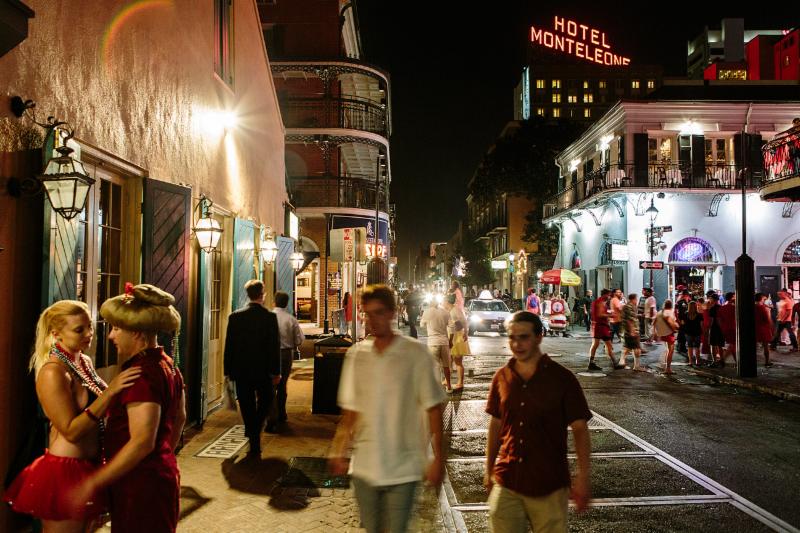
The Hotel Monteleone's iconic neon sign looms above the French Quarter -- and for years loomed over the nearby Iberville projects, a reminder of how far four blocks can be. William Widmer for ESPN
|
THE PARTS OF the city falling further behind were in trouble long before Hurricane Katrina formed over the Bahamas. New Orleans is one of many American cities that rely on tourism and sales tax to support themselves. To survive, New Orleans needs mega-events and massive entertainment districts, and an aggressive police presence in places where consumers gather. Sociologists describe this as post-Fordism, the economy of a place after the death of manufacturing jobs. The new focus divides a community into consumers and criminals. Most post-Fordism economies see a rise in zero-tolerance policing and incarceration rates.
That's exactly what has happened in New Orleans since 1970.
During roughly that time frame, half the city's white population moved to the suburbs while the murder rate grew by 329 percent. Between 1981 and Katrina, the incarceration rate increased by 173 percent. The city lost 13,500 manufacturing jobs between 1970 and 2000, and the low-paying service industry grew by 136 percent. All the while, the city's most famous institutions were born. The Saints started playing in 1967. The Jazz & Heritage Festival began in 1970. The New Orleans Jazz NBA franchise formed in 1974. The Superdome opened in 1975, created as part of the city's new vision of itself. New Orleans as a carnal playground famous the world over didn't happen on its own; it was a calculated and sophisticated marketing campaign. Mardi Gras made the city $4.3 million in 1986 and $21.6 million in 2000. In 2014, direct spending for Mardi Gras totaled $164 million. The city closing those housing projects closest to booming entertainment districts isn't an accident.
The rich stayed rich in this new economy, but the poor trapped in the housing projects were almost exclusively a financial engine for tourism. The jobs available didn't pay to build a middle-class life. The city needed its black people to shuck oysters and pour drinks but chased them back to the Iberville on horseback at the slightest provocation.
***
"I had to make a very tough decision,"
BOUTTE DRIVES down Basin toward Iberville Street, where a few blocks away, the sign from the Hotel Monteleone dominates the sky. If you lived in the Iberville, you saw that sign every day of your life and never once went inside unless you carried bags or cleaned rooms. The glowing sign is always there, a reminder that four blocks is a nearly impossible distance to travel in this life.
Boutte rounds a corner and sees the first flash of red brick.
"There she is," he says, the Iberville coming into view.
He stops in the New Image and talks to some guys hanging outside. Being back here reminds him of his own rebirth, of death too. One afternoon we sit in his office, in the room with the photo of him and Mandela. He describes the project as "quicksand," then says, in a voice quieter than before, "I ended up in all of that."
He's deciding how far to go.
"My story is a bit different," he says. "We can touch on that if you'd like. I very seldom talk about it."
The only sounds are the air conditioning compressors and the rain outside.
"I went to prison," he says. "I had a very ... I don't like to go back here."
He's talking slowly, considering every word. "I had a really bad night after I graduated from college," he says. "Like I said, this was a very bad place."
He settles in to tell the story. Blair Boutte's mother raised him and his three siblings by herself in the '80s and '90s in a New Orleans housing project. She never drank or did drugs, never bought herself new clothes. Everything Blair wanted to do, she supported. "If you understand a single mother living in the housing projects of New Orleans," he says, "bringing up four boys alone. Sometimes working two jobs, sometimes not being able to work at all. It's a pretty rough ride. And my brothers and I, we weren't singing in the church choir, all right? We were typical New Orleans boys growing up in the housing projects in every sense of the word. And she fought and she fought and she fought, and she scratched, and she toiled, and she basically became the anchor to whatever good we had. She never wavered. She never abandoned ship. She never gave up."
Blair got out of the Iberville, made his way to Grambling State University. His mom came up for his graduation. They had a party at a local restaurant, and while everyone celebrated, he looked over and saw her in tears. He didn't understand. After graduation, he got a full ride to Tulane Law School, and before classes began, he went back to the projects. "It's not like I had a credit card to go buy an apartment Uptown," he says. "So I came back from school like any other kid. What do you do? You go back and you live with your parents, right?"
The first thing he did was buy a gun. The city was a dangerous place, around 250 murders a year. He went and registered the firearm, wanting to both protect himself and be legal. On April 10, 1988, Blair walked through the Lafitte projects and a drug dealer nicknamed Two Pistols drew both guns and tried to rob him. Blair pulled his gun and fired, and the man fired back.
In his office, a universe away from that night, he looks haunted.
He's almost whispering now.
"I had to make a very tough decision," he says, "and it didn't end well. At the end of the day, I ended up pleading guilty to manslaughter. An innocent bystander was actually the one who died."
He looks down, thinking about Charles Martin, the 14-year-old boy he shot. Tulane took away Boutte's scholarship, and he did three years, nine months in jail. When he came out, he started his business. It grew into an empire, with real estate holdings and his B3 Consulting firm. Few people in New Orleans understand more about the goings-on in the shadow city.
"I know the streets," he says. "They talk to me..."
***
"How does a family go from Iberville to Brown?"
DREAMS DO COME TRUE. At the end of May, Boutte and 25 family members fly to see his daughter graduate from Brown University. He's got a hat that says "Brown Dad," and he keeps it in his office, the same room as the Crozat and Iberville photo, a reminder of the distance a family can cover in a generation.
"A looong way," he says. "Longer than you could ever imagine."
"How does a family go from Iberville to Brown?"
Boutte tries to speak, sitting at a table at a bar near his office, but the words don't come. Suddenly, he stands up and excuses himself, and the other people at the table, who know him well, look at each other, stunned. They've never seen him like this, Boutte crying alone in the bathroom. He returns to the table when he has composed himself, makes a joke about the onions from the red beans cooking in the back and continues.
"That's a tough question," he says. "It's something I've asked myself a lot, as you can see. It's an emotional thing for me because, you know, I feel like ... "
He pauses again and thinks about his mother crying at his own college graduation and how he was too young to understand what she felt. All this past year, she asked Blair over and over about their plans to attend the Brown graduation, worrying, calling to make sure he'd booked tickets and made the reservations. His phone would ring and she'd be on the other line.
"When is the graduation? I don't want to miss it."
"Mom, you're gonna be there," he'd say, which made her relax until she decided to check again.
They traveled north together, his mom telling every person she encountered where she was going and why. In the hotel the night before, he couldn't sleep. His mother joined him in the lobby.
"I want you to know something," she said. "I'm very proud of you."
Blair just looked at her.
"What did I do?" he asked.
"You got her this far," she said.
Sitting in that lobby, he understood finally what his mother had felt all those years before.
"You know what," Blair said. "I'm proud of you."
His mom looked at him.
"I got her this far because you got me this far," he said.
Both of them cried then, feeling the weight of their past and also feeling somehow free from it. His mother raised four boys in the worst kind of hell America can throw at a family, and Blair has mirrored her devotion and belief. His children grew up in the city's affluent Carrollton neighborhood. His daughter graduated from the city's most elite private prep school, the alma mater of Peyton and Eli Manning. In one generation, the Bouttes had made it to this hotel in Rhode Island. The next morning, Boutte wore white pants with a pink shirt and a pink pocket square, bucks on his feet -- "looking like a Southern gentleman," he says, smiling -- and the whole family waited on the college green as the seniors marched through the old stone and iron gates. Red and white balloons floated everywhere. The graduates came on campus in procession, and Blair looked to find his daughter first in line, holding the sign that read "Brown University."
He felt everything slow down. It was a perfect day, 82 degrees, blue skies. Most of the time, he just watched his mom take it all in.
"She was in her glory," he says.
The old stone buildings, some of the oldest in an old-money world, rose around them. You couldn't get farther from the Iberville, and that's what Blair thought about and couldn't articulate: He was watching a family change its arc. No Boutte would ever live in a housing project again. And when the ceremony ended, the degrees awarded and the hats thrown, the Bouttes, from the corner of Iberville and Crozat, took out an iPad and cranked up the Rebirth Brass Band. They made their own Second Line that day, dancing through the crowd, waving hankies embroidered with Elaina Boutte's name.
"Where are you guys from?" one lady asked.
"New Orleans," Blair Boutte said proudly...
Click here for full story at ESPN The Magazine.
 Wright Thompson - A senior writer for ESPN.com and ESPN The Magazine, Wright Thompson is a native of Clarksdale, Mississippi; he currently lives in Oxford, Mississippi. Previously, he worked at The Kansas City Star and the New Orleans Times-Picayune. In 2001, he graduated from the University of Missouri School of Journalism. Wright Thompson - A senior writer for ESPN.com and ESPN The Magazine, Wright Thompson is a native of Clarksdale, Mississippi; he currently lives in Oxford, Mississippi. Previously, he worked at The Kansas City Star and the New Orleans Times-Picayune. In 2001, he graduated from the University of Missouri School of Journalism.
###
|
|
CITY RECEIVES MORE THAN $2 MILLION TO HIRE OFFICERS, ADD BODY-WORN CAMERAS
|
|
Federal Funding Will Fund 15 Officers, Boost NOPD's Community Policing Efforts
|


NEW ORLEANS -
The City of New Orleans this week received more than $2 million through two federal grants to hire more police officers and to purchase more body-worn cameras, both of which will help to enhance public safety, reduce crime and build trust between the police and the residents they serve.
On Monday, U.S. Attorney General Loretta Lynch announced the City of New Orleans will receive an estimated $1.875 million over three years to fund 15 officers through the COPS Hiring Program (CHP). Also on Monday, the Department of Justice announced that the City of New Orleans will receive $237,000 through the Bureau of Justice Assistance's (BJA) $20 million Body-Worn Camera (BWC) Pilot Implementation Program launched in May 2015 to respond to the immediate needs of local and tribal law enforcement organizations. The City will provide matching funds that will be combined with the federal grant to purchase 250 body-worn cameras.
"Public safety is our top priority, and federal investments like these are critical to helping us build a stronger and more effective police department," said Mayor Landrieu. "These grants will help us to put more officers on the streets and add more body-worn cameras to the program, which has proven to be an effective policing tool. We will not rest until NOPD is among the best police departments in the country. I also want to personally thank Congressman Richmond who has worked tirelessly to secure federal investments like these that make our community safer; we are very grateful."
"This is a major investment that will help us to continue to grow the department and provide our officers with the tools they need to do their jobs," said NOPD Superintendent Michael Harrison. "I want to thank Congressman Richmond, the Department of Justice and the NOPD grant writing staff for their efforts in bringing these needed resources to the department."
CHP provides grants to state, local and tribal law enforcement agencies to hire or rehire community policing officers. The program provides salaries and benefits for officer and deputy hires for three years.
The COPS Office is a federal agency responsible for advancing community policing nationwide. Since 1995, COPS has invested over $14 billion to advance community policing, including grants awarded to more than 13,000 state, local, and tribal law enforcement agencies to fund the hiring and redeployment of approximately 127,000 officers and provide a variety of knowledge resource products including publications, training, and technical assistance.
For the entire list of grantees and additional information about the 2015 COPS Hiring Program, visit the COPS website at
www.cops.usdoj.gov
.
###
|
|
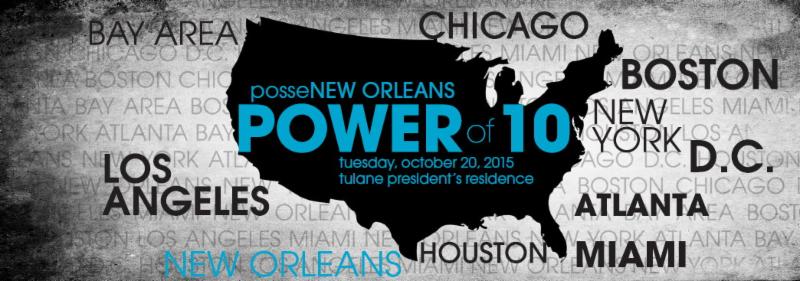
Posse New Orleans Power of 10 Fundraiser
|
Tuesday, October 20, 2015 6:00pm-8:00pm
Tulane President's Residence
Two Audubon Place,
New Orleans, LA 70118
Honoree
Dr. Norman Francis
President Emeritus,
Xavier University
RSVP by October 6 The Power of 10
The Power of 10 is Posse's signature fundraising event that recognizes the strength of a Posse of 10 dynamic students and celebrates diversity in higher education and the workforce. This festive reception features heavy hors d'oeuvres, drinks and entertainment, and includes a brief program honoring special guests and Posse alumni.
Participation Levels
- $25,000 Benefactor: Half-page ad in program, prominent logo display
- at event, logo on invitation, admission for 20 guests.
- $10,000 Mentor: Quarter-page ad in program, logo display at event,
admission for 12 guests.
- $5,000 Ambassador: Logo in program and at event, admission for 8 guests.
- $2,500 Advocate: Listing in program, admission for 5 guests.
- $1,000 Friend: Listing in program, admission for 2 guests.
- $125 Individual ticket
About Posse
THE POSSE FOUNDATION identifies, recruits and trains urban public high school students with extraordinary academic and leadership potential and sends them in Posses-supportive, multicultural teams of 10 students-to top colleges and universities across the country. Posse's 53 college and university partners award Posse Scholars four-year, full-tuition leadership scholarships. To date, 6,275 Posse Scholars have won $806 million in scholarships. Most important, Posse Scholars persist and graduate at a rate of 90 percent and are active leaders on their campuses and in the workforce.
Posse is a national initiative with sites in Atlanta, the Bay Area, Boston, Chicago, Houston, Los Angeles, Miami,
New Orleans, New York and Washington, D.C.
Since 2011,
POSSE NEW ORLEANS has selected 91 Scholars who have earned $15 million in merit-based leadership scholarships from its three partner institutions: Bard College, Grinnell College and Tulane University.
###
|
Pick It Up New Orleans!
An Anti-Litter Campaign by The New Orleans Agenda
--------------------------------------------------------
|
Visit Our Friends at Liberty Bank & Trust!
---------------------------------------
|
------------------------------------------------------------
|
|
|
|
Marc H. Morial, President & CEO
|
Please visit us on the web at
NUL.org
-----------------------------------------------------------
|
EXCELLENCE INNOVATION RESPONSIVENESS
Metro Service Group, located in New Orleans, Louisiana is a multi-faceted corporation with specific expertise and certifications in the areas of Environmental Services, Construction/Demolition and Disaster Response and Recovery. Metro Service Group is a licensed Contractor, certified in Building Construction; Heavy Construction; Highway, Street and Bridge Construction; Municipal and Public Works Construction and Solid Waste Management.
----------------------------------
|
|
|
|
3 Centuries of History * 6 Blocks of Shopping * Open Daily!
|
----------------------------------
|
Rodney & Etter, LLC is a law firm comprised of a diverse group of lawyers with backgrounds in business, government, and science. We practice in New Orleans and in Houston, and are recognized by peers and legal organizations across the United States for our outstanding record of successful settlements and litigation.
----------------------------------
|
Here, you'll be able to explore exciting graphics ideas from Signs Now that will help your business stand out from the rest - from signs and banners to digital signage and trade show displays.
----------------------------------
|
Daughters of Charity Health Centers
----------------------------------
|
Songstress Stephanie Jordan
Available for Bookings
"Every so often a new voice stands up and proclaims itself, but few do so with such supreme depth and understated soul."
- Ted Panken, Jazz at Lincoln Center Playbill
|
|
Stephanie Jordan is a proud user of
Audix Microphones! |
Vincent Sylvain
504-232-3499
Vincent@SylvainSolutions.com
---------------------------------------
|
|
Your Alternative Newsletter - News, Arts, Culture & Entertainment
The New Orleans Agenda newsletter is the leading local alternative for information on New Orleans and the Gulf Coast Region. A provider of turnkey Web-Based Internet Marketing Services, we specialize in servicing community and faith-based entities, corporate and professional organizations, and arts & cultural interest events.
The New Orleans Agenda newsletter has received more than
8 Million Page Views! Let us introduce you to our audience.
|
|
| Vincent T. Sylvain, Publisher |
Sincerely,
Vincent T. Sylvain
The New Orleans Agenda
Email: Vincent@SylvainSolutions.com
Expert Solutions for Your Communication Needs!
|
|
|
|
|
|