Dear Alumni,
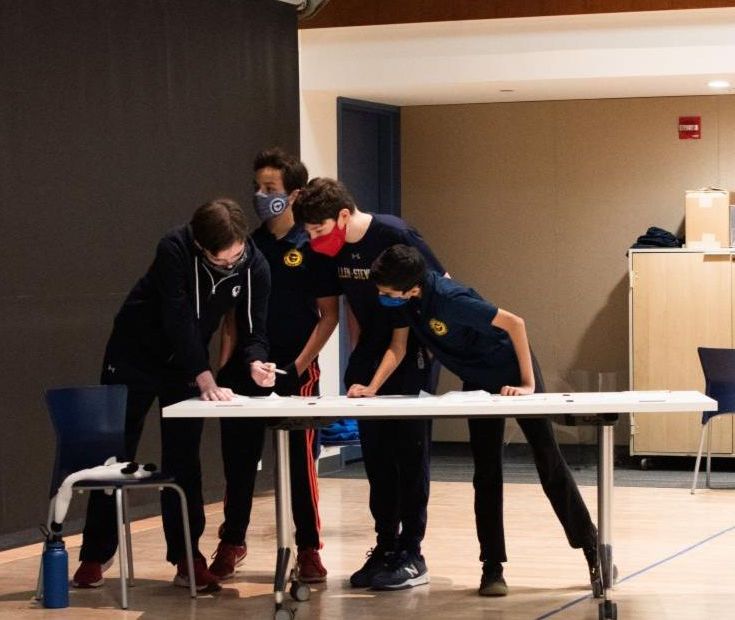
Nothing pleases me more than when alumni and boys engage one another over a shared interest, especially when it has to do with the curriculum. Such an encounter took one Wednesday afternoon in March when Luis Ubinas ’78 was interviewed via Zoom by five seventh-grade reporters from our Upper School newspaper, The Monthly Monitor, for the spring Lamplighter. Luis was recently made Chairman of The Statue of Liberty-Ellis Island Foundation, and the boys were curious to know about his new job and what he saw as the future of these institutions. In October, as part of their study of American immigration, the boys examined microfiche images of ship manifests, archived on the Ellis Island website, to piece together the stories of actual immigrants who had passed through Ellis Island a hundred years ago.
Luis took time to reclaim the original meaning of the Statue of Liberty when he reminded the boys that though the Statue has become a beacon of freedom to immigrants from all over the world, she was first meant to commemorate the American ideals of liberty and democracy and especially, at the time of its dedication in 1886, to celebrate the freedom that came with the abolition of American slavery. He urged the boys to look carefully at the statue to find the broken shackle and chain that lie at Lady Liberty’s feet. I must admit, even I had not noticed this detail before.
Luis also spoke of his determination to turn Ellis Island into a “national museum of immigration history” and expand its focus beyond the short period of Ellis Island’s operation and the mostly Eastern and Southern Europeans who passed through its gate. He told the boys that he wanted the educational reach of Ellis Island to extend beyond the school children of New York City to include seventh graders from all over the United States and the world, “so that you could be in Nigeria and learn about the Statue of Liberty and Ellis Island.”
The interview was wide-ranging and because Luis is on the Board of the New York Public Library, he and the boys talked about the importance of free access to books and public spaces. But what moved the boys most, I think, was when Luis talked about growing up in the South Bronx in the 1970s, which he described as “unfathomably dangerous …like in a movie” and how the School, when he entered in Fifth Grade, was a “safe haven, a place I could go to and not have to worry.” As it happened, there were boys among the reporters whose own stories, now more than 40 years later, are not dissimilar to Luis’. He and the boys spoke about the challenges of traveling to and from school from neighborhoods very unlike the Upper East Side. There is learning that comes from negotiating these differences. “In a world that is changing as rapidly as our world is now,” Luis said, “learning to navigate change and difference is perhaps as important as being smart.” He asked all the boys to reflect on the blessing that comes with going to a school like Allen-Stevenson and growing up in any New York City neighborhood.
The next day the boys told me they were inspired, some talked about how much they had learned in the interview, and all agreed on how much they had enjoyed their time with Mr. Ubinas. I felt confirmed in my notion that the School is at its best when alumni and boys come together in this way.
D. Kersey