|
This matters because the web is the training ground. Future AI systems will not be trained on the internet as it once was. They will be trained on an internet increasingly composed of their own output. And because AI-generated content is uncopyrighted and legally ownerless, there is no friction, legal, economic, or moral, slowing its ingestion.
Which opens a legal void big enough to drive an industry through.
If AI-generated content has no copyright owner, no one can sue over its use. There is no infringement without a rights holder. So when an AI system scrapes oceans of machine-generated content, no one has standing to object. But when that same system produces degraded, misleading, or dangerous output as a result, who is responsible?
The publisher that generated the original content without copyright protection?
The AI company that trained on it?
The user who relied on the output?
As far as I can tell, current law doesn’t have a clean answer to any of those questions.
There is a final irony here, and it’s almost too dark to ignore.
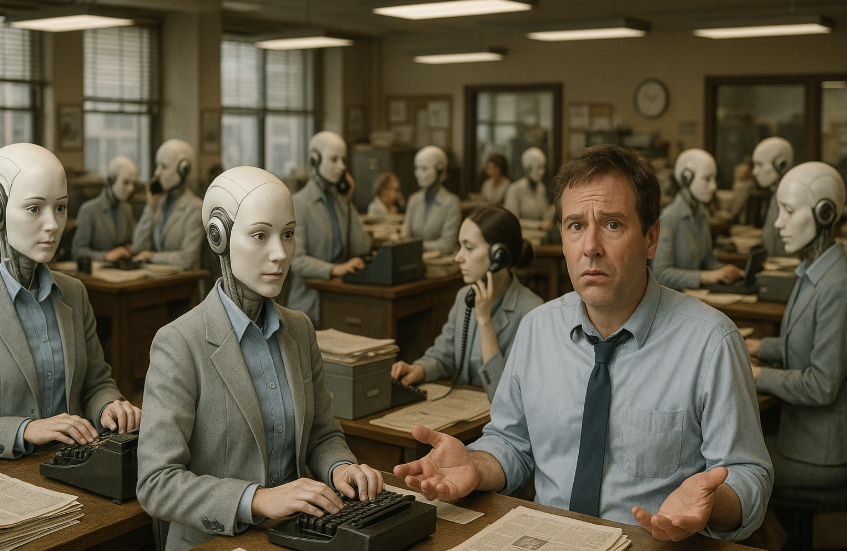
By firing their writers, publishers aren’t just dismantling the human creative infrastructure that gave their brands value in the first place. They are actively poisoning the well from which the next generation of AI systems will drink. Epoch AI and related peer‑reviewed work project that high‑quality, publicly available human‑generated text could be fully utilized or effectively exhausted between 2026 and 2032, with earlier exhaustion possible under aggressive training or overtraining scenarios.
|