|
Please share this edition of Wildlife Highlights with other outdoor enthusiasts
and help our subscription list grow!
| |
Bobcat Research Project Winding Down | |
|
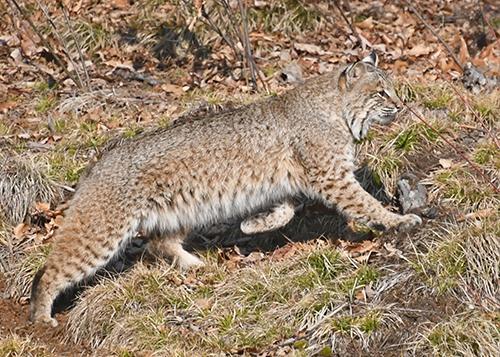
In 2017, the DEEP Wildlife Division initiated a study to learn more about bobcat habitat use in Connecticut. Over the past five years, nearly 150 bobcats were live-trapped and fitted with GPS collars so biologists could accurately track their movements. The results of this study provide biologists with a better understanding of how the state's bobcats meet their needs in both rural and urban areas, as well as how successful bobcats are at reproduction and survival. The field work component of this multi-year study is coming to an end this fall, as the remaining GPS collars are automatically detaching from the cats. Some of the highlights from the study so far include:
- Male bobcat home ranges are typically larger than female bobcat home ranges. A male’s home range will often overlap with several females. On the other hand, female bobcat home ranges typically do not overlap with other females.
- Brush piles, downed trees, and even sheds are often used as den sites by female bobcats to raise their young.
- Female bobcats will often move their den to a new location every couple of weeks when they have kittens. Moving the den location helps keep the kittens hidden by limiting their scent in one area, reducing their risk of predation.
- Through necropsies and kill site visits, biologists found a majority of the bobcat’s diet includes rabbits, squirrels, and small rodents, but bobcats will also prey on deer and turkeys.
- Bobcats are actually choosing habitat that is close to human development, even when large tracts of undeveloped habitat are available, suggesting there is a benefit to spending time hunting near houses.
- Ambush cover and travel corridors are essential factors in whether or not bobcats will use urban areas.
Photo courtesy of Erika Olsen.
More on the bobcat . . .
Report bobcat sightings . . .
| |
Electric Fences Are the Best Deterrent Against Bears | |
|
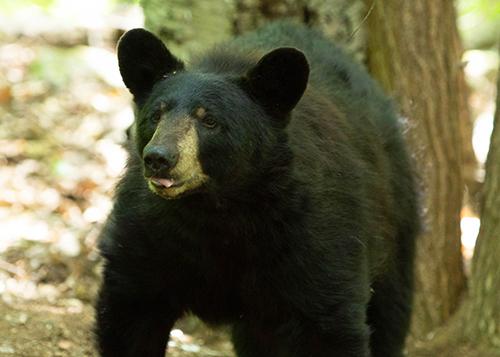
Deterring bears from situations where they can cause damage is a smart strategy and the best way to coexist when you have beehives, livestock, or any other bear attractants around. While there are several ways to deter bears, the most affordable, effective, and reliable solution is to use electric fencing.
An electric fence may seem like an extreme step for a casual backyard bee, chicken, or rabbit keeper, but there is no better way to protect your livestock. Electric fences can be installed to suit the user’s needs, ranging from portable, quick set-up netting to semi-permanent wires, keeping your domestic animals in and wild animals out. There are also many creative ways to incorporate electric fencing into existing physical barriers, such as split-rail, chain-link, and chicken wire fences. Compared to the cost of losing entire beehives, a destroyed chicken coop, and lost chickens, most electric fence setups are also the economical way to go. Complete electric fence systems to protect a 25x25 foot area will cost around $400 and can be setup in a few hours. Check out some resources below to get started, or contact us at deep.ctwildlife@ct.gov if you have additional questions.
More on electric fencing . . .
Preventing Wildlife Conflicts with Electric Fencing (VIDEO) . . .
| |
Shorebird Migration Peaks in August | |
|
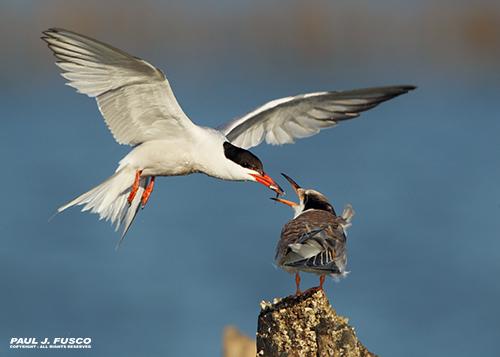
Late summer is a great time to observe the shorebird migration moving through Connecticut. While some shorebirds begin to pass through starting in mid-July, August tends to be the peak, both in numbers of birds and species on the move. There are many places you can go to watch for these long-distance travelers, some of whom are traveling from the Arctic down to South America. Some of the most popular spots include state parks, such as Hammonasset Beach and Sherwood Island, both of which also have nature centers to enjoy. Numerous town beaches, Audubon properties, and National Wildlife Refuge areas can also be visited throughout the migration season.
Even while large numbers of shorebirds are passing through or leaving the state, some shorebirds may still be raising young on our beaches. So, #ShareTheShore when you visit the beach this season and give shorebirds at least 50 feet of space.
New to bird watching? More on common Connecticut shorebirds . . .
| |
Using Prescribed Fire to Benefit Habitat, Birds, and Pollinators | |
|
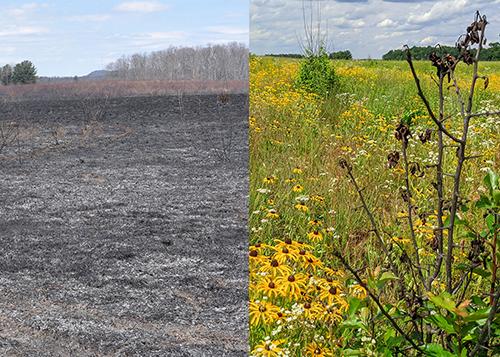
Earlier this spring, DEEP staff conducted prescribed burns at Machimoodus State Park, Suffield Wildlife Management Area, and Matianuck Natural Area Preserve. Controlled burning is a valuable tool for natural resource managers to maintain habitat and vegetative diversity. The photo to the right shows how Suffield Wildlife Management Area has grown back as a result of the burn and is now teeming with native wildflowers and grasses. The primary objective of the burn was to enhance grassland habitat for a variety of grassland bird species, including the eastern meadowlark, upland sandpiper, and grasshopper sparrow. Fire not only suppresses invasive vegetation, it also returns important nutrients to the soil. The results of the burn not only benefit birds but pollinators as well! Looking closely at the image on the right, you will notice a host of wildflowers, including black-eyed Susan, bee balm (monarda), yarrow, white meadowsweet, and daisy fleabane. Prescribed fire helps suppress woody vegetation and allows these wildflowers to flourish!
| |
Final Gobble to Participate in the Turkey Brood Survey | |
|
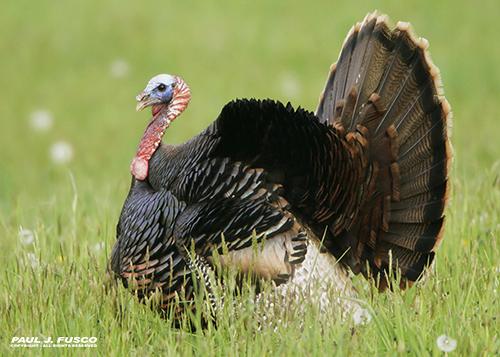
DEEP Wildlife Division staff are close to meeting their minimum sighting requirement for the annual turkey brood survey, but we still need your help to get over the finish line! If you see any hens, poults, or toms (male turkeys) during this final month of the survey, please take a few minutes to submit your sighting(s). The information gathered from this survey helps assess annual fluctuations in the turkey population and helps staff better understand the average number of turkey poults (young-of-the-year) per hen. Observations can be reported to our online database or print our data sheet and mail in your sightings at the end of the survey period.
Report your wild turkey sightings . . .
| |
Wasps Provide Many Unseen Benefits to Forests, Farms, and Gardens | |
|
For many of us, our relationship with wasps is complicated, at best. A past experience being stung by a wasp is enough to mark any wasp as a nuisance. In reality, the stinging culprit was likely from one of a relatively few species of social wasps, such as yellow-jackets and paper wasps, which may sting something it perceives as a threat to its communal nest. The vast majority of wasps around us are not social, but solitary, and go about their business without any bother to you.
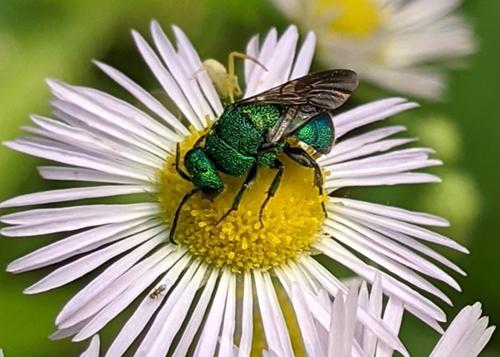
Wasps, including those that might sting you, play an important role in the health of our ecosystem. There are hundreds of different species -- some are generalists, and some are specialists -- with unique characteristics, capabilities, and preferences. One thing they have in common is that they are predators (or parasitoids) of other insects and spiders, including the insects most responsible for damaging crops at farms and in our gardens. Diverse communities of wasps help to naturally regulate these insects, which can also benefit the biggest plants around, our trees.
In fact, wasps can be used as biosurveillance for the presence of invasive pests, such as the emerald ash borer. By monitoring the nests of the wasp Cerceris fumipennis, which specializes in hunting wood boring beetles, scientists can determine if emerald ash borer beetles are present in an area years before their impacts are noticed. You can read more on that here.
Wasps come in many shapes, sizes, and colors, and are worth taking some time to watch in your backyard, garden, or public spaces. All adult wasps need flower nectar to feed themselves, so the best places to look for them and see how busy they are is to find some blooming native flowers and watch!
If you are interested in learning what types of wasps you are seeing, take a picture, and post your observation to iNaturalist, where experts can help you identify the wasp.
| |
Bat Appreciation Day Returns September 10 | |
|
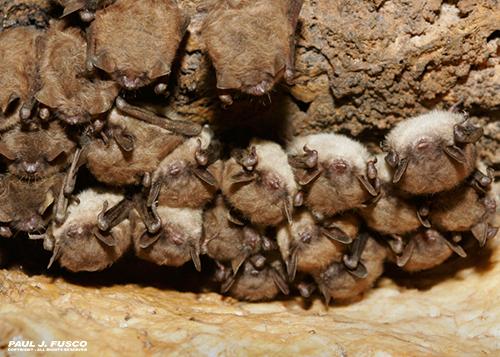
Join the DEEP Wildlife Division and Department of Economic and Community Development (DECD) for a celebration of bat conservation during an event to be held on Saturday September 10, 2022, at the Old New-Gate Prison and Copper Mine in East Granby. Bat Appreciation Day will highlight the story of one of Connecticut’s most intriguing historical sites and its importance to the conservation of endangered species.
This event will feature bat activities for the whole family and include exhibits, bat story time, historical tales, the unique opportunity to sneak a peek at the “bat cave”, and a chance to see a live bat up close. We hope to see you there!
More on Bat Appreciation Day . . .
| |
Species of the Month: American Kestrel | |
|
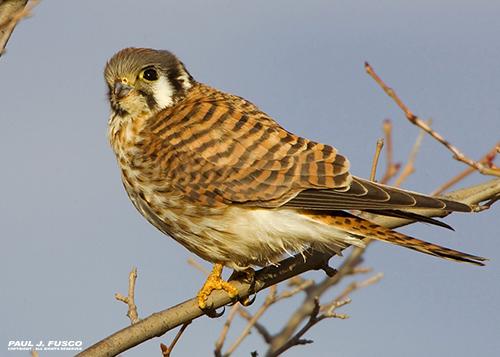
The American kestrel is the smallest falcon found in North America. Like most falcons, kestrels have long, pointed wings and long tails. The birds are easily recognized by two vertical black lines on the cheeks and a rufous-colored back and tail.
Kestrels prefer open grassy or shrubby areas with short vegetation in which to hunt for their prey. In Connecticut, kestrels are usually seen around agricultural areas (hay fields, orchards, pastures), airports, large parks, and power line right-of-ways.
According to Hawk Mountain Sanctuary, data from raptor migration counts, Breeding Bird Surveys, and Christmas Bird Counts indicate that American kestrel populations have declined in much of northeastern North America (including Connecticut) since 1974. Loss of habitat is the most likely cause of the kestrel decline in Connecticut.
Specially-made nest boxes have helped kestrels throughout the country in areas where there are few natural cavities. Nest box programs for kestrels enable populations to increase in locations where nest sites are limiting.
More on North America's smallest falcon . . .
| |
|
Stay Connected!
Follow us on Social Media
| |
|
-- Quick Links --
Your Feedback Is Important to Us!
Send your comments or suggestions to deep.ctwildlife@ct.gov
|  | |
The Connecticut Department of Energy and Environmental Protection is an Affirmative Action/Equal Opportunity Employer that is committed to complying with the requirements of the Americans with Disabilities Act. If you are seeking a communication aid or service, have limited proficiency in English, wish to file an ADA or Title VI discrimination complaint, or require some other accommodation, including equipment to facilitate virtual participation, please contact the DEEP Office of Diversity and Equity at 860-418-5910 or by email at deep.accommodations@ct.gov. Any person needing an accommodation for hearing impairment may call the State of Connecticut relay number - 711. In order to facilitate efforts to provide an accommodation, please request all accommodations as soon as possible following notice of any agency hearing, meeting, program or event.
This program receives Federal financial assistance from the U.S. Fish and Wildlife Service.
Under Title VI of the 1964 Civil Rights Act, Section 504 of the Rehabilitation Act of 1973, Title II of the Americans with Disabilities Act of 1990, the Age Discrimination Act of 1975, and Title IX of the Education Amendments of 1972, the U.S. Department of the Interior prohibits discrimination on the basis of race, color, national origin, age, sex, or disability. If you believe that you have been discriminated against in any program, activity, or facility, or if you need more information, please write to:
Office of Diversity, Inclusion and Civil Rights
U.S. Department of the Interior 1849 C Street, NW
Washington, D.C. 20240
| | | | |