|
FROM VOICES TO VISION
A message from Vice Chancellor Joel Peterson
| | |
How your input is shaping schematic design - and why your voice still matters
Last month, we highlighted the importance of your voices as we move through the Planning and Programming process for Measure HH projects. That message remains just as true today.
Thanks to your contributions, we heard fully what you need and what matters most on your campuses. From big design ideas to small details about how spaces should function, our teams gathered extensive input from all stakeholders on every element that will shape the education program and student experience in the built environment.
The Design-Build teams are now using that input as they launch the next phase of the design process, called Schematic Design. The Schematic Design phase is where the “blueprints” are created. This is where broad ideas narrow into workable options - how the spaces will relate to one another, how they will function day-to-day, and how they will support teaching, learning, and student life.
This step marks an important transition. Planning and Programming helped us define what is needed. Schematic Design determines how those needs are physically and technically met through layouts, relationships between spaces, and detailed design from early concepts. Your feedback is critically vital during this new phase. In fact, it becomes even more important as ideas move from concepts to actual form.
As designs are developed, faculty, staff, and students will review concepts and related drawings, ask questions, and provide input as ideas are refined. This is how we make sure plans remain grounded in actual campus use – designed by experts with you, not just for you.
Before any project moves forward, stakeholders will have full opportunity to review and confirm the direction. Designs proceed only after there is clear agreement that they reflect campus priorities and expectations.
Thank you for continuing to share your precious time and crucial perspective and helping guide this work forward. We are still listening and want to emphasize how important your input is in directing this work going forward.
Sincerely,
Joel L. A. Peterson, PhD, MBA, MA
Vice Chancellor & Executive Operations Officer
San Diego Community College District
| | STAKEHOLDER-LED LEARNING ACROSS CAMPUSES | | |
Measure HH projects are shaped not only by design teams and plans, but by the expertise of faculty and other stakeholders who know their programs best - and by learning from peers across higher education.
As part of planning for the San Diego College of Continuing Education’s West City Campus Expansion - which will include space for a culinary arts program - representatives from DPR Construction, HGW Architecture, and the San Diego Community College District recently visited Mesa College’s Culinary Arts facility to learn directly from those who use the space every day.
The tour was led by longtime faculty member and accomplished chef Tonya Whitfield, a Mesa College graduate, who shared how the facility supports instruction, workflow, and student learning. Participants toured the dining room, commercial kitchen, walk-in refrigerator, pantry, locker rooms, classrooms, outdoor patio dining area, garden, and in-house creamery, discussing how each space contributes to daily operations and hands-on instruction.
Similar stakeholder-led visits are taking place across the district and region.
At City College, the “A” Building Expansion team embarked on a ‘design safari,’ visiting Southwestern College’s Student Union, Cuyamaca College’s Student Services and Student Center, and the Mesa College Commons and Student Services Center to gather inspiration for City’s new student center.
Mesa's performing arts team will be leading similar tours, visiting programs and facilities at the Educational Cultural Complex, Palomar College, and Southwestern College. Mesa's athletics team already visited Mt. San Antonio College last fall.
At Miramar College, the performing arts faculty and program team recently visited the Conrad Prebys Performing Arts Center at UC San Diego to explore how professional-grade performance spaces support instruction, production, and audience experience.
These campus and institution-to-institution visits are an important part of the Measure HH planning process. Learning directly from faculty who teach, rehearse, and perform in these spaces helps ensure new facilities are designed to support strong programs from day one.
| | |
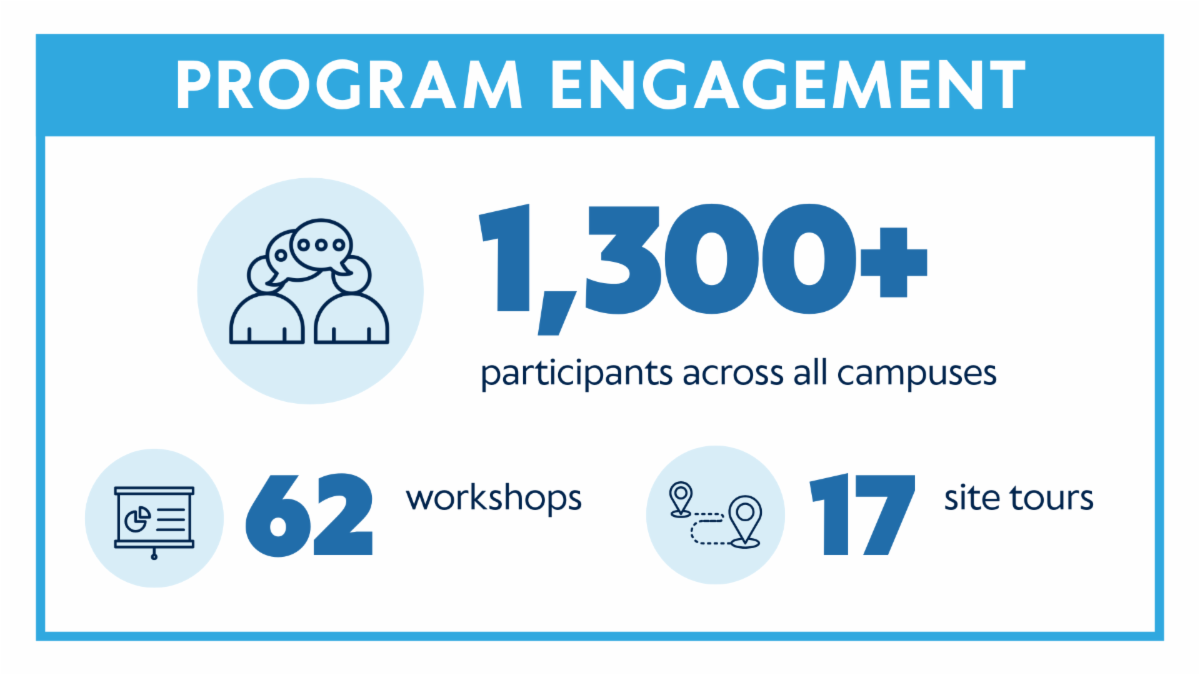
From late September through December 31, 2025, the Measure HH program continued advancing projects across the district while maintaining a strong focus on transparency and stakeholder engagement. During this reporting period, the district conducted at least 62 workshops and 17 site tours, engaging more than 1,300 participants across multiple campuses.
These activities brought together students, faculty, staff, campus leadership, and community partners to help inform project planning, design, and decision-making. Workshops and site tours supported programming efforts for major initiatives, safety and accessibility improvements, and facility upgrades, ensuring campus needs and user perspectives remain central throughout the process.
As a result of this collaborative work, all major Design-Build projects are now transitioning from the Programming phase into Schematic Design. Engagement will continue at each campus as projects progress, reinforcing the district’s commitment to inclusive planning, accountability, and clear communication around Measure HH investments.
| | AFFORDABLE STUDENT HOUSING COMMUNITY MOVES FORWARD | | |
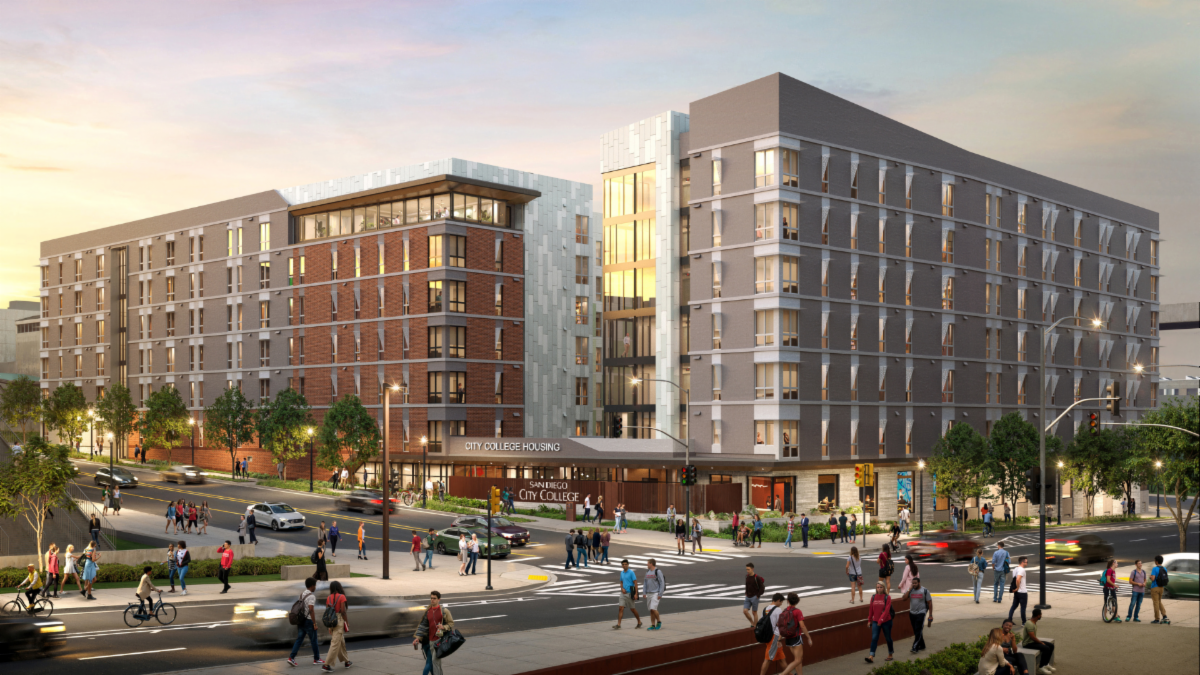
Construction is officially underway on San Diego City College’s Affordable Student Housing community, marking a milestone for the district’s first student housing development. Following a construction kickoff event last November, crews are now fully mobilized, with early work focused on site preparation, safety measures, and earthwork to support future building construction.
Since late November, the contractor has installed traffic control and fencing, cleared and graded the site, removed existing utilities and concrete, and begun excavation. Shoring is underway along the north side of the site to stabilize excavation areas and adjacent conditions. Soil remediation is also progressing, with contaminated soils removed and tested in accordance with regulatory requirements.
In the coming weeks, work will shift from site preparation to structural ground improvement. Once shoring and remediation are complete, crews will begin rough building grading, followed by installation of geopiers - deep foundation elements used to strengthen soils and support building foundations. This work is anticipated in late January or early February, pending completion of soil export.
The project team includes professionals with longstanding ties to the campus, including Albert Gallardo, an archaeologist with Helix Environmental and a former San Diego City College student. An interview highlighting his perspective will be featured next month.
When complete, the housing community will provide affordable, on-campus housing for nearly 800 students and is scheduled to open in fall 2028.
| | |
Watch Construction Live!
Now, it’s possible to watch the construction activity of the affordable student housing community live from your home computer or mobile device.
| | FROM LISTENING TO BUILDING | | |
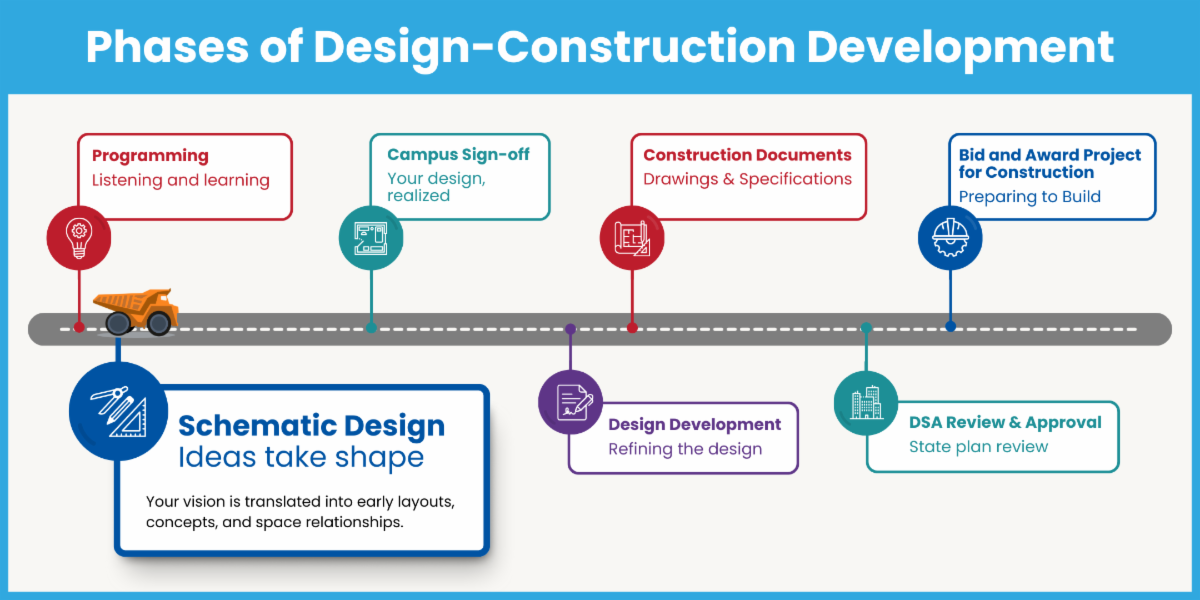
Designing a campus is a step-by-step process. Some phases focus on listening and understanding needs, while others translate those ideas into drawings, plans, and eventually construction. The outline below explains what happens at each stage and where projects are today.
Programming
Listening and learning
Campus input defines needs, priorities, adjacencies, and goals.
Schematic Design (We are here)
Ideas take shape
Your vision is translated into early layouts, concepts, and space relationships.
Campus Sign-Off
Your design, realized
Final confirmation that the project reflects shared campus priorities.
Design Development
Refining the design
Materials, systems, and details are further developed with continued feedback.
Construction Documents
Finalizing the design to meet the various building code requirements
Preparing the plans and specifications for plan review/approval.
Review & Approval by the Division of the State Architect (DSA)
State plan review
Plans are reviewed for fire/life safety, accessibility, and structural code compliance. This phase often involves several rounds of review and revision before final approval is granted.
Bid and Award Project for Construction
Preparing to build
Detailed drawings and specifications are finalized for bidding and construction.
| | |
ALPHABET SOUP
Bond program terms explained
| | |
From planning and design to construction and oversight, Measure HH involves many moving parts - and plenty of shorthand. This glossary provides simple explanations of terms and acronyms that frequently appear in meetings and written materials.
CBOC (Citizens’ Bond Oversight Committee)
An independent committee of community members that reviews bond expenditures and reports on whether funds are used as approved by voters.
Program of Requirements (POR)
A document outlining space needs, functions, adjacencies, and performance criteria for a project.
Mobilization
Early construction activities such as site setup, fencing, and temporary utilities.
Phasing
Breaking a project into stages to manage schedule or campus operations.
Design Charrette
An intensive, often multi-day workshop where designers and stakeholders work through concepts together.
See more terms and definitions in our Measure HH & Capital Projects Glossary!
| | ICYMI (In case you missed it) | | |
Connect with us
With construction underway and major projects in procurement, Measure HH is transforming facilities that serve nearly 90,000 students annually while demonstrating exemplary fiscal stewardship. Future e-news updates will provide additional details on all bond-related activities.
If you are interested in learning more about Measure HH and would like to schedule a presentation for your departmental team or a community organization, or have ideas for future stories, please email us at SDCCDMeasureHH@sdccd.edu.
| | | | |