|
By Design: Spaces that support student success
A message from Vice Chancellor Joel Peterson
| | |
Dear Colleagues,
April gives us a chance to step back and think about the spaces we inhabit every day - and what those spaces actually do for us.
As this is both National Architecture Month and Earth Month, I’ve been reflecting on the role our physical environment plays in student success. Across the district, we are responsible for more than $3.5 billion in facilities. That’s a lot of concrete, steel, and glass. But the real question is: what do those materials do for the people who use them?
SDCCD’s Mission & Goals view student success in three ways - personal, academic, and social. To meet that mission, our campuses must do more than merely function. At a basic level, they need to meet fundamental human needs - things like safety, comfort, and access to light and air. But beyond that, they should evoke a sense of belonging, connection, and even inspiration.
Most of us have experienced this. There are places where you walk in and feel immediately at ease, or, just as quickly, places that feel off. That doesn’t happen by accident. It’s the result of design choices, both big and small, that either support people - or don’t.
In that sense, architecture becomes a kind of language. A library can invite focus and curiosity. A student center can encourage interaction and community. Athletic and performance spaces generate energy in different ways. Each space does something slightly different - but all of it is aimed at helping students discover and achieve their potential.
At the same time, we must think about how these spaces perform over time - not just for the people using them today, but also for the environment. We’re beginning to explore what it might mean to “go off the grid” in some of our student housing, and to test emerging technologies that could reduce our reliance on external energy sources. These are early steps, but they reflect a broader responsibility we have as an institution.
When architecture and sustainability work together, you start to see the full picture. The goal isn’t just to design and build. It’s to design and build in a way that supports people across all their physical, emotional, social, and aspirational needs; respects resources; and holds up over time.
That kind of progress doesn’t happen on its own. It reflects the thought and care of a team constantly asking how our spaces can do more - and do better - for the students we serve.
Thank you for your continued engagement and support.
Sincerely,
Joel L. A. Peterson, PhD, MBA, MA
Vice Chancellor & Executive Operations Officer
San Diego Community College District
| | |
BUILDING TOMORROW, TODAY
A discussion with the Measure HH architecture team
| |
The Measure HH bond program is a unique opportunity to create and implement a vision for what San Diego Community College District campuses will look like and how they will function decades from today. But how do you build for tomorrow’s students when you don’t yet know their needs or the technologies that will shape how they learn?
Will future students prioritize collaborative, open environments or quiet, individual spaces? Should campus buildings serve a single purpose - or many? We sat down with the Measure HH architecture team to ask how they plan, design, and build for what comes next.
| |
CITY COLLEGE
Student voices shape better spaces
| |
Measure HH design team partners recently presented design plans for two major San Diego City College projects to the Associated Student Government (ASG): the "A" Building Expansion and the Saville Theatre Replacement. These weren't just presentations; they were conversations about what students need, how they use these spaces, and what would make them work better for the entire campus community.
The ASG students brought exactly what these projects needed: passionate insight, thoughtful questions, and a solid understanding of student life at City College. Presenters took notes as students shared perspectives on common facility uses, campus activities, and ideas that would increase value for the community.
Through the Measure HH Bond program, we're building spaces designed with students at the center. That only happens when student voices are heard, valued, and integrated into the design process.
This feedback isn't just helpful, it's essential to the success of these projects. Thank you to the ASG for showing up, speaking up, and helping us build spaces that truly serve City College students and the community.
| |
MESA COLLEGE
Well designed spaces speak for themselves
| |
Mesa College President Ashanti Hands shares how Measure HH projects are being shaped through close collaboration with design-build teams, ensuring each space reflects the real needs of students. Through intentional and sustainable design, including natural light, welcoming study areas, and environments that support neurodiverse learners, these buildings are designed to foster connection, well-being, and a sense of belonging.
Grounded in the needs of today’s students and anticipating those of future generations, she highlights how thoughtful design can speak before words and create spaces that truly support learning and community.
| | |
MIRAMAR COLLEGE
Learning from what works
| | |
Last month, Measure HH design team partners toured Southwestern College's Performing Arts Center to gather insights for the Miramar College Performing Arts Center and English/ and Gallery Building project. We're grateful to Ben Dalton, design lead from Miller Hull, for sharing what these tours mean to his team and why they're essential to delivering a space that truly serves students and the community.
These site visits allow design teams to observe how thoughtful decisions create functional, welcoming spaces for performers, students, and audiences. The lessons learned will directly inform better design choices for Miramar's new Performing Arts Center.
Through the Measure HH Bond program, this project will deliver approximately 64,000 square feet of new construction, including performance spaces, a 500-seat theater, advanced classrooms, multimedia labs, and a public gallery. Watch Ben share his insights on how learning from existing facilities helps create something special for Miramar College students and the community.
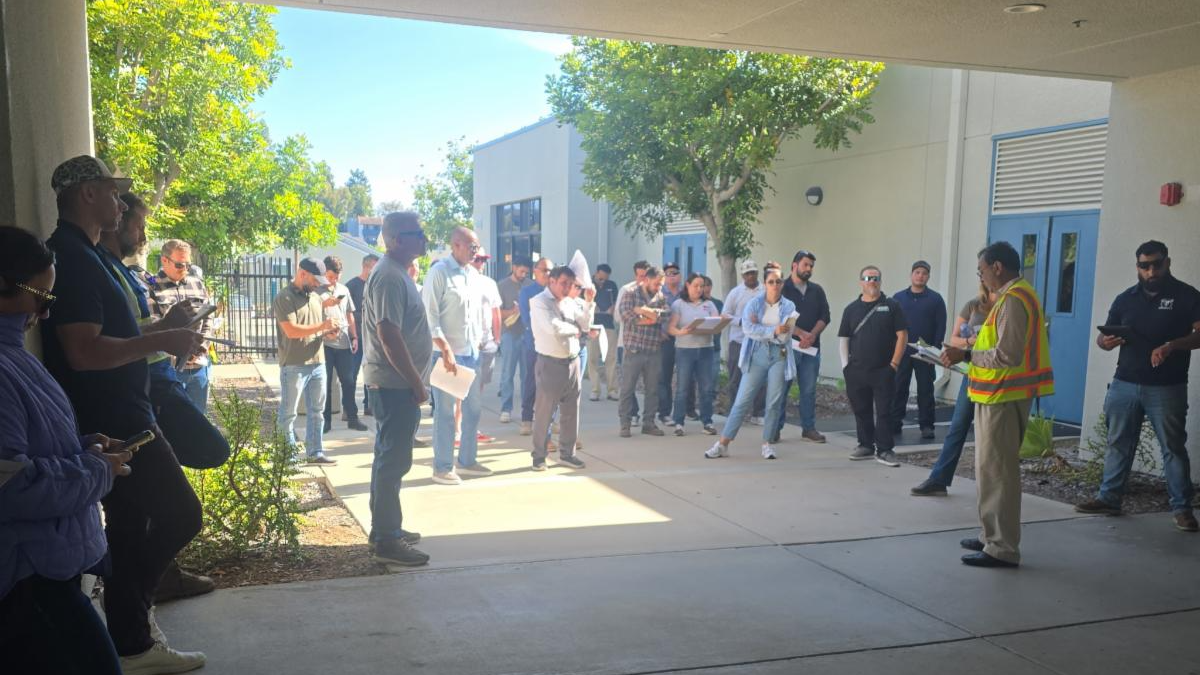
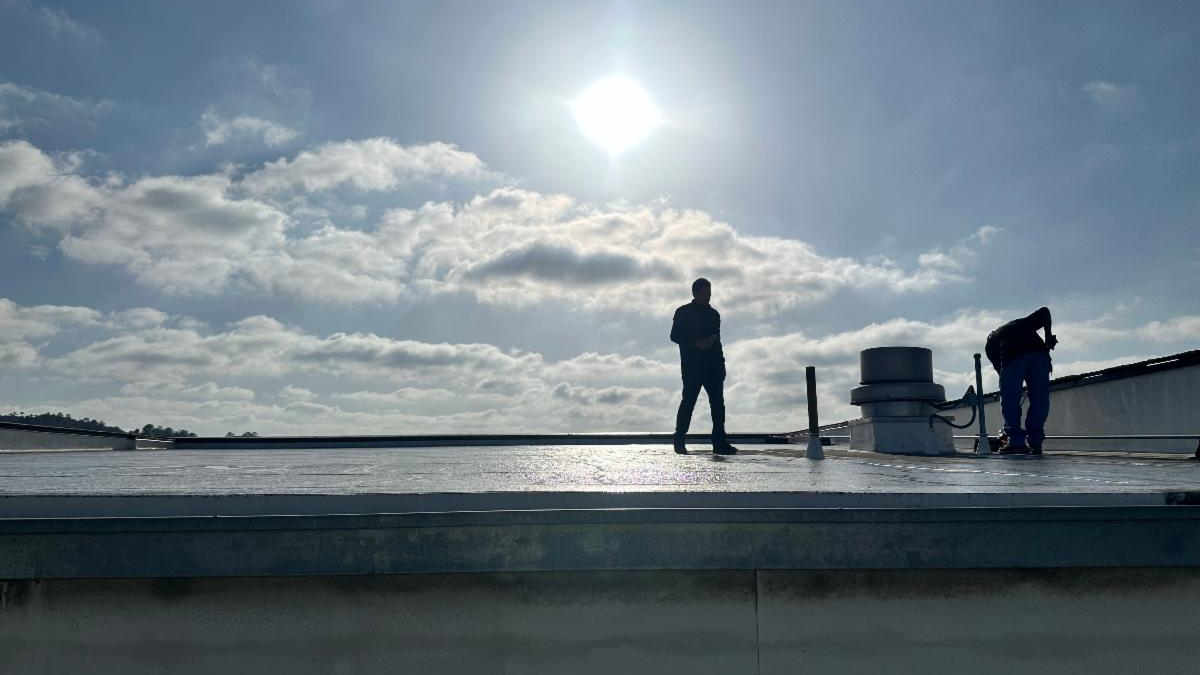
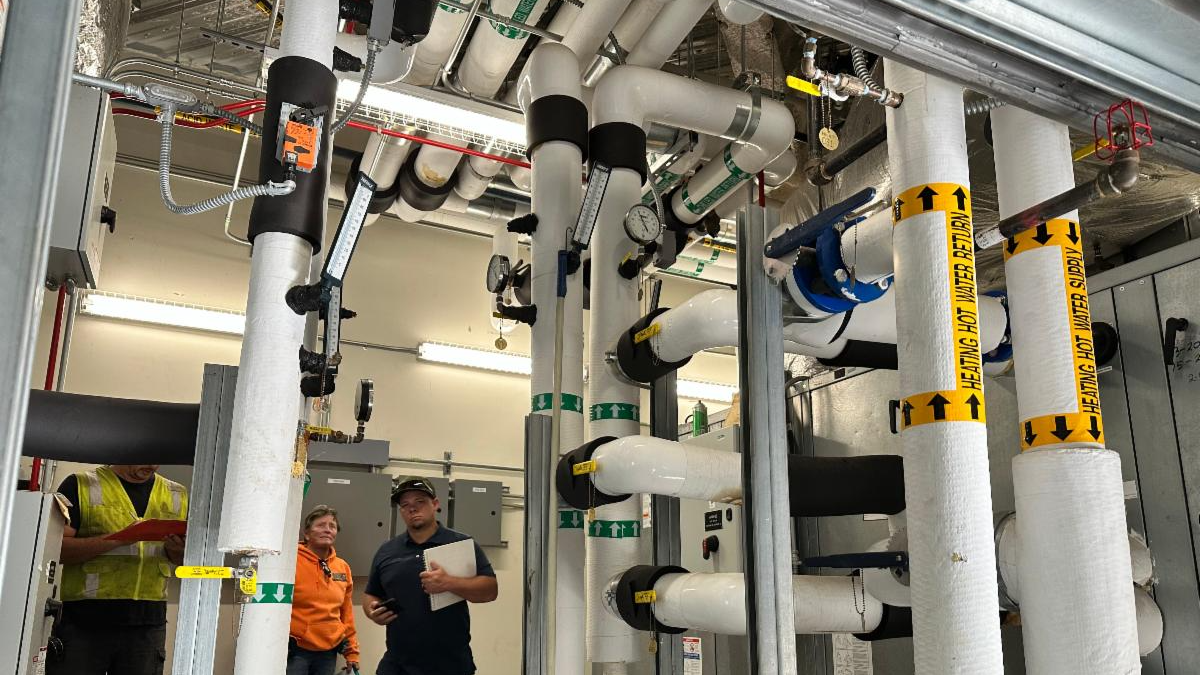
| | Projects draw strong interest | Miramar is seeing serious momentum this spring. Three active projects - the Police Academy tenant improvement project, roof replacements across multiple buildings, and the Science Building AHU refurbishment - drew nearly 90 contractors to job walks over the past week. Call it a surge of bid-tivities: full rooms, thoughtful questions, and a clear sign that these are high-interest, high-impact campus improvements. | | Police Academy (A200) Building Tenant Improvement Project Bid Walk | | Re-Roofing (H, M, T1) Building Project Bid Walk | | Science (S6) Building Air Handling Unit (AHU) Replacement Project Bid Walk | | |
COLLEGE OF CONTINUING EDUCATION
When stakeholders show up, great things happen
| | |
In March, the San Diego College of Continuing Education Mesa Campus Building Envelope project held its second design meeting, bringing together stakeholders to continue refining plans for this highly visible facility at the entrance to San Diego Mesa College. Clarence Singh, College Operations Supervisor for the CE Mesa campus, shares his perspective on the meeting and why this work matters for students, faculty, and classified professionals.
Architects Mosher Drew presented design concepts, and stakeholders provided feedback that Clarence believes will help students in the long run. He sees these discussions as an important part of developing the collaboration needed to make this project successful.
Through the Measure HH Bond program, this project addresses real needs on campus: roof replacement, better drainage to stop water intrusion, HVAC upgrades for temperature control, and a complete refresh of the building's exterior envelope. It's about creating a space where the CE Mesa community can do their best work.
| | |
HARBOR VIEW CAMPUS
Temporary name in place
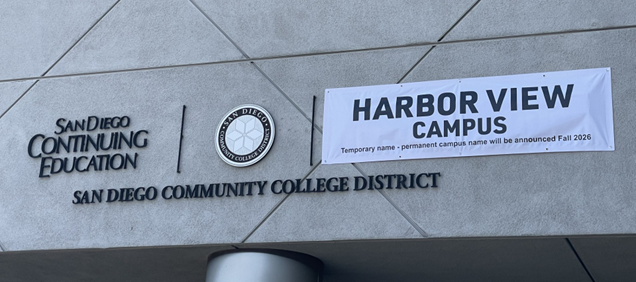
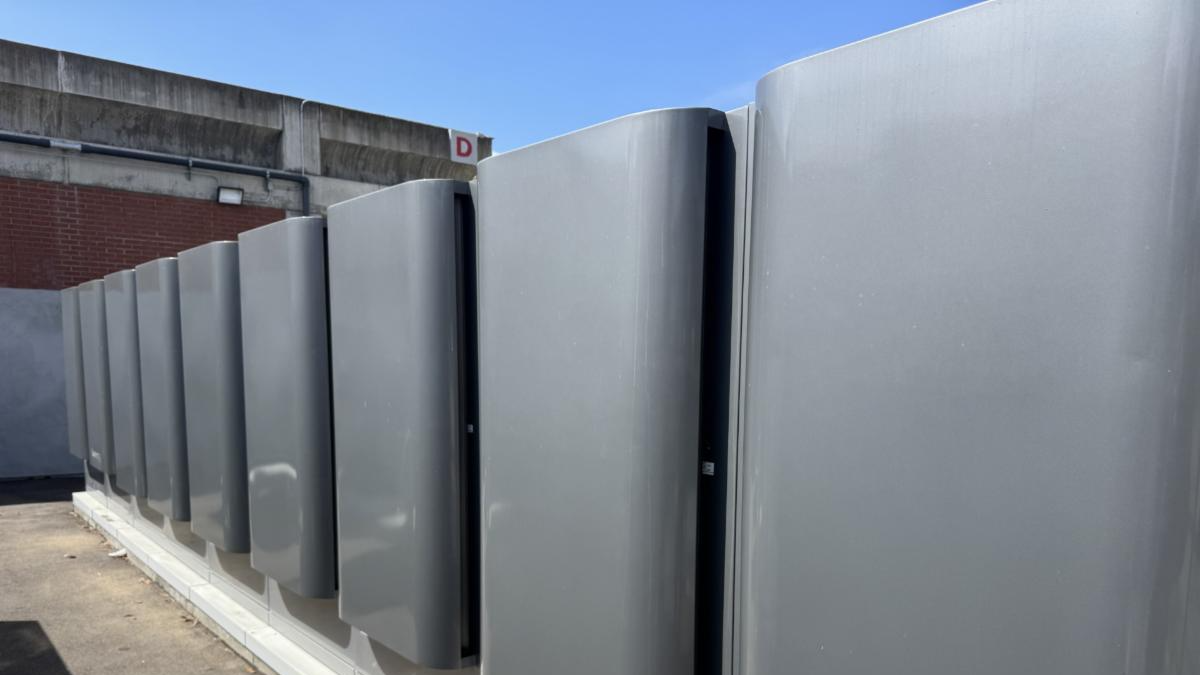
| | The College of Continuing Education has approved Harbor View Campus as a temporary name for the site formerly known as César Chávez Campus. New banners have already been installed to reflect the change. A permanent name will be established this fall following a robust stakeholder engagement process. | | Hydrogen Fuel Cells at City College | |
POWERING THE FUTURE
Building on SDCCD's sustainability work with Measure HH
| |
April is Earth Month, and across the San Diego Community College District, sustainability isn’t a new idea, it’s something we’ve been steadily building for years and prioritize in our Measure HH facility design guides and standards.
From more than 2.4 megawatts of solar installed across our campuses, to battery storage systems and innovative projects like the thermal energy system that helps heat and cool pools at Miramar College, the district has already made significant investments in reducing energy use and costs.
Measure HH allows us to take the next step.
As projects move forward, the focus is expanding from how we build facilities to how we power them. That includes a mix of proven and emerging technologies - solar, battery storage, hydrogen fuel cells, and other systems designed to make our campuses more energy-resilient and less reliant on the traditional grid.
At San Diego City College, that approach will be on display in a new way. The district’s first affordable student housing project is planned to incorporate linear generation technology, which produces energy only when it’s needed rather than running continuously. It’s an example of how newer tools can complement the foundation we’ve already put in place.
The goal is straightforward: use energy more efficiently, reduce emissions, and manage long-term costs responsibly. It is anticipated that these combined efforts will save the district more than $1M annually in the initial years and based on increasing costs for energy distribution and transmission, these savings will grow substantially over time.
Sustainability at SDCCD has never been about a single project or moment. Measure HH builds on years of work and helps position the district to keep moving forward – thoughtfully - and with an eye toward what comes next.
| | COMPLETED PROJECTS UPDATE | | |
To date, the district has successfully completed 23 Measure HH capital repair and renovation projects, reflecting continued progress across our campuses and facilities. The breakdown below highlights the number of projects completed at each location:
-
College of Continuing Education: 5
To review completed projects by campus, visit the Measure HH website and visit the Project Information page.
| | |
ALPHABET SOUP
Bond program terms explained
| | |
From planning and design to construction and oversight, Measure HH involves many moving parts - and plenty of shorthand. This glossary provides simple explanations of terms and acronyms that frequently appear in meetings and written materials.
Design Team
The architect and consulting engineers (structural, mechanical, electrical, civil, etc.) working on a project.
Benchmarking
Comparing similar projects to inform design, cost, or operational decisions.
Rendering
A visual representation of a project that shows what the finished space will look like.
Sustainability
Design strategies that reduce environmental impact and operating costs.
LEED (Leadership in Energy and Environmental Design)
A green building certification system.
See more terms and definitions in our Measure HH & Capital Projects Glossary!
| | ICYMI (In case you missed it) | | |
Did you miss a past issue or want to go back and re-read an article? Here are links to some past issues:
>> February
>> March
| | |
CONNECT WITH US
With construction underway and major projects in procurement, Measure HH is transforming facilities that serve nearly 90,000 students annually while demonstrating exemplary fiscal stewardship. Future e-news updates will provide additional details on all bond-related activities.
If you are interested in learning more about Measure HH and would like to schedule a presentation for your departmental team or a community organization, or have ideas for future stories, please email us at SDCCDMeasureHH@sdccd.edu.
| | | | |