|
Philosopher Ludwig Wittgenstein, famously observed…
‘… the limits of his language meant
the limits of his world.’
Let's steal from him…
'...I've reached the limits of my language. Run out of words to describe something that is simultaneously astonishing, depressing and utterly bewildering.'
How...
... after 130 years of knowing that poverty and ill health are inseparable companions, how have we made such extraordinary advances in medicine and so little progress in changing the circumstances that make people ill?
We've conquered diseases, transformed surgery, decoded the human genome and developed machines that can see inside the human body.
Yet we still struggle to prevent illnesses, whose causes we all understand.
There ought to be a word for it. There isn’t. So, I've invented one.
Progressclerosis.
The hardening of institutional thinking in the face of overwhelming scientific and technological progress.
We've transformed what medicine can do, but not how we think about what it should do.
130 years? Meet Charles Booth...
In 1889, Booth traipsed the streets of London, mapping poverty. Street by street, he recorded how people lived, what they earned and their circumstances…
…a third lived in poverty.
A revolution. Took hours. A lot of shoe-leather. You can see his maps here. A work of art, painting a picture of the public’s health…
... or lack of it.
Nearly 140 years later, we can recreate his maps in seconds. Overlay deprivation with diabetes, heart-disease, housing, employment and life expectancy.
Some of the geography of London has changed, but...
...the relationship between poverty and ill health remains depressingly familiar. It’ll be the same where you live.
The ghost of the past, follows us into the reality of today.
We've transformed medicine. Diseases that killed yer-granny, are treatable.
Diagnostics, pharmaceuticals, genomics, surgery have changed the boundaries of the possible. Now, artificial intelligence and predictive analytics offer something extraordinary…
… the possibility of identifying people at risk before they become ill.
Think about.…
Airlines; they don't measure success by how efficiently they deal with crashes. Their entire operation is designed to prevent them.
Car manufacturers; don't aspire to become world-class at repairing defective vehicles. They design quality into production.
In almost every industry, avoiding failure is a central organising principle.
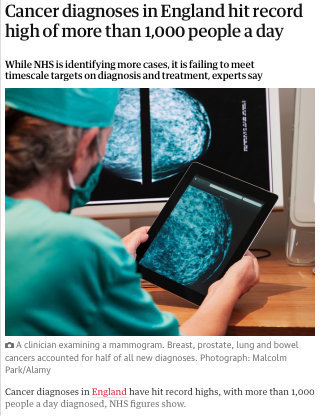
In healthcare, we've become extraordinarily sophisticated at dealing with failure after it happens.
We need another new word… cureblindness... no definition needed!
The NHS is the dustcart that sweeps up after the Lord Mayor’s Show of life.
Maybe knowtivation is another word we need…
'… having the knowledge but failing to turn it into action.'
Try and find a fix for preventertia… another word for the health lexicon... can't be
bothered.
We have millions of blood-pressure readings, prescribing records, diagnostic results and information about deprivation…
... but we don’t use it.
What about Preventopia… bringing intelligence together, to identify where illness is likely to emerge.
That sounds good.
Neighbourhood teams working with housing departments, schools, employers, pharmacies and social care.
Key organisations sharing responsibility for preventing illness.
Budgets following risk rather than waiting for disease.
Success measured not by how many people we treat, but how many avoidable illnesses never happen.
Science fiction? No… the technology exists. The clinical knowledge exists.
Much of what passes for prevention remains prevention-light.
- screening.
- health checks.
- advice.
- Earlier diagnosis.
Important, but nowhere near the limits of what's possible.
Moving healthcare into the community is not the same as creating healthier communities, and…
… knowing someone is at risk because of damp housing, insecure employment or poverty is of limited value if nobody has the responsibility or resources to change those circumstances.
Tell me we’re not trapped in a doom-loop.
-
Deprivation creates illness.
-
Illness creates demand.
-
Demand consumes resources.
-
Prevention struggles for investment.
-
Deprivation persists.
Round and round we go… where it stops, no one knows.
Prevention won't empty hospitals instantly. For a while, we’ll have to pay for both prevention and treatment. However, consider the cost of doing nothing.
- Avoidable admissions.
- Disability.
- Lost working years.
- Social care.
- Human misery.
We are getting better at everything that matters.
Better data.
Better diagnoses.
Better treatments.
Better technology.
None of it matters without our new word...
... knowtivation
The willingness to use what we know, now.
The problem isn't what we don't know. It's how we organise ourselves to act on what we do know.
Maybe it's time for an old word… bonkers.
|