|
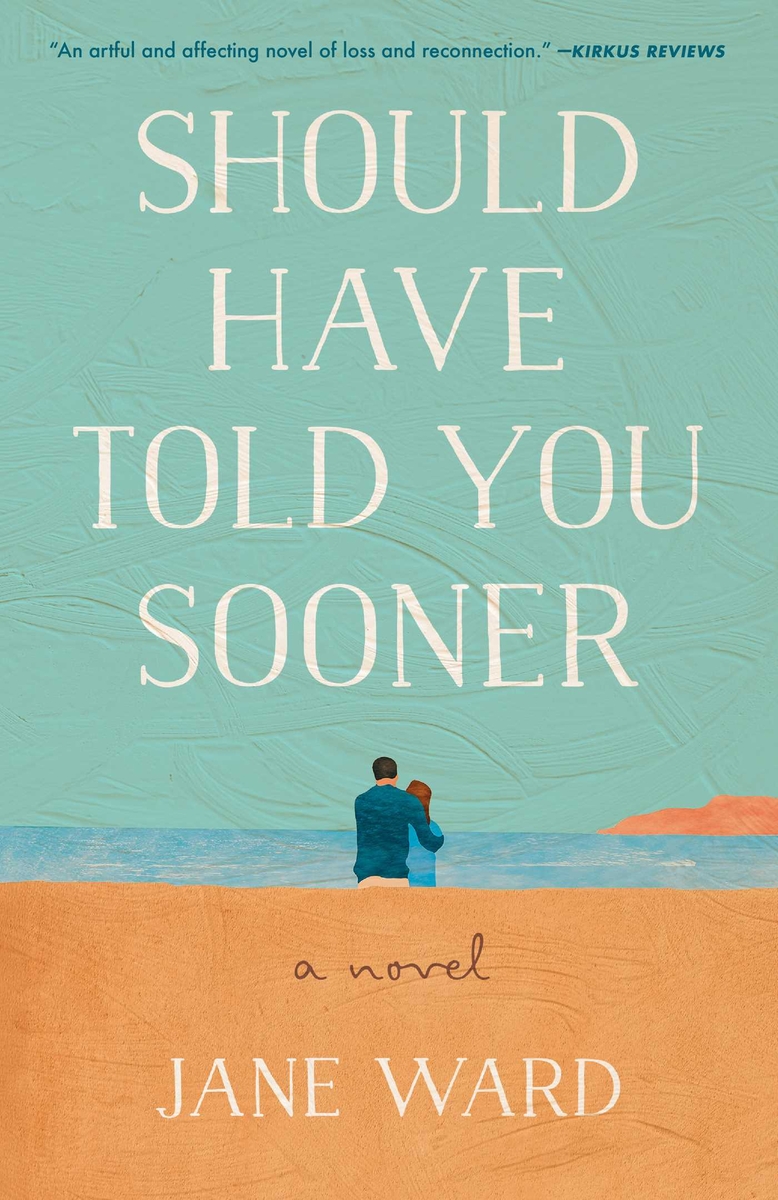
SHOULD HAVE TOLD YOU SOONER
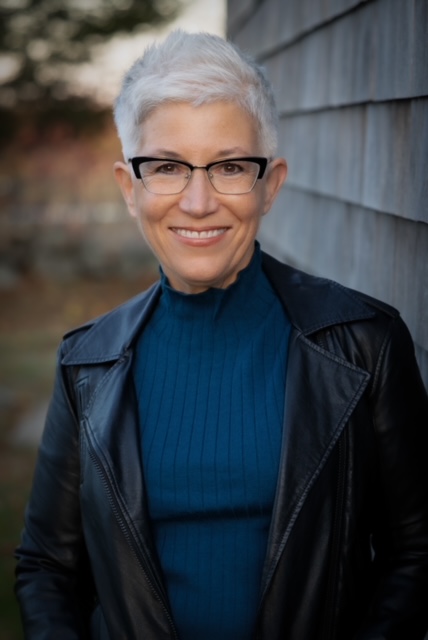
Jane Ward
| | |
She Writes
2/10/26
Fiction
Paperback, 352 pages
| |
“Ward’s fourth novel sensitively navigates lost love, adoption, and regret and is full of vivid imagery that brings its art-world setting to life.”
—Library Journal
| | |
Nine-year-old Noel Enfield first hears this piece of her loving-but-stoic grandmother’s life advice when she arrives on the woman’s doorstep, accompanied by a social worker and the terrible news that Noel’s mother had been killed in a car accident. Amid the bewilderment and grief, Gran suggests that Noel must learn to put tragedies behind her and relegate them to the past; that way forward builds resilience. Noel takes the lesson to heart.
At age eighteen, while studying art history at a London university, Noel falls passionately in love with aspiring artist and art school student, Bryn Jones. Shortly after Bryn leaves for a five-month painting trip through Italy, Noel discovers she is pregnant. She is ecstatic and believes Bryn will be too–they have plans to marry, after all. But mishaps and misunderstandings part the two lovers, and, desperate, Noel channels her grandmother’s counsel once again, this time choosing to move forward in a way that will change not only her life but the lives of everyone she loves.
Three decades later, when she is offered a secondment to a London museum, Noel decides it’s time to prove she really has moved on from that difficult period by returning to the city where she met and lost Bryn. But rather than proving she has persevered, the move lands Noel in the thick of London’s insular art world, and only one or two degrees of separation from her past and the people she once loved.
After Noel reconnects with an old, dear friend and learns what kept Bryn from returning to her years ago, the revelation rocks the very underpinnings of her life. Some decisions made in the past could never be put behind her, she realizes, and armed with this new understanding, she sets out on a journey to reclaim what—and who—she left behind.
| | |
Dear Reader,
When I start a new novel, I have little idea of what will happen throughout. The characters have minds of their own. But in 2021, when I embarked on the first draft of Should Have Told You Sooner, I was determined that the story would feature people reuniting after years apart, and these reunions would happen in London. I’ve spent a lot of time in London since I was on a junior year abroad. I love the city; it has always felt like a home away from home. More than this, though, despite being enormous and cosmopolitan and full of art, at times London feels very much like a collection of small towns. When writing about all the remarkable things that bring people together within truly large populations, London made the ideal setting.
At its core, this novel is a chronicle of three people moving toward each other from Boston, to London, and finally to resolution in quieter, coastal Wales–the mistakes they made, how and when they recognized it was time to confront these, and the grace they afforded themselves and each other when deciding to course correct. But the book is also a celebration of the beauty humans bring to the world through their art. And isn’t all of that life in a nutshell? Our limitations and our creations, our dark moments and our light ones, our sadnesses and our joy. Being alive means embracing how complex and contradictory it all is while we keep on going.
I hope you’re as swept along through these landscapes and the intersecting stories of Noel, Bryn, and Henry as I was.
Jane Ward
| Book Club Recipe and Menu |
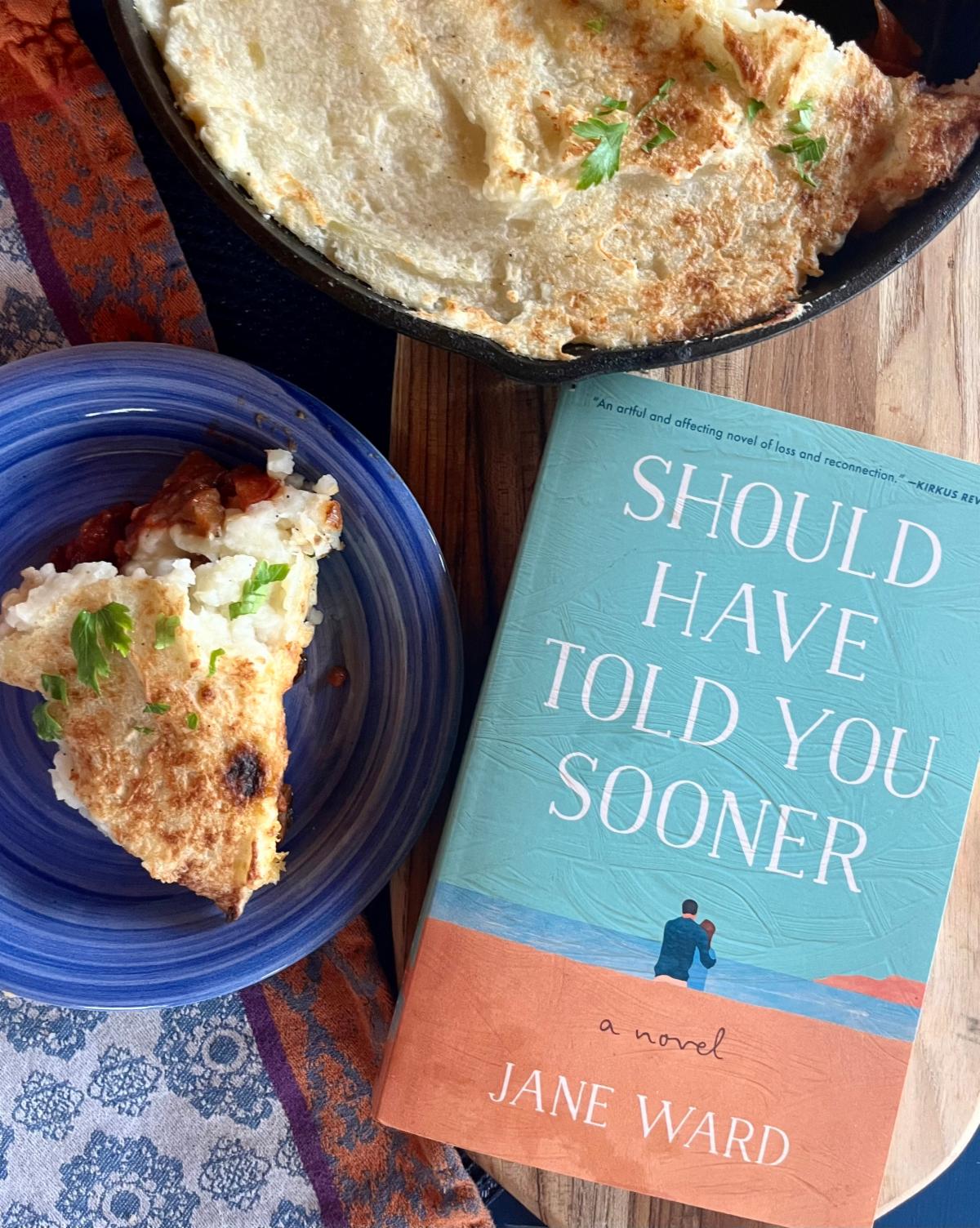
| |  | I grew up in a household where everyone cooked. My Scottish mother specialized in buttermilk griddle scones and traditional roast dinners complete with Yorkshire pudding, while my Italian father claimed the kitchen on the weekends for his braises and pasta sauces. Even I was encouraged to learn, first by watching and then by baking my way through my mother’s circa 1970s Fannie Farmer Cookbook. Because my childhood world centered on people feeding people, it’s no great surprise that when I graduated from college, I immediately found work in the food and hospitality industries. Also not surprising: an entire life spent around dinner tables led me to feature in my novels people who cook and bake, at home or as professions, with these activities serving as a reminder that the need for community and nourishment that food offers persists even when lives seem to be unraveling. In Should Have Told You Sooner, museum curator Noel Enfield’s life is in a bit of free-fall–she’s divorcing, and thousands of miles away from home on a work secondment in London when she meets Henry Bell, a young artist she’ll be working with, over lunch at her workplace cafeteria. Once settled at a table, Henry asks for something hot, stodgy, and preferably vegetarian. When Noel orders at the counter, she selects for him a version of this vegetarian shepherd’s pie, something I had in my mind because it is a favorite at our own house. In winter, I make it with lentils and mushrooms, but at the end of summer, when eggplant is in season, I make it this way
| |
There are a few heavy but necessary conversations in this book, both of which take place during or after a substantial meal. I find there’s a certain vulnerability in all of us when we sit down together and commit to the communal act of sharing food. After all, we’re opening our mouths and admitting our hunger through the rumble of empty stomachs while in the company of others. When we shelve our self-consciousness and eat, when the protective armor of decorum is finally removed, we can find ourselves relaxed and ready to open up.
But there should also be joy and an ease to gathering, and I’ve tried to capture those qualities as well. A pair of former lovers reuniting after 30 years to work out where they might be going in the future; former best friends finally understanding what happened to their relationship and the glimmer of hope that honesty–finally–will be the thing that restores them. These are not times for fuss.
|
| | |
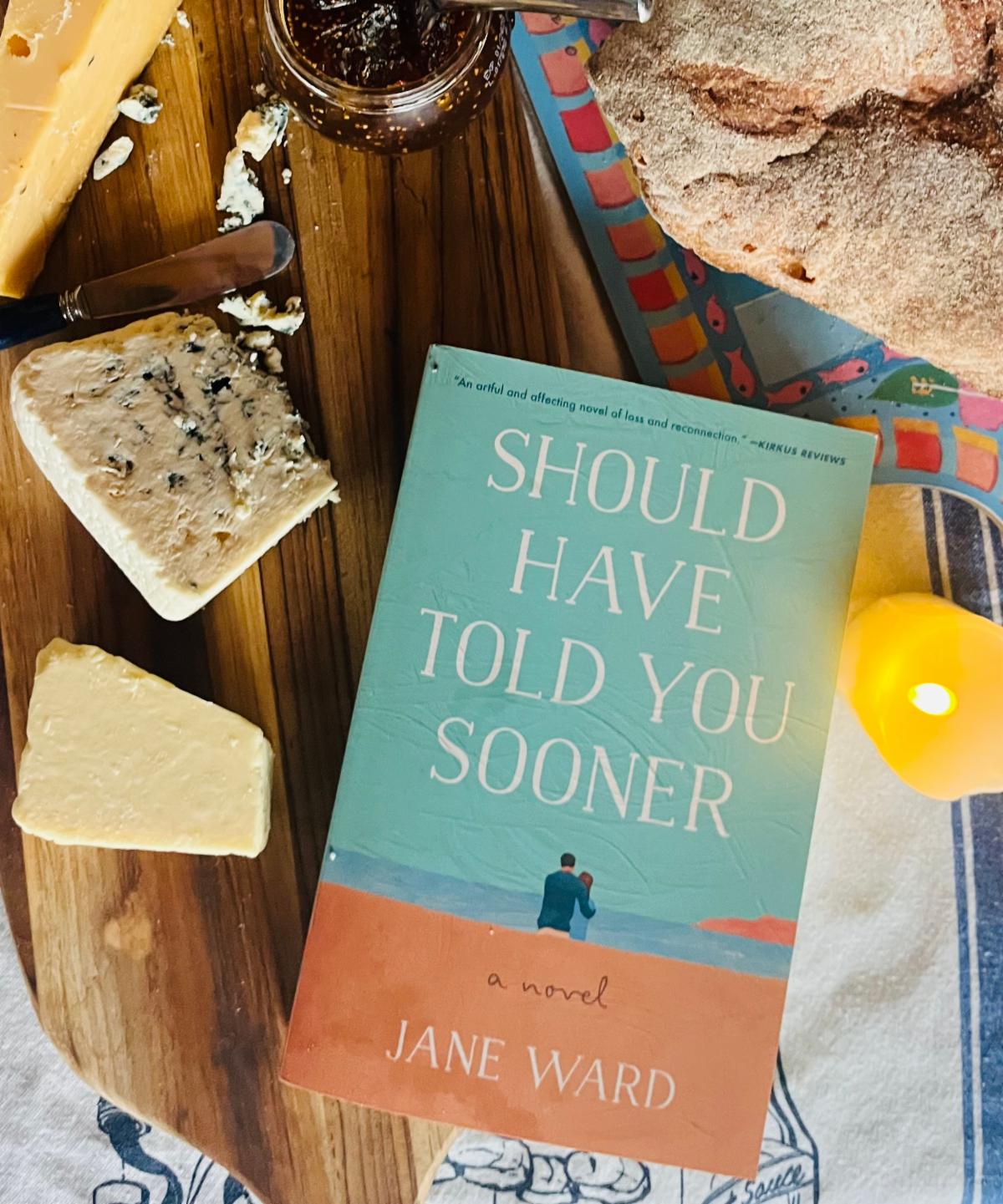
The first meal is "Cal’s Home-cooked Feast": individual vegetable tians, poached salmon with buttered summer peas and mint, British cheeses, and homemade bread. Cal was Noel’s best friend at uni in the early 1990s, until she left mid-term and went home without a word. When she returns to London for work, they get reacquainted over a dinner he cooks for her at his home—Noel brings the cheese served for dessert. This meal takes place in December, so this particular tian, or baked dish of layered vegetables, would have been made with root vegetables such as beets, rutabaga, potatoes, or perhaps sweet potatoes, and seasoned with a hearty herb like rosemary. It’s easily adapted to summer vegetables—traditional layered ratatouille is a tian of summer produce. The peas he serves with the salmon–a classic combination–were grown in the summer and frozen. Peas from your freezer case have been frozen at peak freshness and are fine to use here when fresh ones are not available. Select the British cheeses available for your cheeseboard. My favorites include Stichelton, Cornish Yarg, and Welsh Caerphilly, but you can let yourself go wild with choosing, as Noel did.
The second is The Reunion Christmas Feast. At first, it might not sound like much of a feast. There’s Bryn’s Lentils Braised in an Earthenware Pot, Noel’s Creamy and Cheesy Cabbage Gratin, and her Christmas gift to him–a cobbled-together Apple and Raisin pie for dessert—all humble food, made mostly from pantry staples. But for context, Bryn thought he’d be alone for the holiday and had to shop at the last minute because he suddenly wasn’t. He hadn’t much variety to choose from, but together they take his meager haul and whatever’s on hand in the kitchen and make a deeply satisfying holiday dinner served with red wine. I have a bit of a reputation at home for making meals out of whatever I can scrounge from the fridge. Part of me finds this a creative challenge. The other part of me has been so immersed in work that I’ve forgotten to shop and stock up. This dinner is most like some of the ones I make at home weekly—if you’re at all interested in how a distracted author manages to pull off something satisfying at the end of her work day.
-Jane Ward
| | | | |