Both OpenAI and Anthropic dropped major model updates on the same day.


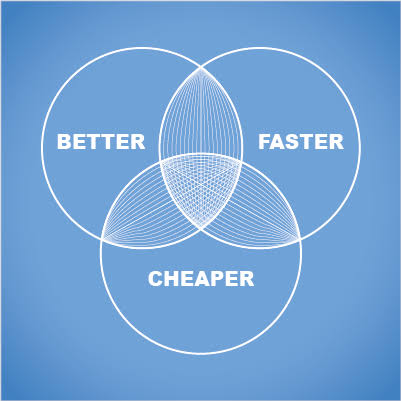
Cheaper, better, faster. The new AI mantra.


__________________________


Project Counsel Media is a division of Luminative Media. We cover the areas of cyber security, digital technology, legal technology, media, and mobile technology.


About Luminative Media: our intention is to delve deeper into issues, at greater length and with more historical and social context, in order to illuminate pathways of thought that are not possible to pursue through the immediacy of daily media. For more on our vision please click on our logo:


________________


The pattern is clear: the frontier is getting commoditized in real time. We're watching intelligence get priced like cloud storage. Every quarter, you get more for less.


Great for builders, brutal for margins. 


__________________________


BY:


Katherine D'Amato

Doctor of Engineering, Artificial Intelligence & Machine Learning

AI Technology Reporter


Member of the Luminative Media team


_________________________________________


23 September 2026 (Rhodes, Greece) - AI companies have competed on having the best and often most dangerous models for years.


Now, they're pivoting to a new focus: cost.


It matters. The biggest risk to the AI boom is demand, and recent innovations to make models cheaper while maintaining powerful levels of intelligence have offered a bullish signal.


As the prices of top models from OpenAI, Anthropic and others come down, usage is increasing dramatically, a trend that points to the kind of demand that will be necessary to justify trillions of dollars in spending. And justifies these massive data centers.


So it's "modelpalooza" in the AI world this week, with OpenAI, Anthropic, SpaceX and some Chinese model providers all offering new releases. Most of them are offering shocking levels of intelligence at prices that would've been unthinkable just a few months ago.


OpenAI released GPT-6 Sol and GPT-6 Luna yesterday, which bring down the cost for top business customers by 50% from previous iterations of the same models.


Also on Tuesday, Anthropic released Opus 5.5, which the company says costs around 40% less to run than Opus 5 while maintaining top intelligence.


And on Monday, Elon Musk's xAI released Grok 4.7, pitching the new model around price-performance.


Yet in a testament to the sheer brutality of competition in the AI race, it only took 24 hours for new options to wipe out much of that price advantage.


The ferocity and speed of the race during an ongoing price war is an issue for OpenAI and Anthropic, which need to retain customers and revenue growth to justify their sky-high multitrillion-dollar valuations.


And even as they face margin pressure, the trend is positive for the AI boom overall, as the price reductions make it much easier to bet on a bright future for AI use.


Follow the money! There is emerging evidence that cost cutting is a rising tide that can lift revenues for all AI providers:


  • In a report sent to clients, Citadel Securities found that falling per-token costs are fueling additional usage, and overall AI spending is increasing. That points to higher eventual profits for labs or any company providing the computing firepower that services AI usage.


  • Morgan Stanley sees competition from Chinese providers as yet another bullish signal for AI because it will increase overall demand for computing by capturing more customers who can now access AI for less.


This is all the concept referred to in classic economic theory as Jevons paradox, which holds that when technology brings down the cost of a resource, consumption increases.


And not being talked about much in the media but well-discussed in the AI community. Open-weight model companies, primarily coming out of China, have been on a tear in recent weeks. DeepSeek this month released V4.1 Flash, which it says beats its previous flagship offering on a number of benchmarks with technical updates that allow the company to charge less for its intelligence. That model is now No. 1 on OpenRouter's leaderboard with a 172% spike in usage this week.


Which forced the U.S. foundation models to act.


Now, a reality check. Lowering costs to take market share is not new in the AI world. AI companies have a long history of releasing a new model and then lowering the cost for prior releases, or even releasing "flash" versions of larger models that are smaller and cheaper to run.


But the increased competition from open-weight model providers (especially from the Chinese) and their massive rise on leaderboards is fueling a broader focus on cost across offerings from top AI labs.


I suspect AI sticker shock feels like a distant memory given the massive push from labs to deliver cheaper models.


But it explains at least one of the reasons why our boss, Greg Bufithis, thinks the U.S. has not a ghost of a chance cutting a deal with Chinese President Xi Jinping during his state visit in D.C. this week.


* * * * * * * * * * * * * * * 


For the URL link to this piece, please click here


If this post was forwarded to you and you'd like to subscribe,

please email us at luminative.media@gmail.com


* * * * * * * * * * * * * * *