|
|
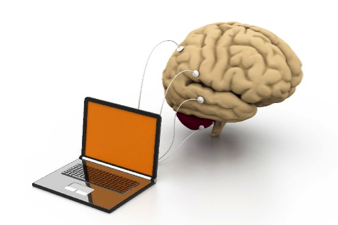 If you could understand what was happening in the brains of your target audience, would you be a more effective trainer, designer, consultant, or leader?
Thanks to recent advances in neuroscience, learning and talent development professionals now have an opportunity to alter their approaches to change management, leadership development, training, and instructional design.
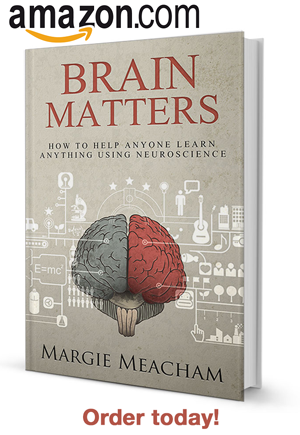
In this interactive online course, you will learn how the brain receives, encodes, and retrieves information to construct knowledge, and you'll receive several templates to help you apply these insights to improve your learning programs.
Register now
for this popular course.
|
|
Brain Matters 2015 Features Informal Learning Guru Jay Cross
|

Jay Cross has been credited with inventing the term 'e-learning' and continues to be a pioneer in both the practice and theory of technology in learning. After developing the first courses on the hugely successful University of Phoenix online learning system, he set up the Internet Time Group. A tireless thinker and presenter on learning, he has pushed the learning world to think seriously about informal learning, and working smarter. He invites us to think about learning in a more naturalistic way, seeing learners as real people in real organizations who use real tools in real networks, both offline and online
An international speaker on a wide variety of topics, Jay will expand your thinking and inspire you to accomplish more with less in record time. Jay distills lessons from cognitive science, business administration, how people learn, social computing, and psychology to boost sales, improve customer service, and empower people to innovate. His speaking style is vibrant, humor-laden, energetic, and compelling. We are thrilled to have him join us at Brain Matters 2015.
Learn more about Jay on his website or his video channel.
(Adapted from the original article by Don Clark at: www.jaycross.com)
|
Join us at Brain Matters 2015: We've got an exciting line-up of speakers committed to this online event and we'll be featuring them in future issues of this newsletter. But don't wait to
buy your ticket! We have a limited number of seats and we expect them to sell quickly!
|
New Podcast: Jeanette Winters Discusses how Neuoscience can Close the Skills Gap
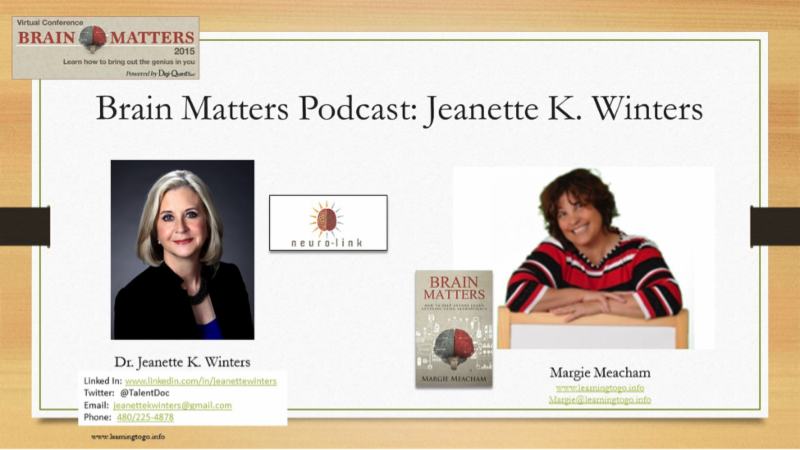
Dr. Jeanette Winters is a
seasoned talent and learning executive leadership. Her special expertise is in championing scalable and sustainable organizational/financial management initiatives via the design and implementation of proven talent management practices, procedures and programs for Fortune 500 global leaders such as Amgen, Pitney Bowes, American Express and Intel. She has been the driving force behind proven learning transformation platforms that embrace competency based assignment strategies, planning, outsourcing, restructuring, and the execution of internal and SaaS-based talent technologies.
Dr. Winters is also one of the first scholar-practitioners to be certified in
Neuro-link
brain profiles, brain-based learning and development training interventions.
Jeanette joined me to talk about the growing
skills gap in the American workforce
and
how a brain-aware approach might help us to close that gap.
|
| Interesting Facts about Geniuses

Discover magazine compiled this interesting collection of facts about genius. But if you want to bring out your own inner genius, join us November 10-11 for Brain Matters 2015 where neuroscientists, artists, psychologists, teachers, therapists and trainers will explore the nature of genius through the lens of neuroscience. Tickets are selling quickly, so don't miss out. Book your seat today! |
Latest Posts to Margie's Brain Matters Blog
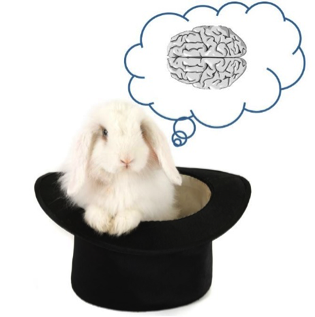
What do Santa Claus, the Tooth Fairy, Leprechauns, Unicorns and my "lucky" putter all have in common? They are all examples of "magical thinking." You might think that belief in magical things would fade away in today's modern age, reserved only for children and "primitive" tribes.
Read more...
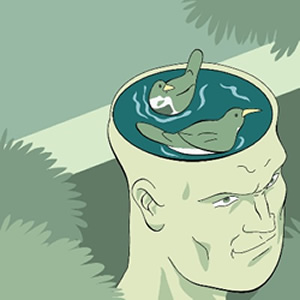
The human brain has evolved over six millions years. The most primitive parts of our brain operate at a deeply unconscious level, and influence a great deal more of our conscious behavior than most of us realize. Read more...
|
|
|
|
|