|
Spreading deceptive information has become a new social norm--one fueled by emotional triggers and algorithmic amplifications that hijack the brain’s reactive circuits. Young people who lack skills to critically evaluate information are especially vulnerable to manipulation, deception, and harm–the consequences of reacting instead of thinking.
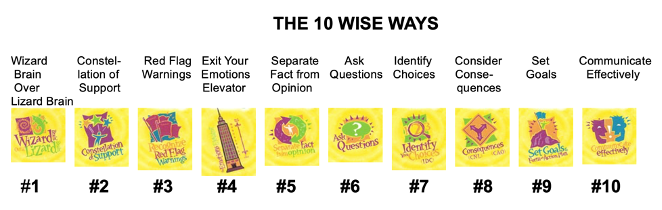
The 10 Wise Ways form a cognitive toolkit that helps learners recognize problems, assess them, and decide what information is fact and what information has no proof to support it. See: Antidote for Fake News Part I and Antidote for Fake News Part II.
Separating Facts from Opinions is a multi-step process that must be learned through practice. These steps are often absent in youth who lack a toolbox of thinking skills. As instructors know, successful BrainWise graduates have hours of practice applying these skills to real-world problems--enabling them to make wise, informed choices.
BrainWise Aligns With Global Best Practices.
BrainWise strategies align with recommendations from leading institutions including Oxford, MIT, the Carnegie Endowment, Neuroscience News, and the American Psychological Association. These experts advocate:
-
Recognizing emotional triggers to Stop and Think before reacting
-
Using stories and animations to illustrate misinformation and identify “Red Flags”
-
Asking Questions to verify facts using reputable resources
-
Staying off the Emotions Elevator or remaining on lower floors when assessing online and offline information.
BrainWise expands on these practices with additional strategies:
-
Building a Constellation of Support helps youth identify trustworthy resources. According to Common Sense Media’s 2025 report, nearly 75 percent of American teens have used AI companions, and more than 50 percent are regular users seeking emotional support, friendship, and advice. BrainWise teaches youth to assess the validity of these digital relationships and recognize that they are not the only option.
-
Identifying Choices and Considering the Consequences–including the choice not to act–is essential when separating facts from opinions. This lesson emphasizes the importance of evaluating consequences now, later, and those affecting others.
-
All of the Wise Ways connect to Communicate Effectively, empowering youth to use multiple communication methods to counter misinformation and contribute to spreading truth using facts.
Thinking Skills are Teachable–and Urgently Needed.
“Thinking Skills” and “Critical Thinking” are more than umbrella terms for abstract ideals. BrainWise teaches them as the 10 Wise Ways—interrelated, teachable,lessons that deepen students’ ability to assess information, weigh options, and make informed decisions. Without these skills, youth default to reactive behaviors driven by the brain’s hard-wired survival emotions and impulses that misinformation exploits.
|