|
BrainWise Newsletter #100:
Stop and Think: A History of Building Brain Connections
| | |
Since its inception in 2016, the BrainWise Newsletter has served as a resource for instructors, offering updates on program implementation, teaching strategies, research findings, and success stories from around the world. The program, introduced in 1996 by six instructors across five schools in metro Denver, has grown into a global initiative, reaching thousands of educators who have taught over 100,000 BrainWise graduates.
This anniversary edition highlights champions and stories that reflect the range of contributions that have shaped the program’s success and inspired replication across diverse settings. Each story is presented under the heading of one of the 10 Wise Ways, but the examples show how the concepts are integrated and reinforced.
The journey of BrainWise has been shaped not only by programmatic evolution, but also by the dedication of educators, researchers, and community leaders who believed in the transformative power of teaching thinking skills. Each milestone, from the first classroom lessons to the international expansion, testifies to the collaborative spirit and shared vision of fostering critical thinking skills in children, youth and adults.
| | |
Wizard Brain Over Lizard Brain
Dr. Marilyn Welsh, a professor and education psychologist, is an esteemed researcher who has played a pivotal role in advancing the program’s credibility through empirical research. Her studies demonstrate measurable behavioral improvements among BrainWise graduates and are published in books and journals and have been presented at national conferences.
A national expert in executive functions, Dr. Welsh said this about BrainWise:
| | | | “After more than 25 years of conducting research on executive functions, I was so impressed when I read the BrainWise curriculum. Dr. Gorman Barry took the theoretical concepts of executive processes and put them into a language that everyone can understand, relate to, and use in their daily lives. From the youngest child who invariably has difficulty controlling emotions and planning ahead, to the at-risk teenager, who may be lacking the role models and the practice needed to optimize these skills, BrainWise empowers them to engage their Wizard Brain to more effectively deal with problems that confront them in our increasingly complex world.” | | |
CONSTELLATION OF SUPPORT
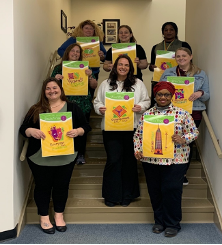
The BrainWise team at Denver’s University Park Elementary School piloted the course in 1998. Each member taught it for more than 20 years, and their contributions and testimonials underscore their commitment. Social worker Barb Lamana, kindergarten teachers Wendy Cameron and Judy Cardenas, and special needs teacher Tracy Dodd gave presentations and shared stories showing how young children and special needs children understand differences between Lizard Brain reacting and Wizard Brain thinking.
| | |
U PARK AWARD-WINNING
BRAINWISE INSTRUCTORS
| | Examples ranged from showing how BrainWise helps 5-year-olds process school shootings to demonstrating how the program’s language gives children tools to comprehend and talk about feelings, emotions, and behaviors. BrainWise is their “go to” program and they teach the skills inside and outside the classroom, as well as at home. These instructors are not only double lines in the Constellation of Support for their young students, but also everyone in their lives | | |
RED FLAG WARNINGS
As a new college graduate, Matt Sena worked as a youth counselor in Grand Junction CO, where he was introduced to BrainWise. He became an instructor and wrote his masters’ thesis on BrainWise and Young Fathers. For the past twenty-two years, he has worked as a youth and family counselor with underserved populations, including Alaska Natives. His work with the latter led Indian Health Services to recognize BrainWise as a program that benefits Native Americans and Alaska Natives.
| | Matt has impacted thousands of lives, not only for graduates he personally taught, but also for the graduates of the hundreds of educators, counselors, and agency employees he has trained to teach BrainWise. These schools, service organizations, and health providers have learned from one of the best. Matt sees all of the Wise Ways as important and tells stories about clients who say recognizing Red Flag Warnings helped them stop and think, preventing violent altercations and other dangerous problems. | | | |
EMOTIONS ELEVATOR
Homeless individuals face high rates of recidivism—even after completing programs at reputable intervention facilities. To help address this dilemma,, the director of a Colorado homeless organization introduced BrainWise to help clients learn decision-making, self-regulation skills, and other executive functions and then participated in a research study to evaluate the outcomes.The study compared outcomes between clients who received all the intervention services their organization offered with a matched treatment group who received the same services plus BrainWise. Published results showed that BrainWise group demonstrated significant improvements across all measures of executive functions.
Inspired by the study, Jared Greenberg, M.D., a psychiatrist with the VA Greater Los Angeles Healthcare System, introduced BrainWise to homeless veterans in his care. His team had long observed that deficits in executive functions—such as poor planning and impulse control—contributed to instability, substance use, and risk-taking behaviors. Many veterans struggle with emotional regulation, often reacting from the “top of their Emotions Elevator,” a BrainWise concept that illustrates how heightened emotions can impair thinking.
| | Dr. Greenberg wanted to see how veterans would respond to BrainWise’s approach to teaching thinking skills. The feedback was resoundingly positive. Participants described the program as “life-changing,” noting that it helped them integrate insights from other treatments and resources. One veteran shared, “You can’t do anything productive until you can control your emotions first—and then you can think about how to solve your problem.” Dr. Greenberg added, “Every single participant’s reaction was overwhelmingly positive to an extent I could not have expected." | | JARED GREENBERG, MD, VA PSYCHIATRIST | | |
FACT vs. OPINION
In an age where misinformation spreads rapidly online—often under the guise of trusted sources—educators face growing challenges in helping students distinguish fact from opinion. The BrainWise program’s “10 Wise Ways” offer a timely and essential framework for teaching critical thinking and media literacy.
This issue isn’t new. As highlighted in past BrainWise newsletters, the tradition of fake news stretches back centuries. One striking example: Benjamin Franklin published fabricated stories in colonial newspapers, including a gruesome account of Native Americans allegedly working with the British to scalp hundreds of children and soldiers. Franklin acknowledged the strategic power of misinformation, writing, “By press, we can speak to nations.”
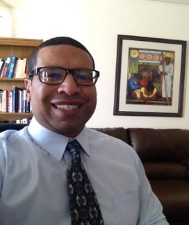
Award-winning educator and master BrainWise instructor Dell Brooks takes historical contexts and current events and turns them into powerful teaching opportunities. By integrating the 10 Wise Ways into lessons on history and social issues, Brooks helps students build the skills to question sources, analyze motives, and apply sound reasoning
| | DELL BROOKS & BRAINWISE GRADUATE | | He uses videos, films, games, and classroom contests to help students learn to apply BrainWise thinking strategies to real-world challenges, both online and offline. As misinformation becomes more sophisticated, BrainWise newletters have helped instructors to equip students with the tools they need to think clearly, ask the right questions, and make informed decisions. | | |
ASK QUESTIONS
After a needs assessment revealed gaps in decision-making skills among families served by public health nurses, nursing director Becky Persing, DNP, RN, reviewed programs and implemented BrainWise as a teaching tool for her team. They integrated the “10 Wise Ways” into their home visits, guiding clients to identify when they needed help, where to seek it, and how to ask effective questions to access accurate information.
| | | | Nurses also applied BrainWise principles to evaluate outcomes, tracking 42 client behaviors from the start of the home visits and then again at the end. These measures spanned parental physical and mental health, substance abuse, parent-child relationships, and child development. Results showed improvement across all indicators with statistically significant gains in 22 behaviors—demonstrating BrainWise’s impact to help foster healthy decision-making skills. | | |
IDENTIFY CHOICES
As Director of Parenting Matters through Colorado State University’s Extension Center, Christine Cerbana had access to a wide range of curricula—but she chose BrainWise. For fifteen years, she championed the program throughout Colorado, teaching BrainWise in schools, prisons, and shelters. Her commitment extended beyond instruction: She trained new facilitators, collaborated with graduate students to collect data, documented outcomes, and presented their findings at both state and national conferences.
| | Christine’s dedication to BrainWise was personal and far-reaching. She once shared the program with a local repairman who as fixing her broken refrigerator. To her surprise, he recognized the concepts of the Wizard Brain and Lizard Brain and credited BrainWise with helping him turn his life around. He explained that he had first encountered the curriculum at a family shelter—where Christine had taught it—and its lessons had empowered him to make better decisions, secure employment, and maintain stable housing for his family. | | | |
Christine’s work has touched thousands of lives. Retired now, her legacy is woven into classrooms, shelters, and communities across Colorado—and into the stories of people who found hope, stability, and purpose through BrainWise.
For more on Christine, see:
Improving Cognitive Skills in Grades K-12. Find the poster on the web page under Researcn and Research Tools.
RMPA BrainWise Executive Functions and SEL Poster. Find the poster on the web page under Researcn and Research Tools.
Teaching BrainWise to Parents
| | |
CONSEQUENCES NOW, LATER, AND AFFECTING OTHERS.
When BrainWise was piloted in 1995, Marsha Harman—a respected counselor at Colorado’s Sheridan High School—quickly recognized its potential and introduced it to high school students. She found that the program gave her easy-to-apply tools to help students navigate life’s challenges and make better life choices.
| | |
MARSHA HARMAN, MS
COUNSELOR
| | |
Four years later, in 1999, tragedy struck six miles away at Columbine High School when two students took the lives of 13 fellow students and injured 21 others. In the aftermath of the event, Marsha used the 10 Wise Ways to support her students as they processed the trauma, shock, and fear.
One of those students was Tiffany, an articulate and thoughtful senior being raised by a single
| | mother. In an interview recorded at the time, Tiffany shared how BrainWise helped her cope. The 18-year-old said, “Problems happen every day. No matter what decision you make, BrainWise will help you.” | | |
TIFFANY-
1999 BRAINWISE GRADUATE
| | |
Two decades later, Marsha had an opportunity to reconnect with Tiffany, now a married mother of two young children, web developer and social media host. Tiffany reflected on the program and said, “The 10 Wise Ways are so important to me as a parent and new mother. BrainWise gives parents a language and tools to help them and their children “stop and think” before they react. If parents don’t teach them, they may never learn these skills.”
| | |
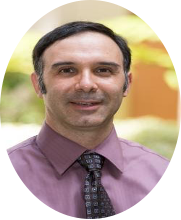
For the past thirteen years, Gary Brayton, PhD, MSW has used BrainWise as the foundation for his clinical practice. He estimates he has reached more than 2000 youth and their families. Additionally, he has introduced the program to mental health educators and counselors throughout Alberta, Canada, including Jocelyn McQuary, Melissa Hudson, and Colton Hok.
One of their goals is to teach BrainWise to more youth and past newsletters have shared their stories. Recently, Gary conducted a training session for 20 health care workers at a mental health center as well as five counselors with Kainai Nation (Blood Tribe), a First Nation Tribe
| | |
GARY BRAYTON, PhD, MSW
BRAINWISE TRAINER/INSTRUCTOR
| | COMMUNICATE - TAKING OTHERS’ POINT OF VIEW | | |
KARYN SINGLEY BLAIR, MS
SCHOOL PSYCHOLOGIST
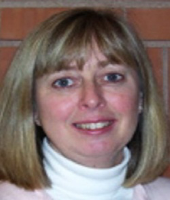
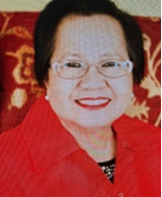
| | The teaching tools created by BrainWise instructors show their sensitivity to students’ needs and how they can best help them learn the 10 Wise Ways. High school psychologist Karyn Singley Blair, M.S., an instructor since 2000, teaches BrainWise to students with physical and/or developmental disabilities. She created a Braille Emotions’ elevator for blind student, made brains out of Jell-O for students, and designated | | COMMUNICATE – USING VERBAL AND NONVERBAL MESSAGES | | After watching a colleague teach a BrainWise lesson, Maile Monk, PhD, wanted to teach the program. It appealed to her because “it could be not only be taught by teachers, but also by parents, administrators, interventionists, adolescents, or anyone who learns the materials.” When she became the school district’s lead psychologist, she used BrainWise “to bring together family, school, and community as partners to support the success of children.” | | |
MAILE MONK, PhD
SCHOOL PSYCHOLOGIST
| | COMMUNICATE - USING ASSERTIVE COMMUNICATION | | |
KRISTIN GREEN AND COUNSELING
TEAM, LAWRENCE COUNTY, PA
| | |
In 2017, Supervisor Kristin Green and her team of counselors started using BrainWise as an intervention to support families whose children had been removed from their home because of abuse and neglect. Their goal was to help parents regain custody of their children and maintain a safe environment for them.
The newsletter shared their success story with testimonials strongly asserting the staff and parents “love BrainWise from beginning to end!”
BrainWise Helps Families in Crisis
| | |
Real Stories, Real Impact:
BrainWise Educators Empower Generations
Dr. Eric Kandel received the 2000 Nobel Prize for his research describing neuroplasticity -- how the brain builds connections when it learns something new. His findings inspired the development of BrainWise as a way to help children and youth learn skills to Stop and Think. The stories presented here highlight the extraordinary individuals who teach BrainWise. Hundreds of instructors share similar histories, offering further testament of the impact of BrainWise.
These instructors are not neuroscientists. BrainWise appealed to them because it offered something different: an opportunity to teach research on brain development – explained as using Wizard Brain thinking over Lizard Brain reacting. This unique approach, the hallmark of BrainWise, introduced the brain as a teaching tool to help nonscientists understand the fundamentals of how the brain works.
The anniversary edition and its 99 preceding issues would not be possible without Marty MacDonald, our esteemed publisher.
| | | | |
My heartfelt gratitude to everyone,
Dr. Pat
| | | | |