|
Yesterday, October 21, CMS released the updated guidance, directing all Medicare Administrative Contractors (MACs) to lift the claims hold and process claims with dates of service October 1, 2025, and later for services affected by the expiration of temporary payment provisions under the Full-Year Continuing Appropriations and Extensions Act, 2025 (P.L. 119-4). This includes claims under the Medicare Physician Fee Schedule, ground ambulance services, and Federally Qualified Health Center (FQHC) claims. MACs will also process telehealth claims that can be confirmed as behavioral or mental health services, while continuing to hold other telehealth and Hospital Care at Home claims pending further guidance.
Practitioners providing services no longer payable by Medicare should consider issuing an Advance Beneficiary Notice of Noncoverage (ABN). Clinicians participating in eligible Medicare Shared Savings Program ACOs may continue furnishing covered telehealth services without geographic restrictions under section 1899(l) of the Social Security Act.
Click here to read the full article.
| | Stay up-to-date with news that impacts you - visit our website or follow us on these social media platforms: | | | |
All Medicare Administrative Contractors (MACs), including CGS, NGS, Noridian, Palmetto, and WPS, except Novitas and First Coast Service Options, have released new Local Coverage Determinations (LCDs) for peripheral nerve blocks and procedures for chronic pain.
The new LCDs provide coverage only for radiofrequency neurolysis for trigeminal neuralgia, corticosteroid injections for median neuropathy at the wrist (limited to a maximum of three injections), and corticosteroid injections for Morton’s neuroma (limited to a maximum of two injections).
All other peripheral nerve block and related procedures are not covered under these policies.
- Occipital nerve block and denervation
- Stellate ganglion block
- Trigeminal nerve block
- Suprascapular nerve block
- Thoracic nerve block
- Thoracic nerve denervation
- Genicular nerve blocks (GNB), cryoneurolysis or ablation
- Pudendal nerve block
- Digital nerve block
- Posterior tibial nerve block at the tarsal tunnel
- Ulnar nerve block
- Denervation of the trigeminal nerve for any diagnosis other than TN
- Any other peripheral nerves blocks, or denervation not listed above
This policy eliminates all procedures except for facet joint interventions and epidural interventions.
As practitioners, we recognize the clinical importance of these procedures. However, they are not performed very frequently, making it surprising that such a restrictive policy has been proposed—one that effectively removes nearly all other interventional options.
ASIPP will be submitting a formal comment letter and is urging all state societies to do the same.
Public comments are open until November 8 for CGS, NGS, Noridian, and Palmetto, and until November 22 for WPS.
Comments may be submitted directly through each Medicare Administrative Contractor (MAC) by using the links provided below:
| | Open Comment Period: Closes Nov. 8. | | Open Comment Period: Closes Nov. 8. | | Open Comment Period: Closes Nov. 8. | |
Open Comment Period:
Closes Nov. 8.
| |
Open Comment Period:
Closes Nov. 22.
| | |
We will stay in touch and provide you with a copy of the ASIPP letter. You will receive ASIPP’s official comment letter, which you can use as a reference to develop your own. However, if you would like to submit your letter before then, please feel free to do so.
When preparing your letter, please follow the principles below:
- Be respectful.
- Identify yourself and your practice.
- Clearly express your concerns.
- Offer solutions, if applicable. Possible recommendations include:
- Withdraw the LCD entirely.
- Modify coverage policies to allow two diagnostic blocks followed by two radiofrequency neurotomy procedures per year, if applicable, or four therapeutic nerve blocks.
- The treatment should be performed only if patients experience at least 50% improvement following both the first and second diagnostic blocks.
- Conclude your letter by thanking the MAC for their consideration.
- Keep in mind that the LCD itself includes detailed background information for each procedure.
- You may also reference supporting literature, either external sources or citations included within the LCD.
Click here to comment.
| | Stay up-to-date with news that impacts you - visit our website or follow us on these social media platforms: | | | |
Medicare Advantage was supposed to save taxpayers money. Instead, it has become a $450 billion engine of profit for private insurers, fueled by the obscure language of risk scores. The government pays more if patients are coded as sicker, and critics say the industry has mastered the art of making seniors look frailer on paper than in real life. Billions of dollars in extra payments ride on that coding.
For years regulators tried to close the gap. The Biden administration finalized a rule in 2023 that would let auditors sample medical charts, extrapolate their findings, and claw back overpayments across entire Medicare Advantage contracts. But in September, a federal judge in Texas vacated the rule after a carrier challenged its legality. With a single stroke, billions in potential recoveries vanished and insurers escaped the most aggressive audit push in the program’s history.
Whistleblowers, congressional watchdogs, and government reports all point to the same underlying problem: diagnosis inflation that has persisted for more than a decade. Lobbying muscle and fears of disrupting popular senior benefits have kept Congress and regulators from acting decisively.
Click here to read the full article.
| | |
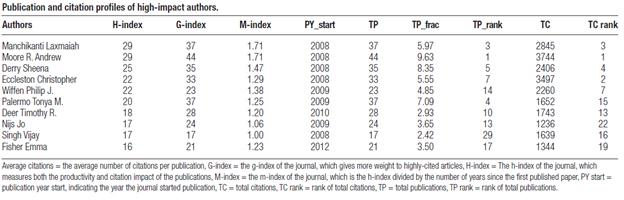
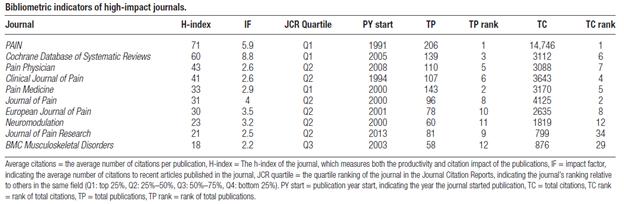
A 35-year bibliometric analysis of global trends in randomized controlled trials for chronic pain therapy (1989-2024) highlights Laxmaiah Manchikanti, MD, as a prominent author with the highest publication counts, while Pain Physician ranks as the third highest ranked journal.
The study, conducted by Yang et al., analyzed 4,206 publications from 939 journals, authored by 20,068 individuals across 86 countries. The most cited article was “Clinical Importance of Changes in Chronic Pain Intensity Measured on an 11-Point Numeric Pain Rating Scale” (Pain. 2001 Nov;94(2):149-158).
Most Published and Cited Authors:
- Laxmaiah Manchikanti, MD
- Andrew R. Moore, DSc
- Sheena Derry, MA
- Christopher Eccleston, PhD
- Philip J. Wiffen
- Tonya M. Palermo, PhD
- Timothy R. Deer, MD
Top cited high-impact journals include:
- Pain
- Cochrane Database of Systematic Reviews
- Pain Physician
The tables below summarize:
- Publication and citation profiles of high-impact authors
| | - Bibliometric indicators of high-impact journals
| |
Upcoming ASIPP Webinars
Register today!
| | |
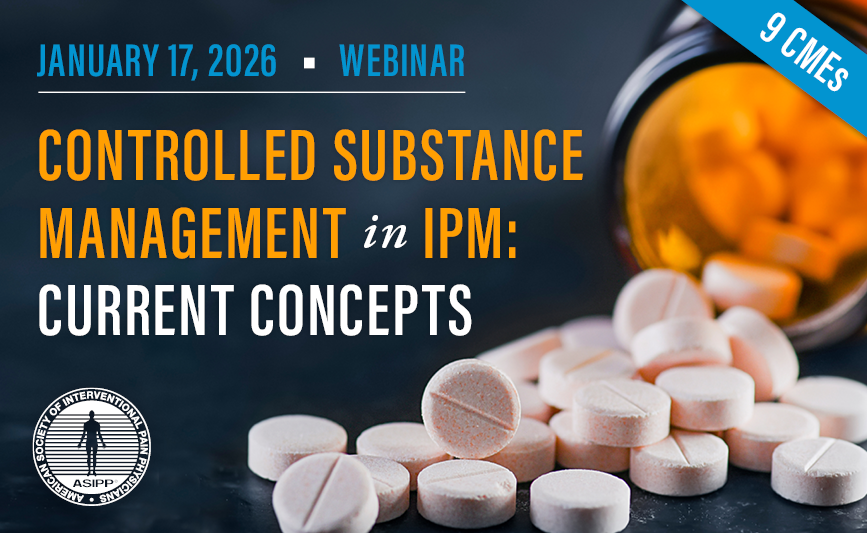
Join ASIPP on January 17, 2026, for an important webinar: Unveiling the Complexities of Controlled Substance Management in Interventional Pain Management (IPM).
Controlled substance management continues to present challenges for pain physicians, from evolving regulations and compliance requirements to balancing patient care with risk mitigation. This webinar will provide expert guidance to help you navigate these complexities and strengthen your practice.
| | |
Join ASIPP on January 31, 2026, for our webinar Strategies for Successful Practice Management. This program will focus on practical approaches to strengthen your practice through improved documentation, compliance strategies, and effective practice-building techniques.
Whether you are looking to optimize workflows, ensure regulatory readiness, or position your practice for long-term growth, this webinar will provide valuable insights to support your success.
| | |
This 2025 retrospective study, "A hidden confounder for microbiome studies: medications used years before sample collection," found that multiple medicines affected the gut microbiome for many years after use.
Typically, we think of antibiotics as the primary medication that alters the gut ecosystem in the long term. However, this study found that beta-blockers, benzodiazepine derivatives, glucocorticoids, PPIs, biguanides (metformin is the most widely prescribed drug in this class), and antidepressants affected the gut microbiome for several years after discontinuing use. And for many of them, the effects at the microbiome level are additive.
Overall, of the 186 drugs analyzed, 167 were found to be associated with the microbiome—affecting alpha diversity, beta diversity, or the abundance of at least one bacterial species—and 78 of those exhibited long-term effects on the gut.
Click here to read the full article.
| |
Join Us in New Orleans for ASIPP 2026
Earn CMEs, Expand Networks, and Explore the Future of Pain Management
| | |
It is our pleasure to invite you to the American Society of Interventional Pain Physicians’ 2026 Annual Meeting, where we will continue to shape the future of Interventional Pain Management.
This 28th Annual Meeting will take place Thursday, March 19 through Saturday, March 21, 2026, at the Hilton New Orleans Riverside in New Orleans, Louisiana.
The 2026 Annual Meeting will provide the tools, knowledge, and connections you need to thrive in the evolving field of interventional pain management.
| | JOIN or RENEW your ASIPP Membership for the best registration rates. | |
ASIPP continues working for YOU!
Our unwavering dedication to tackling the critical issues that matter most to our members creates a vibrant tapestry of community and collaboration among healthcare heroes. As we navigate the ever-changing currents of the healthcare landscape, we’re not just keeping our fingers on the pulse; we’re amplifying your voices to ensure that your needs are front and center! Together, we’re crafting a future where your concerns shape effective policies and practices.
Here are a few recently published Pain Physician articles:
| |
|
Health Policy Perspective - Pain Physician
Laxmaiah Manchikanti, MD, Mahendra Sanapati, MD, Vidyasagar Pampati, MSc, Paul J. Hubbell, III, MD, Ann Conn, MD, Ramarao Pasupuleti, MD, Mayank Gupta, MD, Alan D. Kaye, MD, PhD, Alaa Abd-Elsayed, MD, Annu Navani, MD, Miles Day, MD, Devi Nampiaparampil, MD, Christopher G. Gharibo, MD, and Joshua A. Hirsch, MD
Abstract | PDF
| | | |
|
Health Policy Perspective - Pain Physician
Laxmaiah Manchikanti, MD, Mahendra Sanapati, MD, Paul J. Hubbell, III, MD, Ann Conn, MD, Mayank Gupta, MD, Ramarao Pasupuleti, MD, Alaa Abd-Elsayed, MD, and Alan D. Kaye, MD, PhD
Abstract | PDF
| | | |
|
Health Policy Perspective - Pain Physician
Laxmaiah Manchikanti, MD, Paul J. Hubbell, III, MD, Ramarao Pasupuleti, MD, Ann Conn, MD, and Mahendra Sanapati, MD
Abstract | PDF
| | | |
|
Health Policy Review - Pain Physician
Laxmaiah Manchikanti, MD, Mahendra Sanapati, MD, Amol Soin, MD, Alan D. Kaye, MD, PhD, Alaa Abd-Elsayed, MD, Christopher G. Gharibo, MD, Allen Dennis, MD, and Joshua A. Hirsch, MD
Abstract | PDF
| | | |
This month’s case resulted in a large monetary verdict against the physician, possibly a record-breaking sum in the New York country where it took place.
In many cases it is very hard to know exactly what happened, without actually having been there. The 2 sides in a case thus often rely on the testimony of medical experts to help construct a story that aligns with their narrative.
The undisputed facts in the case are as follows: The patient, Mr B, was a 60-year-old electrical mechanic. He was the primary provider for his wife and 2 children. Mr B was being seen by Dr R, who worked at a pain clinic, for back pain. In mid-November 2019, Mr B underwent a routine, image-guided lumbar epidural steroid injection performed by Dr R. Mr B was sedated for the procedure.
As Mr B came out of sedation, minutes later, he suffered a massive spinal cord infarction leaving him permanently paralyzed from the waist down and with chronic neuropathic pain. The patient was also left with no bowel or bladder control, and impotent.
Click here to read the full article.
| | |
Only two test dates left this year - Apply now!
November 15 & December 13
Four (4) hour virtual exam
- ABIPP Path – Combined CCPM/ CSM Exam
For those with subspecialty in Pain Medicine
Two (2) hour virtual exam
- ABIPP Competency Exam in IPM
For those without primary board certification
Two (2) hour virtual exam
- ABIPP Competency Exam in Regenerative Medicine
Two (2) hour virtual exam
- Controlled Substance Management Competency Exam
Two (2) hour virtual exam
- Documentation, Coding, Compliance, Practice Management Competency Exam
Two (2) hour virtual exam
| |
Recent studies suggest music might reduce the perception of pain
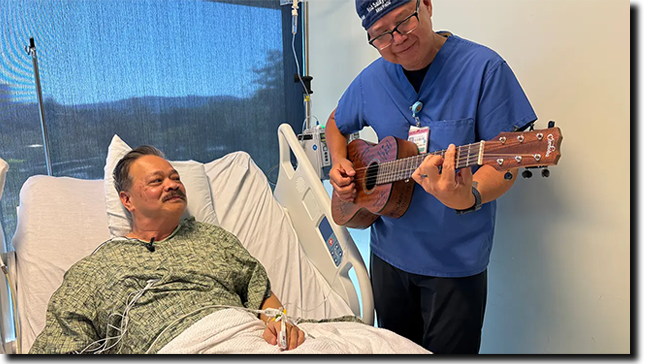
Nurse Rod Salaysay works with all kinds of instruments in the hospital: a thermometer, a stethoscope, and sometimes his guitar and ukulele.
In the recovery unit of UC San Diego Health, Salaysay helps patients manage pain after surgery. Along with medications, he offers tunes on request and sometimes sings. His repertoire ranges from folk songs in English and Spanish to Minuet in G Major and movie favorites like "Somewhere Over the Rainbow."
Patients often smile or nod along. Salaysay even sees changes in their vital signs like lower heart rate and blood pressure, and some may request fewer painkillers.
"There's often a cycle of worry, pain, anxiety in a hospital," he said, "but you can help break that cycle with music."
Click here to read the full article.
| | | |
We're excited to let you know that the new ASIPP Community, hosted by DocMatter, is now live!
The ASIPP Community on DocMatter will serve as a place for members to collaborate around clinical and research topics to advance the care of their interventional pain patients.
Click here to be a part of the conversation!
| | |
Pain Medicine Case Reports (PMCR) and Editor-in-Chief Alaa Abd-Elsayed, MD, PhD would like to invite you to submit case reports and case series to the PMCR journal. Your article will be published free of charge.
Open access journals are freely available online for immediate worldwide open access to the full text of published articles. There is no subscription fee for open access journals. Open access journals are no different from traditional subscription-based journals: they undergo the same peer review and quality control as any other scholarly journal.
Interested in becoming a member of the PMCR Editorial Board?
Editorial board members are asked to review 2-6 manuscripts per year. Please submit your most up-to-date CV to sgold@asipp.org for consideration.
For more information or to submit your articles, click here.
| | |
We are excited to announce that Pain Medicine Case Reports (PMCR) journal (eISSN 2768-5152) has been accepted for inclusion in MEDLINE and PubMed, the prestigious bibliographic database of the U.S. National Library of Medicine. PMCR, a companion publication to the prestigious Pain Physician journal by ASIPP, joins its counterpart in achieving indexing in both MEDLINE and PubMed, marking ASIPP’s dual presence in these renowned databases.
The inclusion of PMCR journal in MEDLINE signifies a higher level of selectivity, as MEDLINE consists of the top 5,200 biomedical journals. This indexing also means that articles from PMCR will be searchable using NLM Medical Subject Headings (MeSH terms) and other metadata.
The selection for MEDLINE follows a rigorous evaluation process by reviewers from the Literature Selection Technical Review Committee (LSTRC). According to their criteria, the scientific quality of a journal’s content is the primary factor considered for indexing.
We extend our congratulations to the Pain Medicine Case Reports Editor-in-Chief, Deputy Editor-in-Chief, Journal Team, and Editorial Board for this achievement, which underscores the significance and excellence of this esteemed journal.
| | | | |